

ZhaoYang Doctor Files IPO: Leveraging Specialty Psychiatry Clinics and an Integrated 'Doctor Tools + Drug Supply Chain' Model to Drive Profitability in Internet-Based Mental Healthcare
According to data released by the Disease Control and Prevention Bureau of the National Health Commission, by the end of 2017, there were 240 million people with mental disorders among China's population of 1.39 billion, resulting in an overall prevalence rate as high as 17.5%; the number of patients with severe mental disorders exceeded 16 million, with a prevalence rate surpassing 1%, and this figure continues to rise year by year.
The physical healthcare market is supported by major Grade 3A hospitals and private specialized institutions such as Kangning Hospital. Behind the rigid demand for in-person mental health services, an emerging market leveraging the internet to deliver psychological and psychiatric counseling, diagnosis, and treatment services has also been drawing sustained attention.
Despite the rising number of patients, consultation rates at psychiatric departments in major hospitals continue to decline. The overall healthcare-seeking rate among individuals with mental disorders remains below 10%. This reality of “being ill but not seeking treatment” is driven by factors such as stigma and low disease awareness.
Lin Zhaoyu, a psychiatrist with 15 years of clinical experience and the founder of the psychiatric practice tool “Zhaoyang Doctor,” believes that, unlike other medical specialties, psychiatry inherently possesses genes suited for digitalization.
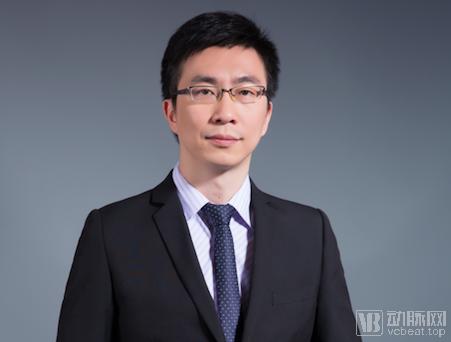
Lin Zhaoyu, founder of Zhaoyang Doctor. Photo provided by the interviewee
Due to the unique nature of mental illness, many patients avoid seeking medical help for fear of misunderstanding and discrimination from the outside world, thereby missing the optimal window for treatment. Furthermore, among those who have already recovered, a lack of systematic follow-up often leads to relapse. The essence of internet healthcare lies in improving the accessibility of medical services and addressing the imbalance in resource allocation. Therefore, leveraging internet-based approaches can effectively assist patients with mental disorders in accessing care and increase the rate of clinical consultation.
Psychiatric disorders do not require laboratory tests or other diagnostic procedures; diagnosis and treatment primarily rely on communication between the physician and the patient or between the physician and the patient’s family members. Particularly during follow-up visits, many patients do not appear in person, but instead have family members describe their condition, consult on their behalf, and collect medications for them. Therefore, leveraging internet platforms can, on one hand, improve the efficiency of psychiatric consultations and, on the other hand, help patients save time and reduce economic costs.
Lin Zhaoyu once served as an associate chief physician at Guangzhou Huiai Hospital (formerly Guangzhou Psychiatric Hospital, also known as Guangzhou Mental Health Center), China’s first specialized psychiatric hospital. He participated in the research and formulation of the 12th Five-Year Plan for Health. In 2015, he resigned to found Guangzhou Xinqing Information Technology Co., Ltd.
Over 15 years of clinical practice, Dr. Lin Zhaoyu has identified numerous pain points in psychiatry, primarily manifested in the following aspects:
First, patients face difficulties in accessing medical care. Many individuals with mental disorders seek treatment across different regions, leading to overcrowded outpatient departments in tertiary hospitals. Each physician is required to attend to over a hundred patients daily, resulting in poor service quality and diminished patient trust.
Second, post-consultation follow-up by physicians is challenging. Psychiatric follow-up still relies heavily on manual labor, resulting in low efficiency with traditional methods and inadequate privacy protection. Inadequate follow-up and disease management contribute to persistently high relapse rates for mental disorders.
Third, psychiatrists and psychotherapists operate in silos between hospitals and departments, lacking coordination.
To address the aforementioned pain points, Zhaoyang Doctor was initially established as an online auxiliary diagnosis and treatment platform, primarily providing health consultations and doctor-patient communication services. Through Zhaoyang Doctor, patients can engage in one-on-one, multi-channel communication with specialist physicians at hospitals, thereby creating a secure, private, time-saving, and efficient healthcare experience for individuals with mental disorders.
Unlike internet healthcare platforms that focus primarily on consultations, Zhaoyang Doctor is essentially an application designed for physicians. Doctors join the platform to manage their patients. Zhaoyang Doctor provides enrolled physicians with features such as appointment scheduling, standardized pre-consultation questionnaires, and post-consultation follow-up systems, while also matching them with professional psychologists for collaborative treatment.
More importantly, Zhaoyang Doctor provides only follow-up consultation services to patients, a practice fully compliant with current policies on internet-based healthcare. Initial consultations can be conducted at Xinqing Outpatient Clinic, a psychiatric specialty physical institution under Zhaoyang Doctor, or at other physical medical facilities. According to Lin Zhaoyu, Zhaoyang Doctor functions more like a “physician tool.” Currently, the platform hosts over 2,000 licensed psychiatrists, primarily recruited from the top ten public psychiatric hospitals nationwide.
Psychiatrists from the top ten public hospitals in China account for 67% of patient traffic in the psychiatric market. This means that, under ideal conditions, Zhao Yang Doctor could capture a 67% market share through its platform by leveraging qualified psychiatrists.
Leveraging the internet, Zhaoyang Doctor describes its business model as “S to B to C,” where “S” refers to the SaaS system represented by the Zhaoyang Doctor platform, “B” denotes the physician side at hospitals, and “C” refers to patients. Lin Zhaoyu stated that Zhaoyang Doctor serves patients by serving physicians.
Among the various policies governing internet-based healthcare, health consultations and follow-up visits conducted via the internet are permitted. However, after launching the platform, Lin Zhaoyu discovered that online consultations alone were insufficient to meet patients’ needs. Without the critical component of “treatment” in patient care, a complete service loop cannot be established.
Therefore, after Zhaoyang Doctor completed the front-end consultation and follow-up visit services, it bridged a particularly critical link in the clinical care process: patient medication. Through its offline Xinqing Clinics, Lin Zhaoyu established his own pharmaceutical supply chain and forged extensive collaborations with pharmaceutical companies specializing in psychiatry, thereby reducing intermediaries and providing medications directly to patients.
Offline outpatient clinics primarily provide psychological counseling services. He emphasized that the psychological counseling industry currently lacks universally recognized standards, resulting in inconsistent service quality. Consequently, patients often struggle to find qualified psychological counselors when they encounter issues. In contrast, Xinqing Outpatient Clinic is a physical medical institution with qualifications for internet-based diagnosis and treatment. By forming a collaborative alliance of psychological counselors and physicians, it offers patients reliable and safe psychological counseling services.
Overall, the Zhaoyang Doctor platform, in conjunction with offline Xinqing Clinics, can address a full spectrum of needs ranging from mild to severe conditions, from initial consultations to follow-up visits, and from pharmacotherapy to psychotherapy.
Lin Zhaoyu stated, “Zhaoyang Doctor is akin to helping physicians establish an online clinic at a low cost, enabling them to realize profits from both consultation fees and pharmaceuticals on the platform.” Therefore, Zhaoyang Doctor has constructed a comprehensive supply chain based on the clinical care process.
The intrinsic nature of healthcare dictates that medical projects cannot advance as rapidly as typical internet initiatives. The healthcare sector emphasizes rigor, and physicians are a conservative and cautious group. Consequently, the cost of trial and error for tools used by physicians is prohibitively high; immature products or those with poor user experience will not be granted more than two chances. Only relatively mature products can be promoted on a large scale, which necessitates extended cycles for research and development platform construction and iterative updates.
For platform-based enterprises, profitability has become a major constraint for companies leveraging internet technologies to innovate in medical services, regardless of the medical specialty involved, the nature of essential demand, or whether they are “unicorns” or star projects in the market.
Lin Zhaoyu stated, “The Zhaoyang Doctor team has over ten years of industry experience and serves as both a provider and user of services, thereby gaining a thorough understanding of the needs of both physicians and patients, as well as familiarity with various internal industry relationships, processes, and resources.” This provides Zhaoyang Doctor with the experience necessary to deliver services that better align with the needs of physicians and patients.
Although the early promotion phase involved iterative trial-and-error with various teams, including “internet healthcare marketing teams,” “traditional pharmaceutical representative teams,” and “part-time teams,” three years of product refinement grounded in physicians’ needs have enabled Zhaoyang Doctor to identify an effective dual-track promotion model. By leveraging “pharmaceutical representatives + internet-based channels,” “part-time + full-time staff,” and a structured allocation system, Zhaoyang Doctor has established a promotional framework that is replicable across different regions.
In 2018, the outflow of prescriptions from hospitals will drive structural adjustments in pharmaceutical distribution channels, representing both a reallocation of existing market share and a new growth engine for the industry. Although still in its nascent stage, major players such as Shanghai Pharmaceuticals, Sinopharm, Alibaba Health, and leading internet healthcare platforms—including Haodafu, Chunyu Yisheng, and Weiyi—have targeted this opportunity. While the outflow of prescriptions from public hospitals remains in an exploratory phase, it holds substantial potential, making it an opportune time for strategic positioning.
A defining feature of Dr. Zhao Yang’s system is its medication and delivery supply chain, built upon physical medical institutions. Leveraging the online Dr. Zhao Yang platform, physicians can prescribe medications for follow-up patients based on complete medical records. After patients complete their treatment and pay the corresponding fees on the platform, Dr. Zhao Yang directly delivers the medications from its proprietary drug inventory to the patients. Lin Zhaoyu considers this end-to-end process—from consultation and prescription to medication delivery—a closed loop.
In terms of revenue, Zhaoyang Doctor has delivered impressive financial performance, standing out not only among internet platforms specializing in psychiatry but also across the broader internet healthcare industry.
Direct collaborations with pharmaceutical companies have made sales profits from medications on the platform the primary revenue source for Zhaoyang Doctor, with the remainder derived from consultation fees and service-oriented income from B-side clients. Zhaoyang Doctor’s monthly prescription value grew from RMB 200,000 in November 2017 to nearly RMB 2 million in September 2018, representing a monthly growth rate of approximately 20%–51%, thereby marking its transition from the product refinement phase into a period of rapid growth. The company’s total annual revenue reached RMB 30 million in 2018.
Lin Zhaoyu revealed that the first phase of Zhao Yang Doctor’s strategy is to leverage the annual RMB 20 billion market for specialty prescription outflows to attract 20,000 psychiatrists across China. “What we are truly targeting is the trillion-yuan overall market for mental health and psychological services, and these 20,000 psychiatrists serve as the entry point and key resources for this market. They hold prescribing, diagnostic, and treatment privileges. In China, triage is conducted by specialists rather than general practitioners. By securing their engagement, Zhao Yang Doctor will be able to cover the entire market, including psychological counseling and psychotherapy, clinical big data, follow-up management, scientific research, corporate Employee Assistance Programs (EAP), and more.”
As pharmaceutical companies shift from a sales-centric to a patient-centric model, various channels capable of capturing patient medication data have become highly sought after. However, our focus here is not on direct data acquisition, but rather on providing precise analytical reports to support pharmaceutical R&D and marketing efforts.
This includes analyses of drug efficacy, side effects, and indications, as well as patient medication preferences and strategies for accurate drug promotion. Such “real-world” medication data are highly valuable. Industry insiders believe that platforms with direct access to patients or physicians, particularly regarding medication preferences, have always been preferred partners for pharmaceutical companies. For pharmaceutical firms, Insights reports are consistently the most expensive.
Lin Zhaoyu stated, “While other mobile health platforms were focusing on doctor-patient communication, XQ Doctor was developing intelligent consultation and cloud HIS; when others began working on intelligent consultation and cloud HIS, we had already completed the closed loop of diagnosis and treatment plus pharmaceuticals; and as others started engaging in ‘pharmaceutical e-commerce,’ we had already launched our ‘specialized data services.’ Therefore, our positioning is that of a ‘pharmaceutical healthcare and data company.’”