

High-Resolution MRI for Stroke Prevention: Qingying Huakang Submits IPO Prospectus to Combat a Leading Cause of Death
Cardiovascular and cerebrovascular diseases are the leading cause of death worldwide, claiming 15.2 million lives globally in 2016. In China, the burden of cerebrovascular disease is even more severe. According to the Report on the Nutritional Status and Chronic Diseases of Chinese Residents (2015), nearly 2 million people die from stroke annually in China, with a mortality rate of 140.3 per 100,000 population, accounting for 22.8% of all deaths. More alarmingly, there is a trend toward younger onset of this disease in China; the average age of stroke incidence is 63 years, which is 10 years earlier than in the United States.
Stroke emergency physicians must race against time to seize the golden window for treatment; however, this does not mean we are powerless in the face of stroke. With the advent of high-resolution magnetic resonance vessel wall imaging, clinicians have gained an additional advantage in their battle against time.
Dr. Li Rui, who has spent many years researching high-resolution magnetic resonance vessel wall imaging, told VCBeat (WeChat ID: vcbeat) that this technology can screen for vulnerable plaques in cerebral vessels, which are closely associated with the onset of ischemic stroke.
Since 1994, the Vascular Imaging Laboratory (VIL) at the University of Washington in Seattle and the Center for Biomedical Imaging Research (CBIR) at Tsinghua University have been at the forefront of technological development, pathological correlation, clinical application, and translational research in high-resolution magnetic resonance vessel wall imaging.
Since 2009, Dr. Li Rui has conducted postdoctoral research at the Vascular Imaging Laboratory of the University of Washington in Seattle, USA. Upon returning to China, he served as Deputy Director of the Biomedical Imaging Research Center at Tsinghua University. After years of research in the field of biomedical imaging, he decided to promote the broader clinical application of high-resolution magnetic resonance vessel wall imaging through technology transfer.
Dr. Li Rui told VCBeat, “Our team’s shared vision is to reduce the threat posed by stroke to humanity.” He named the company Qingying Huakang, signifying clear imaging in support of health in China. Currently, Qingying Huakang’s high-resolution magnetic resonance vessel wall imaging solution has been widely adopted by major Grade 3A hospitals across China.
Stroke is categorized into ischemic stroke and hemorrhagic stroke, with ischemic stroke accounting for 60%–70% of all cases. If one word were to describe the pathogenesis of ischemic stroke, it would be “a sudden outbreak resulting from long-term accumulation.”
Ischemic stroke is primarily caused by thromboembolism or secondary thrombosis following the rupture of arterial plaques. When plaques in the chest, neck, and brain rupture, thrombi travel through the vasculature to the brain; because the cerebral vessels are too small to allow passage, emboli form, resulting in ischemic stroke.
Arterial plaque is caused by atherosclerosis, which involves the deposition of lipid substances resembling millet porridge on the arterial vessel walls.
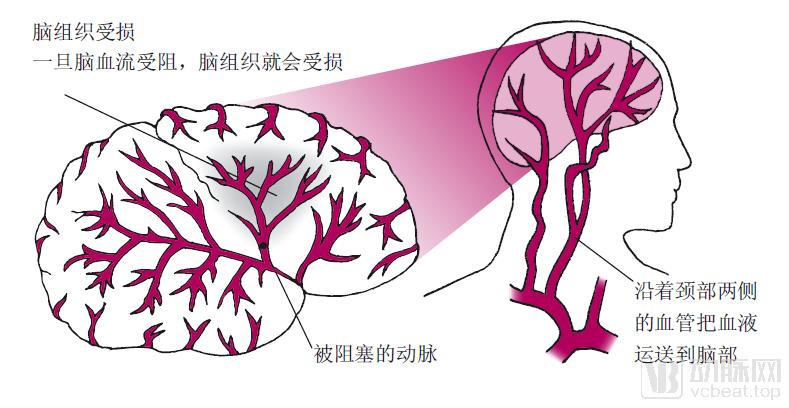
Early monitoring and prevention of these plaques can reduce the risk of stroke. Studies have confirmed that the incidence of cerebral infarction in patients with asymptomatic carotid stenosis is not correlated with the degree of arterial stenosis; the key lies in identifying high-risk vulnerable plaques.
Conventional imaging diagnostic methods, such as digital subtraction angiography (DSA), computed tomography angiography (CTA), and magnetic resonance angiography (MRA), can only visualize the degree of luminal stenosis. Ultrasound is highly operator-dependent and has a limited field of view, leaving it technically inadequate for assessing plaque composition and identifying vulnerable plaques.
High-resolution magnetic resonance vessel wall imaging solutions enable physicians to accurately identify vulnerable plaques.
Dr. Li Rui told VCBeat, “With conventional imaging in the past, physicians could only obtain information about the lumen. The underlying causes of stenosis and the status of plaques remained unknown. High-resolution magnetic resonance imaging (MRI) enables precise assessment of plaque morphology, composition, and function.”
Regarding technological maturity and the challenges of clinical implementation, Dr. Li Rui stated, “High-resolution magnetic resonance imaging (MRI) is widely used in clinical practice both domestically and internationally, with a high level of acceptance among clinicians. However, it demands rigorous imaging protocols, and the workflows for image processing and interpretation are complex.”
In the "2018 Chinese Guidelines for Diagnosis and Treatment of Acute Ischemic Stroke," high-resolution magnetic resonance imaging (HRMRI) is also one of the recommended common diagnostic methods.
Beyond the diagnosis of ischemic stroke, the clinical applications of high-resolution magnetic resonance imaging (HR-MRI) are expected to expand further in the future. For instance, in internal medicine, HR-MRI vessel wall imaging can be used to monitor therapeutic efficacy and guide precision medication management; in surgical treatment, it can provide precise guidance for carotid endarterectomy (CEA) and carotid artery stenting (CAS); furthermore, it enables accurate diagnosis of related conditions such as arteritis, Moyamoya disease, arterial dissection, and aneurysms.
Compared with current magnetic resonance imaging (MRI) solutions, Qingying Huakang’s high-resolution MRI vessel wall imaging solution enables customized scanning protocols, automated delineation during diagnosis, and rapid generation of structured quantitative reports. Currently, Qingying Huakang’s plaque interpretation and post-processing workstation has obtained CFDA registration certification.
Unlike companies that offer only imaging software, Qingying Huakang’s solution includes imaging coils, imaging protocols, image workstations, training services, and research support. Dr. Li Rui stated, “We chose the ‘hardware + software + services’ model because we aim to provide physicians with a comprehensive, closed-loop solution.”
Dr. Li Rui stated, “Previously, we had been promoting the project through scientific research collaborations; however, such research-oriented applications have inherent limitations. Aiming to bring this technology to a broader base of physicians and transition it out of the laboratory setting, several colleagues and I co-founded Qingying Huakang.”
In terms of team composition, Dr. Li Rui currently serves as the Deputy Director of the Biomedical Imaging Research Center at Tsinghua University, with many years of experience in the research and development of magnetic resonance imaging (MRI) technology. Chen Shuo, Manager of the Product R&D Department, holds a Ph.D. from Tsinghua University and has extensive experience in MRI research. Wang Xinyuan, Manager of the Hardware Development Department, earned his master’s degree from Tsinghua University and brings over twenty years of experience in MRI coil design. Xu Jia, Manager of the Software Development Department, holds a master’s degree from Peking University and is a senior software engineering expert.
To extend the benefits of its products to a broader population, Qingying Huakang has designed several clinical implementation models within its business strategy. The first involves collaborating with major medical imaging enterprises to integrate its solutions into large-scale imaging equipment via third-party integration. The second entails partnering with third-party imaging platforms to provide algorithm-based interpretation technologies, thereby empowering diagnostic platforms through technological innovation. The third model focuses on cooperation with large health examination institutions to establish a direct-to-consumer (B2C) approach targeting patients.
Dr. Li Rui stated, “If products are used only in hospital clinical settings, the user base is relatively limited. Health checkup companies and third-party imaging platforms serve a broader population with potential disease risks; wider application can more rapidly reduce the threat that stroke poses to human health.”
In addition to its existing solutions for stroke, Qingying Huakang plans to launch comprehensive precision imaging solutions for other major human diseases, including heart disease, neurodegenerative diseases, and cancer.
Currently, Qingying Huakang is undergoing external financing.