

Portable White Blood Cell Analyzer: A Breakthrough Solution to Antibiotic Overuse in Primary Care
“The most common illnesses at the primary care level are colds, fevers, and inflammatory infections. In the past, the standard approach for such patients was the ‘Three Agents and One Infusion’ regimen: the ‘Three Agents’ refer to antibiotics, corticosteroids, and vitamins, while the ‘One Infusion’ refers to intravenous drip therapy. This has been a common practice among most primary care physicians. I myself have been a contributor to this ‘Three Agents and One Infusion’ approach,” said Dr. Guo Genxin from Jinshan Village, Yiyang City, Hunan Province, in an interview with reporters.
China is both a major consumer and producer of antibiotics, with an annual production of approximately 210,000 metric tons of active pharmaceutical ingredients (APIs), of which 30,000 metric tons are exported. The per capita annual consumption stands at around 138 grams, significantly higher than the 13 grams recorded in the United States. Approximately 75% of outpatient clinic patients treated for colds in China receive antibiotics, while the figure reaches as high as 95% among surgical patients. According to a World Health Organization survey, the antibiotic usage rate among hospitalized patients in China is as high as 80%, with 58% receiving combination therapy involving two or more antibiotics—far exceeding the international average of 30%. Incomplete statistics indicate that among the top 15 medicines by consumption and sales volume in China, 10 are antibiotics. Antibiotic-related costs account for more than 50% of total hospitalization expenses in China, compared to the typical range of 15–30% in other countries.
Over the years, to curb the misuse of antibiotics, the state has issued numerous documents on the management of antimicrobial agents.
The “Notice on Further Strengthening the Clinical Application Management of Antibacterial Drugs to Curb Bacterial Resistance” issued in March 2017, and the “Notice on Continuously Improving the Clinical Application Management of Antibacterial Drugs” released by the National Health Commission in May 2018, among others, have provided clear guidelines on standardizing the use of antibacterial drugs, enhancing technical capabilities and management standards for their clinical application, and reducing inappropriate prophylactic use and intravenous infusion of antibacterial agents.
Mr. Zhuang Hangzhou, CEO of Yifu Tianxia, stated, “The misuse and excessive dosing of antibiotics have become a societal hazard. After several years of special campaigns to regulate the clinical application of antimicrobial agents, clinical management and usage patterns in major Chinese cities and leading hospitals have been increasingly standardized and improved. However, antibiotic misuse remains widespread in grassroots settings characterized by information lag and outdated concepts. A significant contributing factor is the lack of effective diagnostic tools among village doctors. Without such testing capabilities, the use of antibiotics is largely blind and indiscriminate.”
Yifu Tianxia (Shenzhen) Technology Co., Ltd. was established in early 2017 as a medical internet company under the Kangshang Medical Group. It is an internet platform dedicated to empowering primary healthcare institutions and providing one-stop services. By leveraging entry points such as integrated medical health management kiosks, POCT testing devices, and home health equipment required for primary care, the company has built a comprehensive Internet of Things (IoT) system for primary healthcare. Committed to serving China’s primary healthcare market through technological innovation, it operates as both a provider and operator of IoT-based diagnostic solutions for primary healthcare.
Based on research into the current state of primary healthcare and antibiotic misuse, Kangshang Medical Service has developed the first portable white blood cell analyzer designed for use in primary care settings. By analyzing white blood cell counts in the blood of infected patients and combining this data with clinical symptoms, the device effectively determines the type of infection, thereby facilitating accurate diagnosis and appropriate medication use, and helping to reduce antibiotic misuse.
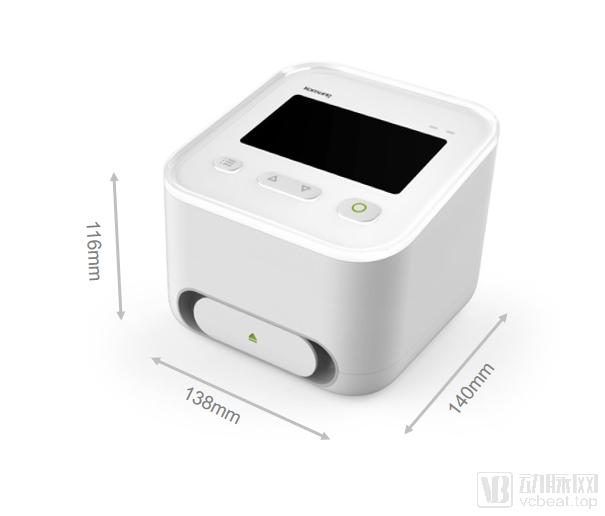
(Kangshang Leukocyte Analyzer)
Its compact design occupies an area no larger than two palms. Equipped with a high-capacity rechargeable lithium-ion battery, the device is highly portable, effectively eliminating the hassle for patients with limited mobility who would otherwise need to visit a clinic for examinations during physician follow-ups.
In terms of operation, it requires a small blood sample volume and is simple to perform. No reagent preparation or real-time focusing is needed during blood sample testing; operators can achieve total white blood cell count measurement by following standard procedures, basically meeting the primary care needs for screening and diagnosing colds, fever, and common infectious diseases.
Maintenance of large-scale analyzers in hospitals generally includes daily maintenance, periodic maintenance, regular inspections, accuracy checks, and fluidic system care. The maintenance process is intricate; if cleaning and maintenance are not performed properly, the instruments may frequently experience issues such as clogged apertures and unstable detection results, causing unnecessary complications for testing.
The white blood cell analyzer features a clog-free design and utilizes a proprietary disposable microfluidic reagent cartridge for single-use applications, completely eliminating carryover contamination. Daily maintenance is limited to the cartridge slot, ensuring simple operation, low maintenance and testing costs, and better alignment with the consumption habits of primary healthcare institutions.
In terms of precision, the device captures images of stained white blood cells using a built-in high-definition microscope and leverages the system’s high-precision pattern recognition technology to accurately identify adherent cells. Furthermore, through the configuration of high-precision pattern recognition algorithms, it can accurately count highly aggregated cells, significantly enhancing the detection accuracy of this portable device. The resulting white blood cell measurements are comparable to those obtained from large-scale medical equipment in hospitals. This advancement provides new measurement methods and assessment tools for the timely diagnosis, monitoring, and treatment of diseases.

(Stained white blood cell image) (Image with adherent white blood cells marked by built-in recognition software)
According to the provided comparative data from clinical trials, Kangshang Medical Service demonstrated a linear regression correlation coefficient (R²) of 0.9919 against imported analyzers and an R² of 0.9945 against domestic benchmark analyzers. The Kangshang Medical Service white blood cell analyzer not only exhibits strong correlation with commercially available imported portable white blood cell analyzers but also shows high consistency in white blood cell measurement results compared to domestic benchmark hematology analyzers, underscoring its significant clinical value.
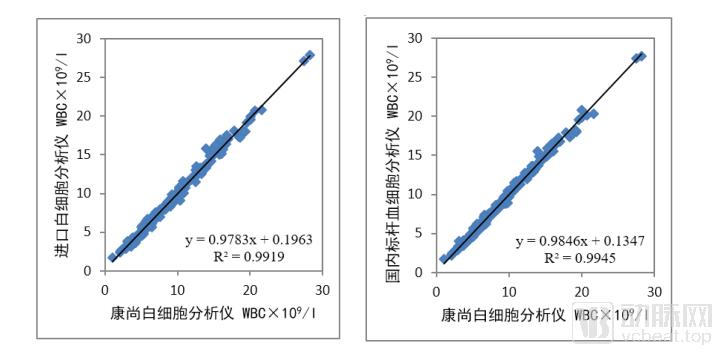
(Correlation Curve Between Kangshang and Imported Analyzers) (Correlation Curve Between Kangshang and Domestic Benchmark Analyzers)
In March 2019, the China Association of Medical Equipment held the “Symposium on Demonstration of Appropriate Medical Equipment Technologies” in Beijing. Following evaluation by an expert panel, it was determined that Kangshang Medical’s white blood cell analyzer meets the testing requirements of hospital emergency departments and primary healthcare institutions, making it suitable for promotion and adoption across medical institutions at all levels.

Expert Panel Review Site

Recommended Certificates
Between 2017 and 2018, the hematology analyzer was also granted 10 domestic invention patents.
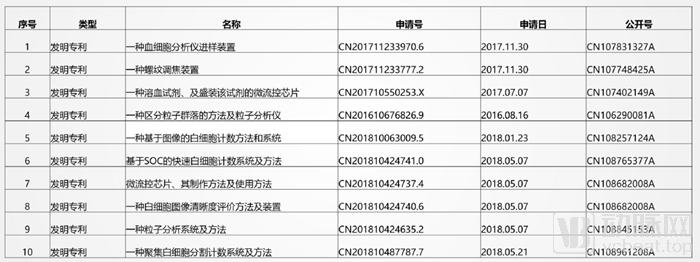
The white blood cell analyzer has also won 10 invention patents.
Dong Shukui, Deputy Secretary-General of the China Association of Medical Equipment, stated: “White blood cell analyzers enable village doctors to achieve precise interpretation, accurate diagnosis, and targeted medication administration. This helps reduce the use of antibiotics without clear indications, minimize unnecessary combination therapy, lower daily dosages, and ensure appropriate durations of anti-infective treatment, ultimately leading to a reduction in antibiotic usage. However, common diseases at the primary care level are not limited to infections; white blood cell count testing can also effectively assess various chronic conditions (such as hypertension, hyperglycemia, and hyperlipidemia) and facilitate early screening for leukemia.”
Zeng Taiping, from the Lieshiqiao Village Clinic under the Chaimatou Health Center in Sanxianhu Town, Nan County, Yiyang City, Hunan Province, was among the earliest beneficiaries of white blood cell analyzers.
Dr. Zeng Taiping stated, “Previously, for patients presenting with colds and fever, we would adopt a broad-spectrum approach to achieve rapid therapeutic effects, concurrently administering both antibiotics and antiviral agents. Since the introduction of the hematology analyzer, we have been able to determine the type of infection through testing. As a result, antibiotic usage in our community health clinic has decreased by nearly 50%, which also contributes to improving the physical health of the general population.”
According to a report by Reporter Ma from Yicai (First Financial Daily): In a survey on standardized patients in rural Shaanxi, only 19% of primary care physicians (including those at township hospitals and village clinics) were able to provide completely or partially correct treatment measures, while 40% prescribed antibiotics when they should not have. For instance, township doctor Guo Genxin believed that antibiotics should no longer be used indiscriminately, so he introduced a white blood cell analyzer. “The white blood cell analyzer has saved me 40,000 yuan in antibiotic costs. Previously, annual antibiotic expenses reached 50,000 yuan; now, annual spending on antibiotics is less than 10,000 yuan.” Equipping primary care facilities with white blood cell analyzers can effectively reduce the misuse of antibiotics at the grassroots level.
Kangshang Medical Service not only possesses innovative white blood cell detection technology but also offers a comprehensive IoT-based testing and inspection ecosystem for primary care, including multi-parameter health all-in-one machines, POCT rapid testing devices, home medical equipment, and health service platforms. These solutions meet the diagnostic needs for common and chronic diseases at the primary care level, creating a closed-loop service system encompassing medical diagnosis, medication guidance, remote medical education/technical support, doctor-patient interaction and care, and a convenient home medical e-commerce platform. This approach enhances the level of diagnostic services in primary care and truly empowers primary healthcare institutions. Currently, its products cover 15 provinces and three municipalities directly under the central government, including Hunan, Hubei, Henan, Hebei, and Hangzhou.