

Dissolvable Stents, Non-invasive Coronary Diagnosis, and Heart Valves: The Trillion-Yuan Cardiovascular Sector Emerges as a Golden Frontier for Medical Device Innovation
Heart , Liver , Spleen , Lung 、The kidneys are vital organs in the human body, while the heart ranks at the top. With technological advancements, there is a growing number of innovative products centered around the field of cardiology.
Recently, Mandi Medical’s magnetocardiography (MCG) device was approved by the Shanghai branch of the China Food and Drug Administration (CFDA) and obtained a medical device registration certificate, making it the first MCG device to receive approval in China.
In March 2019, Lepu Medical’s bioresorbable sirolimus-eluting coronary stent system received approval for production.
Several months ago, Zhongshan Hospital affiliated with Fudan University successfully performed an implantation procedure using the new-generation thin-strut bioresorbable scaffold (BIOMAGIC), which was provided by the domestic company Maiquan Medical.
The substantial investment of manpower and capital is driven by the enormous market demand in the cardiology sector. On June 8, the National Center for Cardiovascular Diseases recently released the “Report on Cardiovascular Diseases in China 2018.” The report indicates that the prevalence of cardiovascular diseases in China remains on the rise, with an estimated 290 million affected individuals currently.
Among them, there are 13 million stroke patients, 11 million coronary heart disease patients, 4.5 million heart failure patients, and 245 million hypertension patients. The average age of patients undergoing cardiac stent surgery in China is 62 years. Deaths caused by cardiovascular diseases account for more than 40% of all disease-related deaths among residents, ranking first among all types of diseases.
In 2015, the total number of hospital discharges for cardiovascular and cerebrovascular diseases in China was 18.8772 million, accounting for 12.87% of the total number of discharges during the same period. Among these, cardiovascular diseases accounted for 6.61% (9.7002 million cases), and cerebrovascular diseases accounted for 6.25% (9.177 million cases).
Among discharges for cardiovascular and cerebrovascular diseases, there were 6.8131 million cases of coronary heart disease (IHD), accounting for 36.2%, including 602,700 cases of acute myocardial infarction (AMI) and 5.7145 million cases of cerebral infarction, which accounted for 30.27%.
From 1980 to 2015, the annual average growth rate of hospital discharges for cardiovascular disease patients in China was 9.96%, outpacing the average growth rate of total hospital discharges (6.27%) during the same period.
The immense market demand has driven entrepreneurs to make substantial innovations in screening, diagnosis, surgical planning, surgical consumables, and artificial hearts.。


Coronary heart disease (CHD) is an ischemic heart disease caused by atherosclerotic lesions in the coronary arteries. From 2003 to 2015, the prevalence of CHD in China increased by more than 120%. In 2018, the number of CHD patients in China reached 15 million, with approximately 3 million coronary angiography procedures and 900,000 percutaneous coronary intervention (PCI) procedures performed, posing severe challenges to public health and healthcare services in the country.
Patients with coronary heart disease (CHD) predominantly present with stable CHD. Clinical diagnosis requires assessment of both the degree of vascular stenosis and myocardial perfusion function. The degree of vascular stenosis is commonly evaluated using non-invasive imaging modalities such as coronary computed tomography angiography (CTA) and invasive imaging techniques such as invasive coronary angiography (ICA). The gold standard for assessing myocardial perfusion function is invasive fractional flow reserve (FFR).
Under normal circumstances, the FFR value is 1.0. When FFR > 0.8, medical therapy is recommended; when FFR ≤ 0.8, percutaneous coronary intervention (PCI) for revascularization is recommended (an FFR of 0.8 indicates that the blood supply capacity of this coronary artery is 80% of normal).
In current clinical practice, coronary CTA is generally used for initial screening to rule out the absence of coronary stenosis; subsequently, patients with positive screening results undergo further invasive ICA and FFR assessments, followed by PCI treatment.。
However, clinical studies have shown that the accuracy of using coronary CTA alone to assess vascular stenosis is not high—more than 70% of patients who initially test positive do not actually have functional ischemia. Performing subsequent unnecessary invasive ICA, FFR tests, and PCI treatments on this group of people increases patients' medical risks and burdens, and also causes a certain degree of waste of medical resources.
In contrast, current invasive FFR measurements require a catheterization laboratory setting, involve the insertion of a pressure wire, cause significant patient discomfort, and are time-consuming.
Therefore, many entrepreneurs are currently adopting innovative approaches for non-invasive FFR testing.。
For example,Shukun Technology's Non-Invasive Diagnostic Method for Coronary Artery Disease Combining Hemodynamics and Deep Learning; Non-gated calcium scoring can calculate the calcium scores of individual vessels in a single, ultra-fast scan, further accelerating the initial screening for coronary heart disease in both radiology and clinical departments. Given the extremely high mortality rate associated with aortic diseases, Shukun AI products enable diagnostic departments to detect aortic dissections and intimal tears earlier than traditional methods and perform automated quantitative measurements. This enhances disease detection rates and improves physicians' workflow efficiency.
Similarly,Xingmai Technology Partners with the Department of Radiology at Sir Run Run Shaw Hospital to Launch FFRct Diagnostic Product Collaboration, Integrating Two Technologies. By integrating DSA data with CTA imaging for combined training, we conduct in-depth R&D by leveraging deep learning, hemodynamics, and other multidisciplinary innovative approaches.
Aligned with clinical needs and building upon the principles of computational fluid dynamics (CFD) simulation, we have independently developed a fully automated meshing system and a proprietary CFD solver. This innovation reduces the processing time from the traditional 4–6 hours to just 10 minutes, eliminates the need for involvement by CFD engineers, and ensures high accuracy.
In addition to leveraging hemodynamics and artificial intelligence, magnetocardiographic signals are also used for diagnosis.. Magnetocardiographic signals contain more comprehensive physiological information than electrocardiographic signals and better reflect the physiological status of the heart. Abnormalities in cardiac depolarization or repolarization, such as those occurring during coronary artery stenosis and ischemia, are manifested as abnormalities in magnetocardiographic signals.
Magnetocardiography features non-contact, non-invasive, radiation-free operation and excellent early detection capabilities., since its inception in the 1960s, it has received significant investment and attention from countries such as Germany, Japan, the United Kingdom, and the United States. After decades of development and clinical research, magnetocardiography (MCG) is considered a medical device with substantial potential for clinical application, particularly demonstrating prominent potential for early diagnosis of ischemic heart diseases.
As early as 2003, CardioMag Imaging’s magnetocardiography (MCG) device received FDA 510(k) clearance for market launch in the United States. In recent years, with breakthroughs in MCG signal detection technology, MCG devices have become a focal point of international attention. MCG products from Germany’s BMP (2013), the UK’s Creavo (2017), and the US-based Genetesis (2019) have successively obtained FDA 510(k) clearance for commercial release.
Recently,Mandee Medical’s magnetocardiography device has been approved by the Shanghai CFDA and obtained a medical device registration certificate, making it the first approved magnetocardiography device in China.。
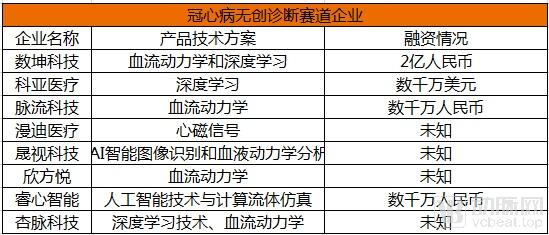
Source: VCBeat
The core of most non-invasive cardiovascular diagnostic technologies lies in the quantification of functional vascular parameters through computer simulation. Zheng Lingxiao, CEO of RainCardio, once stated to VCBeat: “Computational simulation has been widely applied in industrial sectors, such as aircraft design and automobile manufacturing. Therefore, we began to explore the application of fluid dynamics to human biological simulation. By adhering to strict physical laws, it is possible to calculate blood flow within vessels, thereby deriving functional metrics such as blood pressure, flow rate, and shear stress. These functional indicators hold critical value for precise disease detection, guidance of treatment plans, and postoperative assessment.”
Rapid 3D reconstruction of cardiovascular structures based on 3D medical images not only facilitates the planning of stent quantity and size selection according to the morphology of the reconstructed cardiovascular system, but also enables preoperative simulation of postoperative blood flow conditions to predict surgical outcomes.
This enables the development of personalized surgical plans tailored to each patient’s cardiovascular characteristics, allowing for the selection of the optimal treatment strategy from various options. Consequently, this approach reduces surgical risks, facilitates precision medicine, and improves prognostic outcomes.
Currently, companies engaged in non-invasive cardiovascular diagnostics generally possess the capability to provide surgical planning solutions. Examples include Shukun Medical, PulseFlow Technology, and Ruixin Intelligence.。
On June 15, 2011, Johnson & Johnson, a global leader in cardiovascular drug-eluting stents based in the United States, officially announced that it would completely cease production of drug-eluting stents by the end of the year and discontinue the development of its new NEVO sirolimus-eluting stent. This marked the complete withdrawal of Johnson & Johnson’s drug-eluting stents from the market.
In 2003, Johnson & Johnson became the first company globally to commercialize drug-eluting stents, rapidly capturing market share. At its peak in 2006, sales reached $2.6 billion (against an annual global market size of approximately $4 billion for drug-eluting stents), but by 2010, sales had declined to just $627 million.
Johnson & Johnson’s market share for drug-eluting stents has declined sharply, with one key reason being the gradual erosion of its position in the Chinese market. In 2004, China’s drug-eluting stent market was essentially monopolized by foreign companies, led by Johnson & Johnson.However, by 2010, the market shares of foreign brands and domestic brands had shifted to 20% and 80%, respectively.
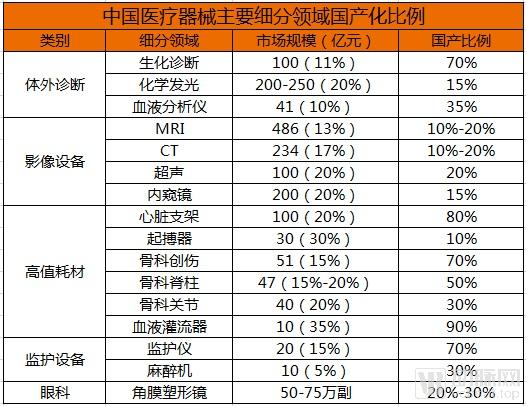
Source: Southwest Securities
According to data from Essence Securities, based on the aforementioned coronary stent implantation figures and combined with the estimated terminal sales price of coronary stents (RMB 9,247 per unit) from the "2017 China Health and Family Planning Statistical Yearbook," the terminal market size for cardiac stents in China was approximately RMB 10.24 billion in 2017. The compound annual growth rate (CAGR) is referenced against the CAGR of stent implantations, which is approximately 12.7%.More than 1 million coronary stents have been implanted.
In 2017, the end-market size for aortic and peripheral vascular stents in China reached RMB 4.04 billion: among which, the market size for endovascular interventional medical devices for the aorta was approximately RMB 1.03 billion, with a compound annual growth rate (CAGR) of 17.2%; the market size for peripheral vascular interventional medical devices was approximately RMB 3.01 billion, with a CAGR of 15.4%. The combined market size of the stent-based interventional medical device industry for related companies totaled approximately RMB 14.28 billion (RMB 10.24 billion + RMB 4.04 billion).
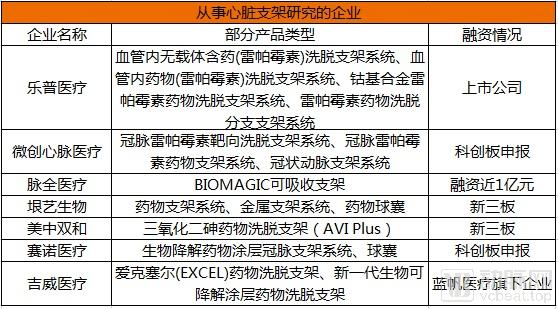
Domestic Companies Engaged in the Research and Sales of Cardiac Stents Data Source: VCBeat
In the field of cardiac stents, domestic brands not only hold a high market share but also lead in new product development.
Currently, conventional cardiac stents are widely used and technologically mature. However, patients must take anticoagulant medications for life after the procedure to prevent thrombus formation triggered by the metal stent within the coronary arteries. Even after physical recovery, many patients experience persistent psychological distress, which adversely affects their daily lives and work.
Therefore, scientists have invented a bioabsorbable stent that can dissolve on its own within the body and be absorbed by the organism.. This stent is made of polymer materials and can expand and support blood vessels when they are narrowed. After the drug is fully released and the blood vessel is reshaped, the stent gradually disappears, avoiding the risk of potential long-term local inflammatory reactions and thrombosis.
In March 2019, Lepu Medical’s bioresorbable sirolimus-eluting coronary stent system received approval for production. A few months earlier, Zhongshan Hospital of Fudan University successfully performed an implantation procedure using a new-generation thin-strut bioresorbable stent (BIOMAGIC), which was provided by the domestic company MicroPort Medical.
Currently, the BIOMAGIC stent is undergoing clinical trials at five hospitals in China: Peking University First Hospital, Shanghai Zhongshan Hospital, Beijing Anzhen Hospital, Shanghai Tongji Hospital, and Wuhan Asia Heart Hospital.
The number of valve surgeries in 2015 is projected to exceed 60,000 cases, with a growth rate of approximately 6–7% (based on the compound annual growth rate of cardiac valve surgeries at Fuwai Hospital from 2010 to 2017). The cost of consumables per surgery ranges from RMB 10,000 to RMB 60,000, depending on the materials used. Currently, the utilization rate of biological aortic valves in China is relatively low, at approximately 21%, while low-end mechanical valves remain mainstream. The estimated terminal market size is around RMB 1.2 billion (calculated based on an average consumable price of RMB 20,000).
Currently, the predominant treatment model in China is open-chest surgery. Based on our analysis of overseas markets, we believe that minimally invasive interventional surgery will become the mainstream approach in the future. Assuming a penetration rate of 10%, the corresponding market size would be approximately RMB 25 billion.。
Surgical aortic valve replacement (SAVR) is currently widely adopted; however, it involves significant surgical trauma, high risk, and slow postoperative recovery, making it intolerable for the vast majority of elderly patients with severe conditions.
After 16 years of development, transcatheter aortic valve replacement (TAVR) has gradually become the mainstream treatment for aortic valve disease internationally. Based on current indications, there are at least 500,000 patients in China who meet the criteria for TAVR, with the vast majority not having been hospitalized for treatment.
In addition to aortic valve disease, mitral and tricuspid valve disorders are also common cardiac valvular diseases. It is estimated that there are over 10 million patients in China with severe Mitral Regurgitation (MR) and Tricuspid Regurgitation (TR), yet the rate of surgical treatment remains below 2%, indicating a particularly vast market potential for therapeutic interventions in this field.
Edwards Lifesciences, the global leader in heart valve technology, is a premier company in the field with nearly 60 years of history since its founding. It went public in the early 2000s and has achieved an annualized return of 22.7% from its IPO to date.。
Edwards Lifesciences has grown into a multinational corporation with annual sales of $3.72 billion. In recent years, its product portfolio has increasingly focused on transcatheter therapies for heart valve diseases, maintaining a high growth rate. Revenue from this product series reached $550 million in 2012 and grew to $2.29 billion by 2018, representing a compound annual growth rate (CAGR) of 26.8%. This trajectory aligns with the gradually advancing trend toward minimally invasive treatments and further indicates that minimally invasive therapy represents the future direction of the Chinese market.
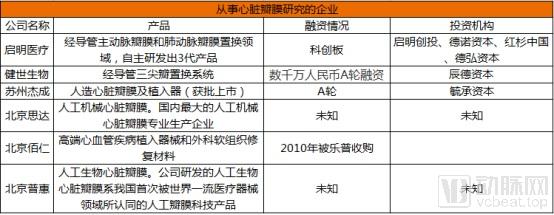
Domestic Companies Engaged in Heart Valve Research | Data Source: VCBeat
Electrocardiogram-based screening for cardiovascular diseases is currently the most common method for monitoring cardiac function.However, the number of doctors in China capable of interpreting electrocardiograms (ECGs) fails to meet demand. Many physicians who possess this skill lack the time and energy to perform such tasks, particularly at the primary care level, where most practitioners do not have the competence to interpret ECGs.. The advent of AI technology is highly likely to resolve this issue.
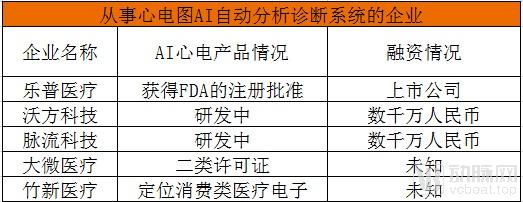
Currently, Lepu Medical is the most mature company in the field of AI-based ECG products. In November 2018, Lepu Medical issued an announcement stating that its wholly-owned subsidiary, Kaiweier, had independently developed the “AI-ECG Platform,” an artificial intelligence system for automated analysis and diagnosis of electrocardiograms. The platform received FDA registration approval on November 19, 2018, becoming the first AI-based ECG product from China to gain approval from the U.S. FDA.
Electrocardiography (ECG) is the most commonly used clinical diagnostic tool for various cardiovascular diseases, including arrhythmias, ventricular and atrial hypertrophy, myocardial ischemia and injury, and myocardial infarction. It offers several key advantages: First, it is highly cost-effective, with a resting ECG costing only RMB 10–30 and a 24-hour ambulatory ECG ranging from RMB 100 to 300. Second, it is non-invasive and free of side effects. Third, it has high accessibility, as ECG-enabled devices such as smart bands, watches, chest patches, and chest straps have permeated both daily life and clinical settings. Fourth, it provides comprehensive coverage, particularly for the full spectrum of conditions associated with chest pain.
Liu Chang, Head of AI at Lepu Medical, told VCBeat that Lepu Medical aims to build a comprehensive ECG industry ecosystem centered on its AI-ECG technology, encompassing various ECG hardware acquisition devices, an automated analysis software platform, and expert services. By leading the technological revolution in the field of electrocardiography, the company seeks to bring AI-powered ECG analysis, diagnosis, and services into hospitals, primary care settings, and homes, thereby meeting the growing demand for ECG examinations both domestically and internationally.
In addition to Lepu Medical, there are many other enterprises in China engaged in the development of AI-powered automated analysis and diagnostic systems for electrocardiograms (ECG).
Source: VCBeat
In the field of cardiology, in addition to the aforementioned products, artificial hearts, intravascular ultrasound, and innovative drugs have been areas of significant industry attention recently., VCBeat will continue to follow up. As the state and investment institutions increase their investment in technological products, these high-tech products are bound to stand out.