

How to Effectively Regulate Online Prescription Drug Sales? Eight Compliance Strategies from Industry Leaders
The pervasive integration of the internet into every aspect of life has become a reality. Beyond shopping and travel, healthcare—particularly diagnosis, treatment, and medication procurement—has emerged as a key domain of internet participation. Online medical consultations and online pharmaceutical sales have become an irreversible trend.
Compared with other sectors, the penetration rate of pharmaceutical e-commerce remains relatively low. However, due to the unique nature of the products sold, it has repeatedly been thrust into the spotlight. In light of the recent social controversy surrounding the online sale of prescription drugs, VCBeat is also closely monitoring the situation. To this end, we have conducted interviews with more than ten companies and industry experts in an effort to identify viable solutions.
Since 2014, the National Health Commission has issued the “Opinions on Promoting Telemedicine Services in Medical Institutions,” the “Technical Guidelines for the Construction of Telemedicine Information Systems,” and the “Management Specifications for Telemedicine Services (Trial),” to support the application of internet technologies in the healthcare sector. As a result, internet-based healthcare and online pharmacies have become new avenues for patients to address their health and medical needs.
At the routine press conference held by the National Health Commission (NHC) on April 25, 2019, Xue Haining, Deputy Director of the Department of System Reform under the NHC, stated that the NHC would continue to promote “Internet + Pharmaceutical Distribution,” advance the coordinated development of online and offline channels, and encourage the provision of “online ordering with in-store pickup” and “online ordering with home delivery” services. “Some large pharmaceutical distribution enterprises leverage third-party platforms to provide high-quality and efficient services such as drug warehousing and distribution, making it more convenient for the public to purchase and use medications.”
However, healthcare is a serious field, and state regulation has remained stringent in the areas of treatment and diagnosis. It was not until last September, when detailed implementation rules for internet-based healthcare—such as the Administrative Measures for Internet-Based Diagnosis and Treatment (Trial)—were released, that comprehensive guidance for online clinical services became available. Meanwhile, policies governing the online sale and regulation of prescription drugs have remained unclear, with debates over “prohibition” versus “liberalization” persisting in the industry for a long time.
Prescription drugs are not merely commodities; they are inextricably linked to patient safety. Therefore, ensuring their safety is far more critical than enhancing convenience, and the process of “physicians prescribing based on patient condition, followed by pharmacist review” must be strictly upheld. Recently, a high-profile incident involving patients being able to purchase large quantities of prescription drugs without a prescription has prompted media outlets to question the regulatory oversight of pharmacist review in pharmaceutical e-commerce.
Where Do the Problems Lie in the Online Sale of Prescription Drugs?
To clarify the ins and outs of online prescription drug sales, VCBeat first outlines the entire medical consultation and medication purchasing process—covering prescription sources, prescription review, drug regulation, and drug delivery—to identify where current problems lie.
First, under the traditional healthcare model, patients require prescription medications due to illness and the resulting need for treatment. Patients visit hospitals or clinics, where physicians make diagnoses and issue prescriptions. Patients then purchase the prescribed medications at the hospital or pharmacy and take them according to the instructions provided on the prescription.
Second is the internet-based model. Prescriptions originate from internet hospitals. Physicians make diagnoses and issue electronic prescriptions online based on the conditions of follow-up and chronic disease patients. Patients then use these electronic prescriptions to purchase medications at pharmacies or through online channels.
Regardless of the model, patients can purchase prescription medications online using a valid prescription. However, the current issue lies in the ability to obtain prescription drugs without a prescription. While some pharmaceutical e-commerce platforms require users to upload a prescription and only dispense medication after approval, patients may bypass this safeguard by uploading arbitrary non-prescription images that still pass verification. Furthermore, certain pharmaceutical e-commerce platforms do not implement any prescription review process at all.
In response to this situation, Associate Researcher Chen Qiulin, Director of the Social Security Research Office at the Institute of Population and Labor Economics, Chinese Academy of Social Sciences, argues that from a policy perspective, while over-the-counter drugs are permitted to be marketed directly to consumers, there must be a physician intermediary between prescription drugs and patients. It is the physician who should determine whether a patient needs medication and which specific drug is appropriate, rather than allowing unrestricted self-selection. However, the issue of purchasing prescription drugs without a valid prescription persists in both offline and online settings.
The online sale of prescription drugs is procedurally complete. However, issues such as lax prescription review by pharmaceutical e-commerce platforms and post-sale prescription supplementation have arisen when patients purchase prescription medications.
Director Chen Qiulin also stated that online consultations and prescription issuance via internet hospitals, and the online sale of prescription drugs by pharmaceutical e-commerce platforms, are two entirely different concepts. While the processes may appear similar to the general public, the missions they undertake differ, which determines the nature of the services provided by the platforms: Is the primary goal to facilitate medical consultations for patients, or to make purchasing medications more convenient? Is the profit model based on charging for medical services, or on generating revenue from drug sales?
If prescription drugs are sold directly to patients over the counter, allowing them to select medications by reading drug labels themselves, and pharmacies subsequently retroactively issue prescriptions merely to create a facade of “compliance,” the process is inherently flawed. In such a scenario, medication decisions originate from patients rather than physicians, raising serious concerns about medication safety and rationality.
If it is an internet hospital, can it directly sell prescription drugs? No. Medical consultations provided by internet hospitals must be genuine clinical encounters, not merely a facade. Even for prescription renewals handled by physicians in convenience outpatient clinics, relevant institutional protocols must be in place to ensure patient medication safety.
Under such circumstances, what should the sales process for prescription drugs be? Director Chen Qiulin believes there are two scenarios.
Scenario 1: A patient seeks medical consultation at a hospital (including internet hospitals). After the consultation, the physician issues a prescription, and the patient obtains the medication from the hospital’s pharmacy (including those of internet hospitals) based on the prescription. In this case, the hospital bears liability for both prescription issuance and prescription review. The prescribing physician must sign the prescription, and the reviewing pharmacist must also provide their signature.
Scenario 2: A patient obtains a prescription at a hospital but does not fill it at the hospital pharmacy; instead, they take the physician’s prescription to purchase medications from retail pharmacies (including online pharmacies). This phenomenon is known as “prescription outflow.” In this context, what responsibilities do retail and online pharmacies bear? First, patients must present a genuine and valid prescription when purchasing prescription drugs; prescription drugs shall not be sold without a prescription issued by a licensed physician. Second, pharmacies must have licensed pharmacists review the prescription for its source, date, potential drug–drug incompatibilities, dosage appropriateness, and validity. After verification, the pharmacist must sign to assume responsibility. If any discrepancies are identified, the pharmacy must refuse to dispense or sell the prescription medication; if necessary, corrections or re-signature by the original prescribing physician are required. Furthermore, pharmacies must comply with the Drug Administration Law of the People’s Republic of China, which prohibits open-shelf sales and promotional activities for prescription drugs.
Online sales of prescription drugs have inherent advantages in process supervision and post-event data traceability, and pharmaceutical e-commerce platforms should likewise assume this responsibility. The sale of prescription drugs requires strict prescription review by licensed pharmacists. Enterprises must conduct rigorous audits and maintain proper data storage; prescription drugs shall not be displayed for open-shelf sales or promoted.
Director Chen Qiulin also highlighted a key point: although the government has been consistently promoting the development of “Internet + Healthcare,” internet companies must also exercise self-discipline. Regulatory oversight by the government will undoubtedly be strengthened; any attempt at self-deception will inevitably lead to problems. Therefore, it is essential to cherish this favorable environment.
The industry boasts immense growth potential, with policy support and regulatory standardization advancing in tandem.
According to data released by the Market Order Department of the Ministry of Commerce, by the end of 2017, the market size of China's pharmaceutical sales terminals had reached RMB 1.6 trillion, with a compound annual growth rate (CAGR) of 12.6% over the previous five years, demonstrating a trend of rapid growth. During the same period, the market size of China's pharmaceutical e-commerce sector was only RMB 121.1 billion, accounting for 7.4% of the total pharmaceutical sales terminal market. Among this, B2C sales were even lower, at approximately RMB 10 billion, indicating substantial potential for future development.
With the growth of online consumer spending and pharmaceutical e-commerce, the state’s stance on the online sale of prescription drugs has shifted from an initial outright ban to the successive introduction of a series of policies and documents aimed at supporting and regulating this practice. The details are as follows:
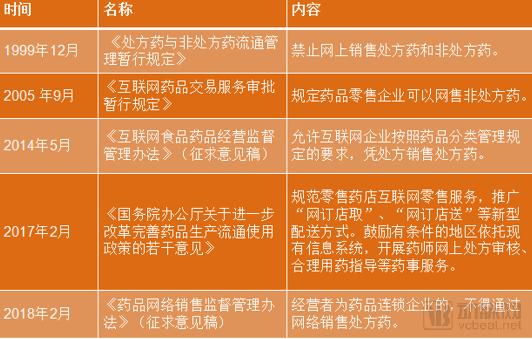
On May 28, 2014, the China Food and Drug Administration (CFDA) released the “Administrative Measures for the Supervision of Online Food and Drug Operations (Draft for Comments),” which permitted internet enterprises to sell prescription drugs against prescriptions in accordance with the requirements for classified drug management. The release of this draft spurred a large number of pharmaceutical companies to enter the e-commerce sector.
For the pharmaceutical e-commerce industry to achieve healthy and rapid development, it must strictly comply with regulatory policy requirements; otherwise, market chaos could further provoke the introduction of stringent policies, delivering a fatal blow to the sector.
At a seminar themed “Reform and Development of Retail Prescription Drugs” held on June 20, 2019, participating experts put forward the following view: The online sale of prescription drugs represents a new business model that should be affirmed provided it meets regulatory, procedural, and technical requirements.
To regulate the online sale of prescription drugs, the focus should return to substantive issues: how to establish regulatory frameworks to ensure that sales are based on authentic prescriptions; how to set standards for warehousing and logistics; and how to implement safeguards for personal data protection, rather than concentrating on commercial formats.
Finally, through strict regulation, ensure that the online sales of prescription drugs and the sales in offline medical institutions have consistent processes and links to address the new problems arising from online sales.
Jin Enlin, General Manager of the Pharmaceutical Division at JD Health, stated at the seminar that, as an industry practitioner, he hopes for a clear resolution on the online sale of prescription drugs at the earliest opportunity, given that the past three years have been marked by ongoing dilemmas and difficulties regarding compliance. Currently, all prescription drugs sold online by JD Health are ambient-temperature medications. The company strives to select subcategories with relatively higher safety profiles and more controllable risks within the broader prescription drug category. There is substantial market demand for online prescription drug sales; chronic disease patients repurchase medications an average of six times per year, with frequent buyers purchasing once or twice weekly. Therefore, we hope for a conditional liberalization of online prescription drug sales. Following such liberalization, standardized regulations should be implemented, including specific standards for delivery and warehousing processes, rather than allowing unregulated industry growth that could lead to a "bad money drives out good" scenario.
At the seminar, Zhang Ze, General Manager of Tmall Pharmacy, stated on drug safety: “Some pharmacies do not have licensed pharmacists. Today, the internet can address this issue by centralizing pharmacist services. Through headquarters-based platforms, remote prescription review can be implemented, which not only ensures medication safety for users but also enhances the operational efficiency of the entire enterprise—indeed, a win-win solution.”
Pharmaceutical E-commerce and Internet Healthcare Companies Discuss Prescription Drug Sales
In response to these emerging issues, VCBeat promptly contacted and interviewed relevant companies and individual experts, who discussed the online sale of prescription drugs—either under their real names or anonymously—and proposed methods for improvement.
Below is a summary and compilation by VCBeat based on the viewpoints presented by various parties:
WeDoctor
In accordance with the Measures for Medical Quality Management, the Administrative Measures for Internet Hospitals, and the Specifications for Prescription Review in Medical Institutions, WeDoctor has established a professional prescription review team. All pharmacists on this team have passed the National Health Professional and Technical Qualification Examination, hold qualifications at the level of Junior Pharmacist or above, and possess more than five years of professional experience.
This year, WeDoctor successively released the “Management Standards on Further Strengthening Prescription Responsibility” and the “Management Standards for Electronic Prescription Responsibility Signatures at Wuzhen Internet Hospital,” further enhancing and standardizing the sense of responsibility among medical personnel on the Wuzhen Internet Hospital service platform. After submitting and completing their information, users can consult with physicians via the WeDoctor App; following thorough communication, physicians will issue prescriptions based on users’ symptoms. Submitted prescriptions are reviewed by a back-end prescription audit team. Only upon approval can users proceed to payment, after which third-party partner companies verify and dispense the medications. If a prescription fails the audit, the physician must revise it; if three consecutive revisions fail, the system automatically terminates the consultation, and the user is unable to purchase the medication.
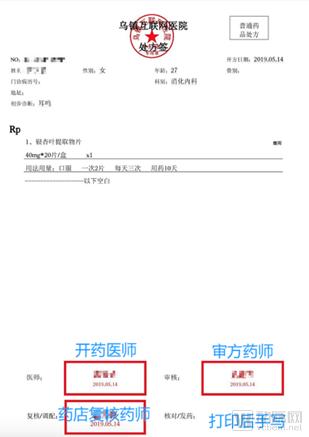
To ensure medication safety for users, electronic prescriptions issued by WeDoctor (as shown below) are valid only for purchases within the platform or at designated dispensing pharmacies. They are applicable solely to the current consultation on the WeDoctor platform, thereby preventing unreasonable practices such as patients downloading or screenshotting prescriptions to make repeated purchases at multiple pharmacies.
Zhang Dingding, Marketing Director at Haoyaoshi
Prescription drugs sold online or in offline pharmacies must be accompanied by a valid prescription and undergo review by a licensed pharmacist. These procedures are fully established. Prescription medications available for online purchase are primarily those used for chronic diseases, conditions related to the “three highs” (hypertension, hyperglycemia, and hyperlipidemia), and dermatological disorders, which generally have a higher safety profile; hence, consumers seek the convenience of purchasing them online. However, companies need to strengthen their prescription management protocols by strictly verifying user-uploaded prescriptions and enhancing technological capabilities for recognizing photographed prescriptions and processing electronic prescriptions.
Zhong Yi, Founder of Yaofangwang Mall
Following the State Council’s 2017 abolition of the administrative licensing system (Categories A, B, and C) for online drug trading, the China Food and Drug Administration (CFDA) issued the Notice on Strengthening Supervision over Online Trading of Drugs and Medical Devices (Shi Yao Jian Ban Fa [2017] No. 144). The Notice explicitly stated that, after the State Council abolished the administrative licensing for online drug trading, food and drug regulatory authorities in all provinces, autonomous regions, and municipalities directly under the Central Government shall “fulfill their supervisory responsibilities, establish and improve regulatory systems for enterprises providing online drug and medical device trading services (third-party platforms), and standardize online drug and medical device trading practices in accordance with the principle of ‘consistency between online and offline operations.’”
Although enterprises have established processes and systems in accordance with the “online-offline consistency” principle, requiring consumers to upload prescriptions for drugs that must be sold by prescription only and having licensed pharmacists at partner pharmacies review these prescriptions in compliance with prescription review standards, issues persist. These include consumers arbitrarily uploading non-prescription images and licensed pharmacists at partner pharmacies failing to conduct reviews strictly in accordance with prescription review standards.
First, the prescription-based sales management process for "drugs that must be sold by prescription only" requires further refinement of requirements and strengthened oversight. Second, consumers need enhanced alerts and procedural guidance to prevent arbitrary purchases. Third, licensed pharmacists stationed at pharmacies should be subject to stricter control through reinforced supervision and improved prescription review systems, thereby eliminating non-compliance with prescription review standards and arbitrary approval of prescriptions.
Huang Hui, Deputy General Manager of Yun Kai Ya Mei
In accordance with the requirements of the National Medical Products Administration (NMPA), the sale of prescription drugs must be based on valid prescriptions and subject to review by licensed pharmacists. Due to the high demand for online purchases of prescription medications and the relatively limited number of merchants capable of fulfilling such orders, it is impractical for merchants to manually review each prescription individually. Prior to integrating with internet hospitals, users either uploaded prescriptions themselves or completed questionnaires sent via SMS by merchants as a procedural formality. After integration with internet hospitals, the system automatically generates relevant information for review by physicians and pharmacists, thereby improving efficiency. With continuous optimization of processes and increased participation from stakeholders, current challenges are expected to be resolved. The key lies in ensuring the involvement of physicians from internet hospitals and licensed pharmacists in the workflow. While leveraging technological means to enhance efficiency will inevitably increase operational costs for enterprises, this is a necessary burden that companies must bear.
Zhang Yibing, General Manager of Akang Chain Pharmacies
This incident also highlights the pain points in the circulation of prescription information. The traditional approach involves issuing paper prescriptions at hospitals, which still suffers from the inability to verify prescription information and cannot guarantee 100% accuracy. The current solution is to establish an electronic prescription circulation and sharing platform. Prescriptions issued are uploaded to this platform, allowing verification of their authenticity whether patients purchase medications at physical pharmacies or through online pharmaceutical e-commerce platforms.
Only after a nationwide electronic prescription circulation and sharing platform is established, achieving information and system integration, will stakeholders be able to verify the authenticity and usage status of each prescription with a simple scan—much like swiping an ID card—whenever needed. Until such a platform is in place, the entire industry must collaborate to address these challenges, requiring greater investments in both manpower and technology.
Xu Feng, Partner at Haoxinqing
This incident has exposed issues with prescription verification in pharmaceutical e-commerce. The online sale of prescription drugs inherently suffers from procedural flaws due to the lack of physician involvement. Internet hospitals primarily cater to patients with chronic conditions and those seeking follow-up consultations, featuring robust regulatory and review processes for prescription verification; prescriptions are subsequently transferred to pharmaceutical e-commerce platforms or offline pharmacies. To comply with national regulations, pharmaceutical e-commerce enterprises must exercise self-discipline in the following three areas: First, avoid providing initial diagnoses and serve only patients with chronic conditions or those seeking follow-up care. Second, regarding mental health disorders—a focus of Haoxinqing—many involved psychotropic and narcotic drugs are under strict state control; the online sale of these medications must be strictly prohibited. Third, enterprises must not compromise medication safety for the sake of economic benefits.
He Side, CEO of Drug Terminal Network
The issues surrounding the sale of prescription drugs are not new; rather, they stem from historical precedents. These challenges did not emerge only recently, nor did they arise solely with the advent of online pharmaceutical services. Similar situations occurred in the past within offline settings, but due to the limited visibility of brick-and-mortar pharmacies and slower information dissemination, they did not spark the widespread discussion seen today.
From a concrete perspective, I believe there are three main reasons. First is the profit-driven nature of enterprises; the prescription drug market holds significant appeal. Second is market trends: demand exists, and convenience has been provided. Third, laws and regulations remain imperfect; while leaving room within a restrictive framework, they fail to provide specific directions for implementation.
Looking ahead, regulatory stances must be clearly defined. If deregulation is pursued, it must be supported by corresponding regulations; if not, channels should be closed entirely, leaving no room for ambiguity. On the basis of deregulation, market access criteria must be specified and supervision strictly enforced. Subsequent steps should include establishing national or regional prescription-sharing platforms, increasing personnel and technical investments in e-commerce platforms, implementing stringent penalties, and applying online regulatory standards equivalent to those for offline operations.
Healthy Development Also Requires Industry Self-Regulation
Under the premise of advancing both policy support and regulatory standardization, industry associations have launched self-disciplinary conventions to further promote the healthy development of the sector. For instance, in February this year, the Yinchuan Internet + Medical Health Association initiated the “Self-Disciplinary Convention on Standardized Pharmaceutical Care Management and Services Provided by Internet Hospitals.” The convention stipulates that all internet medical institutions must genuinely employ qualified pharmacists to conduct prescription reviews, establish prescription review systems and related procedures, and ensure their effective implementation—avoiding mere formalities or superficial compliance—and strictly prohibit the practice of “pharmacist license affiliation” within internet medical institutions.
Through interviews with these enterprises, VCBeat has summarized eight essential self-discipline guidelines that pharmaceutical e-commerce companies must adhere to. It is hoped that companies will strictly comply with these guidelines, prioritize public welfare, implement rigorous review processes for prescription drugs, and accept government supervision.
I. Raise the entry threshold for online stores on platforms, and conduct strict review and control in terms of scale and quality.
II. All internet-based medical institutions shall genuinely staff qualified pharmacists to conduct prescription reviews, establish prescription review systems and related procedures, and ensure their effective implementation.
III. Enhance technical capabilities to improve the efficiency of electronic prescription review. Electronically store data related to electronic prescriptions and patient information, subject to regulatory oversight.
IV. To ensure the safe and rational use of medications by patients, all internet-based medical institutions and pharmaceutical e-commerce platforms shall establish pharmacy and therapeutics committees to conduct rigorous reviews and assess medication risks.
V. Strictly control the source of pharmaceuticals and establish a drug traceability mechanism.
VI. Strictly verify the qualifications of drug manufacturers and product inspection reports in accordance with relevant regulations.
VII. Enterprises shall establish an internal network monitoring system, conducting random spot checks and regular audits.
8. The state shall promptly establish regulations adapted to current online sales and remote diagnosis and treatment services, so as to provide institutional safeguards for the healthy development of online sales. National and local pharmaceutical regulatory authorities shall also strengthen review processes and strictly investigate and punish violations.
Authors: Liu Zongyu, Gao Kangping, Zhang Xiaoxu