

Siemens Healthineers: A Century of Innovation in Medical Imaging – From Monopoly to Market Transformation

Siemens Healthineers
Integrated Healthcare Service Provider
Siemens is the world’s oldest electrical and electronics company. Founded in 1847, Siemens is now 172 years old. Yet this century-old enterprise remains as vigorous as a young man, holding a pivotal position across multiple fields.
Siemens bears multiple labels: it is the world’s largest conglomerate in the electrical industry, a globally renowned leader in automation, and a major player in medical devices. Among these, Siemens’ prominence in the medical device sector is largely attributable to its subsidiary, Siemens Healthineers.
Siemens Healthineers remains the most profitable subsidiary under Siemens, with a gross profit margin of 19%. In the second quarter of 2019, Siemens Healthineers reported quarterly revenue of €3.505 billion ($3.92 billion), compared to €3.226 billion in the same period of the previous year. Of this, Imaging generated €2.137 billion, Diagnostics generated €1.018 billion, and Advanced Therapies generated €391 million. Net profit for the quarter amounted to €381 million, up from €308 million in the same period of the previous year.
Siemens Healthineers was founded in 1896 and has a history spanning more than 120 years. Becoming a century-old enterprise is a shared dream among all companies, yet the path to this aspiration is often fraught with thorns and difficult to traverse. How has Siemens Healthineers endured through the long years that most enterprises fail to survive, distinguished itself from numerous competitors, and maintained its enduring momentum for growth? In an attempt to answer this question, VCBeat (WeChat ID: vcbeat) has herein outlined its major development milestones and key product portfolio.
Real-time ultrasound scanners have long been indispensable devices in the field of medical imaging, widely used in cardiology, pelvic and abdominal disease diagnosis, and neurosurgery. X-ray machines are employed by medical professionals for disease diagnosis, treatment, and radiation protection. Both types of equipment hold significant importance in the medical field. Coincidentally, these two historic inventions originated from the same company—Siemens Healthineers.
Of course, the achievements of Siemens Healthineers extend far beyond the invention of the first real-time ultrasound scanner and X-ray machine. A review of its development reveals that the company’s more than century-long history is also a chronicle of global advancements in medical devices and technology.
In 1816, Werner von Siemens, the founder of Siemens, was born into a farming family in Hanover, Germany. Due to financial hardship, Werner joined the military after completing secondary school. During his military service, he was sentenced to five years’ imprisonment for engaging in a duel.
Prison life did not dampen Werner’s fighting spirit. To help raise tuition funds for his younger siblings, he established a small electronics laboratory in prison and invented electroplating techniques for silver and gold that were highly advanced for the time.

Werner von Siemens (Image from the official Siemens website)
As is well known, Werner founded the Siemens Telegraph Construction Company based on his electrical inventions. However, strictly speaking, the field Werner first engaged with was not telegraphy but healthcare.
In 1844, Werner used one of his electrical inventions, the Voltaic inductor, to treat his brother Friedrich’s toothache. The symptoms improved following electrotherapy. Three years later, he founded the Siemens Telegraph Company.
Werner’s connection to the medical field was not rekindled until half a century after the founding of Siemens Telegraph Company. In 1895, German physicist Wilhelm Röntgen discovered X-rays. Werner keenly recognized that X-rays would inevitably have a profound impact on the medical sector. He began researching X-rays, and just one year later, Siemens produced its first X-ray machine for medical diagnosis.
This X-ray machine enabled Siemens to successfully enter the medical field, bringing it widespread acclaim.
Due to insufficient voltage, the X-ray machines invented by Siemens were limited to superficial radiation therapy for the skin. To enable deep-tissue treatment, Siemens introduced the rotating anode tube for X-ray machines in 1933. X-ray machines equipped with rotating anode tubes could withstand higher electrical loads, laying the foundation for the development of modern X-ray technology.
In 1950, Siemens developed the Betatron electron accelerator, achieving a key breakthrough in deep-tissue radiotherapy. This device utilized magnetic fields to accelerate electrons along a circular path to near-light speeds, thereby enabling effective irradiation of deep-seated tumors for the first time. This technology is hailed as the pioneer of modern radiation therapy.
Siemens places great emphasis on collaborating with distinguished physicists and scientists. In 1953, Siemens partnered with Swedish physician Inge Edler and physicist Carl Hellmuth Hertz in the medical field, becoming the first company to apply ultrasound technology to echocardiography.
Today, ultrasound technology remains the standard method for electrocardiogram examinations.
In the 1960s, Siemens engineer Ralph Soldner developed Vidoson, the world’s first real-time ultrasound diagnostic system. This device enabled physicians to observe internal bodily movements in patients. To this day, real-time ultrasound diagnostics remain a critical tool in prenatal care.
In the coming years, Siemens Healthineers will continue to deepen its presence in the field of medical imaging.
The Medical Imaging division is Siemens Healthineers’ most proud department. Among its offerings, computed tomography (CT) scanners and magnetic resonance imaging (MRI) systems have generated substantial revenue for the company.
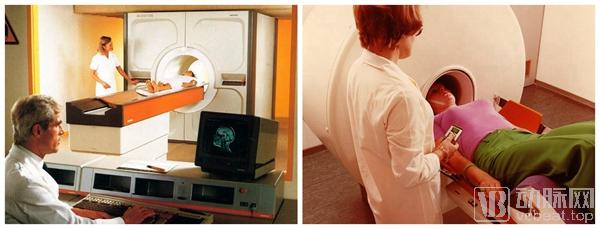
Siemens Healthineers’ First CT Scanner and First MRI System (Image from the Siemens Healthineers Official Website)
Thanks to the invention of computers, Siemens released its first CT scanner in 1975 and unveiled tomographic images of the human head for the first time at the annual meeting of the Radiological Society of North America (RSNA) in Chicago a year later. With this instrument, physicians were able to visualize soft-tissue structures of the brain for the first time.
Just three years later, another groundbreaking invention was born. The first MRI system from Siemens Healthineers was developed in a small wooden cabin at the Siemens research facility. In March 1980, this system captured the first image of a human brain.
For a long time, physicists widely believed that CT and PET could not be combined. However, Siemens Healthineers overturned this prevailing view among physicists.
In 2000, Siemens became the first company to fully integrate positron emission tomography (PET) with CT, launching the PET-CT scanner and providing a more effective approach for cancer diagnosis and treatment. That same year, the device was named “Medical Invention of the Year” by Time magazine.
In January 2015, Siemens announced that it would spin off its healthcare business into a newly established, independently operated company within the group. One month later, Siemens Healthineers appointed Bernd Montag as Chief Executive Officer. This move marked the beginning of a new chapter in the development of Siemens Healthineers.
In 2018, Siemens Healthineers successfully listed on the Frankfurt Stock Exchange, raising €4.2 billion ($5.2 billion) through its initial public offering (IPO). The successful listing of Siemens Healthineers was one of the largest IPOs in Germany in nearly two decades and one of the biggest in Europe in 2018.
Siemens adheres to the principle: “I won’t sell the future for a short-term profit.” It is this very philosophy that underpins Siemens Healthineers’ focus on long-term interests, driving continuous product innovation and strategic adjustments.
In 2017, Siemens Healthineers announced a major strategic realignment. Previously, its healthcare business was divided into six segments: Imaging Diagnostics, Laboratory Diagnostics, Clinical Therapy, Point-of-Care Testing, Ultrasound Products, and Integrated Services. Following the restructuring, the healthcare business was organized into three divisions: Imaging Diagnostics (including Ultrasound), Advanced Therapies, and Diagnostics.
Imaging Diagnostics Services
The discovery of X-rays ushered in a new era in the field of medicine. Medical imaging is currently the primary revenue source for Siemens Healthineers, with nearly two-thirds of its revenue derived from its globally leading Medical Imaging division. In the second quarter of 2019, the Medical Imaging division generated €2.137 billion in revenue, significantly surpassing the other two divisions.
The substantial profitability of the medical imaging division is inseparable from Siemens Healthineers’ robust innovation capabilities in the field. Siemens Healthineers has successively launched multiple industry-first imaging devices, leading the advancement of medical imaging technology.
Following the PET-CT scanner, Siemens Healthineers launched the Biograph mMR, the world’s first MR-PET system capable of simultaneous MRI and PET scanning, in late 2012, with its initial market release in Japan.
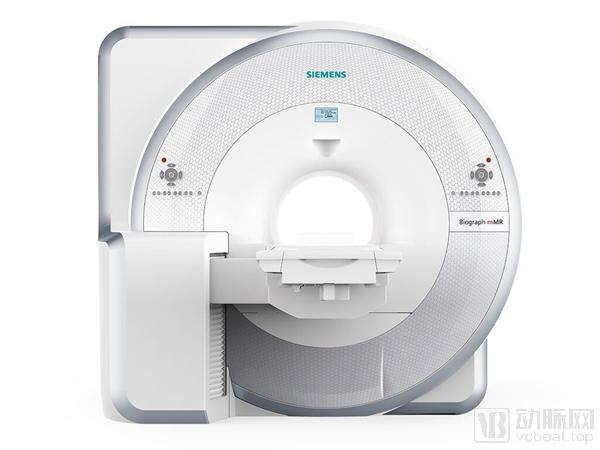
Biograph mMR System (Image from the Siemens Healthineers official website)
As the world’s sole manufacturer capable of producing integrated MR-PET systems, Siemens Healthineers’ Biograph mMR system achieves seamless integration of magnetic resonance imaging and molecular imaging, enabling simultaneous acquisition of precise spatial localization and image fusion on a single platform. The two imaging modalities operate without mutual interference and are organically combined, thereby assisting physicians in making more accurate diagnoses of cancer and neurological disorders.
MAGNETOM Terra, developed by Siemens Healthineers after 15 years of research, is currently one of the most powerful imaging devices in the world. In 2017, the 7T MRI system MAGNETOM Terra received CE certification.
MAGNETOM Terra can detect functional signals that were previously undetectable, becoming an important tool for studying conditions such as depression, Alzheimer’s disease, drug addiction, and internet addiction. More significantly, the 7T system offers high-resolution spectroscopic imaging and supports multinuclear imaging, playing a crucial role in nuclear imaging of physiological and metabolic processes. This will greatly expand the scope of research into cognitive brain functions and the prevention and treatment of diseases.
The Acuson Sequoia ultrasound system is one of the flagship products in the medical imaging department. The history of this system dates back to 1996.
In 1996, Siemens Healthineers printed the first 2D image of a goldfish using its Sequoia ultrasound system. Two decades later, the contrast-enhanced imaging capabilities of the Sequoia ultrasound system remain irreplaceable, and it continues to serve as the primary contrast imaging workhorse in major hospitals.
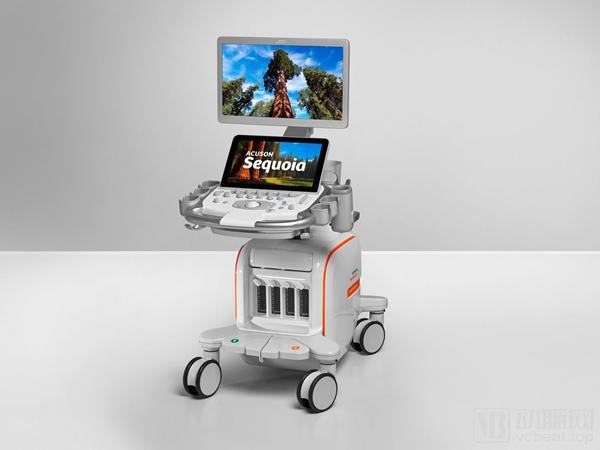
Next-Generation Sequoia Ultrasound System (Image from Siemens Healthineers Official Website)
In March 2019, Siemens Healthineers launched the next-generation Sequoia ultrasound system. This new generation of systems not only seamlessly integrates cutting-edge technologies such as ultrasound, low-noise analog circuitry, digital beamforming, image design, artificial intelligence, and visualization with targeted transmission modes, but also boasts an ultra-high image signal-to-noise ratio, significantly overcoming the limitations of traditional ultrasound beams.
Advanced Therapies Business
In recent years, major healthcare giants have been emphasizing the development of “integrated diagnosis and therapy,” and Siemens Healthineers is no exception. In 2000, Siemens Healthineers established its Advanced Therapies division and expanded its product portfolio through commercial collaborations and independent research and development.
The Advanced Therapies Division is dedicated to integrating imaging technologies and software applications to support the entire continuum of care, from diagnosis and treatment to post-treatment follow-up.
In 2003, Siemens announced a partnership with Stereotaxis, a leader in innovative robotic technology, to pioneer magnetic navigation technology in the field of interventional cardiology. This technology is used for treating arrhythmias and performing endovascular procedures. The integration of Stereotaxis’s Niobe Magnetic Navigation System with Siemens’ Axiom Artis dFC digital fluoroscopy system helps physicians identify anatomical features, thereby reducing procedure time and associated costs.
In 2012, the Advanced Therapies division launched the CLEARstent Live stent. This stent features real-time high-definition visualization and HeartSweep advanced coronary panoramic imaging, enabling comprehensive coverage of the entire coronary intervention workflow—from preoperative diagnosis and intraoperative real-time guidance to postoperative outcome assessment.
During complex procedures such as those required for treating myocardial or valvular diseases, cardiologists need to obtain information on soft tissues and blood flow from ultrasound diagnostics, as well as detailed vascular imaging from angiography. There is a significant demand among physicians for products that combine these two imaging capabilities. In 2017, the Advanced Therapies division developed the software application syngo TrueFusion. By displaying ultrasound data overlaid on real-time fluoroscopic images, this software consolidates all necessary information into a single image, thereby combining the advantages of both ultrasound and angiographic imaging modalities.
As Siemens Healthineers’ clinical therapy portfolio primarily focuses on cardiovascular and oncology, the company currently offers a limited range of products in its Advanced Therapies business. However, the establishment of a dedicated Advanced Therapies division underscores Siemens Healthineers’ strategic emphasis on this area, and the company is poised to significantly increase its investment in this segment in the future.
Medical Diagnostic Products
With the advancement of molecular medicine, Siemens planned to enter the medical diagnostics market in 2006. Surprisingly, this innovation-focused company chose to establish its medical diagnostics product line through a major acquisition.
In April 2006, Siemens Healthineers acquired Diagnostic Products Corporation (DPC) for €1.5 billion. As one of the global leaders in immunodiagnostics, DPC specialized in the development, manufacturing, and distribution of automated body fluid analyzers for the diagnosis of cancer, heart disease, and allergies. This acquisition successfully enabled Siemens Healthineers to enter the laboratory diagnostics sector.
Just three months later, Siemens acquired Bayer’s Diagnostics division from Bayer for €4.2 billion. As a global market leader in clinical chemistry, Bayer Diagnostics held leading positions in laboratory automation and hematology (blood cell diagnostics). This acquisition enabled Siemens to gain molecular diagnostic technologies based on genetic analysis and nucleic acid testing.
Siemens Healthineers’ ambitions in the field of medical diagnostics extend far beyond this. In October 2007, Siemens Healthineers acquired the U.S.-based in vitro diagnostics company Dade Behring for $7 billion. Dade Behring primarily engaged in the research and development, production, and sales of in vitro diagnostic systems that analyze patients’ blood and tissue samples to diagnose cancer, allergies, and infertility.
Through three acquisitions, Siemens Healthineers has built a robust medical diagnostics portfolio, becoming the world’s second-largest medical diagnostics company, trailing only Roche.
However, in recent years, the performance of the medical diagnostics division has been less than satisfactory. In the second quarter of 2019, Siemens Healthineers reported quarterly revenue of €3.505 billion, while its medical diagnostics division generated only €391 million.
In August 2016, Siemens Healthineers launched Atellica, a flagship in vitro diagnostics product. Atellica is a next-generation clinical chemistry and immunoassay system, developed by the company over more than a decade. The system is highly automated, offering rapid and accurate testing capabilities. It utilizes magnetic levitation technology, enabling sample transport speeds ten times faster than traditional conveyor belts. With a throughput of 400 samples per hour, it significantly enhances overall laboratory testing capacity.
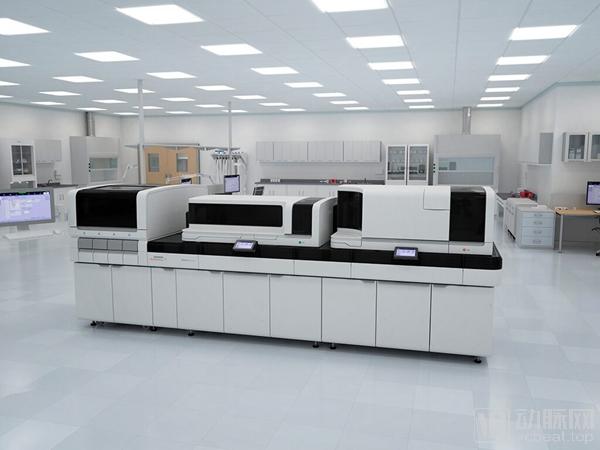
Atellica Biochemistry and Immunoassay System (Image from the Siemens Healthineers official website)
Atellica has now become the core of Siemens Healthineers’ medical diagnostics business, with the company leveraging this product to challenge the diagnostics sector dominated by Roche and Abbott. Meanwhile, Siemens Healthineers is revitalizing its underperforming diagnostics division, aiming to boost revenue growth to 4%–6%.
Rooted in China
Siemens Healthineers’ ties with China span over a century. In 1899, Siemens Healthineers provided China with its first X-ray system. In 1988, the first MRI scanner was installed in China.
Among numerous foreign-funded enterprises, Siemens Healthineers was the first to implement a localization strategy in China.
In 1992, Siemens Healthineers established Shanghai Siemens Medical Equipment Co., Ltd. (SSME), successfully entering the Chinese market. Subsequently, in 1999, Siemens Healthineers set up its Shanghai R&D Center, which became the company’s only overseas CT R&D center outside its German headquarters.
SSME has secured over 500 highly valuable granted patents and independently developed a range of CT and X-ray products. Medical devices manufactured by SSME not only meet domestic demand in China but are also exported to more than 150 countries and regions worldwide.
In 2002, Siemens Healthineers established Siemens (Shenzhen) Magnetic Resonance Ltd. (SSMR) in Shenzhen. By integrating German quality with local Chinese resources and talent, the company achieved localized R&D and manufacturing for its full product portfolio, including 0.35T low-field MRI systems as well as 1.5T and 3.0T high-field MRI systems.
Each year, over 70% of the products launched by SSMR are exported overseas, accounting for one-third of Siemens’ global MRI production volume, thereby achieving the goal of serving China and the world with local innovation in China.
Currently, Siemens Healthineers has established five major production and R&D bases in Shanghai, Shenzhen, Wuxi, and Suzhou, China. It holds more than 560 patents in China, and its products and solutions are deployed in over 12,000 hospitals across the country. Siemens Healthineers’ Chinese subsidiary has evolved into a locally rooted company with a global background.
Building a Digital Healthcare Ecosystem
Supported by imaging and interventional technologies, Siemens Healthineers is leveraging emerging technologies such as artificial intelligence, big data, and cloud computing to build a digital healthcare ecosystem.
China has become the primary hub for Siemens Healthineers to build its digital healthcare ecosystem.
Recently, at the 2019 Smart Healthcare Summit, Siemens Healthineers announced that it had signed memoranda of understanding with Tencent Healthcare, Deepwise, Yasen, and Zhuyitai to jointly promote the development of China’s digital healthcare ecosystem.
teamplay, a cloud-based big data platform, serves as a cornerstone of Siemens Healthineers’ strategic layout for its digital healthcare ecosystem. By connecting healthcare institutions with their imaging equipment, teamplay enables seamless interaction and connectivity among hospitals, imaging specialists, and imaging devices. It also collects and analyzes the vast amounts of data generated by these devices, empowering physicians to provide more precise diagnostic recommendations and personalized treatment plans for patients.
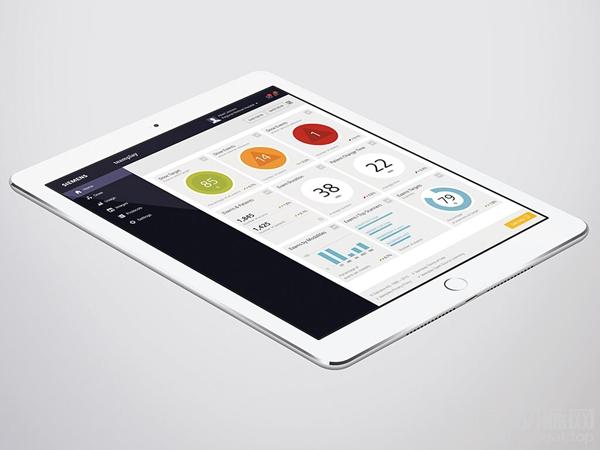
Teamplay (Image from the Siemens Healthineers official website)
Siemens Healthineers refers to Teamplay as the “Apple Store” of the digital healthcare ecosystem. Currently, the platform hosts approximately 20 to 30 partner third-party independent companies and connects imaging equipment from over 200 hospitals.
With the advancement of precision medicine and the application of high-tech solutions such as big data and artificial intelligence, it is no surprise that digital strategy has become a focal point for major companies. However, whether Siemens Healthineers can harness the power of digital healthcare through its teamplay platform remains to be seen over time.
Chinese Companies Break the Monopoly
For a long time, Siemens Healthineers, GE Healthcare, and Philips have monopolized approximately 70% of China’s medical device market. However, with the rapid development of domestic medical device enterprises and increased policy support, multinational giants, including Siemens Healthineers, are now feeling mounting competitive pressure.
Among Chinese enterprises, United Imaging Healthcare is undoubtedly a dark horse in the medical device sector. Positioning itself in the high-end medical market, the company places “independent R&D” at the core of its strategy.
United Imaging Healthcare is currently the only company in China with the capability to manufacture PET-CT systems. Since its establishment in 2003, the company has dedicated three years to research and development, launching ten high-end medical products, including advanced medical equipment such as digital X-ray systems, X-ray computed tomography (CT) scanners, magnetic resonance imaging (MRI) systems, and PET-CT systems.
Although United Imaging Healthcare is a Chinese company, a review of its corporate profile reveals that it maintains intricate ties with the foreign enterprise Siemens Healthineers.
Zhang Qiang, founder of United Imaging Healthcare, has 10 years of work experience at Siemens Healthineers. He previously served as a Senior Scientist at Siemens Healthineers (US), Vice President of Siemens-Medical Systems Magnetic Resonance Ltd. in China, Director of Market Development for the Southeast Region of Siemens Healthineers in the US, and General Manager of the Magnetic Resonance Business Unit at Siemens Healthineers (China). His extensive R&D experience in nuclear magnetic resonance and medical imaging enabled Zhang to rapidly establish United Imaging Healthcare within less than a year after leaving Siemens Healthineers.
Even after leaving his position, Zhang Qiang maintained close ties with several senior executives at Siemens Healthineers. This facilitated the move of multiple Siemens Healthineers executives to United Imaging Healthcare after its establishment.
For example, in March 2017, Xia Fenghua, CEO of Siemens Healthineers Shanghai, joined United Imaging Healthcare as its Chief Operating Officer, overseeing production, supply chain operations, and management across the company’s entire product portfolio. In March 2018, the global head of Siemens’ Computer-Aided Detection and Diagnosis division joined United Imaging Healthcare as Co-CEO of its subsidiary, Shanghai United Imaging Intelligence Medical Technology Co., Ltd., dedicated to applying artificial intelligence in the field of medical imaging.
With the rise of Chinese enterprises such as United Imaging Healthcare, China’s medical device industry has experienced rapid development in recent years. Data indicates that China has surpassed Japan to become the world’s second-largest medical device market, trailing only the United States. According to the “2018–2020 China Big Health Industry Investment Research Report,” the domestic medical device market size grew from RMB 126 billion in 2010 to RMB 370 billion in 2016, representing a compound annual growth rate (CAGR) of 19.67%. By 2017, the market size had reached RMB 448.4 billion.
The market’s appeal has prompted Siemens Healthineers to continuously increase its investment in China’s medical device sector. Moving forward, Siemens Healthineers will remain deeply rooted in China and continue to write its China story. Pan Xijiang, Vice President of Diagnostic Imaging Systems at Siemens Healthineers Greater China, stated, “Over the next 5 to 10 years, Siemens Healthineers, renowned for its innovation, will bring more surprises to China’s diagnostic imaging medical device market.”