

Shangying Internet Healthcare Files IPO Prospectus Highlighting Full-Course Management System Aligned with DRGs
The rise of internet healthcare has initially bridged the physical distance between medical resources and patients, but services remain concentrated on minor consultations. The average patient waiting time exceeds 36 hours, high-level medical teams are not effectively matched with patients suffering from complex and difficult-to-treat conditions, collaboration barriers persist among medical consortia, and the challenges of “difficulty in accessing medical care” and “high cost of medical care” remain to be alleviated.
Comprehensive attention to and management of the entire patient care journey has become a prevailing trend and guiding philosophy in the healthcare industry. On April 25, 2018, the General Office of the State Council issued the “Opinions on Promoting the Development of ‘Internet + Healthcare,’” which explicitly encouraged medical institutions to establish an integrated online-offline healthcare service model covering pre-consultation, during-consultation, and post-consultation phases. In light of this trend, what role can “Internet + Healthcare” play? To address this question, a reporter from VCBeat (WeChat ID: vcbeat) conducted an exclusive interview with Eddy Tau, Head of Full-Course Care at Shangying Internet Healthcare.
Shangying Internet Healthcare is an emerging internet healthcare enterprise registered and established in Xuhui District, Shanghai, in 2018. Unlike conventional internet models that merely address the methods and connectivity of doctor-patient communication, Shangying Internet Healthcare places greater emphasis on patients’ long-term treatment outcomes. By implementing a patient-centered, scientifically standardized management pathway and execution system, it has constructed an integrated, full-course management system encompassing “consultation methods,” “diagnosis and treatment pathways,” and “patient behavior management.”
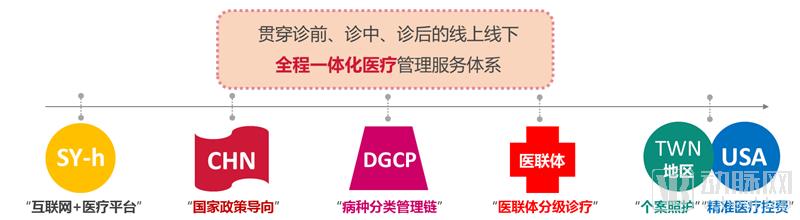
As one of the nation’s strategic priority sectors, healthcare aims to improve public health outcomes and reduce medical expenditures in the long term. The entire industry should pursue this goal through gradual, steady innovation. In light of the unique characteristics of healthcare, Shangying Internet Healthcare has made beneficial supplements and exploratory attempts to existing healthcare relationships. After a period of pilot implementation, the participating specialties have achieved the following results:
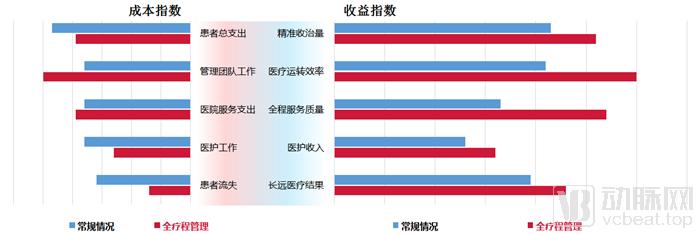
The model is characterized by enhancing the operational efficiency of core medical teams. Meanwhile, it improves the quality of whole-course medical services without increasing hospital service costs, ultimately reflected in improved long-term medical outcomes.
According to the introduction, whole-course management serves as a rational supplement to the limited resources of public tertiary hospitals. By integrating these two approaches, patients can enjoy precision healthcare services comparable to those in Europe and the United States, while also benefiting from the convenience of China’s public medical system. For instance, a critically ill patient with a confirmed diagnosis within a medical consortium may require referral to a higher-level hospital for long-term treatment. Once enrolled in the whole-course management system, the patient only needs to submit relevant data and chief complaints to the management team. The system will then provide tailored recommendations for diagnostic and therapeutic teams, clinical pathways, and comprehensive end-to-end services.
Patients will receive managed care services—transitioning from the previous pattern of unguided, self-directed medical visits to passively accessing integrated, one-stop online and offline services, including treatment course management, admission preparation, therapy planning, appointment scheduling, emergency care coordination, rapid-response consultations, and dedicated service counters.
Once enrolled in the full-course management program, patients no longer need to worry about arranging medical visits and can focus with peace of mind on treatment and recovery. Meanwhile, the system provides rapid, standardized support based on a criticality index for the patient’s condition (though it does not replace emergency care). For certain diseases, this enables physicians to deliver diagnostic and treatment plans up to one week earlier—a difference that can determine whether severe complications will arise and whether effective cure is achievable.
How can such a precise, low-cost, and high-value management system be achieved? The DMT team foundation and the DGCP management chain are the core of the system.
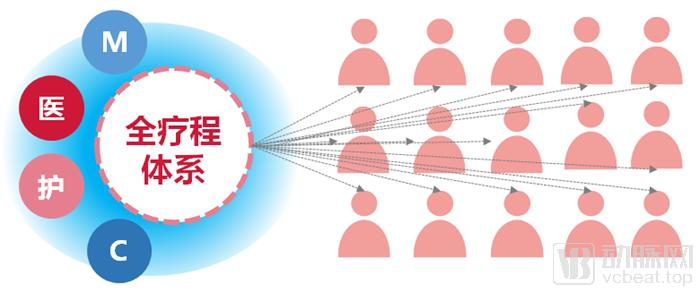
What is DMT?
DMT, also known as the Disease Grouping Management Team, serves as the foundation of the Full-Course Management System. The DMT comprises dedicated physicians, nurses, course managers, third-party operational staff, and other personnel. These multi-disciplinary roles collaborate to provide services centered around a single patient. Each individual DMT unit is exclusively responsible for managing cases of a specific type, while multiple DMTs within a region are uniformly coordinated and integrated by the Shangying Full-Course Management Operations Center. Although the service logic and execution standards of the DMT vary according to different DGCP management chains, under standardized operational protocols, DMT services can be effectively delivered to individual patients. Furthermore, Shangying Internet Healthcare provides robust quality assurance, enabling patients to confidently entrust their personal health to the region’s highest-level medical and service teams.
Disease Category Management Chain (DGCP)
The complete DGCP is further divided into a logical root chain and multi-behavior sub-chains (with DMT additionally including role-based sub-chains), all of which are uniformly advanced, executed, corrected, and optimized by the Full-Course Management System. DGCP can be implemented as a standardized extension of DRGs, with its medical professionalism and operational feasibility consistently recognized by DMTs. The Disease-Specific Classification Management Chain (DGCP) is grounded in the diagnostic and treatment protocols and management services provided by the core medical team. It also incorporates assessments of factors such as patient geography, local medical consortium diagnostic and treatment capabilities, patient adherence, family circumstances, health literacy, and accessibility of intelligent tools. Ultimately, it generates a personalized and precise Full-Course Management Chain Project Plan (DGCP-CMP) for each patient.
Management based on DGCP will also play a disruptive role in the commercial insurance sector. The General Manager of Operations at an insurance company stated: "In addition to providing commercial insurance customers with an exceptional medical experience within hospitals, DGCP can also improve post-diagnosis rehabilitation quality for insured individuals to a certain extent. This helps reduce the probability of high-risk complications, lower mortality rates, and decrease the high-risk claim ratios associated with critical illnesses and accidents. Furthermore, through full-course management enabled by DGCP, the renewal rate of commercial insurance policies can be improved to some degree."
Meanwhile, the involvement of commercial insurance in internet hospitals remains a blank slate. However, as policies become clearer and regulations more standardized, it is an irreversible trend for commercial insurers to underwrite internet hospitals. In terms of premium control, there is an urgent need for the Shangying Internet Hospital DGCP model. Comprehensive services spanning from medical and information technology perspectives to offline-to-online integration are essential for insurance companies in areas such as cost containment and underwriting.
The insurance company will also collaborate with Shangying to explore multi-dimensional insurance cooperation models based on internet hospitals. By leveraging more efficient and rational utilization of medical resources, longer-term health management, and more comprehensive user services, this partnership aims to integrate the previously fragmented healthcare security system through multi-party coordination among hospitals, basic medical insurance, and commercial insurance.
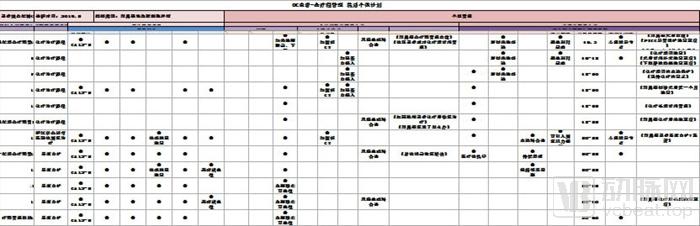
DGCP (Root Chain Directory) for the Full Course of Treatment in a Specific Subspecialty
A physician at a Grade A tertiary hospital in Shanghai stated that, with the support of a comprehensive treatment cycle management system, the overall duration of inpatient chemotherapy for cervical cancer patients under their care has been reduced by an average of 3–4 days compared to previous practices. For post-discharge tracking and follow-up, the number of hospital visits required within 18 months has decreased from 5–6 visits (each lasting 2–3 days) to 3–4 visits (each lasting 1–2 days). This optimization saves each patient approximately RMB 5,000 in additional medical-related costs (including transportation, accommodation, and lost wages) and reduces time spent on medical care by 72–96 hours. Patients have expressed high satisfaction with this innovative service model.
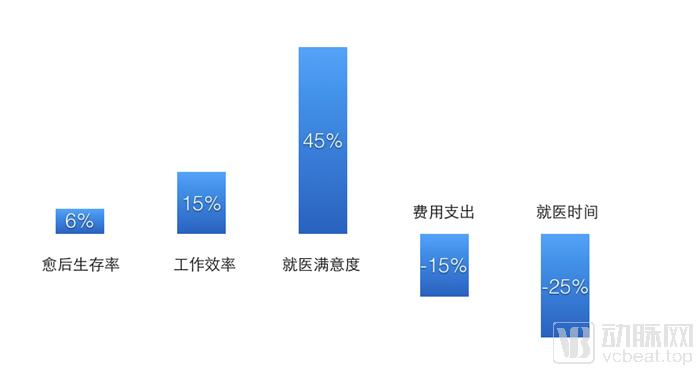
Improvement in Outcomes for This Disease Condition Following the Implementation of Full-Course Management
Currently, Shangying Internet Healthcare has signed a cooperation agreement with a Grade III Class A hospital to vigorously promote its full-course management services within the institution. Shangying Internet Healthcare will also collaborate with the hospital to establish management chain systems for no fewer than six disease types, leveraging the hospital’s specialized departments and covering more than 20 sub-specialties. Building upon a medically rigorous full-course management system within medical consortia, Shangying Internet Healthcare leverages its multi-sector advantages to integrate health insurance, specialized disease insurance, chronic disease management, health management, pharmaceutical supply chains, disease screening, and home health devices. This approach creates a continuous “health–disease–health” service and product supply chain, constructing a new ecosystem of comprehensive health management (“Full Health Journey Management”) anchored in high professional medical standards.