

How Emerging CROs Break Through in an Increasingly Crowded Market

HLT Pharma
Big Data Science and Medical Artificial Intelligence Technology Provider
WuXi AppTec
New Drug R&D and Production Service Provider
In recent years, market demand for Contract Research Organizations (CROs) has been growing significantly. According to data from Frost & Sullivan, the size of China's CRO market was approximately $4.2 billion in 2017. It is projected that by 2022, the total size of China's CRO market will approach $15 billion.
Accompanying the growth of the CRO market is increasingly fierce market competition. For pharmaceutical companies, the selection of CRO partners depends on whether the CRO can compensate for their shortcomings—whether partial or comprehensive—in drug discovery, preclinical research, clinical trials, and marketing authorization applications.
For drug discovery CROs, the technical shortcomings of pharmaceutical companies in new drug R&D represent a strategic breakthrough point for industry competition. Key stages of new drug development, such as target discovery, lead compound activity screening, and antibody generation and affinity screening, often present high barriers to entry. Research by U.S.-based SBI indicates that the hit rate for traditional structure-based drug design ranges from 0.1% to 0.01%, whereas computer-aided drug design (CADD) can increase the hit rate to 5%–20%. Therefore, leveraging innovative technologies such as AI and big data to shorten new drug development cycles and reduce R&D costs is a critical strategy for drug discovery CROs to pursue differentiated growth and maintain a competitive foothold in the industry.
Preclinical and clinical CROs are facing increasingly stringent regulations and a more complex environment for clinical trial execution. Specifically, the low efficiency of clinical trial management in traditional CROs is mainly attributed to three factors:
First, patient recruitment costs are high. Industry insiders estimate that patient recruitment accounts for more than 30% of the total clinical trial budget. Data from the Tufts Center for the Study of Drug Development shows that 11% of clinical sites failed to enroll a single patient, and 37% of clinical sites failed to meet their patient enrollment targets;
Second, there is a lack of effective clinical data management tools. Traditional CROs still adopt the TMF (Trial Master File) model for managing clinical data, which involves submitting clinical data in paper form or through simple file transfers. However, this approach has limitations, as operators cannot access the trial in real time;
Third, there is a lack of effective interventional protocols for clinical trial design. After a clinical trial commences, partial results from the early stages often reveal flaws in the initial trial design. By analyzing these data and adjusting subsequent trial protocols accordingly, researchers can rectify unreasonable aspects of the clinical trial design, thereby reducing research costs and shortening the study timeline. This approach is known as adaptive design. However, traditional Contract Research Organizations (CROs) often overlook these early-stage clinical trial data and lack effective means to implement adaptive design.
Therefore, seeking more efficient, standardized, and consistent approaches to clinical trial management is crucial for building industry competitiveness.
As competition in the CRO market intensifies, the traditional CRO model is in urgent need of transformation. Mergers and acquisitions (M&A) and strategic collaborations have become the primary drivers of growth for large CRO firms. Industry giants such as IQVIA and PPD (Pharmaceutical Product Development) have actively expanded their business scopes through M&A in recent years. Notably, PPD has entered into a strategic partnership with HLT Pharma (Happy Life Technology), a leading medical AI technology company. By integrating HLT’s AI and big data capabilities with PPD’s global leadership in clinical trial management and real-world evidence research, this collaboration significantly enhances clinical trial efficiency and reduces costs.
Small and medium-sized CROs are distinguishing themselves from the crowded field and emerging as new forces in the industry by building specialized technology platforms or services, focusing intensely on specific therapeutic areas, and adopting innovative payment models.
Whether they are CRO giants or small and medium-sized CROs, those that accelerate clinical trial processes through big data, AI, and other means; those that become specialized CROs by focusing intensely on specific therapeutic areas; or those that optimize their operational models by implementing innovative business models to provide clinical or preclinical trial services more precisely, efficiently, and leanly—we classify all such entities as new-type CROs.
In this article, VCBeat reviews emerging CRO companies in recent years and provides a detailed introduction to how they empower clinical trial management and new drug development through AI, big data, and other technological means, or innovative payment models, thereby improving efficiency and reducing drug R&D costs.
The applications of AI and big data in new drug development are extensive, with computer-aided drug design (CADD) significantly facilitating the discovery and optimization of lead compounds.
Specific applications of CADD include structure-based drug design (SBDD), ligand-based drug design (LBDD), and high-throughput screening, providing a new paradigm for new drug development. Drug discovery CROs equipped with AI and big data platforms are undoubtedly more favored by pharmaceutical companies, with representative enterprises including ChemPartner, BioDuro-Sundia, and Viva Biotech.
Low efficiency in clinical trial management is a major factor constraining the growth of traditional clinical CRO businesses. However, a new wave of innovative CRO companies has emerged in China, such as HLT Pharma, Tigermed, and IQVIA. These firms leverage AI and big data to empower clinical trial management—utilizing data processing platforms including Electronic Data Capture (EDC) systems, Clinical Trial Management Systems (CTMS), Clinical Trial Drug Management Systems (CTDMS), electronic Common Technical Document (eCTD) systems, and the eMediSafe pharmacovigilance database—to achieve intelligent, integrated data management and insights, thereby accelerating patient recruitment and enhancing the efficiency of clinical trial data management.
Technical Platform for Next-Generation Clinical CROs
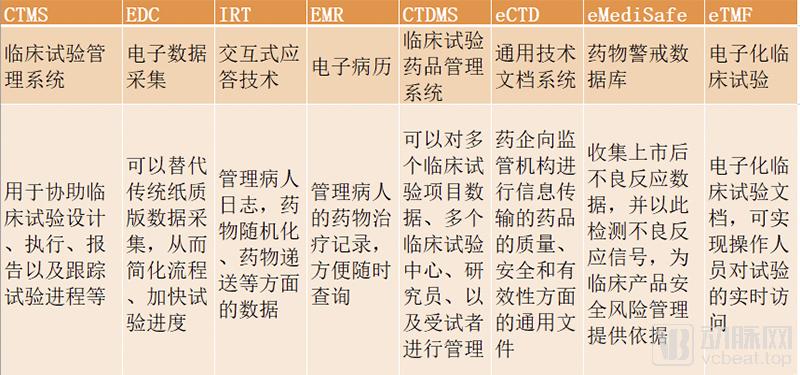
Data Source: ISR, Minsheng Securities Research Institute, VCBeat
HLT has established a strategic partnership with PPD, a globally leading CRO, to integrate HLT’s big data technologies and scientific capabilities in the medical field with PPD’s global clinical research expertise. This collaboration provides comprehensive empowerment across multiple domains, including IND registration, clinical trial protocol design, clinical trial operations and quality management, patient enrollment efficiency, risk-based monitoring, virtual clinical trials, and single-arm trial methodologies utilizing real-world data as controls.
Tigermed independently funded the development of its Electronic Data Capture (EDC) system for clinical trials in 2014, designed for data acquisition, storage, transmission, and processing, thereby enhancing the efficiency of clinical trial management and data management.
Furthermore, a number of highly focused or specialized CRO companies have emerged in the CRO market. These companies often concentrate on a specific domain and provide single services, facing relatively less market competition due to their high degree of specialization. Such new types of CRO companies include Joinn Laboratories, which focuses on preclinical safety evaluation; BioClinica, which specializes in central imaging; and KingMed Diagnostics, which focuses on central laboratories.
In addition to new types of CROs that leverage innovative technologies and specialize in specific business areas, there is another category of CRO companies characterized by innovative business models, such as Quintiles.
In terms of payment model innovation, the traditional CRO business model typically operates on a “cash-on-delivery” basis. Most drug discovery CROs adopt a milestone-based payment model. In contrast, CRO giant Quintiles employs a “risk-sharing” business model, by more deeply engaging in the design and implementation of new drug R&D projects, proactively assuming risks, and thereby securing greater returns.
A Novel Clinical CRO Empowered by AI, Big Data, and Innovative Payment Models
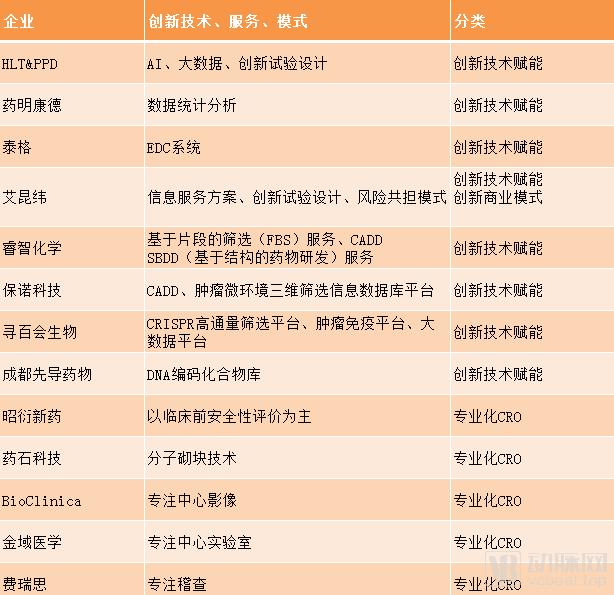
Source: Compiled by VCBeat
Fundamentally, the development of the CRO industry is driven by pharmaceutical companies’ demand for new drug R&D. The emergence of novel CROs reflects, to some extent, the transformation and upgrading of drug development needs. While the future trends of the CRO sector remain uncertain, insights may be gleaned from the developmental trajectory and business expansion strategies of these emerging CROs.
Taking HLT Pharma, a new-generation CRO empowered by AI and big data; WuXi AppTec, the earliest-established CRO in China; and IQVIA, formed through the merger of CRO giant Quintiles and leading health data provider IMS Health, as examples, we analyze the future trends of new-generation CROs.
HLT&PPD
HLT Pharma is a medical artificial intelligence enterprise that provides comprehensive big data and AI-empowered solutions for innovative pharmaceutical research. With an EDC product line validated by the international professional services firm NNIT and a world-class team of clinical research experts, HLT Pharma offers full lifecycle solutions for pharmaceutical companies. These solutions encompass clinical trials, drug launch strategies, and real-world studies focused on drug safety, efficacy, cost-effectiveness, and indication expansion, thereby accelerating new drug development and enhancing drug accessibility.
HLT-iCD (iClinical Development) Intelligent Clinical Development: Leveraging a medical knowledge graph built via machine learning on ultra-large-scale real-world data, a clinical research collaboration platform, and a professional CRO service team, HLT-iCD relies on China’s top PI expert network and domestic and international industry experts. In partnership with PPD, a leading global CRO company, it integrates specialization, intelligence, and innovation to provide domestic and international pharmaceutical companies with “more precise, more efficient, and leaner” professional intelligent integrated clinical development services.
Furthermore, HLT Pharma has conducted in-depth research on real-world evidence, with related papers published in top-tier journals such as The Lancet Oncology and Nature Medicine.
In February 2019, HLT Pharma and PPD entered into a strategic partnership. The exclusive collaboration between HLT Pharma and PPD will focus on providing data-driven, innovative clinical research services to biopharmaceutical companies globally and in China, thereby accelerating the clinical development process and reducing R&D costs.
Leveraging AI and big data to comprehensively empower key stages of CRO operations, including IND registration, clinical trial protocol design, clinical trial quality management, and patient enrollment efficiency.
PPD is a global contract research organization with offices in 48 countries and more than 20,000 employees. The company is dedicated to providing drug discovery, development, lifecycle management, and laboratory services, serving clients and partners across the pharmaceutical, biotechnology, medical device, academic, and government sectors.
PPD has nearly 20 years of extensive experience in Phase I–IV clinical trials in the Asia-Pacific region, with clinical development offices in Beijing and Shanghai, as well as a central laboratory in Shanghai. PPD has also established the Evidera business unit to provide real-world evidence-based research services to pharmaceutical companies. From early-stage product development through to patent expiration, Evidera can demonstrate the real-world effectiveness, safety, and value of biopharmaceutical products throughout their entire lifecycle.
HLT and PPD Join Forces to Optimize CRO Drug Discovery and Clinical Trial Management in Three Areas Through Innovative Technologies Such as AI and Big Data
First, by leveraging machine learning technologies to construct ultra-large-scale knowledge graphs, physician survey networks, and multi-source data processing and prediction models, we match research institutions and patients with the most suitable clinical trials. This enhances the efficiency of addressing unmet clinical needs while simultaneously resolving the pain point of difficult patient recruitment.
Second, leveraging HLT’s high-quality data processing technology and clinical trial technology platform to achieve integration of automated clinical trial data collection, intelligent data management, proactive adverse event alerts, and timely warnings for protocol deviations, thereby improving clinical trial efficiency and reducing clinical trial risks;
Third, HLT leverages its real-world data processing and research capabilities, integrating clinical research findings from both domestic and international sources, to conduct a comprehensive review of the current landscape of disease treatment, thereby uncovering the therapeutic value and market potential of drug candidates. Based on unmet therapeutic needs, it provides researchers with R&D strategic proposals. This enables numerous innovative drug clinical development teams to timely adjust their clinical trial protocols through adaptive designs at the early stages of drug development, thus reducing R&D costs.
WuXi AppTec
WuXi AppTec was established in 2000. After delisting from the U.S. stock market in 2015, it was split into three entities: STA Pharmaceuticals, WuXi Biologics, and WuXi AppTec. STA Pharmaceuticals provides CRO services for small-molecule drug intermediates, active pharmaceutical ingredients (APIs), and formulations. WuXi Biologics primarily offers discovery, development, and manufacturing services for biologics. WuXi AppTec mainly operates as a comprehensive, integrated service platform for the discovery, research and development, and manufacturing of small-molecule chemical drugs.
By splitting into three entities, WuXi AppTec expanded its CRO business into niche segments, laying the foundation for it to become a leading enterprise in the CRO niche markets in the coming years.
The spun-off WuXi AppTec is not confined to its existing business scope; rather, it has expanded its technological platforms in established areas through a series of mergers and acquisitions and collaborations, thereby building competitive advantages in niche segments and addressing its weaknesses in clinical CRO services.
In May 2015, WuXi AppTec acquired the U.S. biotechnology company Ambrx, which specializes in the research and development of antibody-drug conjugates (ADCs).
In April 2016, WuXi AppTec acquired Crelux, a leading European drug discovery services provider. Crelux’s technical services encompass a diverse range of customized offerings, including protein production, biophysical analysis, fragment screening, and X-ray crystal structure determination.
In October 2017, WuXi AppTec completed the acquisition of the U.S. clinical research organization ResearchPoint Global (RPG), addressing its weaknesses in clinical operations and enhancing its capacity to deliver multi-regional clinical trials (MRCT).
In November 2017, WuXi Biologics and Pall established a joint laboratory to develop continuous manufacturing processes for monoclonal antibodies, thereby expanding its biologics research and development business.
In May 2019, WuXi AppTec announced the acquisition of Pharmapace, a U.S.-based clinical CRO. The target company provides data analytics services for all phases of clinical trials, regulatory submissions, and post-marketing support.
IQVIA
IQVIA is a U.S.-based service provider offering professional services, information consulting, and collaborative solutions to the pharmaceutical, biotechnology, and healthcare industries. Its predecessor, Quintiles, was founded in 1982. In 2016, Quintiles merged with health data provider IMS Health to form Quintiles IMS Holdings. One year later, the merged company was officially renamed IQVIA.
IMS Health is a healthcare data company that helps clients drive sales, optimize brands, promote new product launches, and manage drug lifecycles, while also providing specialized consulting and analytical services. Leveraging its health information technology, IMS captures pharmaceutical transaction data from thousands of sources worldwide and analyzes this information to understand market trends and generate new marketing insights.
Quintiles has over 50,000 employees worldwide, with operations in more than 100 countries and regions across three major segments: Commercial Consulting Solutions (pharmaceutical information consulting), Drug Research and Development Solutions (including clinical CRO and laboratory analytics), and Integrated Commercialization Services (contract sales and healthcare management).
Since its inception, Quintiles has expanded its clinical scope and entered new business areas such as market sales through numerous mergers and acquisitions. According to incomplete statistics, Quintiles has completed more than 50 M&A transactions. Notable examples include the acquisitions of Novella in 2013 and Encore in 2014, which extended the company’s capabilities in medical device CRO services and electronic health record management.
In October 2015, Quintiles and IMS Health formed a global strategic alliance aimed at helping biopharmaceutical companies leverage real-world evidence (RWE) to advance late-stage clinical research. In 2016, following the merger of the two companies, an integrated business model was established, encompassing new drug development, commercial sales, commercial consulting, and venture capital.
Furthermore, Quintiles has also achieved substantial returns by pioneering innovative business models that involve deep participation in the design and implementation of new drug development projects, thereby sharing risks with pharmaceutical companies.
An analysis of the recent development of emerging CROs such as HLT Pharma and PPD, alongside industry giants WuXi AppTec and IQVIA, demonstrates that integrating innovative technologies like AI and big data with CRO services can address patient recruitment challenges in clinical trials from multiple dimensions. This integration enhances clinical trial efficiency, reduces costs, accelerates the market launch of new products for biotechnology and medical device companies, and improves patient access to innovative therapies.