

From Medical Tourism to Aesthetics and Preventive Care: Shao Hui's U-Sail Life Institute Pioneers the Private Doctor Model
In 2006, Lavion International was established to pioneer overseas medical tourism; in 2013, investment was made to build So-Young, the first Chinese internet-based medical aesthetics company listed on the stock market; in 2014, Lavion Life Institute was founded as a flagship one-stop preventive healthcare provider featuring private physician services.
Different sectors, different directions, different solutions. Cross-border healthcare primarily involves facilitating clients’ access to high-quality medical resources overseas; medical aesthetics operates on an internet-based platform model; whereas Youxiang Life Institute is a brick-and-mortar entity dedicated to lifelong health management with a focus on prevention, characterized by its asset-heavy nature, with its core offering being “precision health management + true private physician services.”
What is the investment logic behind these three consecutive ventures “touched” by healthcare? What backgrounds lie behind each investment? On the path of gradually moving closer to the core of healthcare, how to define one’s own position? Why finally settle on preventive medicine and precision health management, and heavily invest in building a Life Hospital? With these questions in mind, VCBeat (WeChat: vcbeat) reporter conducted an exclusive interview with Shao Hui.
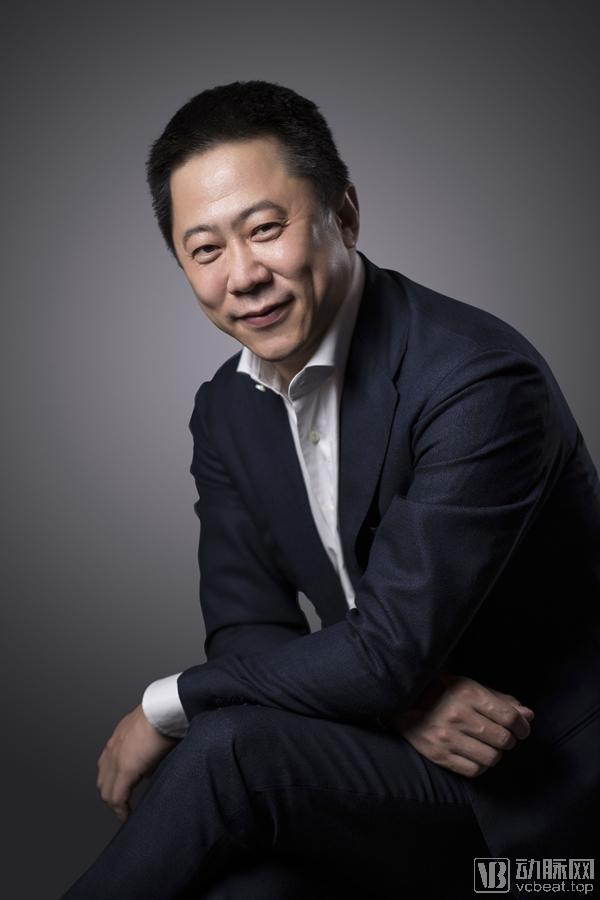
Founder of Lavion Life Institute: Shao Hui (Image source: Provided by the company)
Around 2006, Shao Hui, who had spent a decade in the financial industry, was highly optimistic about the bespoke travel sector. However, further research led him to identify a more specialized niche: medical tourism. At that time, as people’s pursuit of health and beauty continued to rise, many chose to travel abroad for high-quality medical services.
By integrating tourism with healthcare and wellness, Shao Hui identified a market opportunity to help people access high-quality medical services while reducing costs. In 2006, Lavion International Travel was established to pioneer the cross-border medical travel industry. According to Shao Hui, “The first Chinese medical travel visa to Japan was issued through Lavion.”
In 2009, while developing medical aesthetics tourism projects in South Korea, Shao Hui identified a larger market opportunity. “During the peak seasons of winter and summer vacations, every medical aesthetics clinic was bustling with customers,” said Shao Hui. “We believed this represented the future of China.” However, given that China’s medical aesthetics industry was still highly marginalized at the time—with concepts, technologies, and even the medical profession itself not widely accepted by the general public—Shao Hui failed to find a viable breakthrough point.
Opportunity favors the prepared. In 2012, as the internet shifted from PCs to mobile devices and the “O2O” (Online-to-Offline) model gained popularity, Shao Hui entered the medical aesthetics industry through a mobile-first approach, addressing two core challenges in the sector: information asymmetry and safety. Initially, the medical aesthetics venture operated as a project team within Beijing Lavion International Medical Investment and Management Limited Company. It was only after the Series A financing round that it was spun off into an independent company—SoYoung.
With over a decade of experience rooted in the healthcare industry, Shao Hui has identified a pervasive issue: both overseas medical services and traditional domestic healthcare suffer from fragmented, incomplete, and overly siloed treatment approaches. More critically, patients lack truly continuous personal health data, which prevents the formation of an effective basis for diagnosis, treatment, and health management. “You may have visited numerous medical institutions, but each visit requires repeating tests. The data is not integrated, remaining discontinuous and fragmented.”
“In Shao Hui’s view, this represents a highly passive approach.” “Is there an institution capable of establishing long-term, continuous personal health databases, proactively conducting ongoing observation and analysis, promptly identifying impending risks, and thereby achieving more effective disease prevention and control?” Shao Hui told reporters that this is precisely the rationale behind the establishment of Lavion Life Courtyard.
“I subscribe to two entrepreneurial and investment philosophies: one is to identify structural inflection points within broader development trends; the other is long-term value accumulation, directing all attention, resources, and energy toward endeavors that truly create lasting value,” said Shao Hui. The healthcare sector is an industry with significant long-term value. Currently, preventive medical services and health management represent a critical gap needing to be filled. Although they are not yet at the core of the healthcare industry, their significance may even surpass that of traditional disease treatment, offering greater social and commercial value.
In 2014, Shao Hui selected a plot of land in the heart of Beijing, adjacent to Chaoyang Park, and meticulously planned Lavion Life Hospital from the foundation stage onward. The project required an investment of hundreds of millions of yuan and took five years to complete and become fully operational. “Today’s Lavion Life Hospital is not only a comprehensive preventive medical institution but also a popular architectural landmark infused with ‘landscape art,’ attracting many visitors for photos,” said Shao Hui.

Exterior Photo of Lavion Life Hospital (Image Source: Provided by the Company)
A major trend in healthcare is that, with the development of the global economy, civilization, and culture, the public’s focus is shifting from “curing diseases” to “preventing diseases and maintaining lasting health, youthfulness, and vitality.”
Lavion Life Institute is an early-stage comprehensive medical entity in China focused on prevention, with private physician services at its core, aiming to achieve precise health management and disease prevention while enhancing the quality of life and longevity.
“We focus on the field of prevention, rather than simply opening another hospital for treating diseases, which would be of little value given the abundance of excellent hospitals already available,” said Shao Hui. “Traditional hospitals concentrate on treatment and healing, whereas Youxiang Life Institute focuses on prevention and optimization. We serve as a complement to traditional healthcare, maintaining a cooperative and symbiotic relationship with hospitals.”
Traditional hospitals primarily treat patients, whereas Youxiang Life Institute mainly serves individuals who are relatively “healthy.” This includes those experiencing symptoms of discomfort or minor ailments that remain undiagnosed despite medical examinations, as well as individuals with chronic conditions or recurrent minor illnesses whose symptoms persist due to the standardized nature of conventional medical care, which often fails to address root causes. Additionally, the Institute’s clientele encompasses “sub-healthy” individuals requiring exercise-based rehabilitation for bodily pain or post-discharge recovery, as well as asymptomatic, healthy individuals seeking to sustain long-term wellness, optimize their health status, and enhance specific physiological functions.
Shao Hui cited examples of individuals experiencing “discomfort,” noting that many people exhibit various symptoms of discomfort despite medical examinations showing no disease, indicating that their bodies are already in a state of functional imbalance. This “discomfort” or imbalance is the primary culprit behind the vast majority of diseases. This explains why many individuals receive clean bill of health during annual check-ups yet suddenly develop critical illnesses, sometimes even reaching a point where it is too late for effective intervention.
Therefore, identifying the root causes of physical “discomfort” through precise data analysis and implementing effective interventions and adjustments is key to disease prevention and health optimization. This task, however, falls outside the scope of hospital-based “disease” treatment and is beyond the willingness and capacity of health checkup institutions to address.
How to Prevent and Precisely Manage?
Shao Hui cited another example: an elderly acquaintance who had always maintained a healthy lifestyle was recently diagnosed with cancer at an advanced stage, leading to a sharp decline in quality of life. “Could it have been detected earlier? Absolutely. This highlights gaps in preventive health awareness; maintaining regular exercise and good habits does not guarantee immunity from disease.”
In Shao Hui’s view, the ideal approach is to have a professional physician conduct long-term, continuous monitoring of a patient’s daily physiological data and symptoms, enabling immediate intervention when data anomalies or subtle symptoms emerge.
Therefore, the key to prevention lies in people—specifically, “truly professional” private physicians.
“Private physician services are a type of medical care that many people misunderstand. Some perceive them as overly prestigious and expensive, assuming that having a private physician is impressive but costly. Others believe that private physicians only treat diseases and can handle any medical condition. In fact, both of these views are incorrect.”
In Shao Hui’s view, a private physician assumes three distinct roles. First and foremost, he or she serves as your “health steward,” leveraging medical expertise to organize and interpret health data, assess risks, and prevent disease. Meanwhile, the physician can diagnose and treat common minor illnesses, provide timely responses to health inquiries, develop personalized health plans, and continuously manage and optimize your physical well-being.
Secondly, he/she serves as your “medical advisor.” He/she knows which specialist to consult for specific conditions, assists with appointment scheduling and care coordination, and facilitates preliminary communication with physicians. Additionally, he/she is well-versed in medical cost management, helping you reduce healthcare expenses and arrange appropriate health insurance coverage.
He or she remains the friend who “understands” you best, leveraging this deep understanding to serve as your psychotherapist and provide optimal support and assistance for a wide range of health, medical aesthetics, and functional decline concerns.
People are at the core of medical services and health management. Lavion Life Institute assembles a “Super Private Doctor Team” for each client, comprising at least three senior experts from top domestic and international institutions with over 15 years of experience, to provide clients with “true, professional private doctor services.”
Data is the foundation of all medical practices. Therefore, the Super Doctor team will start with data, conducting comprehensive and systematic data collection for clients (including their past physical examination records and reports). By collecting and organizing massive amounts of data, they help clients establish a truly continuous and complete life database, which is continuously updated. “This step is crucial; if not done properly, the foundational basis for medical care will be unsound,” said Shao Hui.
Subsequently, the private physician team will conduct a comprehensive and in-depth interpretation and analysis of the data to identify correlations between the data and physical symptoms, uncover the underlying pathological mechanisms, and provide timely, continuous intervention and management before disease onset or in the early stages of disease. The data analytics capability of Lavion Private Physicians is one of its core strengths. “Traditional medical logic follows a symptomatic approach—treating headaches when the head hurts and foot pain when the feet hurt—whereas Lavion Private Physicians is committed to identifying the root causes of diseases or symptoms from complex data sets, enabling targeted interventions and solutions at the source,” said Shao Hui.
Behind the private physician are specialized medical centers. Lavion Life Institute has established a Gastrointestinal Management Center, a Fat and Weight Management Center, a Sports Medicine Center, a Medical Spa Center, and more. Under the guidance of private physicians, it provides targeted improvement and solutions for issues related to the gastrointestinal tract, musculoskeletal system, pain management, cardiopulmonary function, sexual health, dermatology, suboptimal health status, and various chronic diseases, while continuously optimizing and enhancing overall physical well-being.
“Private physicians do not work in isolation. If an institution offers only a so-called ‘renowned specialist’ to address all of a client’s health concerns, it is undoubtedly unprofessional,” said Shao Hui.
Backed by resources from over 100 top-tier medical institutions worldwide, including Johns Hopkins Hospital and the Mayo Clinic, Lavion Life Institute can arrange consultations with renowned global experts for the diagnosis of complex and rare conditions. Working in conjunction with Lavion’s private physician team, they formulate optimal treatment plans and facilitate precise domestic and international referrals tailored to each client’s specific needs.
In addition to private physician services, Lavion Life Institute will also establish a training system for private physicians, “cultivating a modern team of true private physicians distinct from traditional practitioners, so that more Chinese people can enjoy personalized, cost-effective health management services.”