

From Food Distribution to Healthcare Giant: Cardinal Health's Strategic Evolution Through 39 Acquisitions and Expansion into China

Cardinal Health
Healthcare Service Provider
On April 24, 2019, Cardinal Health announced the acquisition of mscripts, a digital communication platform associated with pharmacy dispensing systems, thereby gaining a mobile and web application that can directly connect to pharmacy dispensing systems to provide targeted information to patients.
Notably, this marks the 39th acquisition by Cardinal Health since its founding in 1971. It has long been Cardinal Health’s strategic approach to augment its business through acquisitions, thereby expanding its market share. It is worth noting that Cardinal Health itself originated as an acquired food distribution company.
How did Cardinal Health cross over from food distribution to the healthcare services industry? And how did it step by step ascend to a leading position in the healthcare services sector? VCBeat (WeChat ID: vcbeat) attempts to interpret this cross-industry giant through the development history of Cardinal Health.
The Legend Born from a Leveraged Buyout
In the early 1970s, a food movement swept across the United States. Robert D. Walter, a Harvard Business School graduate eager to make his mark, rode this wave. Walter believed that acquiring an existing company was a more accessible path than starting a business from scratch.
In 1971, Walter acquired the food distribution company Cardinal Food through a leveraged buyout. At that time, the overall situation in the U.S. food sales industry was highly favorable. Cardinal Food continuously acquired other companies to strengthen its capabilities and successfully went public in 1983.
The good times did not last. Leveraging their financial and scale advantages, giants in the U.S. food distribution industry continued to expand their market share, plunging Cardinal Health into a development crisis. At this juncture, another opportunity awaited Walter’s exploration.
By the 1980s, the U.S. pharmaceutical industry was experiencing rapid growth, fueled by healthcare reforms and technological advancements. New drugs were continuously introduced, and demand remained robust and unflagging. Walter observed that pharmaceuticals and food products share common characteristics: both are essential goods, and their sales strategies and warehousing processes exhibit notable similarities.
Walter decided to pivot into the healthcare industry. Employing his proven strategy, he continuously acquired suitable pharmaceutical companies and expanded drug distribution operations on the foundation of Cardinal Food. In 1988, Walter divested entirely from the food business to focus exclusively on the pharmaceutical distribution sector.
Since 1990, giants in the pharmaceutical sales industry have engaged in horizontal M&A competition, even initiating a low-price competitive model. Walter took the lead. In 1994, Walter renamed the group Cardinal Health. In 1995, Cardinal made its first acquisition outside of pharmaceutical wholesale: it acquired Medicine Shoppe, the largest retail pharmacy chain in the United States. Medicine Shoppe primarily dealt in prescription drugs and was also renowned for its unique services, such as health screenings and care centers.
This acquisition marked a strategic shift for Cardinal Health. Moving beyond its previous focus on pharmaceutical wholesale, the company began to prioritize extending its reach across the upstream and downstream segments of the pharmaceutical sales value chain. In the aftermath, Cardinal Health sustained robust growth, achieving an average annual revenue growth rate of 42% and rapidly emerging as a dominant player in the healthcare services industry.
Cardinal Health marked its entry into the upstream and downstream segments of the pharmaceutical sales supply chain by acquiring Medicine Shoppe, the largest retail pharmacy chain in the United States, thereby completing a vertical merger. By expanding Medicine Shoppe’s offerings to include health screenings and care center services, Cardinal transformed itself from a pharmaceutical distributor into a comprehensive healthcare services group.
Deeply affected by his restrictive work experience at Rockwell International’s aerospace division and harboring a profound aversion to bureaucracy and centralized management, Robert D. Walter was determined to become a boss who “grants employees the maximum degree of freedom.”
Since entering the healthcare industry, Walter has adopted a decentralized, “delegative” management approach. He retained the original names of acquired companies and granted their local operations full autonomy to these subsidiaries. Cardinal Health Group provides resource support from the background only. This management style has not only improved overall efficiency but also maximized respect and freedom for subsidiaries, giving employees greater room to exercise their initiative. Such a relaxed work atmosphere has attracted numerous business elites, infusing Cardinal Health with innovative vitality.
Water can carry a boat, but it can also capsize it. The drawbacks of this management approach have gradually become apparent over time. After being recruited into the group, the attracted business elites operated independently, with minimal communication or collaboration with other subsidiaries. The autonomous development of these subsidiaries resulted in weak interconnectivity across the entire group, creating a situation where only the “subsidiaries” were recognized while the “parent company” was neglected, leaving the group as fragmented as loose sand.
Walter realized that to develop Cardinal Health into a large-scale, one-stop healthcare services group, it was essential to strengthen the interconnectivity among its subsidiaries. He then embarked on sweeping reforms. First, he designated key personnel across the various subsidiaries to oversee the business operations of all group entities, facilitating holistic integration and breaking down internal silos. Second, he unified the corporate brand under the name “Cardinal Health” to enhance brand recognition.
To date, Cardinal Health has grown into a multinational healthcare services group. According to its 2017 financial report, Cardinal Health reported earnings of $7.181 billion and annual revenue of $136.809 billion. As of 2018, Cardinal Health ranked as the 14th largest company in the United States by revenue.
Distribution and Production: A Dual-Pronged Approach
Cardinal Health specializes in the distribution of pharmaceuticals and medical products, supplying medical products to more than 75% of hospitals in the United States. In addition, Cardinal Health manufactures medical and surgical products, including gloves, surgical gowns, and fluid management solutions. Healthcare is everywhere, and so is basic hygiene. Cardinal Health’s cross-portfolio healthcare solutions help healthcare providers work more effectively, patients live healthier lives, and health systems operate more intelligently.
Pharmaceutical and Product Distribution Business
From hospital offices and retail pharmacies to patients, numerous companies in the pharmaceutical supply chain rely on Cardinal Health’s services to get their products to market.
VitalSource GPO Inventory Management System
For business intelligence purposes, Cardinal Health provides machine learning-based data analytics solutions to pharmaceutical and healthcare companies, with its Vitalsource GPO (Group Performance Optimization) service serving as the core of all its machine learning offerings. These solutions leverage predictive analytics, and those processing EHR/EMR data may also utilize natural language processing (NLP).
Although most of these solutions are targeted at oncology, Cardinal Health also lists some of its solutions for urology and interdisciplinary cases. The following are the machine learning solutions covered by Vitalsource GPO services:
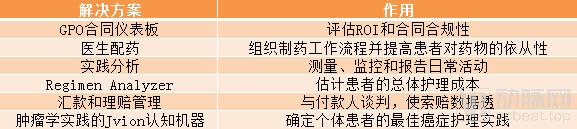
Currently, Cardinal Health’s VitalSource GPO services have helped Tennessee Oncology implement a new inventory management system to ensure the accurate dispensing of oral and intravenous medications. “Data management will be key to success,” said Jeff Barton, CEO of Tennessee Oncology. As an increasing number of drugs become available in oncology, the company aims to integrate more medications into its business model through the VitalSource GPO, thereby gaining better visibility into expenditures and more accurately reflecting the treatment options available to patients.
Simplified freight management strategies offer significant cost-saving opportunities for both hospitals and health systems. To this end, Cardinal Health has developed a pharmacy logistics solution called OptiFreight Logistics. Leveraging data analytics, OptiFreight Logistics helps hospital pharmacies manage inbound shipments and healthcare facilities manage outbound shipments, thereby reducing freight costs.
The system can either provide bulk shipping discounts through Federal Logistics or manage the delivery of each item to hospitals at the time of purchase, ensuring users obtain the best possible prices. Cardinal Health stated that it delivers nearly 19 million packages annually to approximately 32,000 shipping locations across roughly 2,000 hospitals nationwide in the United States, saving hospitals $200 million per year.
Brad Wilson, Vice President of National Sales and Services at OptiFreight Logistics, stated, “Our freight management program leverages ten years of data to help customers benchmark performance and expertise, thereby uncovering additional cost savings. It is this unique combination that sets us apart.”
OptiFreight Logistics features three core capabilities: performance optimization, coordination of large-scale freight operations, and integrated training.
In terms of performance optimization, the program can identify hidden freight charges through detailed logistics reports, prompting suppliers to share freight data and thereby improving compliance by an average of 8%, resulting in savings of thousands of dollars. Additionally, OptiFreight Logistics optimizes purchase order instructions, helping to drive supplier participation, with over 12% of shipments now processed through the program.
OptiFreight estimates that if suppliers do not use this program for bulk orders and large shipments exceeding 150 pounds, such as laboratory and IT equipment, material costs per shipment will be 40% to 50% higher. The OptiFreight customer management team helps hospitals save costs in practical ways, such as by raising questions with suppliers before placing orders. Account managers also connect customers’ shipping docks with OptiFreight’s large-freight team to coordinate high-volume outbound shipments, all within two minutes.
OptiFreight Logistics also provides comprehensive onboarding training for new hires. OptiFreight Logistics helps key facility personnel understand areas such as the operating room (OR), laboratory, or pharmacy to discuss their specific workflows. The OptiFreight onboarding team assists customers with tasks such as ordering from suppliers, shipping large items, and arranging direct delivery to patients’ homes.
On December 4, 2011, at the 46th Annual Midyear Clinical Meeting and Exhibition of the American Society of Health-System Pharmacists (ASHP), Cardinal Health launched a unique unit-dose barcode packaging solution for the packaging and distribution of oral liquid medications.
Cardinal Health’s new packaging solution directly responds to suggestions and feedback from hospital pharmacy directors across China.
“An increasing number of hospitals are expanding their use of barcode management technology. This new packaging solution will alleviate some of the burdens faced by most hospitals,” said Jon Giacomin, President of U.S. Pharmaceutical Distribution at Cardinal Health. “As we expand our portfolio of unit-dose barcode-enabled liquid medications, hospitals will enhance the efficiency and effectiveness of patient safety measures, while also freeing up valuable staff time to focus on patient care.”
Cardinal Health’s oral liquid medications are currently available in various unit-dose packaging sizes, allowing for dosages ranging from 5 to 45 milliliters. This innovative packaging design features a flat-spoon shape that facilitates accurate dose determination. Furthermore, the outer packaging complies with USP Class A packaging material standards and has a shelf life of up to 12 months. Notably, this new packaging solution incorporates Reduced Space Symbology (RSS) barcodes, enabling healthcare providers to track the NDC lot number and expiration date of each medication dose with a single scan, thereby enhancing patient safety.
Surgical Product Manufacturing Business
In November 2014, Cardinal Health entered into a strategic partnership with Henry Schein, a provider of healthcare products and services, to expand its product portfolio and extend its business scope to include the manufacturing of cardiovascular medical devices, surgical supplies, specialty pharmaceuticals, and other products.
In October 2015, Cardinal Health completed the acquisition of Cordis, a subsidiary of Johnson & Johnson and a global leader in the development and manufacturing of interventional vascular technologies, for $1.944 billion, thereby acquiring the MYNX vascular closure device product portfolio.
The MYNX vascular closure device product line includes the MYNXACE, MYNXGRIP, and EXOSEAL vascular closure devices. The MYNXACE and MYNXGRIP devices are designed with safety and patient comfort in mind, enabling gentle closure without the need for tensioning, sutures, or metallic implants.

In addition to the aforementioned product lines, the FLASH Ostial system is also part of the “dowry” that Cordis brings to Cardinal Health. The FLASH Ostial system is indicated for coronary and peripheral applications, primarily designed to maintain patient stability during stent expansion and angioplasty, ensuring optimal alignment of the expanded stent with the ostium. The proprietary dual-balloon design of the FLASH Ostial system enables physicians to achieve maximal stent wall apposition post-dilation for the treatment of ostial lesions.
The MYNX Vascular Closure Device product portfolio and the FLASH Ostial System are innovative products designed to address complex clinical challenges. Following its integration into Cardinal Health, Cordis’s extensive innovation expertise has complemented Cardinal Health’s professional business and operational capabilities, creating a formidable force in the cardiac and peripheral vascular fields.
Cardinal Health manages the largest radiopharmaceutical network in the United States, comprising more than 130 radiopharmacies and a network of 30 PET biomarker manufacturing facilities. It supplies over 12 million unit doses of radiopharmaceuticals and PET drugs annually to more than 5,000 hospital imaging centers. Cardinal Health is the sole source of PET and SPECT (Single-Photon Emission Computed Tomography) radiopharmaceuticals in the United States.
LYMPHOSEEK injection is a radioactive diagnostic agent and the only clinically proven, FDA-approved agent for lymphatic mapping in patients with solid tumors. As part of intraoperative management, LYMPHOSEEK provides accurate and precise identification of lymph nodes in patients with solid tumors, guiding sentinel lymph node biopsy in patients with breast cancer, melanoma, and oral squamous cell carcinoma, and is used in conjunction with scintigraphic imaging.
It is important to note that prior to administering LYMPHOSEEK, patients should be questioned about previous allergic reactions to drugs, particularly to dextran and modified forms of dextran. Resuscitation equipment and trained personnel should be available during the administration of LYMPHOSEEK, and patients should be observed for signs or symptoms of hypersensitivity following injection. Any product that emits radiation may increase the risk of cancer. Adhere to dosage recommendations and ensure safe handling to minimize the risk of excessive radiation exposure to patients or healthcare personnel.
Notably, in October 2014, the FDA approved an expanded indication for LYMPHOSEEK as a lymphatic mapping agent for solid tumors. LYMPHOSEEK is currently exclusively distributed in the United States by Cardinal Health.
Entering China
In 2010, Cardinal Health acquired Yongyu Pharmaceutical, a Chinese pharmaceutical distributor, for $470 million, thereby entering China’s pharmaceutical distribution sector. Subsequently, leveraging Yongyu’s existing distribution network and adopting the Cardinal Health (known in Chinese as Jiadenuo, formerly Kangdele) model, it further expanded its business scope and established its presence in China.
In the distribution sector, Cardinal Health has successively acquired pharmaceutical commercial companies in various regions, such as Liaoning Longda Pharmaceutical, Tianjin Oriental Tailai Pharmaceutical, and Shanghai Luoda Pharmaceutical. It also serves as a distributor for pharmaceutical companies like CSL Behring and certain foreign medical device manufacturers. Furthermore, Cardinal Health engages in regional distribution businesses with domestic pharmaceutical enterprises including Guizhou Yibai, Chongqing Lummy, Shandong Dong-E-E-Jiao, and Jiangsu Hengrui Medicine, while also acting as the Chinese agent for foreign medical device companies such as CSL Behring. In terms of information and retail services, Cardinal Health operates multiple HES and DTP pharmacies in Shanghai and Guangzhou.
Between 2010 and 2015, Cardinal Health not only took strategic measures to expand its business in China but also further initiated integration with local Chinese companies. At the 15th China Interventional Cardiology Conference held in March 2017, Cordis, a subsidiary of Cardinal Health, entered into a strategic cooperation agreement with Guangdong BrosMed Medical (BrosMed Medical). BrosMed Medical authorized Cordis to exclusively distribute its PTCA balloon catheter product series under the BrosMed brand in China.
This strategic agreement will fully leverage Cordis’s expertise and well-established marketing network to accelerate the expansion of two PTCA balloon catheter products under Bomai Medical in the Chinese market, undoubtedly marking a major move by Cardinal Health in China’s cardiovascular intervention sector.
In 2018, Cardinal Health sold its pharmaceutical distribution business in China to Shanghai Pharmaceuticals for $547 million, while retaining its remaining operations in the country, such as its cardiac products division, Cordis, and its recently acquired patient recovery business.
Following the divestiture of its China distribution business in 2018, Cardinal Health China completed the integration of Medtronic’s patient recovery business in 2019, achieving diversification and deepening of its medical product portfolio. These initiatives have enhanced Cardinal Health’s capacity to provide high-quality products and solutions to healthcare providers in China, covering the entire healthcare system.
In April 2019, Cardinal Health China adopted the Chinese name “Jiadenou” and completed the integration of Medtronic’s patient recovery business, achieving diversification and deepening of its medical product portfolio.
Domestic Giants Race to Claim Their Turf
Foreign enterprises have accelerated their entry into the Chinese market, while domestic pharmaceutical distribution giants such as Sinopharm Group, China Resources Pharmaceutical, and Shanghai Pharmaceuticals are closely following suit. These companies aim to achieve scale and performance growth through inorganic acquisitions, thereby breaking the stagnation plaguing the overall growth of the pharmaceutical distribution industry.
Shanghai Pharmaceuticals Expansion
In November 2017, Shanghai Pharmaceuticals announced that its wholly-owned subsidiary, Shanghai Pharmaceuticals Holdings, was expected to pay $557 million in cash to Cardinal Health China. Shanghai Pharmaceuticals stated that this transaction was part of its strategy to expand its distribution network and establish a pharmacy business.
It is reported that prior to the acquisition, Cardinal Health China operated 14 directly affiliated companies and 17 distribution and operational centers, with a total storage area of approximately 146,000 square meters and a cold storage capacity of approximately 7,000 square meters. According to the "2017 Statistical Analysis Report on the Operation of the Pharmaceutical Distribution Industry" released by the Ministry of Commerce, Sinopharm Group, China Resources Pharmaceutical, and Shanghai Pharmaceuticals ranked as the top three players in the industry. With this acquisition, Shanghai Pharmaceuticals successfully surpassed China Resources Pharmaceutical to secure the second position.
China Resources Pharmaceutical Gains Momentum
On September 26, 2018, China Resources Pharmaceutical Commercial Group proposed to subscribe for non-publicly issued shares of Zhejiang-based listed company Int'l Group Co., Ltd. for RMB 650 million, acquiring a 16.67% stake in the listed company upon completion of the transaction. China Resources Pharmaceutical disclosed that since January 2018, it had acquired a 51% equity interest in Shanghai Guobang Pharmaceutical Co., Ltd., a 70% equity interest in Jiangsu Nanshan Pharmaceutical Co., Ltd., an equity interest in Lianyungang Dezhong Pharmaceutical Co., Ltd., and a 70% equity interest in Sinopharm Guang'an Pharmaceutical Co., Ltd., for a total consideration of RMB 135 million.
The company’s 2018 semi-annual performance report showed that its pharmaceutical distribution network had expanded to cover 27 provinces, municipalities, and autonomous regions across China. Its client base included 5,857 secondary and tertiary hospitals, 38,954 primary healthcare institutions, and 28,916 retail pharmacies. Undoubtedly, 2018 was a year of robust growth for China Resources Pharmaceutical in the distribution segment.
Sinopharm Holdings Accelerates Integration
As CR Pharma and Shanghai Pharmaceuticals locked horns, Sinopharm Group did not remain a bystander.
Sinopharm Group is the Hong Kong-listed platform under China National Pharmaceutical Group (Sinopharm). The 2018 semi-annual results of Sinopharm Group showed that its distribution business generated revenue of RMB 139.9 billion. In July 2018, Sinopharm Group announced that it planned to acquire a 60% equity stake in China Scientific Instrument & Equipment Corporation, held by its controlling shareholder Sinopharm, for RMB 5.10789 billion.
Sinopharm Group also stated that China’s medical device sector is in a period of rapid growth and opportunity. This acquisition will help further enhance the company’s competitiveness in the medical device field by integrating and complementing the target company’s strengths in product portfolio and business models with Sinopharm’s existing nationwide distribution network. This move will expand coverage in the medical device distribution market, strengthen the company’s comprehensive service capabilities in the pharmaceutical and healthcare industry, and constitutes an important component of its overall future strategy.
Surveys indicate that emergence, growth, consolidation, and maturity constitute the fundamental patterns of evolution in the pharmaceutical distribution industry. China’s pharmaceutical distribution sector has, in fact, entered the consolidation phase. As Cardinal Health seeks to capture a share of the Chinese market, domestic pharmaceutical distributors are also striving to gain a competitive edge amidst future changes. It remains to be seen who will ultimately prevail.
Reference Link:
https://kknews.cc/zh-mo/news/lebq2p9.html
https://en.wikipedia.org/wiki/Cardinal_Health
http://wemr.club/companies/cardinal-health-china-business-20170720.html
https://www.cardinalhealth.com/en/about-us/our-people/our-leaders.html