GemPharmatech Secures RMB 160 Million Series A Funding Within Two Years of Inception, Aims to Become the World's Largest Genetically Engineered Mouse Model Supplier

GemPharmatech
R&D, Production, and Non-Clinical Research Service Provider for Laboratory Mouse Models
Fear of mice is a common phenomenon. However, for professionals in the biology and pharmaceutical industries, mice are among their most cherished companions and valuable assets. Researchers use mouse models to simulate the onset and progression of human diseases, and by observing the therapeutic effects of drugs on these mice, they validate candidate drugs through disease models before they become genuine medications capable of treating patients and saving lives. Therefore, researchers often feel a sense of gratitude mixed with remorse toward mice, acknowledging the sacrifices these animals have made for the advancement of human medicine.
When discussing the history of mouse model development in China, one cannot fail to mention Professor Gao Xiang. Known as the “Mouse King,” this expert in model animals has now established GemPharmatech with his original team, aspiring to become the world’s largest supplier of gene-edited model mice.
A team photo hangs in the hallway of the first-floor lobby at GemPharmatech. In the bottom right corner of the picture, we spot Gao Xiang. “This photo was taken in 2002,” Gao Xiang told us. “Back then, I was a young man with black hair; now my hair has turned white.” At that time, Gao Xiang held only an academic title, exuding confidence as a returnee scholar. Today, as the Chairman of GemPharmatech, he appears more composed and self-assured. What has remained unchanged over these past years is the confident smile on his face.
Professor Gao Xiang is a pioneer in the field of model organism research in China. Under his leadership, his team not only produced China’s first high-difficulty conditional gene-knockout mouse, but also created the world’s first gene-edited dog and the world’s first gene-edited monkey, thereby securing a prominent place for China’s model organism industry on the international stage. When Professor Gao returned to China in 2000, he coincided with the national launch of the “National Genetic Engineering Mouse Resource Bank” project. Despite having less advantageous financial support, the Nanjing University team led by Gao defeated competitors from three other municipalities directly under the central government and provincial capital cities with a high-quality proposal, ultimately bringing the project to Nanjing. In 2003, Professor Gao founded the Model Animal Research Institute at Nanjing University and served as its director.
Model animals are the “gold standard” for validating the efficacy of preclinical candidate drugs, permeating every link of the pharmaceutical R&D industry chain and serving as a core resource in translational medicine. In lay terms, model animals are experimental animals used to substitute for the human body in in vivo studies. Mouse models are considered the most important model animals.
“By constructing gene-edited mouse models, we can fully recapitulate the entire process of disease onset and progression. For instance, if a specific genetic mutation is clinically identified as causing a certain disease, we can introduce the same mutation into mice to induce the corresponding pathology. Such mouse models can faithfully mimic clinical disease manifestations, thereby maintaining high consistency with human conditions in further drug development and mechanistic studies,” said Gao Xiang.
2009In that year, to promote the sharing and utilization of resources, Nanjing University and the Jiangbei New Area of Nanjing jointly established a technology transfer platform, the “Nanjing University–Nanjing Institute of Biomedicine,” leveraging the National Resource Center for Mutant Mice. Gao Xiang was appointed as the Director of the Institute. With its one-stop specialized services for mouse models encompassing R&D, production, and sales, the Nanjing Institute of Biomedicine successfully gained entry into the market. As early as 2017, the Institute’s operating revenue reached RMB 100 million.
2017In December, with the support of Nanjing University and driven by the policies for new R&D institutions of the Nanjing Municipal Government, an innovative team led by Gao Xiang, together with the Jiangsu Industrial Technology Research Institute and the Nanjing Bio-pharmaceutical Valley in the Jiangbei New Area, jointly established Jiangsu Jicui Yaokang Biotechnology Co., Ltd. to further promote the industrial translation of model animal resources.
2019In June, GemPharmatech, founded less than two years ago, secured RMB 160 million in Series A financing from CDH Investments and Sinopharm Group Holding. Mr. Wang Lin, Founding Partner of lead investor CDH Investments, stated: “GemPharmatech has accumulated profound expertise and innovation in the field of gene-edited animal models, establishing significant technological and know-how barriers. The R&D-focused management team at GemPharmatech, led by Professor Gao Xiang, originated from China’s ‘national team.’ They possess strong capabilities, passion, and methodological rigor. We are confident that they will lead high-quality model animals developed in China to the global stage.”
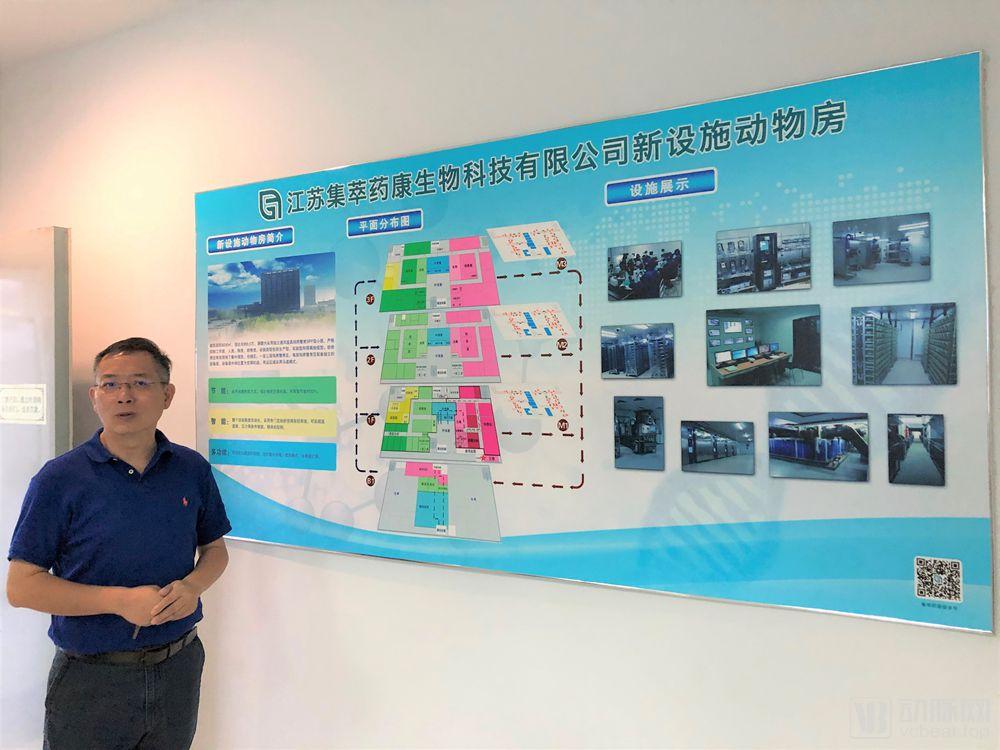
Professor Gao Xiang Introduces GemPharmatech’s Facilities
“Many people mistakenly believe that raising mice requires little technical expertise and incurs low costs, as if one could simply find any space, set up cages, and start breeding. This misconception has led to lax quality control in many domestic model organism companies, even to this day. In reality, the opposite is true: the supply of model organisms is a capital-intensive industry,” Gao Xiang told us. GemPharmatech currently occupies a total area of 18,500 square meters, with 8,000 square meters dedicated to SPF-grade animal facilities capable of housing more than 80,000 cages of SPF-grade mice. The company spends substantial funds annually to maintain the operation of its entire animal facility, with utility costs (water, electricity, and gas) for the experimental animal facilities alone exceeding RMB 10 million.
SPFSPF-grade animals refer to Specific Pathogen Free laboratory animals. These animals are required to be free from major potential infections, opportunistic pathogens, and other pathogens that significantly interfere with scientific experiments, making them internationally recognized standard laboratory animals. To ensure the quality of mice, GemPharmatech implements stringent husbandry requirements for SPF-grade mice. All cages, feed, bedding, and even water that come into contact with SPF-grade mice must undergo sterilization via ionizing radiation. Meanwhile, the animal housing rooms are maintained under positive pressure, meaning the air pressure inside the room is higher than that outside. This ensures unidirectional airflow from the housing room to the external environment, preventing pathogen entry through the air. All laboratory personnel entering the housing rooms must change into full sterile protective suits and masks, covering their entire bodies except for their eyes.
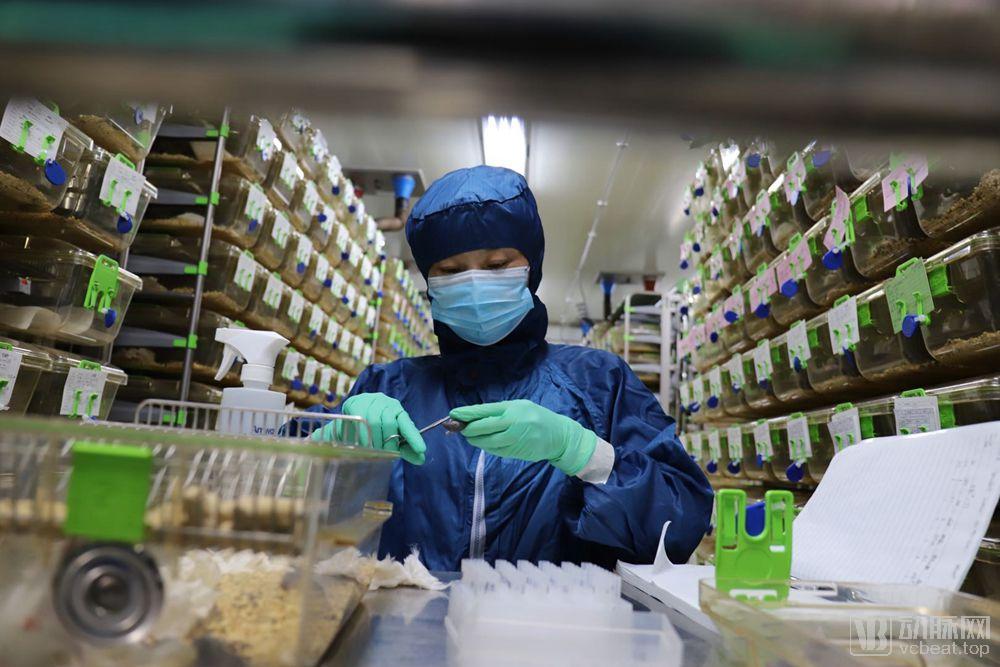
Fully Equipped Laboratory Technician
“We joke that the mice live in ‘seven-star hotels.’ This is because the air exchange rate inside the mouse cages exceeds 10 times per hour, whereas that of a five-star hotel is only about 1–2 times per hour. Our requirements for SPF-grade animal barrier environments are extremely stringent; I don’t even have access to the animal housing rooms, as I haven’t obtained our laboratory technician certification,” Gao Xiang said with a smile.
Beyond standardizing breeding protocols, GemPharmatech has long maintained a commitment to the humane care of mice. AAALAC is an internationally recognized authority that evaluates and accredits animal care and use programs, requiring the humane and scientific treatment of laboratory animals in the fields of biological sciences and medicine. The laboratory founded by Gao Xiang was the first in China to achieve AAALAC accreditation, thereby aligning its practices with international standards.
In addition to meeting basic husbandry requirements, GemPharmatech has established three major automated systems to further enhance the quality of laboratory animals:
First is the automatic watering system, where water for laboratory animals is sterilized and then directly delivered to the cages through a piping system. This not only facilitates monitoring but also avoids potential contamination from repeatedly used water bottles.
Next is the automated cage washing system. In China, most laboratory animal centers still employ external personnel to clean husbandry supplies. The automated system acquired by GemPharmatech not only reduces labor costs but also ensures standardized processing of husbandry supplies.
Finally, GemPharmatech has independently designed a comprehensive EMice laboratory animal production management system. The company has equipped mouse housing environments with PDA data acquisition systems to enable real-time, accurate updating and recording of growth parameters, birth rates, mortality rates, and various physiological data. All collected metrics are transmitted to an integrated database, allowing staff to monitor the basic status of the mice through an automated system without needing to enter the animal housing rooms.
Not only are the mouse housing facilities at GemPharmatech modernized, but the company is also equipped with a comprehensive array of high-value experimental apparatus for mice. The metabolic cages used to study murine metabolism cost RMB 2 million for just eight small units; a single echocardiography system for mouse hearts exceeds RMB 3 million; and one mouse magnetic resonance imaging (MRI) scanner costs as much as RMB 18 million.
The competitive barrier formed by GemPharmatech’s fixed assets, sourced from around the world, may appear easily surmountable through substantial capital investment. In reality, however, GemPharmatech’s true moat in industry competition lies in ensuring that these globally sourced equipment systems are mutually compatible and operate stably within a unified framework. “This is not merely a matter of basic principle. The selection of all materials, the operation of equipment, and the final construction of the entire system have all undergone our repeated and rigorous validation,” said Gao Xiang.
A high-quality laboratory animal management system is merely the outer layer of GemPharmatech’s moat; its mouse gene-editing model construction system constitutes the company’s more robust core barrier.
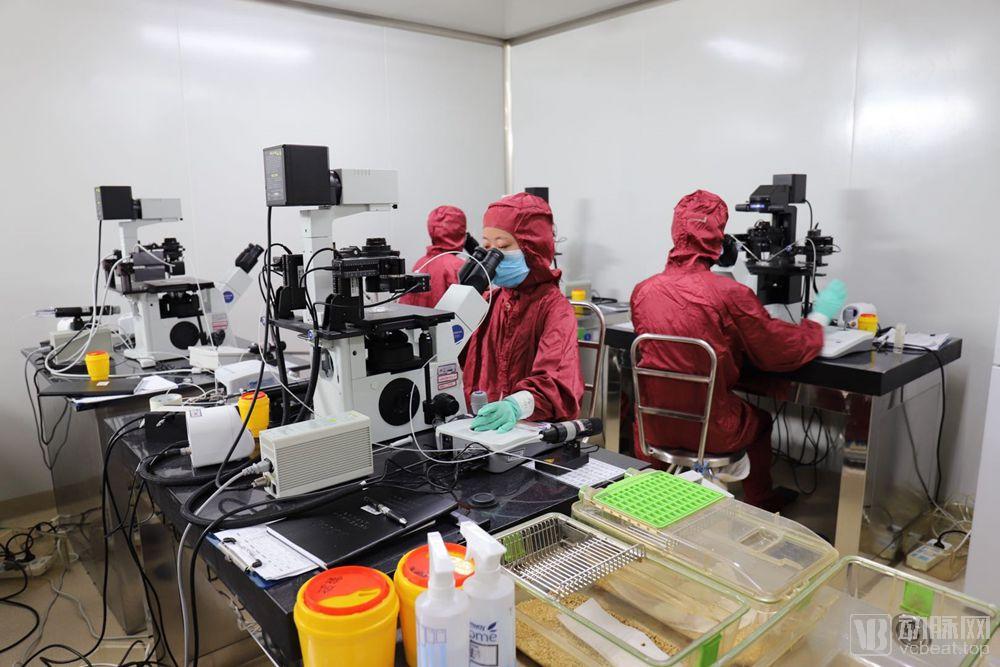
Laboratory Technician Performing Micromanipulation
GemPharmatech’s core team originates from the operational management team of the Nanjing University–Nanjing Institute of Biomedicine, bringing years of accumulated expertise in the development of model animals. Dr. Jing Zhao, CEO, has over 16 years of experience in model editing and analysis, as well as key account development. Dr. Cunxiang Ju, R&D Director, has successfully developed hundreds of humanized animal models. Dr. Hongyu Wang, Technical Director, earned his degree from Saarland University in Germany and subsequently conducted postdoctoral research at the University of Oxford in the United Kingdom; he is highly proficient in model construction and drug screening. Within GemPharmatech’s large workforce of 446 employees, 169 hold R&D and technical positions, accounting for 38% of the total staff.
Under the leadership of its core team, GemPharmatech has developed a globally leading system for constructing mouse models, accumulating a resource repository of over 8,000 strains. For comparison, Jackson Laboratory, the world’s largest provider of genetically modified animals, offers approximately 10,000 strains. The team established its transgenic technology platform in 2004 and has since completed 534 projects with a 100% success rate. In 2005, the team generated China’s first conditional knockout mouse and has subsequently completed 594 embryonic stem (ES) cell targeting projects with a success rate exceeding 98%. Furthermore, regarding the widely adopted Cas9 technology in recent years, the team achieved a 98.5% on-time delivery rate for Cas9 projects in 2013, while achieving zero off-target effects. These technical indicators, which far exceed industry averages, underscore GemPharmatech’s leading position in the field of genetically edited model animals both domestically and internationally.
“We not only provide clients with mouse models but also assist them in model selection and experimental design. At times, clients are unsure which mouse model to choose; at other times, their selections are suboptimal or fail to fully align with their research needs. Most members of our team have a scientific research background and possess extensive expertise in mouse experimental design. Therefore, we can help clients identify the most suitable mouse models based on their specific requirements and offer recommendations for subsequent experimental design—a capability that many competitors in the same field lack,” said Gao Xiang.
GemPharmatech collaborates with scientists in global biomedical research, as well as new drug development firms and CROs, to help pharmaceutical companies and research clients both in China and abroad complete preclinical mechanistic and pharmacodynamic evaluations. The company has accumulated over 750 clients, covering a large number of domestic pharmaceutical companies, CROs, and research institutions, including well-known pharmaceutical enterprises such as Novartis, GlaxoSmithKline, Hengrui Medicine, and BeiGene; renowned CROs such as WuXi AppTec, CrownBio, and Joinn Laboratories; as well as numerous prestigious research institutions and universities, including the Chinese Academy of Sciences, the Chinese Academy of Medical Sciences, and Double First-Class universities.
Liu Dan, Executive Director of the Innovation and Growth Fund at CDH Investments, commented on the development stage of China’s pharmaceutical industry: “China’s pharmaceutical R&D has progressed through two phases—tracking-based generic production and imitative innovation—and is now transitioning toward original innovation. Genetically engineered animal models are indispensable experimental tools in early-stage scientific research and preclinical drug development, significantly enhancing the success rate of drug development while substantially reducing costs. Companies such as GemPharmatech will undoubtedly provide robust model and platform support for pharmaceutical development in China and globally.”
Following its Series A financing, GemPharmatech’s next step is expansion, extending its service reach globally. In China, the company will establish Nanjing as its hub while setting up corresponding R&D and production bases in northern, southwestern, and southeastern regions. Meanwhile, GemPharmatech will actively expand into overseas markets by establishing international R&D and production facilities to better serve global clients.
Leveraging its robust mouse model generation platform and aiming to meet market demands for cost-effectiveness and rapid turnaround, GemPharmatech has launched the “Spotted Mouse Project.” The goal of this initiative is to systematically generate conditional knockout (cKO) models for all protein-coding and non-coding genes in the mouse genome amenable to cKO strategies over the next 3–5 years. By establishing a comprehensive library of whole-genome cKO products, the project seeks to standardize mouse gene knockout models, thereby significantly reducing the time and costs required for customers to obtain standardized mouse models.
The Spot Mouse Project Phase I has established a ready-to-use model resource library comprising 1,200 conditional knockout (cKO) and 1,800 knockout (KO) mouse lines, covering multiple high-interest research areas including oncology, metabolism, immunology, development, and DNA and protein modifications. Phase II of the project has also been launched and is currently in full swing, aiming to construct models for 5,000 relevant genes. The ultimate goal of this initiative is to generate over 20,000 conditional gene knockout strains, thereby establishing the world’s largest mouse model resource library.
“For us, the key focus is on maintaining our technological edge and delivering excellent service. Profit has never been our primary concern. I have always believed that if we provide high-quality service, substantial returns will naturally follow. Indeed, we are already achieving strong and sustainable profitability.” Throughout these remarks, Gao Xiang maintained his confident smile.