

King Xing of SoYoung on the Future of the Beauty Industry: A Terminal Mindset Perspective
Two months ago, So-Young celebrated its spotlight moment on NASDAQ, marking a milestone victory for Jin Xing’s entrepreneurial journey. Today, as a star enterprise in the internet-based medical aesthetics industry, So-Young’s public listing has prompted Jin Xing and the company to contemplate the future of the beauty sector and the industry at large.
On July 1, the Third Beauty Industry Grand Fair opened at the Shanghai Cross-Border Procurement Center, bringing together over a thousand top professionals in the beauty sector for exchange and learning. At the summit, SoYoung CEO Jin Xing delivered a keynote speech titled “Viewing the Future of the Beauty Industry Through Endgame Thinking.” VCBeat (WeChat ID: vcbeat) has compiled the following summary.
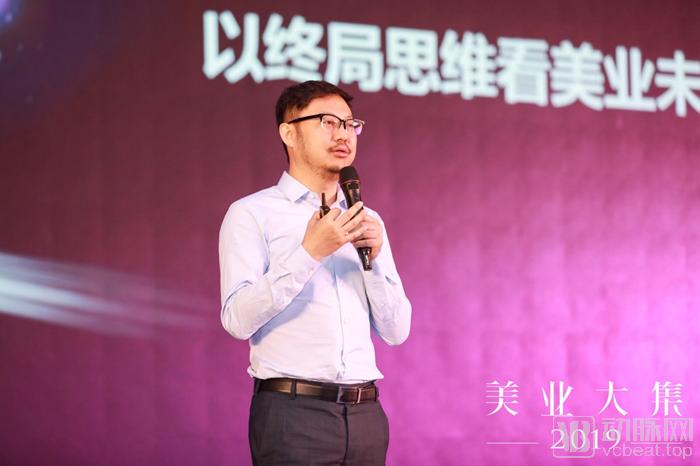 SoYoung Founder & CEO Jin Xing
What exactly is end-game thinking? What are the sources of corporate growth? What models of innovation exist? In light of the pain points arising from changes in the new consumption environment, new consumers, new scenarios, new technologies, and new supply chains, how can enterprises navigate transformation and build differentiated competitiveness? Through critical analysis, Jin Xing interprets the future of the beauty industry and its enterprises by uncovering the underlying logic of end-game thinking.
The following are the main points of Jin Xing's speech:
End-game thinking is strategic thinking.
What Exactly Is Endgame Thinking? This is a concept proposed by Zeng Ming, former Chief of Staff at Alibaba. He stated that while every choice has its pros and cons, the ability to predict the future enables one to make a better decision.
Today, many people are saying that the entire beauty industry is facing a turning point. In my view, this shift has been gradually unfolding over the past few years and may now be becoming increasingly intense. As a result, many are feeling uncertain, speculating about what the future holds, and debating whether to transform their businesses, remain steadfast in their current approach, or even exit the industry altogether.
If we can clearly envision the future of this industry and make informed choices, that is end-game thinking, which constitutes strategic thinking. Viewing the present from the perspective of the future is the essence of strategy. With a clear strategy comes strategic positioning, enabling you to know what to persist in and what to let go of. This is perhaps the most critical takeaway for everyone.
Few Companies Outpace GDP Growth?
In the endgame, we will discuss two aspects: the corporate endgame and the industry endgame. Let me share an observation. An economic magazine conducted a survey examining all the top-tier companies in the United States over the past 80 years, including General Electric, Procter & Gamble, and even Coca-Cola. The study compared their average annual growth rates with the national average GDP growth to determine which performed better.
Statistically, the figures are quite surprising.Only slightly over 2% of companies have outperformed GDP growth, and even over the past few decades, merely 5% of companies have managed to outpace inflation.. When compared with national GDPs, only 2% of the world’s top-tier companies outperform them. What does this phenomenon indicate? It shows that even enterprises with immense prestige operate with remarkably low efficiency. Why is this the case? These companies attract the finest talent, boast the strongest brands, and command the most abundant resources. Yet they still face such inefficiencies. So, what should small and medium-sized enterprises (SMEs) do? We need to reflect on the underlying reasons for this reality.
Disrupting Legacy Enterprises with Innovative Companies
I believe one of the core reasons for this is,Disruptive market thinking and protective corporate thinking are key. We know that the three core drivers of corporate growth are: first, dividends; second, management; and third, innovation.. Yet every bonus period eventually wanes. Once it fades, growth must be driven by refined management. When a company has already optimized all aspects of its operations through rigorous management and still seeks further development, what should it rely on? Innovation. Indeed, innovation can be regarded as the sole genuine engine of growth.
There are only two types of innovation. The first is what we call incremental innovation, which involves making gradual changes based on your existing foundation. For example, the iPhone has evolved from the first generation to the second, third, fourth, fifth, sixth, and now the tenth generation, with minor innovations introduced each year. However, this type of incremental innovation faces a problem: it will eventually reach a limit.After the peak, a gradual decline begins.。
When you reach your limit, new innovations, models, and mechanisms often emerge. For example, Apple originally started as a computer company, later launched the iPhone, and then introduced the iPad. This is known as discontinuous innovation. Therefore, we can see that discontinuous innovation has the potential to bring new growth points to enterprises. However, these two often compete with each other in the early stages, reflecting a type of market-disruptive thinking.
What is disruptive thinking in the market? When a company is currently regarded as a star enterprise within its industry and among the general public in the country, all resources converge toward it. After a period of time, when an emerging enterprise appears, various resources shift to cluster around this new player. This transition constitutes a form of disruption for the incumbent company—a very typical scenario. Nevertheless, it is precisely through this continuous process of dismantling the old order and channeling these resources to new enterprises that the market achieves rapid growth.
Only by attacking oneself can one become a phoenix.
Let’s look at enterprises. What is the typical internal situation? You have a group of people co-founding the venture with you. In the face of today’s challenges, is there an appetite to develop new offerings? Should we try out the business model used by that neighboring organization? You may set up a small team and allocate some resources to drive new innovations.
However, when you are under immense pressure and your revenue, performance, and profits for the year face significant challenges, you need resources. At such a time, do you continue to invest these resources in new businesses, or do you allocate them fully to your existing core business? In fact, most companies choose to withdraw resources from new ventures and redirect them to their core business.This is the "big fish eat small fish" effect.
There are many typical examples. Around the year 2000, Motorola was the dominant player in the mobile phone market, while Nokia was still a relatively small company. However, because Motorola held a substantial market share, it hesitated to launch new digital phones for fear of cannibalizing its existing sales. As we all know, Nokia ultimately defeated Motorola.
Therefore, as you can see, it is not only small and medium-sized enterprises (SMEs) that make such choices; even the world’s top-tier companies do the same. So why do companies struggle to keep pace with the market? Because the market exerts relentless pressure at every step, while companies are burdened by numerous concerns.
I would like to make one statement: “Only by disrupting yourself can you rise like a phoenix.” If you fail to challenge your own status quo, the market will inevitably do so. It will allocate resources to emerging companies unburdened by legacy constraints, enabling them to ruthlessly disrupt you—and this process could unfold with remarkable speed.
Healthy internal competition keeps your company evergreen.
Why is it so difficult for people to challenge themselves? We often say, “This business is my company.” In reality, that is not the case. For an enterprise,Business is merely a subsystem of the company.. In fact, you can foster healthy competition between your new and existing businesses. Through this approach, the seamless transition between old and new ventures will keep the company perpetually vibrant.
How should we view our own internal businesses? There are numerous successful examples, such as Tencent’s QQ and WeChat, as well as other business units incubated within the Alibaba Group. You will find that all these evergreen companies continuously generate new internal ventures, and there is invariably internal competition between these new initiatives and established ones.
"Differentiated competition may help you emerge from the battle for survival."
We have just discussed the ultimate fate of an enterprise, arguing that a company can remain evergreen only by constantly disrupting itself. The message I would like to share with you is: “Do not dwell on the past; move forward with passion.” Why this phrase? Today, we are witnessing unprecedented changes in the environment, consumer behavior, marketing models, and talent dynamics.
Despite various difficulties, everyone is trying every possible means to sustain the life of their current enterprises. However, have you considered that if the current business model is one in gradual decline, should you still persist in propping it up? Continuously attempting to extend its viability may eventually deplete the wealth and resources you have accumulated over many years. For those seeking to continue developing within this industry, is it feasible to build new platforms or invest in new models and teams, allowing younger generations to take the helm? Alternatively, could you delve deeper into other segments of the industrial chain?
For example, So-Young; in essence, we are neither a hospital nor a medical institution.We provide services to hospitals and physicians; while our past focus was on marketing services, our future direction is toward software services.。
It is well known that the beauty industry sector we operate in is fraught with countless pain points. Any given pain point you face is likely a challenge shared by the entire industry. If you can take a longer-term view and dedicate yourself to solving such a specific pain point, positioning yourself as a specialized service provider in that niche, this differentiated competitive strategy may enable you to emerge from the fierce struggle for survival.