

Micro-Interview Preview: Unveiling the Key Drivers Behind Medical Technology Commercialization
China’s four decades of reform and opening-up have essentially unfolded as a process of releasing four waves of dividends. The first wave unleashed the vitality dividend under the planned economy system; the second, the labor dividend within the framework of international division of labor; the third, the real estate dividend driven by policy-led market bailouts; and now, we are witnessing the release of the commercialization dividend fueled by technological innovation. Capital plays a pivotal role in this process. As the starting point of the entire industrial chain, early-stage investment must be made early and with precision—this is akin to securing a strategic position in the race.
In fact, contemporary China bears a striking resemblance to the United States in the 1970s. The real estate development model is becoming a thing of the past, and China will undoubtedly place significant emphasis on developing its stock and investment banking markets in the future. The STAR Market (Science and Technology Innovation Board) presents a golden opportunity. Consider this: The Chinese Academy of Sciences (CAS) comprises 120 research institutes. The Institute of Automation alone employs 5,000 engineers and 2,000 PhD holders. Which listed company in China can boast 2,000 PhDs? With such robust mechanisms, an abundance of talent, and substantial state funding, we are on the verge of entering a dividend cycle where these investments come to fruition. The scientific research we discuss is not ivory-tower academic pursuit; many of the technologies, equipment, and materials developed can be integrated with traditional industries. Indeed, even within the current medical sector, we are witnessing a plethora of outstanding products and technologies emerging from scientific research. These innovations are gradually being translated into clinical applications, benefiting an ever-growing segment of the general public.
In any case, from every perspective, China’s translation of scientific research into practical applications has entered a highly favorable window. This represents a national technological dividend; given the strong economies of scale in technological development, an organically integrated innovation service consortium is poised to emerge.
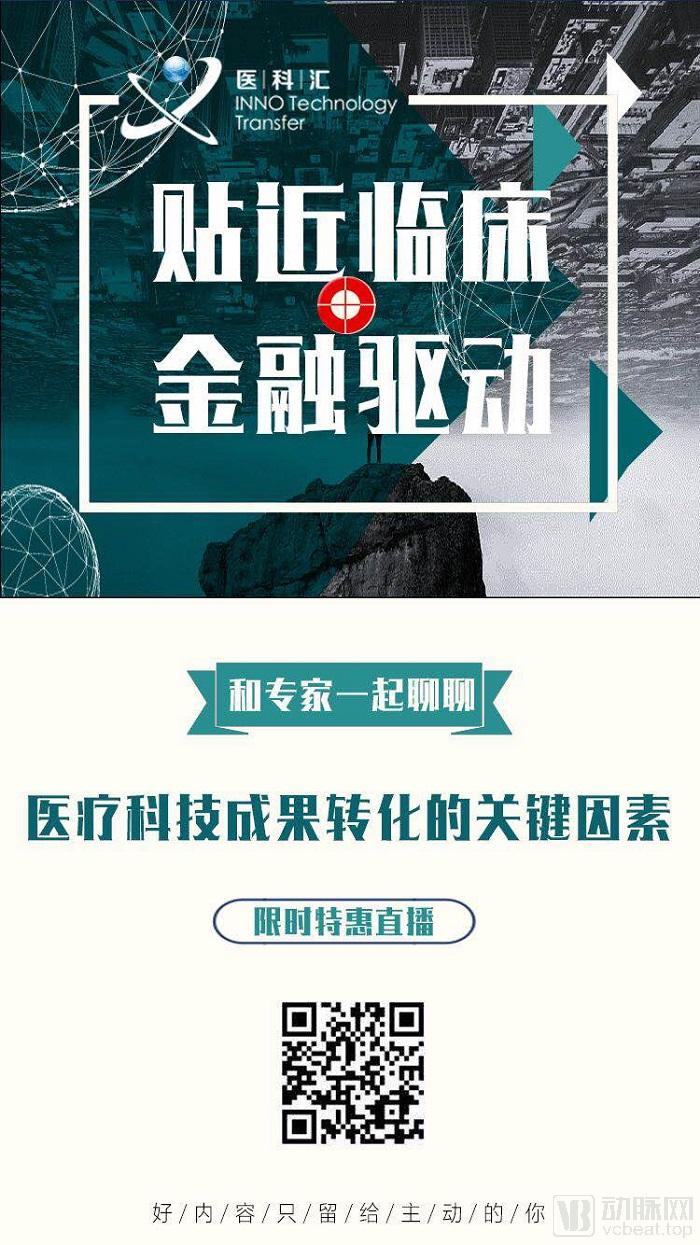
“MedTech Hub” is an innovative service platform dedicated to translating cutting-edge global medical technologies into tangible healthcare outcomes. The MedTech Hub technology transfer series primarily engages a think tank of experts from clinical research institutions both in China and abroad. These events select projects with urgent needs for technological achievement translation—such as POCT (Point-of-Care Testing), precision medicine and genomic big data, exosome R&D and extraction, and small-molecule candidate drugs for protein degradation—that demonstrate significant market value, high technical sophistication, and strong potential for commercialization. Innovating the future, empowering those skilled in technology—we welcome passionate and insightful peers to join our community of technology transfer and commercialization.
Stay tuned for July 5 (this Friday) at 19:00, when representatives from the research, investment, and commercialization sectors will share their experiences in translating technological achievements into practical applications! (For details, please scan the QR code on the poster.)

[Guest Introduction]
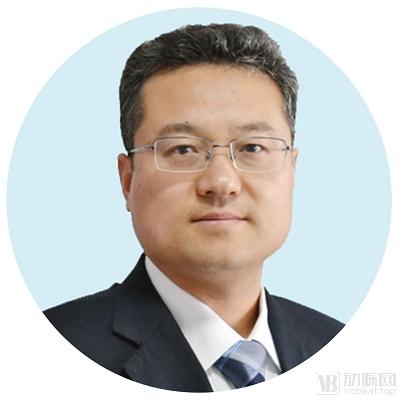
[Professor Yang Xiaobao]
Currently affiliated with the Institute of Immunochemistry at ShanghaiTech University
He received his Ph.D. from East China University of Science and Technology in 2008 and joined the GSK Shanghai R&D Center in the same year. In 2009, he joined Shanghai Dongyue Biochemical Co., Ltd. as Chief Engineer. In 2013, he successively joined the research groups of Professor Jian Jin at the University of North Carolina at Chapel Hill and the Icahn School of Medicine at Mount Sinai to conduct research on PROTACs. At the end of 2016, he joined Professor Biao Jiang’s research group at the Institute of Immunochemistry, ShanghaiTech University, where he has been primarily dedicated to building a protein degradation drug platform and developing related therapeutics.
Dedicated to the development of E3 ubiquitin ligases;
Development of Immunomodulatory Small-Molecule Drugs;
Development of a Protein Degradation Platform and Its Antitumor Drugs.
Designated as Nantong City in 2012——
Trainee of the 4th Phase of the “226 High-Level Talent Development Program”;
In 2012, it was designated as Qidong City—
Candidate of the “312 High-Level Talent Echelon Development Program”;
Listed in 2010 as——
“Jiangsu Province Enterprise Doctoral Talent Aggregation Program” Grant Recipient.
Filed more than 10 patent applications in the field of protein degradation, and obtained orally bioavailable small-molecule candidate drugs for protein degradation.

[Qiao Jing]
Currently serving at a well-known listed company in China
Executive General Manager, Finance
Fellow of the Chartered Institute of Management Accountants (FCMA), Chartered Global Management Accountant (CGMA), BiMBA at Peking University, MSc in International Banking and Finance from the University of Southampton, UK.
He has previously held positions at world-renowned Fortune 500 multinational corporations, including Novartis Pharmaceuticals, Philips, and Corning. With over fifteen years of experience in strategic finance, investment financing and exit management, mergers and acquisitions (M&A), and investment management, he has led financial teams in overseeing core equity-participating and holding companies as well as listed entities. He has been deeply involved in operational optimization, process control, asset allocation, ecosystem integration, and value-added empowerment. Furthermore, he has played a key role in the spin-off and initial public offerings (IPOs) of internal business units within the group, cross-company product line M&A and asset restructuring, the establishment of financial shared service centers, and the implementation of corrective measures for significant internal audit and internal control issues. An advocate for smart ecosystems, he places strong emphasis on talent capabilities, technological innovation, global technology transfer and commercialization, and brand marketing. He has successfully empowered numerous portfolio companies, driving value creation and enhancement.

【Pan Hong (Host)】
Currently serving at Shanghai Zhongyi Precision Medical Technology Co., Ltd.
General Manager, Project Department
Ms. Pan Hong has nearly a decade of frontline clinical experience in otolaryngology and head and neck surgery. Since June 2016, she has been dedicated to the field of translational medicine, currently overseeing the operational translation of cutting-edge medical technological achievements. Her responsibilities include technology brokerage, proof-of-concept validation, policy research, investor relations, and brand building for the “Yikehui” self-media platform.
Leveraging advantages such as the vast domestic market, government support, an increasingly robust entrepreneurial ecosystem, and a mature CRO industry, she has advanced by adopting the new VICC model. Through this approach, she provides professional consulting services to clients in areas including technological innovation, tech entrepreneurship, industrialization of high-tech achievements, and technology trade. In January 2019, she helped Shanghai Zhongyi Precision Medical Technology Co., Ltd. receive the “China Industry-University-Research Collaboration Promotion Award.”
In addition to her professional responsibilities, Ms. Pan Hong is deeply committed to philanthropy, empowering the dissemination of compassion. She played a key role in helping the company establish the Women’s and Children’s Health Medical Special Fund under the Shanghai Shuangping Charity Foundation in October 2018, serving as its Executive Director. The fund’s distinctive approach extends beyond one-on-one medical assistance; it also supports and funds high-quality medical research projects, stimulating innovation and translation among researchers and healthcare entrepreneurs, thereby embodying the spirit of “New Era, New Philanthropy, New Actions.”