2019 Smart Healthcare Innovation Competition White Paper: Over 300 Projects and the Construction of a 'Smart Healthcare' Funnel Model
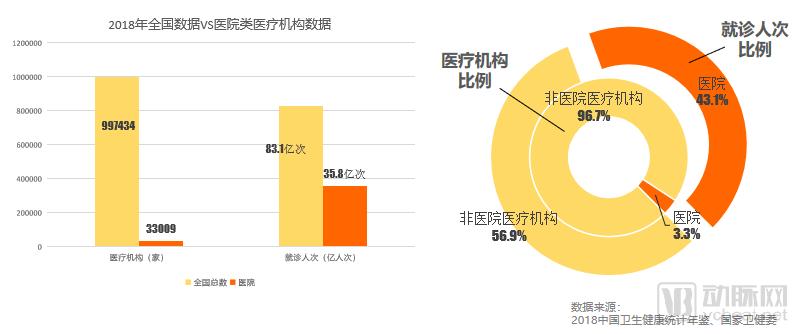
With the rapid economic development and continuous improvement in living standards in China, residents’ demand for health services has been growing steadily. The current healthcare industry faces challenges of insufficient supply capacity and an inability to meet the public’s pursuit of high-quality medical care. Against this backdrop of constrained supply and rising demand, hospitals—as the core component of China’s healthcare system—bear 42% of patient visits despite accounting for only 3.1% of all healthcare institutions. It is therefore imperative to enhance operational efficiency and reduce burdens on the hospital supply side.
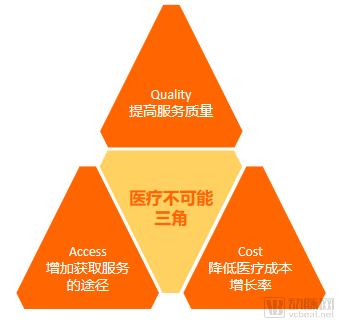
In most healthcare scenarios, it is impossible to simultaneously improve the quality of care, increase the accessibility of medical services, and reduce the cost of healthcare without disrupting existing rules. VCBeat refers to this as the “Healthcare Impossible Trinity Model.” The only solution to this trilemma is to introduce new technological increments. Only by transforming operational models, industry structures, and social frameworks can new technologies drive all variables within the triangular model to progress in the same direction. We believe that this new technological increment relies on “healthcare intelligence,” and to this end, we have constructed the “Smart Healthcare” Funnel Model.
As innovators in “Smart Healthcare,” amid the continuous advancement of “digital” technologies, how should we gain insights into the current state of the industry? Where lie the pain points in each subsector? How can we address these pain points from an innovative perspective? In light of future trends, how should innovators adapt to the evolving landscape?
Looking ahead, “Smart Healthcare” will transform China’s healthcare model, enhance the capacity and quality of medical service delivery, and drive the transformation of operational models across the entire healthcare industry.
AtMinistry of Education-Mobile Healthcare Joint LaboratoryHosted by,VCBeatCo-organized by multiple enterprises, the 2019 Smart Healthcare Innovation Competition saw the emergence of numerous high-quality “Smart Healthcare” innovation projects, whose creators are pioneers and practitioners in innovation. The “Smart Healthcare Innovation Competition” has been successfully held for two sessions. Guided by the Hospital Information Management Professional Committee of the Chinese Hospital Association (CHIMA) and initiated by the Joint Laboratory of Mobile Health Education Ministry and China Mobile, the competition is co-hosted with relevant local associations, societies, and industry institutions.
VCBeat Research Institute and the Joint Laboratory of Mobile Health Education Ministry–China Mobile Healthcare, systematically reviewed over 300 competition entries from previous editions, conducting statistical analysis across multiple primary dimensions—including basic attributes of the entries, pain points addressed, specialized subfields, targeted clinical departments, needs lists, and target populations—as well as more than 30 secondary dimensions, and released"2019 Smart Healthcare Innovation Competition White Paper."
“2019 Smart Healthcare Innovation Competition White Paper”By constructing a “Smart Healthcare” funnel model and integrating data from past Smart Healthcare Innovation Competition entries, this report centers on hospitals to elucidate the current development status and characteristics of “Smart Healthcare” across four key innovation domains: “Informatization,” “Internet of Things (IoT),” “Big Data,” and “Artificial Intelligence (AI).” Through the analysis presented in this report, we have compiled insights regarding“Smart Healthcare” Industry and Smart Healthcare Innovation CompetitionCurrent Status and FutureSix Core Perspectives:
1. Imbalance in the supply-demand relationship at tertiary hospitals makes it imperative for hospital suppliers to improve efficiency and reduce burdens;
2. How to Resolve the Imbalance in Supply and Demand: Introducing Technological Increments to Address the Impossible Trinity of Healthcare;
3. The Smart Healthcare Innovation Competition continues to expand its influence across China, effectively uncovering the deep-seated digitalization needs of remote areas and small hospitals; it originates from within hospital systems, takes root in serving hospitals, and is implemented in hospitals.
4. “Three Dimensions + Four Domains” Build the Core Driving Force for Smart Healthcare Innovation;
5. Gradual shift in application scenarios, transitioning from a hospital-centric to a patient-centric model;
6. Most participating projects are in their early stages and urgently require support in multiple areas, including funding, promotion, and implementation; there is an urgent need for public welfare funds to follow up with incubation.
>>>>
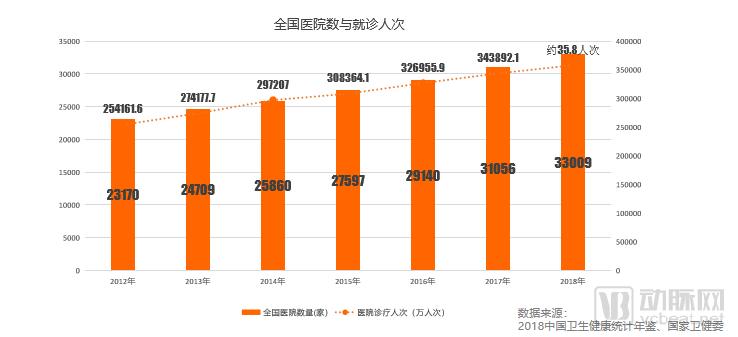
China: 33,009 Hospitals, 3.58 Billion Patient Visits; Supply and Demand Growth Relatively Balanced
According to the latest data, by the end of 2018, there were 33,009 hospitals nationwide in China. From 2012 to 2018, an average of approximately 1,640 new hospitals were established annually, representing an average annual growth rate of 6.1%. The number of hospital visits increased from 2.54 billion to 3.58 billion, with an annual increase of 173 million visits and an average annual growth rate of 5.9%.Overall, the number of hospitals and hospital visits have grown relatively steadily.
>>>>
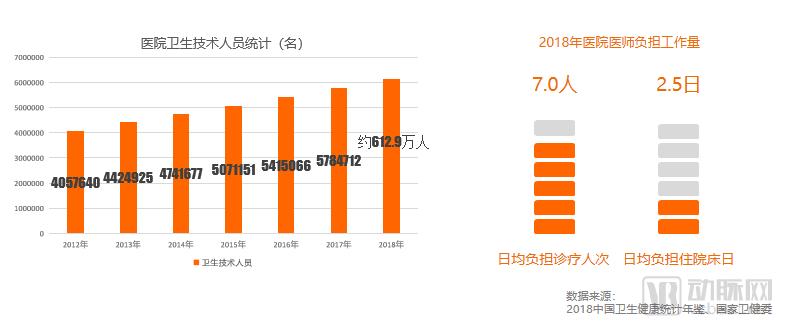
The Number of Hospital Health Technicians Has Increased Year by Year, Yet Physicians’ Workloads Remain Heavy
Statistics on hospital health technical personnel show that from 2012 to 2018, the number of such personnel in hospitals increased from 4.058 million to 6.129 million, with an average annual increase of 345,000. As of 2018, the average daily workload for physicians in hospitals nationwide was 7.0 outpatient visits and 2.5 inpatient bed-days per physician.Overall, although the number of hospital health technicians has increased year by year, the workload of hospital physicians has not decreased.
Imbalanced Supply and Demand: It Is Imperative for Hospitals to Improve Efficiency and Reduce Burdens
Overall, hospitals accounted for 43.1% of the market supply while representing only 3.3% of the total number of providers, making it imperative to improve efficiency and reduce the burden on the hospital supply side.
>>>>
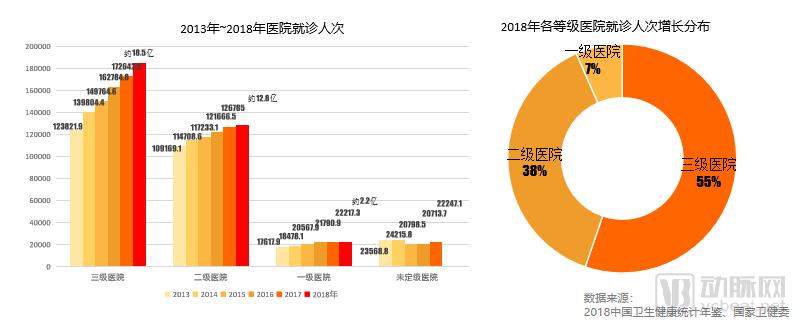
Tertiary Hospitals Saw the Largest Increase in Patient Visits; Tertiary Hospitals Bear the Heaviest Burden of Medical Supply
Regarding the detailed growth in hospital patient visits, we observed varying degrees of increase across tertiary, secondary, and primary hospitals, while ungraded hospitals experienced a decline in patient visits. In terms of the distribution of this growth, tertiary hospitals accounted for 55% of the total increase across all hospitals, with an average annual increase of 122 million visits; secondary hospitals contributed 38% of the incremental growth, averaging approximately 38 million additional visits per year; and primary hospitals represented 7%, with an average annual increase of 8.77 million visits.The growth in this distribution of patient visits indicates that tertiary hospitals remain the preferred choice for residents seeking medical care, thereby continuously increasing the burden on their medical service supply.
>>>>
Tertiary Hospitals Bear the Heaviest Burden of Medical Services Despite Being Fewest in Number: How to Resolve This Is Key
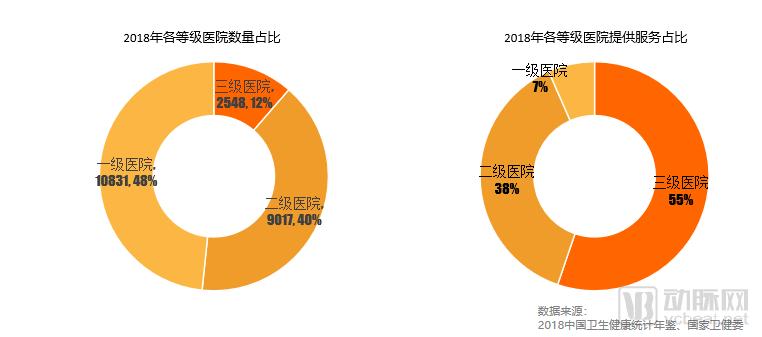
A further analysis of the supply dynamics across hospital tiers reveals that there are 2,548 tertiary hospitals, accounting for 12% of the total number of hospitals but providing 55% of medical services. There are 9,017 secondary hospitals, representing 40% of the total and delivering 38% of medical services. Primary hospitals are the most numerous, with 10,831 facilities comprising 48% of the total, yet they contribute only 7% of medical service volume. Overall, tertiary hospitals, despite constituting only 12% of the total number of hospitals, handle 55% of patient visits, which further demonstrates thatThe burden of medical service provision in tertiary hospitals has become an issue that must be addressed.
>>>>
Introducing Technological Increment to Resolve the Impossible Trinity in Healthcare
In most healthcare scenarios, it is impossible to simultaneously improve healthcare quality, increase the accessibility of medical services, and reduce the cost of medical services without breaking existing rules. VCBeat’s Eggshell Research Institute refers to this as the “Healthcare Impossible Triangle Model.” The only solution to this healthcare trilemma is to introduce new technological increments. Only by changing operational methods, industrial structures, and social norms can new technologies drive all variables within the triangle model to develop in the same direction.
We believe that this new technological increment is built upon "smart healthcare":
1. Reduces the workload of hospital administrative staff and improves work efficiency;
2. Support the clinical activities of healthcare professionals by collecting and processing patients' clinical medical information, providing assistance in diagnosis and treatment as well as clinical decision-making, thereby improving the quality of care delivered by healthcare staff;
3. Expanded the coverage of medical services, enabling more patients to access high-quality healthcare;
4. Assist in hospital management and decision-making, thereby enabling hospitals to improve efficiency, reduce costs, and enhance service quality;
To this end, we have constructed the “Smart Healthcare” funnel model.
>>>>
Hospital as the Scenario, Data Flow as the Core: Revisiting Innovation through “Three Dimensions + Four Domains”
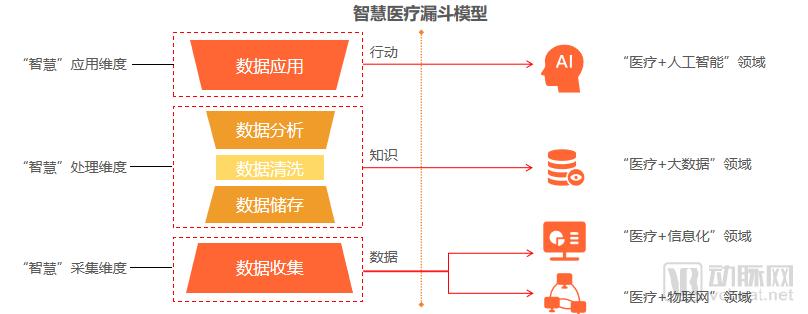
“Smartification” is achieved by building regional health information platforms for electronic health records, leveraging cutting-edge digital technologies to facilitate interaction among patients, healthcare professionals, medical institutions, and medical devices. This approach progressively advances informatization and intelligence, effectively improves healthcare quality, curbs the rising cost of medical care, and establishes an efficient, high-quality, and affordable smart healthcare system, thereby promoting the prosperous development of the healthcare sector. “Smart Healthcare” encompasses numerous fields, from the perspectives of data collection, processing, and application,We will provide a detailed explanation of “Smart Healthcare” from four domains: artificial intelligence, big data, informatization, and the Internet of Things.
>>>>
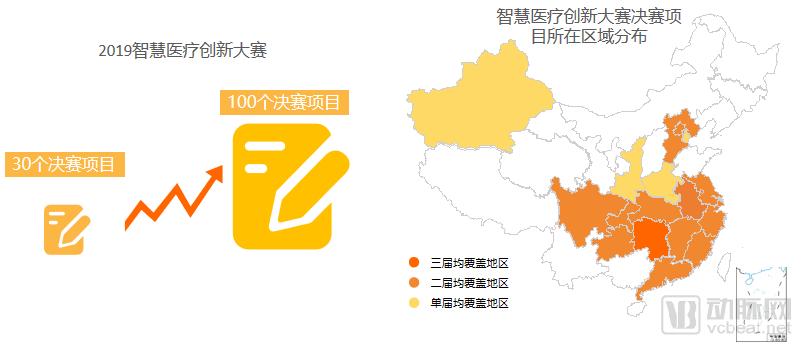
Founded in Hunan, with participants from 17 regions across China, its influence extends nationwide.
Compared with the previous two editions, the 2019 Smart Healthcare Innovation Competition saw significant improvements in both participation scale and social impact. The number of projects in the finals expanded from 30 in 2017 to 100 in 2019. Furthermore, although the competition was established in Hunan Province, its influence has rapidly expanded nationwide year by year. In 2019, the finalist projects came from provinces across central and eastern China, covering a total of 17 regions.
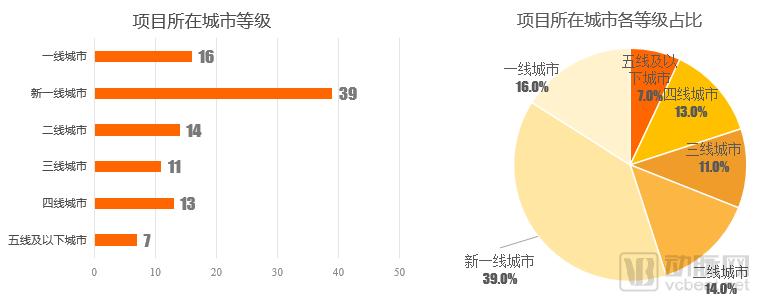
Tier-1 and New Tier-1 Cities as the Core: Vertically Delving into the "Smart" Healthcare Needs of Remote Areas
Compared with the previous two editions, apart from changes in participation scale and social impact, the 2019 Smart Healthcare Innovation Competition placed greater emphasis on vertically deepening the “smart” transformation of healthcare infrastructure in remote areas. Among all finalist projects, those from first-tier and new first-tier cities remained the mainstay of digital project development and demand, accounting for 55% of the total, with new first-tier cities contributing the highest number of entries at 39 projects. Second- and third-tier cities accounted for a total of 25 finalist projects. Notably, 20 projects, representing 20% of the finalists, originated from fourth-tier, fifth-tier, and lower-tier cities.The “smart” transformation of healthcare is no longer the exclusive domain of large hospitals and major cities; remote areas and small hospitals also have a pronounced need for digital infrastructure development.
>>>>
"Originated within the hospital system, rooted in serving hospitals, and implemented in hospitals."
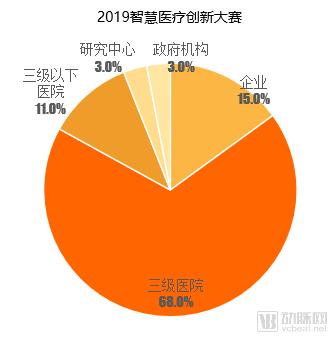
Among the 100 projects that participated in the finals of the 2019 Smart Healthcare Innovation Competition:
1. Hospitals are the primary applicants (nearly 80%), with tertiary hospitals accounting for 68% and non-tertiary hospitals for 11.0%;
2. The proportion of applicants led by enterprises also reached 15.0%;
3. The proportion of applicants primarily consisting of research centers and government agencies was only 3.0% each;
The Smart Healthcare Innovation Competition originated within the hospital system, is rooted in serving hospitals, and is implemented in hospitals.
The Impossible Trinity Model in Healthcare: Focusing on Reducing Costs and Improving Efficiency
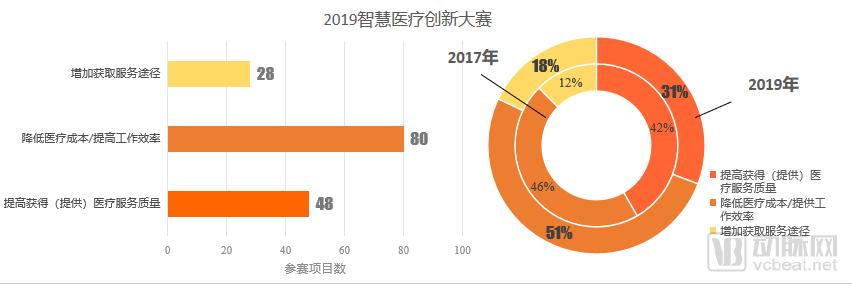
Among the 100 projects in the finals of the 2019 Smart Healthcare Innovation Competition:
1. The largest number of projects, totaling 80, can reduce healthcare costs and improve operational efficiency; 48 projects can help enhance the quality of healthcare service delivery; and 28 projects can increase access to services.
2. The proportion of projects that can reduce medical costs/improve work efficiency and those that can increase access to services is on the rise; the share of projects that help improve the quality of healthcare delivery has relatively decreased by 11%;
Interpreting from the perspective of addressing pain points, projects participating in the 2019 Smart Healthcare Innovation Competition focused more on reducing healthcare costs and improving work efficiency.
>>>>
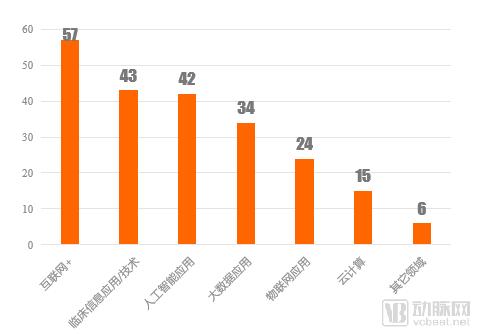
Most "Internet Plus" enterprises span multiple niche sectors.
Among the 100 projects in the finals of the 2019 Smart Healthcare Innovation Competition:
1. Up to 57 projects involved Internet Plus;
2. More than 30 projects involve the application of clinical information technologies, artificial intelligence, and big data;
3. A single project often involves multiple sub-sectors;
>>>>
Support Needs Span Six Areas, with Promotional Needs Drawing the Most Attention
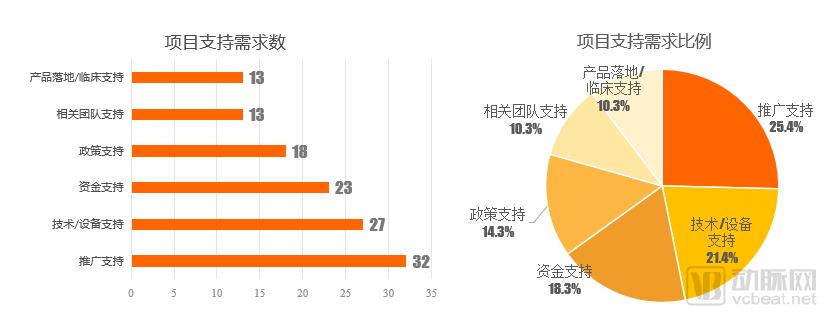
Data shows that the 100 projects participating in the finals of the 2019 Smart Healthcare Innovation Competition, including those with overlapping selections, all require varying degrees of support in six key areas: promotion, technology/equipment, funding, policy, team building, and product implementation/clinical application. Among all listed needs, 32 projects sought support in promotion, accounting for 25.4%—the highest proportion. Meanwhile, 27 and 23 projects expressed certain needs in technology/equipment and funding, respectively, representing 21.4% and 18.3% of the total.
>>>>
Serving Five Key Target Groups, with a Primary Focus on the Needs of Physicians and Patients
From the perspective of target users, among the 100 projects that entered the finals of the 2019 Smart Healthcare Innovation Competition (including overlapping categories), the primary target groups were physicians, patients, nurses, family members, and other stakeholders. Physicians and patients were the key focus groups across all projects. The largest number of projects—56, accounting for 41.8%—were designed to serve physicians, while 40 projects, representing 29.9%, targeted patients.
>>>>
The Integration of Multiple Networks Emerges in the Era of the Internet of Everything
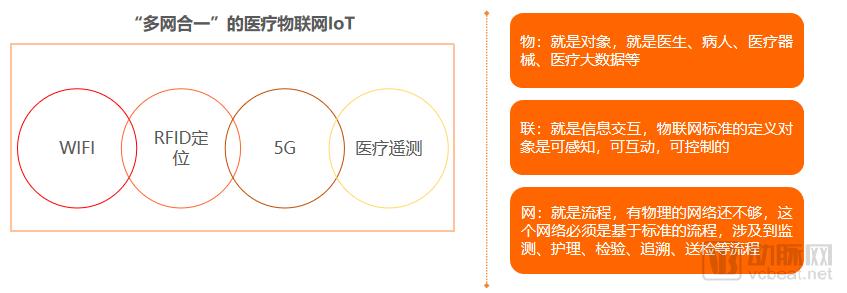
The Medical Internet of Things (MIoT) employs a converged network architecture integrating Wi-Fi, RFID positioning, 5G, Zigbee, and medical telemetry networks. By deploying electronic tags, sensors, and network connections on various hospital assets, or by equipping individuals with wearable devices, MIoT enables refined management of personnel and assets within hospitals. This approach helps hospitals improve efficiency, optimize management, and reduce costs, thereby ushering hospital administration into the era of intelligence.
>>>>
Technological Advancements and Policy Support Become the Primary “Driving Forces” Behind the Development of the Medical IoT Market
Drivers – Technology
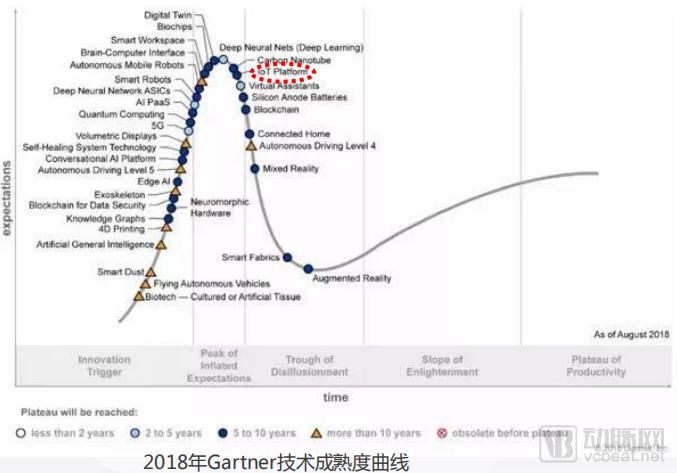
According to the 2018 Gartner Hype Cycle, IoT platform technology is nearing the end of its Peak of Inflated Expectations and will be widely adopted across various industries over the next 5–10 years, with healthcare being one of them.
Drivers – Policy
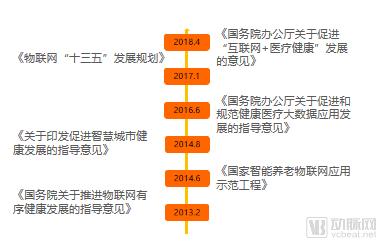
The Internet of Medical Things (IoMT) has become a key component of the national strategy to promote smart healthcare.
>>>>
Medical Devices and System Software Are the Largest Market Segments in the Medical Internet of Things
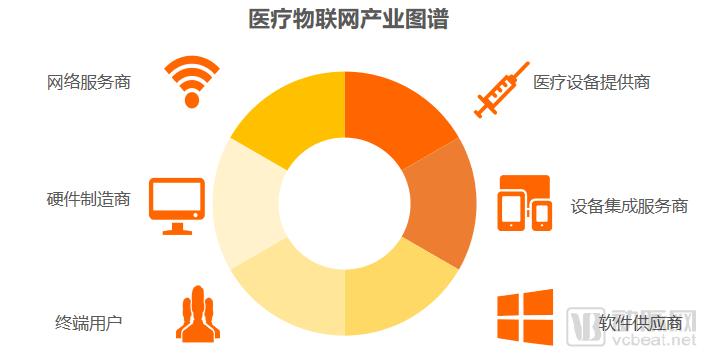
Network service providers, hardware manufacturers, software providers, equipment integration service providers, medical device providers, and end users collectively constitute the industrial ecosystem of the Internet of Medical Things (IoMT).
>>>>
The primary application scenarios focus on software supply and end users.
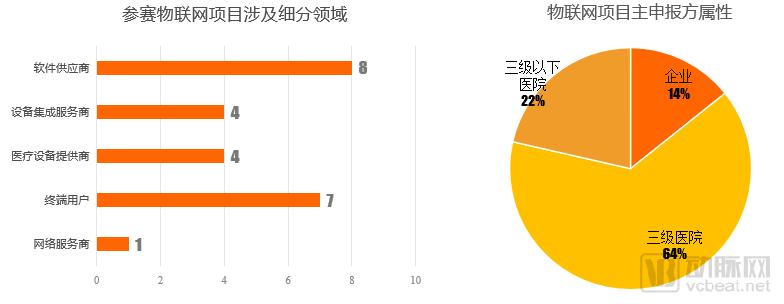
Classified by the sub-sectors of the medical Internet of Things (IoMT) industry chain,Among the finalists of the 2019 Smart Healthcare Innovation Competition, five sub-sectors of the Internet of Things (IoT) were represented. Software providers accounted for the largest share with eight projects, followed by seven projects involving end-users, while network service providers had the fewest entries, with only one project.
From the perspective of the attributes of the primary project applicant,Finalist projects in the IoT sector were sourced as follows: 64% from tertiary hospitals, 14% from enterprises, and 22% from hospitals below the tertiary level.
Patients and physicians are the primary target groups, with the most urgent need for technical/equipment support.
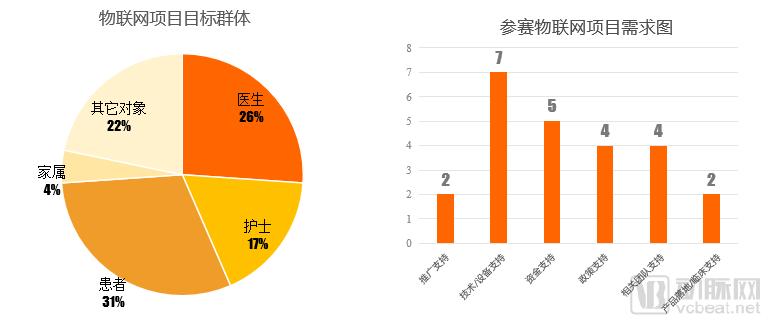
In the final round of IoT projects, 31% are targeted at patients, 26% at physicians, and 22% at other entities (such as devices).
Among the finalist projects in the IoT sector, seven companies have the most urgent need for support in technology and equipment, followed by significant demands for funding, policy assistance, and team-related support.
>>>>
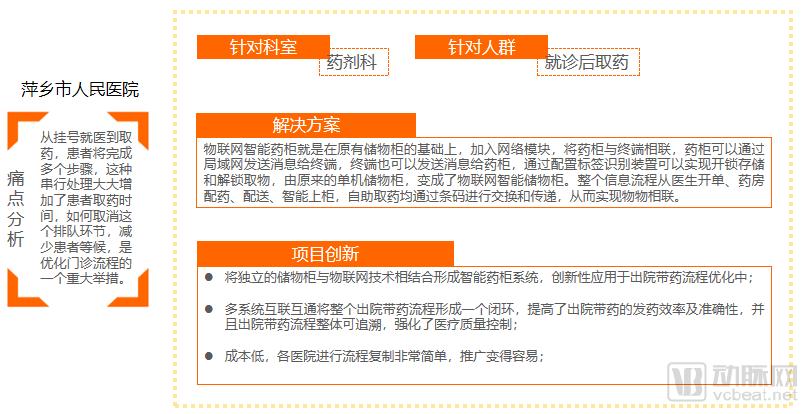
Outstanding Innovation Case: Eliminating Queues with IoT-Enabled Smart Medication Cabinets
Applicant Enterprise:Pingxiang People's Hospital
Solution Analysis: From registration and consultation to medication pickup, patients must complete multiple steps. This sequential processing significantly increases the time required for patients to obtain their medications. Eliminating this queuing step to reduce patient wait times is a major initiative in optimizing outpatient processes.
Target Department:Department of Pharmacy
Target Audience:Patients Picking Up Prescriptions After Consultation
Solution:IoT-enabled smart medication cabinets are developed by integrating network modules into traditional storage lockers, thereby connecting the cabinets with terminal devices. The cabinets can transmit messages to the terminals via a local area network (LAN), and the terminals can likewise send commands to the cabinets. By configuring label recognition devices, the system enables automated locking for storage and unlocking for retrieval, transforming standalone storage lockers into IoT-based smart storage units. Throughout the entire information workflow—from physician order entry, pharmacy dispensing, and distribution, to intelligent restocking and self-service medication pickup—data is exchanged and transmitted via barcodes, thereby achieving interconnectivity among all entities.
Project Innovation:
1. Integrating standalone lockers with Internet of Things (IoT) technology to form a smart medication cabinet system, innovatively applied to optimize the discharge medication process;
2. Interconnectivity among multiple systems creates a closed-loop process for discharge medications, improving the efficiency and accuracy of medication dispensing upon discharge. Furthermore, the entire discharge medication process is fully traceable, thereby strengthening medical quality control.
3. Low cost, making it very simple for hospitals to replicate the process and facilitating widespread adoption;
>>>>
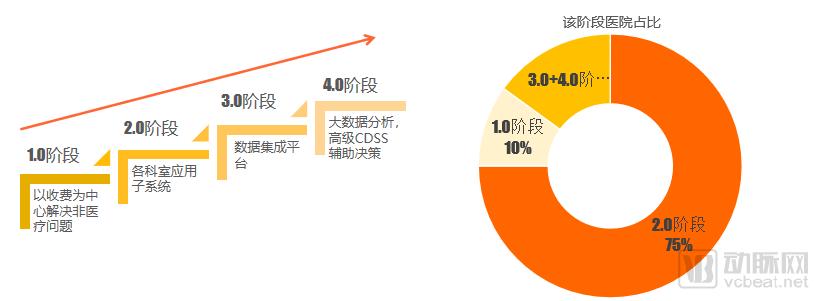
Four Stages of Development: 75% of Hospitals Are at Stage 2.0, with Promising Future Potential
VCBeat · VCBeat Statistics:
1. Most healthcare institutions have already passed the first stage and are currently in the second stage;2. Approximately 75% of hospitals have reached Stage 2, while those still remaining at Stage 1 account for about 10% of the total;
3. Currently, Phase III and Phase IV are proceeding largely concurrently, with hospitals in this stage accounting for approximately 15%;
>>>>
Building a Healthcare Information System Centered on Electronic Medical Records
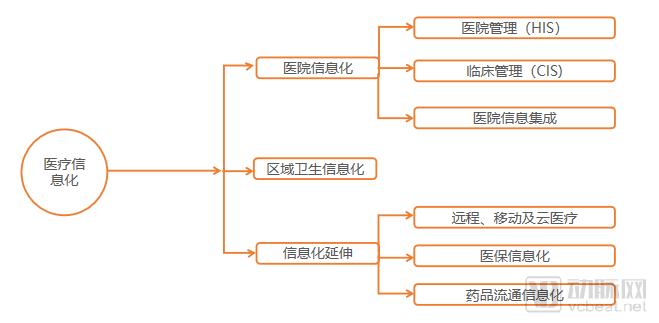
Key Architectures in Healthcare Informatics: Hospital informatics centers on electronic medical records (EMR), leveraging information technology to enable the acquisition, processing, storage, transmission, and sharing of hospital management and clinical data. This facilitates the digitalization of patient information, medical processes, management workflows, healthcare services, and information exchange.
>>>>
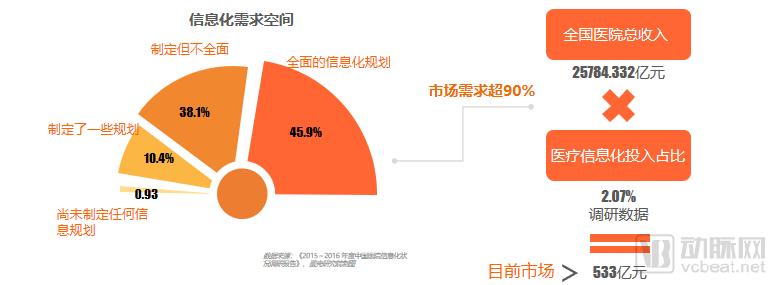
Market potential exceeds 90%, with market demand size greater than RMB 53.3 billion
Data shows that 45.9% of hospitals have formulated comprehensive informatization plans, 38.06% have developed incomplete plans, 10.45% have only established partial plans, and 0.93% have not yet formulated any plans. The results indicate that over 90% of hospitals have a demand for informatization planning.
VCBeat Research Institute projected that the market size for healthcare informatization would reach RMB 53.3 billion in 2016. Driven by policy-induced expansion of the existing market and the growing number of healthcare institutions, current market demand far exceeds RMB 53.3 billion.
>>>>
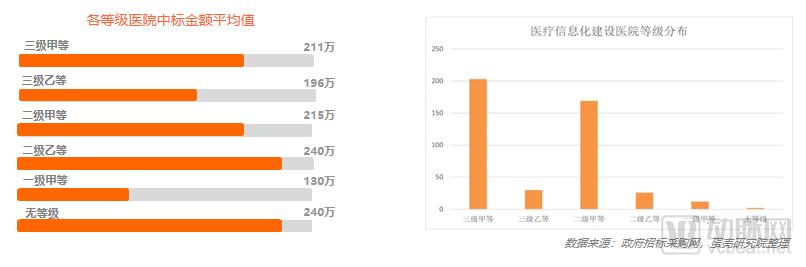
Tier-3 hospitals as the primary demand side, with an average winning bid amount of approximately RMB 2 million
An Analysis of Hospital Information System Procurement in 2018: As of September 2018, tertiary Grade A hospitals remained the primary investors in healthcare informatization construction and equipment upgrades, driven by factors such as heavy clinical workloads, significant challenges in clinical and hospital management, and a high acceptance rate of new technologies. Secondary Grade A hospitals are predominantly county-level hospitals; currently, their demand for healthcare informatization transformation is steadily increasing, approaching the level seen in tertiary Grade A hospitals.
Based on the tender amounts, the average procurement value across hospitals of different tiers does not vary significantly, generally clustering around RMB 2 million. However, Grade 1A hospitals, being smaller in scale and having limited payment capacity, have an average winning bid amount of only RMB 1.3 million for informatization projects.
>>>>
Focusing on Four Key Implementation Scenarios: Tertiary Hospitals as the Main Body of Information Technology Construction
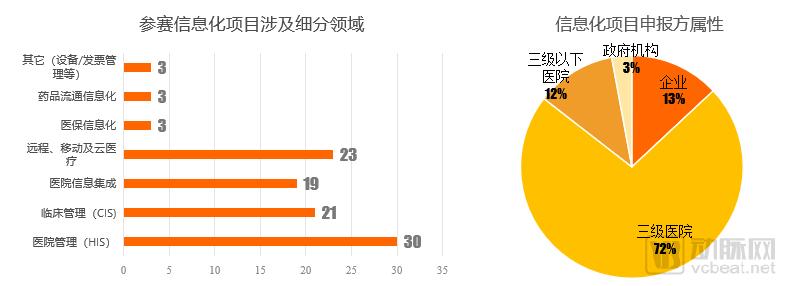
Classified according to the segmented fields of the medical informatization industry chain,In the final round of the 2019 Smart Healthcare Innovation Competition, there were seven specialized subfields of health informatics. Hospital Information Systems (HIS) had the highest number of projects, totaling 30, followed by telemedicine, mobile health, and cloud healthcare with 23 projects, clinical management with 21 projects, and information integration with 19 projects.
From the perspective of the primary applicant's attributes,72% of the finalist projects in the informatization field originated from tertiary hospitals, 13% from enterprises, and 12% from hospitals below the tertiary level.
>>>>
Doctors and patients are the primary target audience, with high demand for promotion and technology/equipment.
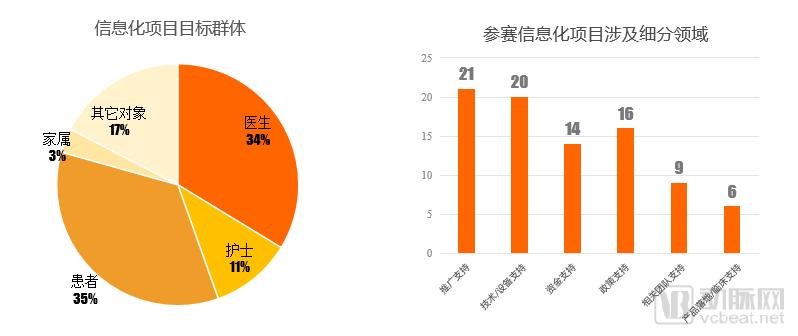
Among the final-round informatization projects, 35% are patient-focused and 34% are physician-focused;
Among the finalist projects in the informatization sector, 21 have the most urgent need for promotion support, followed by 20 projects requiring technical or equipment support.
>>>>
Excellent Innovation Case: Internet+ Home-based Maternal and Child Health Care
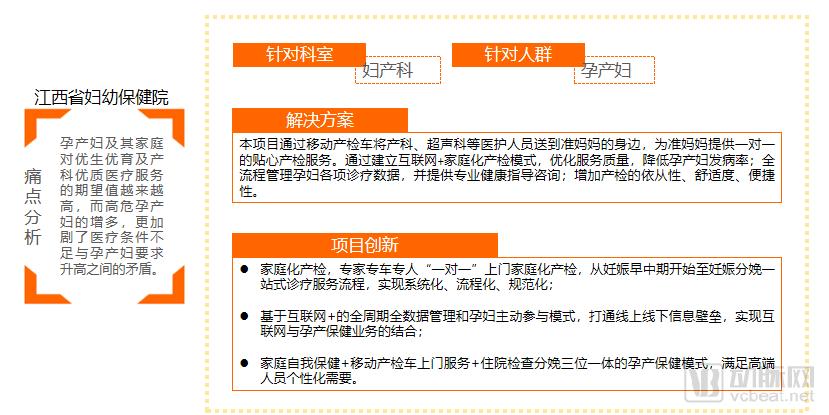
Applicant:Jiangxi Provincial Maternal and Child Health Hospital
Solution Analysis: Expectations among pregnant women and their families for eugenics, healthy childbirth, and high-quality obstetric medical services are rising, while the increasing number of high-risk pregnancies has further intensified the contradiction between inadequate medical resources and growing patient demands.
Target Departments:Obstetrics and Gynecology
Target Population:Maternal
Solution:This project brings obstetricians, sonographers, and other healthcare professionals directly to expectant mothers via mobile prenatal care vehicles, providing personalized one-on-one prenatal checkup services. By establishing an “Internet+” home-based prenatal care model, it aims to optimize service quality and reduce maternal morbidity. The project enables full-process management of pregnant women’s diagnostic and treatment data while offering professional health guidance and consultation, thereby enhancing adherence to, comfort with, and convenience of prenatal care.
Project Innovation:
1. Home-based prenatal check-ups: Experts provide dedicated, one-on-one in-home services via private transport, offering a one-stop diagnostic and treatment pathway from early to mid-pregnancy through delivery, ensuring systematic, streamlined, and standardized care;
2. Leveraging an "Internet Plus" model for full-cycle, comprehensive data management and active maternal engagement, break down information barriers between online and offline channels to integrate internet technologies with maternal and perinatal healthcare services;
3. A tripartite model of maternal healthcare integrating home-based self-care, mobile prenatal check-up vehicles providing door-to-door services, and inpatient examinations and delivery, catering to the personalized needs of high-end clientele.
In the full report, “2019 Smart Healthcare Innovation Competition White Paper,” we will continue to provide our analysis.Smart Healthcare Big Data and Smart Healthcare Artificial Intelligence Industries, and Related Competition Projects.
Finally, we will provide an outlook on the future of the “Smart Healthcare” industry. Drawing on interviews and expert commentary from the competition, we will demonstrate to industry participants how the Future Smart Healthcare Innovation Competition will effectively empower the “Smart Healthcare” sector through project selection, mentorship, investment, and incubation.
For more content, please see:
"2019 Smart Healthcare Innovation Competition White Paper"
To read the remaining chapters, please scan the QR code to become a VCBeat member and download the full report, or scan the QR code in the VCBeat Reports section to download the report.