

DingTalk by Alibaba: Internet Healthcare Enters 2.0 Era
“I unequivocally and firmly support internet healthcare.”
During the 2019 China Hospital Information Network Association Conference (CHIMA 2019), Wang Hongshuai (alias: Ye Shi), Director of the Healthcare Industry at Alibaba DingTalk, concluded his speech with this distinctly heroic statement.
Currently, internet healthcare has moved beyond its initial phase of unregulated exploration, with internet giants such as BAT entering the field and driving a series of irreversible new trends. Notably, Alibaba’s DingTalk, together with its ecosystem partners, has launched a coordinated, large-scale entry into the healthcare industry, pooling resources to build Internet Healthcare 2.0—a move that emerged as a major highlight of CHIMA 2019.
On the afternoon of July 5, 2019, the “2019 DingTalk Future Hospital New Ecosystem Forum,” jointly organized by DingTalk and VCBeat, was held at the Xiamen International Conference & Exhibition Center. This marked the second appearance of the DingTalk Future Hospital initiative at the CHIMA Congress.
Chen Qiulin, Executive Deputy Director of the Health Industry Development Research Center at the Chinese Academy of Social Sciences; Hu Yaguo, Director of the Information Center of the Quzhou Municipal Health and Family Planning Commission; Lang Yiqing, Director of the Information Center of Zhejiang Provincial People’s Hospital; Qin Kaizhou, Director of the Information Department of the Obstetrics and Gynecology Hospital Affiliated to Fudan University; Sheng Yingtao, Director of the Otolaryngology Department of Xiaoshan District First People’s Hospital; as well as DingTalk Vice Presidents Yang Meng and Zhang Sicheng, attended the forum.
At the forum, representatives from DingTalk provided a detailed interpretation of the architectural logic and strategic focus of the new ecosystem for Future Hospitals, presented the achievements made in Future Hospital construction over the past year, and engaged dozens of guests from the industry, investment community, and healthcare institutions in discussions on key industry concerns regarding digital empowerment in healthcare.

During the same period, the DingTalk Medical Ecosystem Alliance, “Ding Yi Hui,” was officially established. Eight investment institutions, including Yuanjing Capital, Yunfeng Capital, Legend Capital, Chongshan Capital, BlueRun Ventures, Shangshi Capital, Huachuang Capital, and Fengrui Capital, joined the DingTalk Medical Ecosystem Venture Capital Circle to jointly empower high-growth enterprises within the DingTalk ecosystem. Tian Min, Partner at Yuanjing Capital, stated at the forum that the DingTalk platform enables numerous entrepreneurs to rapidly deliver high-quality products and services to the grassroots level. He expressed strong optimism about this model, which effectively integrates policy implementation with grassroots service delivery.
In addition, DingTalk presented the Best Operational Service Award and the Best Application Award to partner enterprises that rapidly achieved scale effects within the new ecosystem: GuKan Medical Management, FengRui Medical Alliance, LianFan Technology, and the Gold Medal Team.
Yang Meng stated that Alibaba’s Future Hospital ecosystem includes Alibaba Cloud, AliHealth, and DingTalk. The DingTalk Future Hospital initiative will collaborate with Alibaba Cloud, AliHealth, partners, and investors to establish a closed-loop business model, which will serve as the foundation for creating closed-loop product and technology ecosystems. “I believe that the Future Hospital will undoubtedly be internet-based, forming a unified and orderly large-scale ecosystem of social healthcare through cross-organizational and cross-boundary collaboration, thereby realizing the vision of ‘making no disease difficult to treat’ at an early stage.”
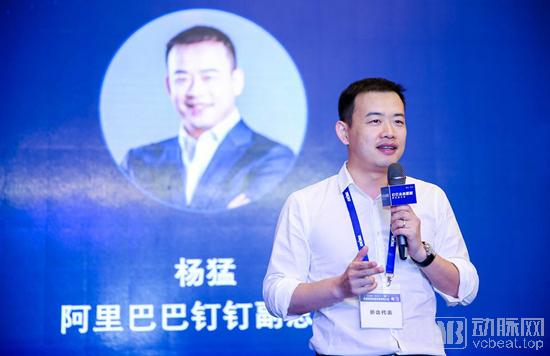
DingTalk Vice President Yang Meng. Image provided by DingTalk
Zhang Sicheng interpreted the operational logic of DingTalk’s new healthcare ecosystem through the multiplier effect generated by the integration of five key elements: “online, open, secure, capital, and ecosystem base.”
“Leveraging digital operations to connect every node of organizational workflow, thereby achieving multi-dimensional online integration of organization, communication, collaboration, business, and ecosystem, is the fundamental starting point of DingTalk,” pointed out Zhang Sicheng. He noted that an open platform can better support innovation; security serves as both the guardian of customer trust and a core principle upheld by DingTalk; DingTalk regards capital as a vital resource to accelerate the growth of enterprises within its ecosystem; meanwhile, the DingTalk Space, an ecosystem hub established in Hangzhou last June, leverages Alibaba’s commercial DNA to stimulate and cultivate the endogenous development capabilities of resident enterprises.
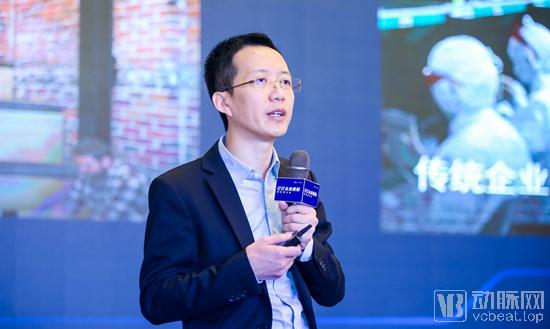
DingTalk Vice President Zhang Sicheng. Photo provided by DingTalk.
In 2018, DingTalk had already covered more than 3,000 public hospitals across China, with 300,000 online doctors. For a platform that only entered this sector in the second half of the internet healthcare game, this is a commendable achievement.
In Wang Hongshuai’s view, DingTalk is not a healthcare company but an enterprise service platform. Leveraging its robust infrastructure and substantial user traffic, it provides businesses with new opportunities to achieve genuine integration with hospitals and break through existing bottlenecks. He pointed out that in industries with extreme scarcity on the supply side, such as healthcare and education, it is very difficult to gain traction solely from the consumer (C-end) perspective. “The second half of the internet healthcare game will be a battlefield dominated by the business (B-end) sector.”
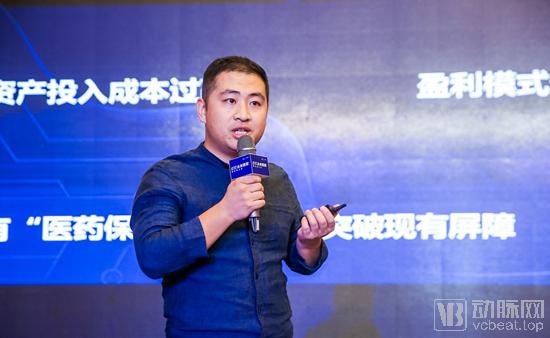
Wang Hongshuai, Director of the Healthcare Industry at DingTalk. Image provided by DingTalk.
According to Wang Hongshuai, hospitals need not merely informatization, but future-oriented digital transformation. DingTalk has already established robust infrastructure and empowers the healthcare industry through its “Five Online” capabilities.
First, organizational connectivity. With all staff online, the organizational structure is clear at a glance, and new digital business cards help improve the efficiency of doctor consultations comprehensively.
Second, communication is always online. A flat and transparent communication style fosters a more open and positive hospital culture, boosts employee engagement, and simplifies management. Professional group categorization enables a perfect closed-loop for departmental management and makes collaborative consultations more efficient and convenient.
Third, Collaborative Online. Collaboration efficiency is comprehensively met from large closed loops to small closed loops, administrative office work is fully improved in efficiency, and time is returned to clinical practice within the hospital; two-way referrals between hospitals and remote consultations help improve the efficiency of medical consortia and address the shortage of medical resources.
Fourth, online business operations. Clinical services are fully digitized and moved online, helping hospitals and doctors break free from spatial constraints and maximize the efficiency of medical resource utilization; AI-assisted diagnostic and therapeutic products, powered by data, enable comprehensive improvements in physician efficiency.
5. Online Ecosystem. Comprehensively drive the entire industry chain, including pharmaceutical companies, pharmacies, insurance providers, primary care institutions, genetic testing services, and patients, to achieve full-lifecycle health management and health early warning.
Digitalization is the foundation of Internet Healthcare 2.0 as defined by DingTalk. How, then, will digitalization enhance the management efficiency of hospital resources—personnel, finances, and materials—as well as operational workflows? How will it empower the professional advancement of clinicians? And how will it improve patients’ sense of gain from medical services? During the roundtable discussion at the forum, guests shared their insights. VCBeat has selected and presented some of their notable viewpoints below:
In hospital management, maintaining information interoperability among different departments is a critical issue.
Director Lang Yiqing stated that digitalization should serve management. Hospital management is similar to corporate operations, where hospital leaders and functional departments use daily operational data to promptly identify and resolve issues. Through these data, hospitals are able to improve medical quality and enhance medical services.
Yang Jianjun, CEO of Gu Kan Medical Management, pointed out that digital hospitals should not be confined to a single entity; rather, they can radiate and extend to partner organizations, medical consortiums, and even to county-level medical communities and healthcare groups, thereby forming a highly effective collaborative model.
Liu Yifeng, General Manager of Yunxuetang, offered insights from the perspective of digitalization empowering physicians’ self-directed learning. “Yunxuetang delivers services through an integrated ‘platform + content + operational services’ model, which includes tool-based enablement and provides cloud-based courses to empower enterprise employees.”
Mr. Ye Angyue, COO of Lianfan Technology, introduced the company’s digital nurse scheduling solutions for hospitals. Lianfan Technology provides integrated internet products covering product design, deployment, and operations, surpassing traditional spreadsheet-based scheduling models. Its solutions have already been adopted by more than one-third of Grade A tertiary hospitals across China. In the future, Lianfan Technology will explore the granular segmentation of nursing scenarios and leverage the DingTalk platform to interconnect the entire nursing care system.
Director Qin Kaizhou stated that in clinical practice, physicians need to leverage various methods, including ultrasound and laboratory tests, to make relatively accurate diagnoses. As hospitals operate as a system requiring interdepartmental collaboration, this collaborative process necessitates informatization. However, given the stringent requirements for medical data security, providing data coordination applications via Software-as-a-Service (SaaS) can better ensure data security and controllability.
Liang Hui, Product Director at Yitu Healthcare, pointed out that Yitu has made numerous attempts to empower clinical physicians in their professional development. For instance, through collaboration with women’s and children’s hospitals, Yitu analyzed over 5 million electronic medical records to identify 55 disease diagnoses. Leveraging artificial intelligence algorithms, this approach enables junior physicians to attain diagnostic and treatment capabilities comparable to those of senior physicians. Furthermore, Yitu has upgraded its products into intelligent internet-based applications that connect patients with physicians. The company plans to collaborate with DingTalk in the healthcare sector, aiming to assist clinical physicians in documenting medical records more effectively in outpatient settings.
Tang Haofu, Chairman of Chuangrui Investment, emphasized the application of digitalization in assisting physicians with scientific research. He pointed out that the future hospital of the digital era has three key dimensions: the future of clinical diagnosis and treatment capabilities, the future of management capabilities, and the future of innovation and research capabilities. Among these, the first two have already seen numerous industrial attempts, while digitally empowering hospitals’ innovation and research capabilities represents an important direction for future applications.
Director Hu Yaguo believes that digital healthcare is crucial for the self-improvement of primary care physicians. By leveraging digital platforms to amplify limited medical resources and quantify the work of primary care physicians, both doctors and patients have received substantial benefits. In particular, service teams and community residents have reported a significantly enhanced experience.
Miao Miao, COO of Dashu Yida, pointed out that AI technology, when integrated with various scenarios, can provide solutions for connecting doctors and patients. For instance, at the primary care level, AI can clone specialists from tertiary hospitals to serve as physician assistants, empowering primary care physicians in a rapid, efficient, and cost-effective manner. This approach quickly enhances their diagnostic capabilities, proficiency, and efficiency, thereby better serving patients in grassroots communities.
Huang Ting, Deputy General Manager and Chief Operating Officer of Jianjian Family Doctor, stated that Jianjian Family Doctor has built a smart platform centered on addressing issues such as low patient satisfaction and difficulties in standardizing management, achieving horizontal and vertical data interoperability. For instance, by equipping family doctors with follow-up kits and leveraging intelligent devices, the company enables instant contract signing and profile creation. The integration of AI facial recognition technology facilitates efficient follow-ups, thereby enhancing the sense of gain for both family doctors and patients.
Shi Peng, CEO of Fengrui Medical Alliance, stated that future digital hospitals can instantly onboard hundreds of thousands of users online, enabling physicians to rapidly reach patients for health education and follow-up care, thereby bridging the “last mile” in grassroots healthcare service delivery.
Guest speakers demonstrated the feasibility of digital future hospitals from various perspectives. Alibaba DingTalk has entered this arena as an infrastructure platform provider, vigorously integrating technological and capital resources to build a new ecosystem for future hospitals. This move has reignited many practitioners’ enthusiasm for internet healthcare, marking a significant milestone for the industry. We await with anticipation the changes that DingTalk’s Future Hospital initiative will bring to internet healthcare.