

Anxiang (Ping An Lenovo) Smart Healthcare Showcases Three Major Product Systems at CHIMA 2019 and Files IPO Prospectus
VCBeat (WeChat ID: vcbeat) has learned that the annual benchmark event in the field of healthcare informatics—the “2019 China Hospital Association Information Management Conference (CHIMA 2019) and Exhibition of Medical Information Network Technologies and Products from China and Abroad”—was held in Xiamen from July 4 to July 7. As a representative force driving innovation in healthcare informatics solutions, Ping An Group and Anxiang Smart Healthcare, a subsidiary of Lenovo Group, made a strong appearance with their three major solution portfolios: Smart Hospital, Smart Healthcare, and Smart Health. The showcase highlighted the leading technologies and practical implementations of Anxiang Smart Healthcare’s solutions.
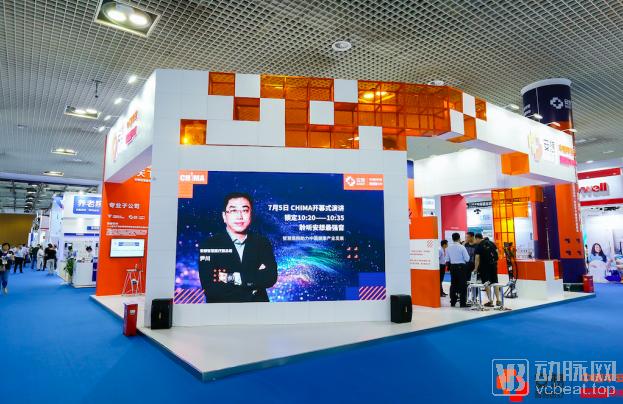
The China Hospital Information Network Association Conference (abbreviated as CHIMA) is a key platform for advancing the academic and technological development of healthcare informatization in China and enhancing the professional expertise of healthcare IT practitioners. At this year’s CHIMA conference, in addition to showcasing products and solutions, Anxiang Smart Healthcare contributed its experience and insights to the transformation of the smart health industry chain through keynote speeches at the main forum and specialized sessions on informatization.
On the morning of the 5th, during the main forum session, Yin Chuan, Vice President of Anxiang Smart Healthcare, took the initiative to deliver a keynote speech, introducing the company’s products and solutions to attendees. Yin Chuan stated that Anxiang Smart Healthcare is an enabler of China’s medical ecosystem and a pioneer of the new-generation smart hospital model. The company also fulfills its social responsibilities while exploring the development of China’s health industry. Anxiang Smart Healthcare will chart a new course for the development of smart healthcare with a perspective suited to the new era.
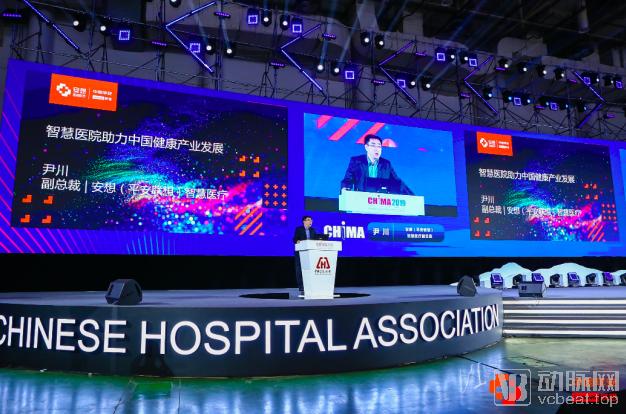
Yin Chuan, Vice President of Anxiang Smart Healthcare
Anxiang Smart Healthcare has been deeply engaged in medical informatization for many years. Its products and solutions integrate a “trinity” top-level design framework catering to medical institutions, government regulatory authorities, and resident patients. This approach enables data to flow more efficiently while reducing the need for physical visits by the public, thereby supporting healthcare professionals and benefiting patients, and empowering governments at all levels and medical institutions to achieve intelligent transformation.
On the afternoon of the 5th, Anxiang Smart Healthcare held a special session on informatization construction themed “Smart Hospitals Empowering the Development of the Health Industry,” inviting benchmark client hospitals to share their extensive case experiences and advanced concepts in building smart hospitals with Anxiang Smart Healthcare.
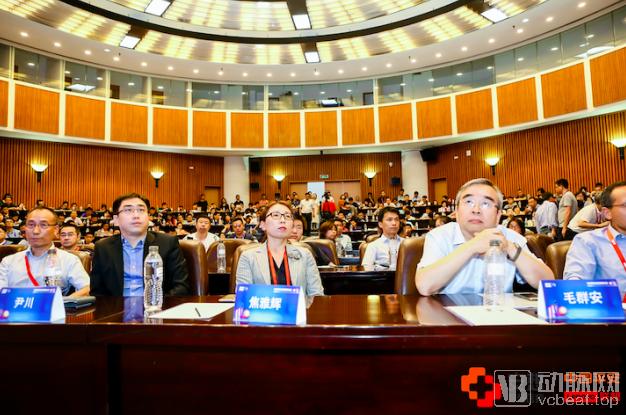
Shen Jianfeng, Researcher at the Big Data Office of the Department of Planning, National Health Commission; Gu Jin, President of Peking University Shougang Hospital; Liu Gang, Vice President of the First Hospital of Hebei Medical University; Mao Huiling, Vice President of Daqing Longnan Hospital; Xiao Hongliang, Chief Healthcare Researcher at IDC; Lin Lin, CEO of Anxiang Smart Healthcare; and Luo Bin, COO of Anxiang Smart Healthcare, attended the conference to discuss smart healthcare.
Shen Jianfeng, Researcher at the Big Data Office of the Department of Planning under the National Health Commission, stated in his address that hospital informatization construction is applicable to both the “wooden bucket theory” and the “iceberg theory.” Norms and standards provide a structured framework for informatization development, achieving a balance between capacity enhancement and performance demonstration.
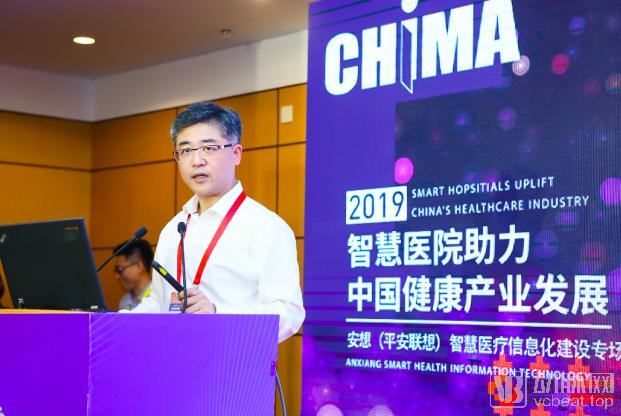
Shen Jianfeng, Researcher, Big Data Office, Department of Planning, National Health Commission
Gu Jin, President of Peking University Shougang Hospital, outlined pathways and practices for comprehensively improving cancer survival rates in China and shared his reflections on humanistic care in healthcare. Under his leadership, the Chinese Platform for Standardized Diagnosis and Treatment of Colorectal Cancer was launched in Beijing on June 27. This platform bridges the “last mile” gap in implementing standardized oncology care in clinical practice and is expected to effectively enhance cancer survival rates across the country.
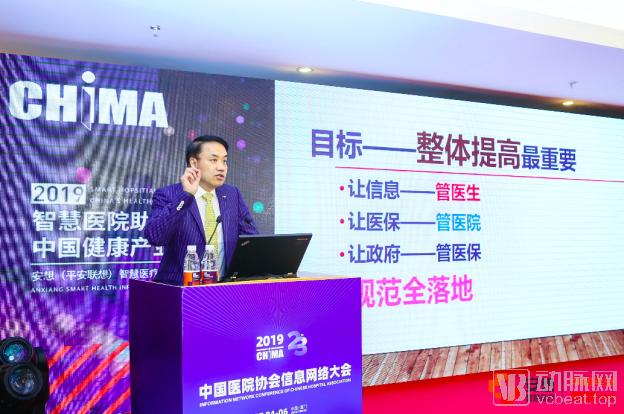
Gu Jin, President of Peking University Shougang Hospital
Subsequently, Liu Gang, Vice President of the First Hospital of Hebei Medical University, stated in his presentation that smart hospitals represent an advanced stage of hospital informatization, and this “advanced” nature necessitates top-level design. He emphasized that intelligence constitutes the core competitiveness of hospitals in the internet era. Liu Gang further remarked that hospital informatization has no endpoint; it is an ongoing journey characterized by continuous innovation and improvement.
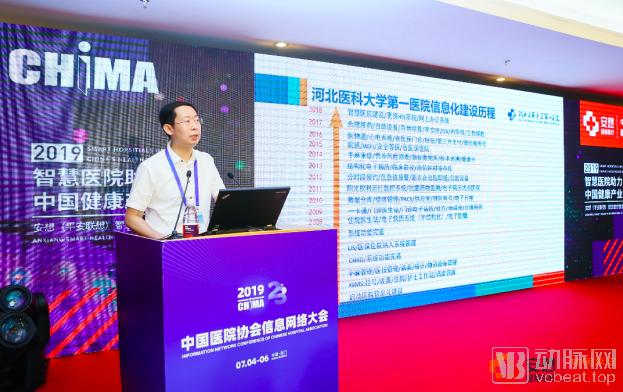
Liu Gang, Vice President of the First Hospital of Hebei Medical University
Mao Huiling, Vice President of Daqing Longnan Hospital, delivered a keynote speech titled “Smart Hospitals: Making Healthcare Smarter” by sharing a real-life emergency care case. She pointed out that the development of smart hospitals should take the hospital itself as the central perspective to holistically address its vision, needs, and challenges. Beyond the construction of hardware and software systems, smart hospital initiatives must be guided by proper values. Longnan Hospital’s smart healthcare model is characterized by bringing light, love, and warmth to patient care.
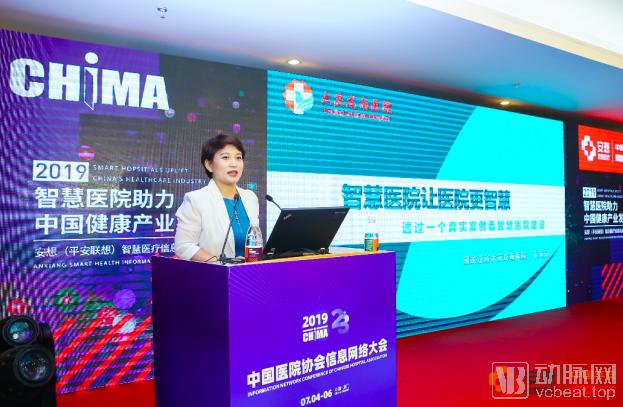
Mao Huiling, Vice President of Daqing Longnan Hospital
At this specialized conference, IDC China released the White Paper on Smart Hospital Construction, engaging with industry professionals to discuss development trends in smart healthcare, identify emerging opportunities, and lead the wave of innovation in the sector. Through macro-environmental analysis and surveys of cognitive needs, the white paper captures the genuine demands for “smart hospitals,” thereby exploring their essential characteristics, construction methodologies, and reference architectures. It examines the current state of smart hospital development, provides a comprehensive overview of the industry landscape, and draws on typical cases and benchmarks from Anxiang Smart Healthcare. From an industry analysis perspective, it presents innovative approaches to smart hospital development, offering valuable insights and references for building sustainable smart hospitals.
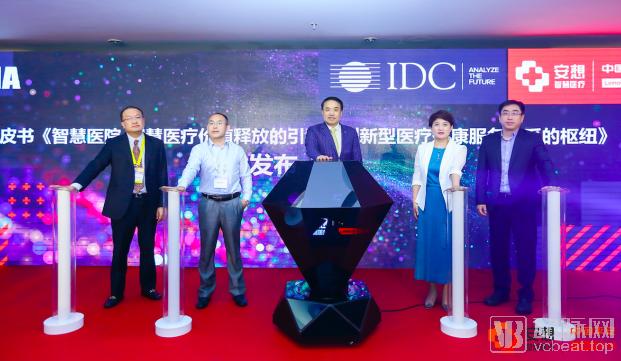
IDC White Paper Joint Release Ceremony
Xiao Hongliang, Chief Researcher of the Healthcare Industry at IDC, pointed out that over the past decade, smart healthcare has flourished with a diverse array of applications. However, these applications have been fragmented and lacked systematic integration; their potential value will be unlocked through the comprehensive development of smart healthcare infrastructure.
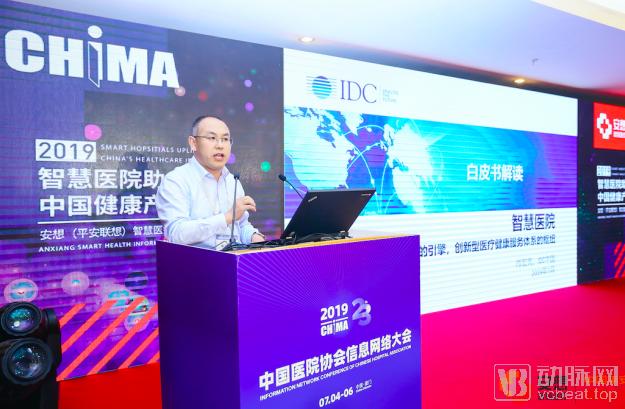
Xiao Hongliang, Chief Researcher for the Healthcare Industry at IDC
In addition to making its strongest statement yet, Anxiang systematically showcased three major product systems covering the entire smart healthcare industry chain at this year’s CHIMA. These include the “Smart Hospital” product line—targeting hospitals with digital operations, clinical management, and self-service convenience solutions; the “Smart Medical Care” product line—serving public health institutions at all levels and medical consortia with public health services, tiered diagnosis and treatment, medical regulation, and remote collaboration; and the “Smart Health” product line—providing Internet-plus-healthcare services and standardized tumor therapy for medical institutions and patients.
During the Dean’s Sub-forum on the 6th, Yin Chuan, Vice President of Anxiang Smart Healthcare, delivered another speech, introducing the company’s concepts and experience in medical informationization to health authorities’ leaders and hospital deans in attendance, which received enthusiastic responses from the participating leaders and guests.
In an era of rapid technological innovation, healthcare informatization is undergoing unprecedented transformative change. In the process of building smart hospitals, Anxiang Smart Healthcare has led this transformation with innovative technologies, rapidly evolving from a rising star into a “special forces” unit in the field of healthcare informatization, providing best practices for the development of smart healthcare in China.
About Anxiang (Ping An Lenovo) Smart Healthcare
Anxiang (Ping An Lenovo) Smart Healthcare, established in 2016 and formerly known as Lenovo Smart Healthcare, is a rapidly emerging representative force in the new generation of medical information technology under Ping An Group and Lenovo Group. As a leading provider of comprehensive healthcare informatization solutions in China, Anxiang Smart Healthcare offers integrated smart healthcare solutions encompassing core hospital business systems, regional health services, and personal health management. Committed to restructuring hospital management and business systems through its advanced cloud computing development framework, the company leverages emerging technologies such as big data and artificial intelligence to reengineer overall hospital business processes, enhance disease diagnosis and treatment capabilities, and empower the transformation of smart healthcare.
“Peace” for the World, “Vision” as Our Guide. Guided by the patient-centric philosophy of smart healthcare development, Anxiang Smart Healthcare is committed to delivering comprehensive, high-quality solutions to more medical institutions, providing robust technical support for informatization and innovative disease diagnosis and treatment in the healthcare industry, thereby leading the transformation of smart healthcare in China.