

Qianjing Rehabilitation: Advancing Dignified Living for the Elderly and Patients through Industry-Academia-Research-Clinical Integration
Recently, the 39th China (Changzhou) International Rehabilitation Assistive Devices and Welfare Robotics Expo was held at the Changzhou International Convention and Exhibition Center. As the most important rehabilitation assistive devices expo in China, it attracts around 200 exhibitors and tens of thousands of visitors each year.
Previously, the China International Rehabilitation Assistive Devices and Welfare Robotics Expo was mostly held in Beijing. The decision to host this year’s exhibition in Changzhou is closely tied to the rapid development of the rehabilitation sector in Jiangsu Province, particularly in Changzhou.
After years of development, Changzhou has nurtured numerous outstanding rehabilitation enterprises, represented by Changzhou Qianjing Rehabilitation Co., Ltd. As of now, there are 78 large-scale manufacturers of rehabilitation assistive devices in Changzhou, with annual sales exceeding RMB 10 billion and approximately 4,000 product varieties, accounting for 20% of global categories. This has given rise to the popular saying, “For rehabilitation in China, look to Jiangsu; for rehabilitation in Jiangsu, look to Changzhou.”
As a leading rehabilitation enterprise in China, Qianjing Rehabilitation.In addition to meeting existing rehabilitation needs, the company has kept pace with the times by applying technologies such as artificial intelligence and robotics to the rehabilitation field. Through collaborations with government agencies, hospitals, and universities, it has pioneered a unique innovative “shortcut” in the rehabilitation sector. VCBeat has conducted an in-depth report on the company to explore how it maintains its industry leadership among numerous rehabilitation enterprises.。
During the visit to the Qianjing Rehabilitation booth, the most impressive feature was Qianjing Rehabilitation’s newly launched Health and Wellness Pod.

The "Health and Wellness Pod" is a new elderly care model centered on rehabilitation from geriatric diseases, bridging the last mile of rehabilitative medical care to achieve healthy aging.
Distinct from conventional elderly care models primarily focused on IoT-based health management, the Kangyang Hut is positioned around community rehabilitation, providing professional rehabilitation services “at the doorstep” for older adults. By incorporating the tertiary prevention theory of rehabilitation and the concept of the Intelligent Internet of Things (AIoT), and integrating artificial intelligence (AI), data technology (DT), the Internet of Things (IoT), and cloud computing, the Hut organically combines rehabilitation medicine with network technologies to intelligently recommend personalized elderly care and rehabilitation plans for community-dwelling seniors.
IoT and digital devices collect and integrate large volumes of rehabilitation data,It can be used to continuously optimize solutions and user experience, helping communities address issues such as elderly rehabilitation and management in an intelligent and efficient manner, thereby ensuring the professionalism and quality of community-based elderly rehabilitation services.
After the completion of the Wellness Cabin,The hut is handed over to the community or institution for operation.. Truly realize the integration of professional rehabilitation devices into communities and ensure their practical operation, thereby improving the quality of life for tens of millions of elderly individuals and people with disabilities.
Currently, Qianjing Rehabilitation has established 11 pilot "Health and Wellness Pods" in Changzhou, distributed across communities, elderly care institutions, and tertiary specialized hospitals. The company can customize these pods to meet diverse user needs, with a standard size of approximately 80 square meters. Compared to ordinary exercise rehabilitation equipment found in residential areas, these pods are more scientific and professional. Conventional devices provide no data or monitoring after use. In contrast, as soon as an elderly individual enters the pod, they are automatically identified and receive targeted services.
Wang Xiaohua, Deputy Director of the Jiangsu Provincial Department of Civil Affairs, stated that the development of health and elderly care facilities in communities is still in its early stages, with strong demand expressed by the elderly, institutions, and family members alike. However, enterprises’ development of community-based rehabilitation and elderly care services relies heavily on policy support and financial contributions from families. Currently, government medical insurance coverage is limited to medical treatments and does not extend to elderly care and rehabilitation services.
Data from Changzhou Qianjing Rehabilitation Co., Ltd. shows that Jiangsu is the province with the highest level of aging in China. It is estimated that by 2020, the elderly population aged 60 and above in the province will reach 19.5 million, accounting for 25% of the total population. More than 90% of the elderly choose home-based care, and the demand for rehabilitation assistive devices will continue to rise.
Therefore, there is an urgent need to explore rehabilitation models that are cost-effective, widely accessible, and flexible in service delivery, so as to meet people’s rehabilitation needs at a lower cost. Qianjing Rehabilitation’s “Kangyang Hut” represents one such attempt.
According to the survey by Changzhou Qianjing Rehabilitation Co., Ltd.,The cost of community-based rehabilitation is only 10% of that of institutional rehabilitation.Community-based rehabilitation services are superior to institution-based rehabilitation in terms of cost, labor expenses, and patient acceptance. Currently, it is essential to fully stimulate the vitality and creativity of various market entities and accelerate industrial development, so that the public can access, afford, and effectively utilize rehabilitative assistive devices.
Staff from Changzhou Qianjing Rehabilitation Co., Ltd. told VCBeat that the rehabilitation kiosks will be placed in community senior activity centers, which are important hubs for seniors’ leisure activities. By enabling health management within their daily routine, these kiosks impose no additional burden on the elderly. Furthermore, they facilitate mutual education and peer monitoring among seniors, thereby preventing the scenario where comprehensive services are established but remain underutilized.
In addition to the wellness pods, Qianjing Rehabilitation’s assisted bathing products also left a deep impression on the reporter. For caregivers of paralyzed or stroke patients in ordinary households, providing a comfortable shower or bath is a monumental task. To address this pain point, Qianjing Rehabilitation has developed and manufactured a diverse range of assisted bathing products, helping nursing homes, medical institutions, and families solve the bathing challenges faced by patients with disabilities.
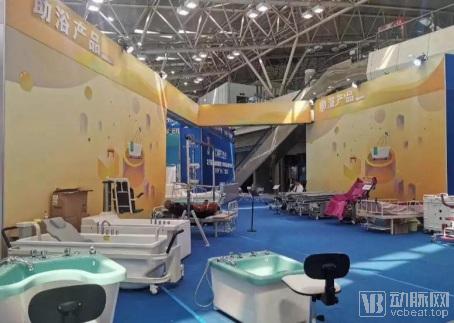
Staff from Changzhou Qianjing Rehabilitation Co., Ltd. stated that assisted bathing products are not inherently high-tech, and many similar products are available on the market. However, product designers must consider how to optimize design to facilitate easier use for both patients with disabilities and their caregivers.
In addition to assisted bathing products, Changzhou Qianjing Rehabilitation Co., Ltd. also offers a series of health and wellness products, all designed and developed with the aim of helping the elderly and patients live with greater dignity."Medical care keeps patients alive, while health and wellness products and services enable patients and the elderly to live with dignity. This is the goal of Qianjing Rehabilitation."
If the Health and Wellness Pod represents an innovation in health and wellness models built upon technological innovation,Therefore, the sustained integration of industry, academia, research, and healthcare is the key to Changzhou Qianjing Rehabilitation Co.,Ltd. maintaining its product innovation and competitive advantage.。
Rehabilitation equipment differs significantly from other medical device sectors; although the rehabilitation equipment market boasts a scale worth tens of billions,There are nearly thousands, or even tens of thousands, of rehabilitation products. Although the rehabilitation equipment market boasts a scale worth tens of billions, the average market size for each individual product is quite small. However, the research and development (R&D) of rehabilitation products demands exceptionally high talent standards. R&D personnel are required to possess professional backgrounds in engineering, medicine, mechanical design, and mechanics. The cost of securing such multidisciplinary talent is extremely high.
Currently, the annual revenues of several leading domestic rehabilitation equipment companies are all below RMB 500 million, with R&D expenditures under RMB 50 million. Such a scale is fundamentally insufficient to support large-scale R&D teams in carrying out research and development activities.
Therefore, collaboration between enterprises, universities, and hospitals—where companies develop products based on university R&D, provide financial support to universities or research institutions, and hospitals contribute clinical needs and product feedback—represents the optimal R&D model for rehabilitation equipment companies at present.
Additionally,At the 3rd Rehabilitation Equipment Enterprise Development Forum, Dr. Zhang Yi, Director of the Department of Rehabilitation Medicine at Changzhou No. 1 People's Hospital, also stated, a high-end medical device must be the result of collaborative research and development among top-tier hospitals, physicians, and enterprises.
Currently, physicians typically rely solely on medical devices and rarely provide feedback to engineers or discuss issues encountered during use. Domestic medical device companies often focus exclusively on product development, paying little attention to genuine clinical needs. Although some local governments encourage universities and research institutions to translate scientific achievements into practical applications, they do not explicitly incentivize physicians to participate in medical device R&D.
Therefore, the current chain requires better linkages to accelerate the adoption and implementation of innovative medical devices.
To this end, with the support of the Jiangsu Provincial People's Government, the Jiangsu Industrial Technology Research Institute and Changzhou Qianjing Rehabilitation Co., Ltd. have jointly established the Changzhou Jicui Rehabilitation Medicine Joint Innovation Center. Leveraging the resources of more than 40 research institutions within Jiangsu Province and over 30 international cooperative partners, the center aims to accelerate industry-academia-research-application collaboration and promote the development of the rehabilitation industry.
Staff from Qianjing Rehabilitation told VCBeat that in the third year of its predecessor’s establishment (1998), Qianjing Rehabilitation signed a cooperation agreement with Nanjing University. Leveraging Nanjing University’s R&D strengths and its own financial resources, the two parties jointly developed Qianjing’s first industry-academia-research collaborative product—the B-PHY Balance Function Assessment and Training System. This open and win-win approach has also attracted attention from more universities.
Changzhou Qianjing Rehabilitation Co., Ltd. has currently engaged in research and development collaborations on specific projects with prestigious institutions, including the Chinese Academy of Sciences, Western University (Canada), City University of Hong Kong, Beijing Normal University, Nanjing University, University of Shanghai for Science and Technology, Southeast University, and Nanjing Normal University of Special Education.
Since 2010, Changzhou Qianjing Rehabilitation Co., Ltd. has collaborated with multiple domestic universities and institutions, investing RMB 10 million in the research and development of a multi-position intelligent rehabilitation training robot. After five years of effort and five iterative versions, the company successfully developed the Flexbot multi-position intelligent rehabilitation training robot, thereby breaking the market monopoly previously held by foreign companies.
In addition, Qianjing Rehabilitation maintains close collaborative partnerships with the China Disabled Persons’ Federation, the Chinese Association of Rehabilitation Medicine, and the National Research Center for Rehabilitation Technical Aids in technological and service innovation. For instance, in December 2017, Qianjing Rehabilitation formally signed a strategic cooperation agreement with the National Research Center for Rehabilitation Technical Aids. The two parties will engage in in-depth collaboration in the field of intelligent rehabilitation assistive devices, jointly carrying out research on common technologies, standard setting, international cooperation, development and industrialization of products with independent intellectual property rights, and working together to establish a Joint Key Laboratory for Intelligent Rehabilitation Assistive Devices.
In addition to the Changzhou Jicui Rehabilitation Medicine Joint Innovation Center, Jinghe Robotics, a subsidiary of Qianjing Rehabilitation, has consistently served as the vanguard of the company’s product innovation.
Liu Qing, Deputy General Manager of Jinghe Robotics, told VCBeat that Qianjing gradually realized the importance of continuous innovation for the long-term development of the enterprise shortly after its establishment.
Consequently, Qianjing Rehabilitation established Jinghe Robotics in Shanghai, focusing primarily on the research and development of multi-position intelligent rehabilitation training robots and a series of digital rehabilitation solutions, leveraging technological advancements to meet the needs of modern rehabilitation development.
Liu Qing stated that during the rehabilitation process, the ability to provide quantitative assessments of rehabilitative function and to conduct interactive training in motor control scenarios has become a shared need among clinicians, researchers, and patients. Traditional manual rehabilitation methods are not only labor-intensive but also fail to deliver accurate and effective assessments and rehabilitative training.
In response to this need and challenge, Jinghe Robotics has dedicated itself to developing a digital rehabilitation solution, while introducing the most advanced robotic therapy and independently researching and developing the high-end rehabilitation product: the multi-position lower limb rehabilitation robot. This enables patients to achieve the greatest possible recovery of their abilities for independent living, labor, and work.
Currently,Jinghe Robotics employs two product development models: in-house R&D and industry-academia-research collaboration.。
The most representative self-developed product is the Flexbot Multi-Position Intelligent Rehabilitation Robot System. As the first lower-limb rehabilitation robot in China to receive CFDA certification, Flexbot entered mass production and the market in 2013 after an extended period of research and development. Following more than five years of market development, Flexbot has been deployed in over 100 hospitals and rehabilitation institutions, primarily concentrated in Jiangsu, Zhejiang, and Shanghai in East China, as well as in Northeast China.
This product provides patients with a lower-limb rehabilitation training workstation that accurately simulates normal human gait. It offers a breakthrough by enabling early bedridden gait training, incorporating dual movement modes of closed-chain and open-chain exercises across the complete gait cycle. By integrating virtual reality (VR) scenario-based interactive technology, it delivers quantified, multi-positional, and multi-modal gait training for patients, while providing real-time data feedback.
It has had a revolutionary impact on the remodeling of the patient’s nervous system and gait relearning, pioneering a new model of intelligent rehabilitation robot-assisted walking training. It can be effectively applied in clinical lower limb rehabilitation training to improve the outcomes of functional walking rehabilitation for the lower limbs.
It is reported that in addition to its deep cultivation in the field of lower-limb robots, Jinghe Robotics has implemented a serialized layout for upper-limb robots and pediatric robots. The upper-limb robot offers comprehensive solutions for motor dysfunction, aiming to facilitate collaboration between medical institutions and home care, thereby strengthening the integration of in-hospital and out-of-hospital rehabilitation service systems. The pediatric robot, guided by clinical needs, is dedicated to expanding its market presence in the field of pediatric motor rehabilitation.
External collaborations are primarily anchored in universities and research institutions across the Jiangsu-Zhejiang-Shanghai region, while strengthening partnerships with universities in Beijing and the Pearl River Delta to facilitate the clinical translation of academic scientific achievements.
Liu Qing stated that rehabilitation has its own unique characteristics, and the collaboration among industry, academia, research, and medical institutions is a mutually beneficial model. As the driving force of innovation, enterprises can rapidly understand clinical needs and cutting-edge technologies, integrate them with market conditions, and develop high-tech products that meet clinical demands and are commercially viable.
In response to the characteristics of rehabilitation equipment products, such as high variety with small batch sizes and the high professional requirements for service support, Changzhou Qianjing Rehabilitation Co., Ltd. has deeply cultivated its national marketing and service network while integrating its accumulated big data and assembling R&D teams to tackle key challenges, becoming the first in the industry to launch the “Jingyun” platform.
Jingyun comprises modules such as Precision Assessment, Precision Rehabilitation, Rehabilitation Academy, Rehabilitation Store, and Rehabilitation Community. By simply inputting their symptoms, rehabilitation patients can receive customized treatment plans and access online rehabilitation training resources tailored to various functional goals and difficulty levels, thereby facilitating the product’s transition and extension from institutional users to home users. The platform has also developed a mobile app that integrates with wearable assistive devices, making healthcare and rehabilitation more convenient.
Rehabilitation training robots, digital rehabilitation products, and cloud-based rehabilitation services—this suite of offerings represents only a portion of Changzhou Qianjing Rehabilitation Co., Ltd.’s innovations in the rehabilitation sector. In the future, through collaborations with multiple partners and leveraging Internet of Things (IoT) and artificial intelligence technologies, the company will research, develop, and manufacture more innovative products that meet patient needs in areas such as intelligent rehabilitation engineering, smart interaction, intelligent navigation, automated assessment, AI-driven prescription, and intelligent communication.