

Junshi Biosciences CEO Li Ning: What’s Next After PD-1 Approval?
Junshi Biosciences
Innovative Drug Developer
On December 17, 2018, the National Medical Products Administration (NMPA) announced the approval of toripalimab injection, the first domestically produced PD-1 antibody drug, for market launch. Amid fierce competition for the title of the first domestic PD-1 inhibitor, Junshi Biosciences (hereinafter referred to as “Junshi”) emerged as the frontrunner. This sparked a flood of media coverage, with widespread speculation surrounding production timelines, sales launch dates, and pricing strategies.
In contrast to the external acclaim, Junshi Biosciences remained remarkably composed. “For us, this was an inevitable development, not a surprise,” said Dr. Li Ning, CEO of Junshi Biosciences, recalling that day. He attended meetings and handled routine affairs as usual, making it seem like just another ordinary day.
Using a philosophical metaphor, he told VCBeat that it was like a tree planted many years ago; you know it will blossom and bear fruit—it is only a matter of time. When the registration clinical trials for toripalimab injection (brand name: Tuoyi) were completed and Junshi Biosciences submitted its marketing application to the NMPA, Li Ning was confident that the drug’s approval was all but assured. During the design of the clinical studies, they had projected that the product’s response rate would be more than double that of conventional therapies, i.e., exceeding 15%. The clinical results showed that Tuoyi achieved an objective response rate (ORR) of 17.3%, a disease control rate (DCR) of 57.5%, and a one-year survival rate of 69.3%, fully comparable to similar imported drugs. The robust clinical data demonstrating efficacy and safety gave them considerable confidence.
Securing the first marketing approval for a PD-1 inhibitor was not only a testament to Junshi Biosciences’ R&D accumulation and execution capabilities but also benefited from the favorable winds of pharmaceutical regulatory reforms. “PD-1 inhibitors address unmet clinical needs, which facilitated an expedited approval process.” However, PD-1 is far from the entirety of Junshi’s portfolio. Beyond PD-1, the company’s current pipeline includes more than ten first-in-class innovative products targeting novel oncology pathways such as PD-1, PD-L1, and BTLA, as well as immunotherapeutic agents targeting PCSK9, BLyS, and IL-17A. Following the launch of its PD-1 product, Junshi has continued to uphold its dual focus on “innovation-driven development” and “patient accessibility,” strengthening its pipeline through a complementary strategy of internal source innovation and strategic in-licensing partnerships. In essence, the PD-1 milestone marks merely the beginning of Junshi’s story.
Creating China’s Own Innovative Drugs, Starting with PD-1
In December 2012, Junshi Biosciences started in a laboratory of less than 300 square meters in Zhangjiang, Shanghai. It established R&D centers in China and the United States across the ocean, gradually building a core R&D and management team with dual backgrounds in immunology academia and the antibody industry. They came together to discuss bringing truly innovative drugs to China, with the first selected product being PD-1.
In May 2012, Bristol Myers Squibb (BMS) released the first clinical trial data for its PD-1 inhibitor, sending shockwaves through the industry. Prior to this, PD-1 was largely regarded as a legend, with its efficacy remaining uncertain. Subsequently, PD-1 products from BMS and Merck & Co. were launched successively, prompting several Chinese companies to enter the field. Junshi Biosciences, Innovent Biologics, and Hengrui Medicine emerged as the first-tier players. Hengrui Medicine and BeiGene initiated their projects only slightly later than Junshi Biosciences. Faced with dozens or even hundreds of competitors trailing behind, Junshi Biosciences recognized that time was of the essence.
Fortunately, they capitalized on regulatory changes in China’s pharmaceutical sector, including joining the ICH and implementing accelerated review processes. This environment alleviated burdens beyond scientific research for innovative enterprises. With financial and fundraising experts on its founding team, Junshi Biosciences was able to focus without distraction on scientific and clinical breakthroughs, advancing rapidly. In just six years, Junshi’s PD-1 inhibitor, Tuoyi, underwent rigorous selection and evaluation at its R&D centers in Maryland and San Francisco, validation by clinical investigators and enrolled patients, and an accelerated review by Chinese drug regulatory authorities, ultimately receiving marketing approval on December 17, 2018.
When Junshi Biosciences was founded, the team’s aspiration was to develop new drugs with superior efficacy and lower costs. Li Ning revealed that prior to setting the price for Tuoyi (toripalimab), Junshi conducted surveys involving hundreds of relevant stakeholders to determine the most acceptable price points for principal investigators (PIs), physicians, key opinion leaders (KOLs), and patients. “We aimed to balance the investment required for subsequent clinical studies with drug accessibility, ensuring that the final price would be practical and affordable,” he stated.
On January 7, 2019, Junshi Biosciences announced the final pricing for Tuoyi. With charitable assistance included, the annual cost of treatment for patients amounts to approximately 20% of the price of imported drugs. Notably, the pricing of these imported drugs in China is already the lowest globally. “This is an unprecedented case, one that can be said to have broken the established pricing patterns for new imported drugs,” said Li Ning, who expressed considerable satisfaction that innovative Chinese pharmaceuticals are now capable of influencing the pricing of imported medications.
To improve accessibility, Junshi Biosciences has begun advancing work related to national medical insurance reimbursement. Previously, Tuoyi was just included in Zhuhai’s supplementary medical insurance scheme. “We will make every effort to align with the national call and hope that Tuoyi can benefit more patients,” said Li Ning, expressing strong confidence in this endeavor. It is understood that the results of this year’s dynamic adjustment to the National Reimbursement Drug List may be announced in October.
The expansion of indications for Tuoyi is also underway. Currently, Junshi Biosciences is conducting more than 30 clinical trials covering 14 tumor types in multiple countries, including China, the United States, and Singapore. Among these, there are 14 pivotal registration clinical trials. Nasopharyngeal carcinoma and urothelial carcinoma are approaching the stage for marketing application submission. Of the other 12 ongoing Phase III clinical trials, four relate to lung cancer indications, while others include liver cancer, esophageal cancer, breast cancer, and melanoma. Li Ning revealed that they hope to have new PD-1 indications approved every year over the next three to four years.
In anticipation of increased patient demand driven by the expansion of approved indications for PD-1 inhibitors, as well as production requirements for other drugs in its pipeline, Junshi Biosciences initiated the construction of its second monoclonal antibody manufacturing facility in Lingang, Shanghai, in 2017. The project received support under Shanghai’s Strategic Emerging Industries Program. It was scheduled for completion by the end of 2019 and to commence operations in early 2020. Upon completion, the facility’s production capacity is expected to be ten times that of the Suzhou manufacturing base, exceeding 30,000 liters.
Bullish on Combination Therapy: Breaking Through Innovation with Innovation
As a publicly listed company, Junshi Biosciences conducts roadshows every quarter. In dialogues with securities firms and institutional investors, the company has realized that public attention toward Junshi has far exceeded previous levels, accompanied by heightened expectations. To meet these expectations, in addition to continuing to advance product commercialization and inclusion in the national medical insurance scheme, the company must achieve more breakthroughs in R&D, leveraging greater innovation to push the boundaries of innovation.
Li Ning told VCBeat that although PD-1 has achieved significant breakthroughs in the treatment of multiple tumor types, its efficacy rate as a monotherapy for solid tumors is around 20%, leaving room for improvement. Junshi Biosciences hopes to identify suitable combination regimens beyond PD-1 monotherapy to enhance the efficacy of cancer treatment and overcome resistance to PD-1 monotherapy. In this regard, PD-1 combination therapy represents an important direction.
Among the 14 pivotal registration clinical trials currently being conducted by Junshi Biosciences, the vast majority involve combination therapies. These combinations are based on pairing PD-1 inhibitors with established anticancer agents or treatment modalities, such as targeted therapy and chemotherapy.
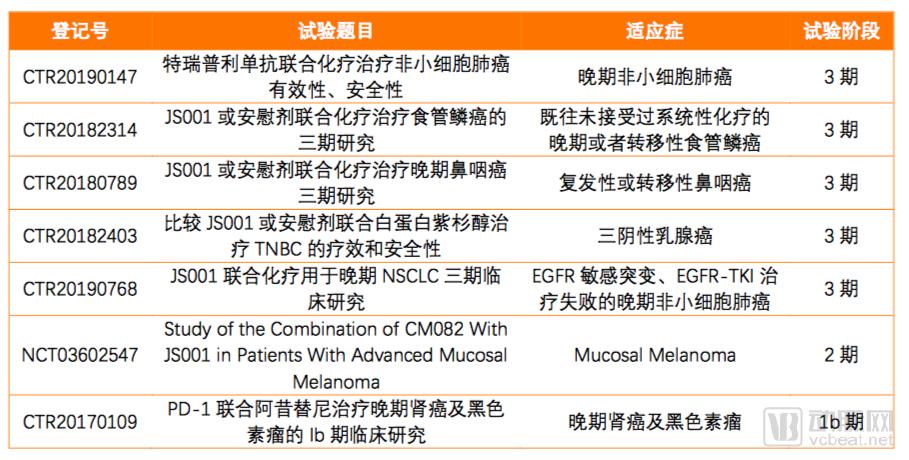
“PD-1 combination therapy will be an effective direction for cancer treatment. From a strategic perspective, by selecting indications and combination regimens based on existing global data, or by combining two already marketed products, we can accelerate their clinical deployment to benefit more patients. From a market perspective, this approach also enables rapid expansion of indications,” said Li Ning.
However, this strategy does not solve all problems. Even though standard combination therapy can improve the response rate to some extent, it remains at around 50%. “If higher standards are to be met, different innovations are needed,” Li Ning believes. They need to pursue innovations that no one has attempted before, selecting products in new fields that have a complementary effect with PD-1 inhibitors. At this level, Junshi Biosciences’ independently developed combination therapy of BTLA and PD-1 is a major highlight.
In April 2019, the FDA approved the clinical trial application for Junshi Biosciences’ recombinant humanized monoclonal antibody injection targeting B- and T-lymphocyte attenuator (BTLA), marking the first BTLA antibody worldwide to enter clinical trials. Building on this milestone, Junshi’s innovative checkpoint inhibitor pipeline has advanced from following similar innovations to pioneering global first-in-class therapies.
It has been revealed that Junshi Biosciences has already initiated studies in the United States on BTLA monotherapy and combination therapy with PD-1 and BTLA. Leveraging its advantages in BTLA clinical research, Junshi is poised to achieve global leadership in PD-1/BTLA combination therapies.
Of course, in addition to independently developed products, collaboration is also necessary. “The market is vast, and the strength of a single company is insufficient.” On June 25, 2019, Junshi Biosciences announced that it had entered into a Drug Technology Transfer and Co-development Agreement with Huaao Tai Biopharma, a subsidiary controlled by Huahai Pharmaceutical. Under the terms of the agreement, Junshi Biosciences agreed to acquire from Huaao Tai Biopharma the existing R&D achievements and subsequent technical support for the bevacizumab biosimilar (project code: “HOT-1010”) for RMB 90 million.
Avastin is a recombinant humanized monoclonal antibody that binds to VEGF and prevents its interaction with receptors (Flt-1 and KDR) on the surface of endothelial cells. The originator drug, bevacizumab, is primarily used as a targeted biologic for the treatment of metastatic colorectal cancer and advanced, metastatic, or recurrent non-small cell lung cancer, generating $7 billion in global revenue in 2018 (a year-over-year increase of over 3%).
Also announced concurrently, Junshi Biosciences signed a Share Purchase Agreement and a License Agreement with Anwita, an innovative U.S. biopharmaceutical company. Under the agreements, Junshi Biosciences may develop and commercialize Anwita’s innovative product, an IL-21 fusion protein, in China. IL-21 is an active cytokine that stimulates the activation of innate and adaptive immune cells, such as natural killer cells and cytotoxic T cells. Junshi Biosciences intends to introduce this agent for investigation as a monotherapy or in combination with other therapeutic agents.
“Anwita’s IL-21 is a re-engineered interleukin (IL) that offers high safety, lower toxicity, and retained or even enhanced efficacy. Mechanistically, IL-21 has the potential to be combined with PD-1 and BTLA inhibitors to enhance tumor-killing effects and improve response rates,” explained Li Ning.
Certainly, whether acquiring HOT-1010 or in-licensing IL-21, Junshi’s objective is to strengthen the robustness of its pipeline, rather than merely expanding its length. “The purpose of in-licensing assets is to create synergies with our existing internally developed innovative products,” stated Li Ning. For instance, the acquisition of an Avastin biosimilar was driven by clinical evidence from Junshi’s prior trials demonstrating the efficacy of combining PD-1 inhibitors with VEGF inhibitors.
In addition to in-licensing and acquiring rights, they have also collaborated with more than ten domestic pharmaceutical companies on combination therapies, involving multiple first-in-class novel drugs. Li Ning believes that such explorations are highly meaningful, as they may help identify safer and more effective combination therapy regimens through these partnerships.
“First, we consider synergy with our products—specifically, those with a scientific basis in their mechanisms of action,” said Li Ning when asked about the criteria for selecting collaborative products. He believes that combination therapy should not merely deliver the efficacy of individual drugs, but rather achieve a “1+1>2” effect.
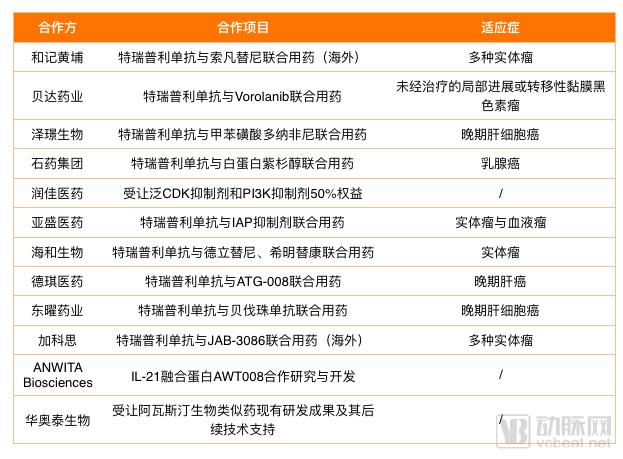
Moreover, in addition to domestic collaborations, Junshi Biosciences has established clinical research partnerships with more than 30 cancer hospitals in the United States. Its R&D centers in Maryland and San Francisco frequently conduct exploratory preclinical studies on drug mechanisms in collaboration with overseas university laboratories and pharmaceutical companies. In 2018, the company announced a target discovery project in collaboration with The University of Texas Health Science Center at Houston, while its clinical cooperation projects with Hutchison MediPharma, Betta Pharmaceuticals, and Jacobio Pharmaceuticals are being carried out simultaneously overseas.
“Although Junshi currently focuses on the domestic market, it has positioned itself as an international company since its inception. ‘Drug development knows no borders,’ said Li Ning.”
Beyond Oncology, Beyond Immunology
Tumor immunotherapy constitutes a pivotal segment of Junshi Biosciences’ current business portfolio. However, we have observed that the term “tumor immunotherapy” in the company’s annual report has been quietly replaced with “oncology.” This change prompts us to question whether it signifies a major strategic shift for Junshi Biosciences.
Among the newly introduced agents in the pipeline, both the PI3K and CDK inhibitors are classified as targeted therapies rather than tumor immunotherapy products. Li Ning believes that removing the term “immuno-” signals a broader product portfolio for Junshi Biosciences: “Junshi is not merely a PD-1 company, nor solely an oncology immunotherapy company.”
Of course, immunotherapy will remain the business focus, and not only cancer patients can benefit from it. Junshi’s non-oncology product pipeline covers immunological drugs for treating chronic diseases, autoimmune disorders, and neurological conditions. Li Ning revealed that three non-oncology products have already entered clinical stages, including BlyS (for systemic lupus erythematosus), PCSK9 (for hyperlipidemia), and a biosimilar of Humira. The clinical trial application for IL17A (for psoriasis and rheumatoid arthritis) was just accepted by the NMPA at the end of June.
As of now, Junshi Biosciences’ R&D pipeline comprises 19 products, including 13 innovative biologics, three small-molecule drugs, and one biosimilar. The vast majority of these products are independently “originated” by Junshi Biosciences. Source innovation—defined as the capability to discover and validate novel targets for early-stage drug development—signifies a higher level of pharmaceutical research, greater potential for drug discovery and success, and broader coverage across disease areas.
“With early-stage discovery and R&D capabilities, our innovation is like ‘water flowing from a living source,’ enabling a continuous stream of breakthroughs,” said Li Ning. “‘Source innovation’ allows us to better grasp product characteristics, which significantly helps improve the efficiency and success rate of subsequent clinical studies.”