

Yunzhisheng AI System Achieves 10x Faster Medical Record Quality Control and 40% Higher Documentation Efficiency at Fujian Provincial Hospital
“Perception” and “Cognition” are two terms frequently used in the field of artificial intelligence. Perception refers to seeing with the eyes, hearing with the ears, and speaking with the mouth; cognition involves the logical processing of information gathered during the perceptual process. Today, these behaviors, once exclusive to humans, are increasingly being replicated by machines.
Through perceptual intelligence, machines can recognize images and speech; through cognitive intelligence, they can understand information and make decisions. These two technologies are now widely applied in the medical field, with Unisound AI Technology Co., Ltd. being a notable player among AI enterprises.
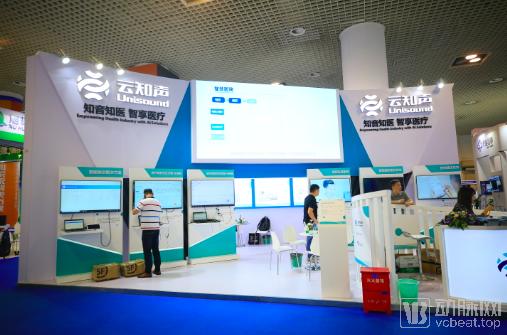
At the CHIMA 2019 conference, Unisound unveiled a comprehensive suite of three AI-powered solutions: medical voice interaction, intelligent medical record quality control, and smart waiting & follow-up services. Addressing challenges associated with electronic medical records, these solutions aim to liberate physicians from burdensome and monotonous tasks—meeting the most urgent needs of hospitals and clinicians.
According to statistics from the American Medical Association, physicians spend 35% to 40% of their professional careers on medical record collection and entry. If measured by time value, a chief physician’s investment in electronic medical records amounts to €65,500 per year.
The situation in China is equally grim. Amid the broader trend toward digitalization, many physicians are compelled to devote increasing amounts of time to entering medical records. This is particularly true for doctors in township health centers, where a single electronic medical record may need to be entered up to six times to ensure completeness.
Addressing this issue requires a two-pronged approach: on one hand, enhancing system interoperability to reduce the complexity of case entry; on the other, optimizing the voice input workflow to accelerate data entry. Unisound has adopted the latter strategy, leveraging knowledge graph-supported voice input to replace keyboard typing and manual documentation, thereby reducing the time physicians spend on electronic medical record (EMR) entry.
This approach is supported by practical evidence abroad. The 2018 HIMSS survey on electronic health records (EHRs) revealed that voice entry and keyboard entry accounted for 37% and 33%, respectively, in the United States. Compared with other input methods, voice entry generally improves efficiency by 20% to 40%.
Voice input can also alleviate physicians’ resistance to entering data into electronic medical records. According to Wang Sheng from the Information Center of Fujian Provincial Hospital, “Physicians are generally reluctant to perform data entry. In the past, they only needed to handwrite outpatient medical records; now, however, they must spend considerable time on data entry, leading to work overload and preventing them from leaving work on schedule. Voice input improves their efficiency, thereby reducing their work pressure.”
However, voice input also presents numerous challenges. First, it is essential to ensure high accuracy in speech recognition by mitigating the impact of physicians’ accents and specialized medical terminology. Second, effective noise-canceling equipment is required to address acoustic interference in hospital environments.
Guo Chongliang, Product Manager of Medical AI at Unisound, introduced that the Unisound medical voice interaction solution consists of a medical speech recognition engine, a voice input client, customized microphones, and mice. It is built upon AI technologies such as deep learning, high-performance computing, and big data.
To accommodate the practical usage needs of different hospital departments, this system offers two versions. The Standard Edition provides a convenient and efficient assisted entry method: physicians dictate patient conditions, and the system automatically converts speech to text, entering electronic medical record data in a structured format and inserting the text in real time at the cursor position, thereby improving entry efficiency. The Enhanced Edition develops specialized functions—such as specialty-specific recognition models, voice control interfaces, and voice filtering—as independent modules to achieve low system coupling. These modules can be freely integrated with the Standard Edition based on business and scenario requirements, allowing for the creation of customized specialty-specific solutions.
In addition, Unisound has enabled the coexistence of keyboard and voice input, allowing users to switch freely between them without needing to perform specific steps such as “turning off the voice input method and turning on the keyboard input method.” These details are also key to improving physicians’ efficiency.
Currently, Unisound’s medical voice interaction solution has been deployed across all outpatient departments at Fujian Provincial Hospital, achieving an average recognition accuracy of 97% and improving medical record documentation efficiency by 40%.
Regardless of the method used for medical record data entry, errors are inevitable. However, quality control of medical records is not a simple calibration issue; this step is akin to a “catch-22”—it cannot be ignored, yet it is difficult to manage effectively.
On the one hand, medical record quality control places extremely high demands on the competencies of quality control personnel. Qualified staff must possess a clinical background; for instance, the job posting for quality control positions at West China Hospital requires applicants to hold “a master’s degree or higher” and have “a background in clinical medicine or related fields.” Such recruitment criteria are by no means low—in fact, they are significantly more stringent than those for many clinical departments in central urban hospitals across China. Against the backdrop of severe shortages in medical resources, outstanding clinical medical graduates are still unable to meet clinical service demands. Consequently, it is difficult for both hospital management and physicians themselves to accept the notion of leaving clinical practice to engage exclusively in quality control work.
On the other hand, a single medical record can range from dozens to hundreds of pages. Manual quality control is highly time-consuming, and even experienced physicians struggle to identify errors within such voluminous data in a short period. Many discrepancies can only be detected by cross-referencing various sections of the medical record, which places exceptionally high demands on the comprehensive competencies of quality control personnel.
In this context, Unisound leveraged its knowledge graph built on millions of data points to develop an intelligent medical record quality control system. This system accurately interprets the content of medical records and screens for defects, thereby reengineering business processes, significantly improving the efficiency of medical record quality control, and expanding both the depth and breadth of quality assurance.
Xie Guanchao, President of the IoT Business Unit at Unisound, told VCBeat: “To improve the coverage of medical record quality control, Unisound first established a comprehensive set of quality control checkpoints based on the quality control standards of different provinces and the benchmarks of various hospitals. On this basis, Unisound supplements the database according to specific scenarios at individual hospitals.”
Shi Yaxiang, Director of the Network Information Center at Zhongda Hospital Affiliated to Southeast University, stated that as a collaborative partner, Zhongda Hospital has achieved 100% coverage in medical record quality inspection. The scope of defect detection has been upgraded from focusing on key defects to comprehensive all-defect inspection, resulting in nearly a tenfold increase in the efficiency of quality control operations.
Unisound Intelligent Waiting System is deployed in waiting rooms. With the support of this system, robots can proactively initiate and guide conversations with patients to collect medical histories, and then send summaries of the patients’ conditions (medical histories) to physicians. This enables doctors to obtain partial information about the patient’s condition before the consultation, thereby improving diagnostic efficiency and reducing misdiagnosis.
The intelligent follow-up solution can simulate "doctor" calls to patients using standardized question templates, thereby improving follow-up efficiency and ensuring comprehensive and accurate collection of follow-up information. Meanwhile, the system provides patients with various personalized post-discharge services, such as intelligent reminders for follow-up visits and medication adherence, interactive follow-up communications, rehabilitation guidance, health records, and medical inquiries. These features help patients achieve self-rehabilitation and health management. From another perspective, the system also extends the hospital's post-discharge services, enhancing user experience and patient satisfaction with medical care.
Li Feng, Director of the Network Information Center at Qianfoshan Hospital and a medical business partner of Unisound, pointed out that traditional waiting processes typically rely on questionnaires that can only be completed during the consultation visit. This often leads to queues during peak hours, resulting in wasted time for both patients and healthcare providers. With the introduction of an intelligent consultation system, optimized diagnostic logic acts as an assistant to physicians by handling routine pre-consultation inquiries. This effectively reduces the repetitive work of medical history collection, improves consultation efficiency, and enables more targeted diagnoses.
To date, Unisound has accumulated approximately 500,000 medical concepts, a terminology database of 1.69 million entries, a relationship database containing 3.98 million connections, and 520,000 medical attribute values, covering the vast majority of pharmaceuticals, diseases, clinical departments, and diagnostic tests. In terms of market presence, Unisound has captured 80% of China’s medical voice interaction market.
However, Unisound must still strive to enhance the completeness of its knowledge graph, improve the recognition of colloquial speech, dialects, and specialized terminology in voice interaction, and gradually achieve simultaneous improvements in both accuracy and recall rates in medical record quality control.
Meanwhile, due to variations in hospital informatization systems, electronic medical record (EMR) structures, and quality control processes, Unisound must strike a balance between accuracy and generalizability across various metrics to develop cost-effective products that best meet market demands. How to make these trade-offs remains a challenge that Unisound continues to explore.