

Shanghai Micro Technology Industrial Research Institute Files Prospectus Highlighting BTIT Integration: Convergence of Biotechnology and Information Technology
On July 5, 2019, the Qingcheng Mountain China IC Ecosystem Summit was held in Qingcheng Mountain, Sichuan Province. During the roundtable discussion, Mr. Ding Huiwen, General Manager and CEO of Shanghai Industrial Technology Research Institute (SITRI), delivered a keynote speech titled “The Integration of Life Sciences and Information Technology.” VCBeat has compiled the highlights of his presentation.
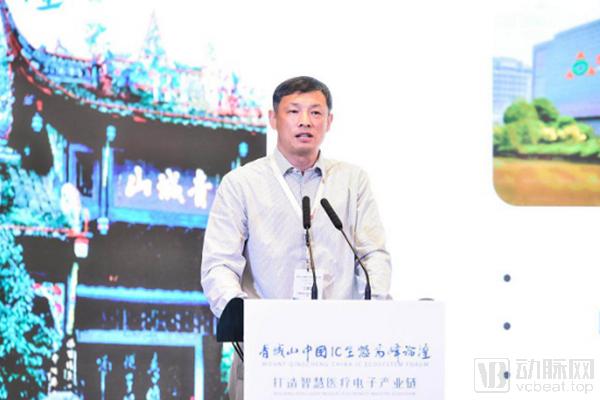
Ding Huiwen, General Manager and CEO of Shanghai Institute of Microsystem and Information Technology (SIMIT) Industrial Research Institute
The intelligent era, represented by Internet of Things (IoT) applications, has quietly arrived. Wearable robots, smart manufacturing, smart homes, smart healthcare, smart agriculture, and smart cities are all manifestations of this new era. A major distinction between the developmental trends of the intelligent era and those of the personal computer and internet eras is the shift from single-technology innovation to multi-technology convergent innovation. Within this transition, the next major trend lies at the intersection of biotechnology and information technology—namely, the integration of BT (Biotechnology) and IT (Information Technology), referred to as BTIT (BioTech & InfoTech).
Ding Huiwen believes that half a century ago, silicon technology transformed the IT industry. Today, this technology is reshaping BT.
Regarding the relationship between biotechnology (BT) and information technology (IT), it was previously believed that IT primarily drove the advancement of BT. However, recent research has revealed that BT can also influence IT. For instance, DNA storage, an emerging technology, leverages biotechnological principles to revolutionize data storage methods in the information sector.
In fact, the integration of BTIT is already being implemented within the healthcare industry. The human body’s structures—from the soma, brain, and neurons to cells, bacteria, viruses, proteins, DNA/RNA, and small molecules—correspond respectively to length scales ranging from meters down to nanometers. Using equipment such as CT scanners, we can observe structures at scales from meters to millimeters. At the micrometer scale, higher-resolution tools are required for observation. At the nanometer scale and below, much information becomes invisible to direct imaging, necessitating integrated analytical approaches; this is where the emerging BTIT technology comes into play. Additionally, the miniaturization and portability of medical devices represent another key application scenario for BTIT.
Ding Huiwen believes that,BTIT technology will be the next trillion-dollar market.
Silicon technology, following Moore’s Law, is continuously driving the development of BTIT.Now, DNA sequencing and small-molecule research have entered the nanoscale realm. Researchers require more advanced infrastructure to fulfill the applications demanded by biotechnology (BT) and information technology (IT).
BT and IT innovations are being advanced across multiple levels, encompassing fundamental research into innovative concepts—such as the deepening of specialized theories in optics and electronics; breakthroughs in cutting-edge technologies—including applications of new materials and processes for sensors; and advances in applied research, such as gene sequencing, liquid biopsy for cancer, and the application of electroencephalography (EEG) in both scientific research and clinical practice.
BTIT is disrupting numerous scientific and industrial sectors. Many investors have observed that this industry is shifting from its traditional profile of high risk and low return to one of high risk and medium-to-high return. In the future, the sector will offer many opportunities characterized by medium-to-high risk and high return.
As a core enabling technology of BTIT, bio-photonic integrated circuits are of significant importance for foundational research. From the perspective of bio-optoelectronic technology, the design technology framework of the Shanghai Institute of Microsystem and Information Technology (SIMIT) Industrial Research Institute comprises two systems: a microfluidic system and an optical analysis system. The integration of these two systems enables the miniaturization of medical diagnostic systems.
Shanghai Institute of Microsystem and Information Technology has developed a microscope-on-a-chip through system miniaturization, ultimately evolving into a highly integrated BPU (Biological Processing Unit). This process demonstrates the convergence of IT technologies, such as microfluidics and optoelectronics, with biological, imaging, and sensor technologies.
Chip-scale, high-throughput, and highly sensitive micro/nano biosensing and analysis technology fundamentally resolves the inherent physical trade-off between throughput and sensitivity.
Shanghai Industrial Technology Research Institute has established an 8-inch MEMS R&D pilot line and a compound semiconductor R&D pilot line, with an investment of RMB 1 billion in each. This infrastructure enables researchers to observe phenomena at the micron and nanometer scales. Meanwhile, the institute has attracted a team of world-class international talent dedicated to helping companies that lack the capacity to invest in such infrastructure reduce their R&D risks and costs, thereby fostering innovation.
Regarding the smart healthcare industry, Ding Huiwen primarily categorizes it into two major segments:One is a chip-level application, and the other is an IoT-level technological application.These two major directions ultimately converge in the cloud to form a smart healthcare industrial chain, encompassing information analysis, feedback, and product services.
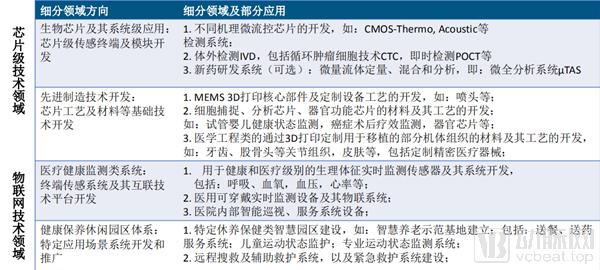
Sub-sectors of the Smart Healthcare Industry
In addition, the Shanghai Industrial Technology Research Institute of Micro-Nano Technology integrates the entire microfluidic chip into a module to achieve digitalization and intelligence, thereby enabling modularization and miniaturization. Sensor terminals based on microfluidic chip technology have diverse applications.
Chip-Level Medical Sensor Development:Primarily used for in vitro diagnostics (IVD) and the monitoring of critical conditions such as cancer, it enhances the efficiency and capabilities of detection and analysis in existing medical technologies. Furthermore, chip-scale microfluidic systems can also be applied in the field of new drug development to improve R&D efficiency.
Development of Advanced Manufacturing Process Technologies:Integrating medical 3D printing technology with MEMS technology enables the precise printing of living cells for various applications.
Development of Intelligent POCT Testing and Monitoring Tools:Convenient and efficient diagnostic tools form the foundation of smart healthcare. In daily disease screening and condition monitoring, smart healthcare complements the unique advantages of POCT products in terms of testing speed, ease of use, and overall cost savings.
In addition, intelligent microfluidic chips can be applied to POCT medical diagnostics, particularly for PCR amplification and data analysis. Furthermore, liquid biopsy technology, hydraulic systems, health monitoring, organ-on-a-chip platforms, and drug efficacy evaluation can also leverage microfluidic chip technology. Moreover, smart teeth can be manufactured by integrating pressure sensors with 3D printing technology.
Overall, microfluidics has been applied to every stage of drug research, ranging from order-of-magnitude improvements in operations based on microfluidics during drug development, through 2D and 3D drug screening and microfluidics-based drug administration, to animal testing controlled by microfluidics.
The life sciences industry has entered a new phase, adopting new models. The previous model was based on independent R&D, which then evolved into R&D outsourcing, technology licensing, and collaborative R&D, gradually transitioning into an environment of shared R&D.
In this process, life sciences represent the convergence of biotechnology (BT) and information technology (IT). The Micro Technology Industrial Research Institute boasts robust infrastructure and public R&D platforms, and has gradually developed a suitable collaboration model that is becoming increasingly attractive to companies. Last year, the Institute secured 210 paying clients.
Innovation in the life sciences industry is no easy feat. We hope to leverage the Qingcheng Mountain China IC Ecosystem Summit as an opportunity to jointly explore and build a robust industrial ecosystem with attending guests, thereby helping entrepreneurs achieve success.