

Livongo Files for IPO: Has the Digital Chronic Care Management Model Succeeded in the U.S.?
There are numerous unicorn companies in the digital health sector, but few have reached the IPO stage, particularly digital platforms focused on chronic disease management.
In 2019, according to Rock Health’s semi-annual report, five digital health companies were projected to go public: Livongo, Health Catalyst, Change Healthcare, Phreesia, and Peloton. This would break the streak of zero IPOs in the sector since 2016.
In late June, digital health company Livongo announced its IPO filing, drawing significant industry attention. To date, Livongo has raised nearly $240 million in funding, including a $105 million Series E round in April 2018, thereby achieving unicorn status.
Since its inception, Livongo has focused on diabetes management. The company combines hardware devices, AI-driven data, and professional health coaches to help individuals manage chronic conditions, providing personalized information and guidance to support patients in their health management. It has gradually expanded into other chronic disease areas, such as hypertension, weight management, and behavioral health.
Compared with traditional blood glucose devices, Livongo’s glucometer features a more streamlined user interface that simplifies the steps for blood glucose management. Moreover, unlike the growing number of smartphone-connected hardware devices on the market, Livongo’s glucometer operates independently, thereby avoiding many drawbacks associated with reliance on mobile phones, such as frequent disconnections. Additionally, Livongo has established an offline team of health coaches and strengthened collaboration with medical teams to ensure the accuracy and effectiveness of personalized health recommendations in clinical practice. This approach is considered an innovative move within the industry.
In terms of its revenue model, Livongo directly adopts a membership subscription model, as opposed to the traditional approach of selling test strips and other consumables for blood glucose hardware devices or the course-selling model used by community-based software platforms. This also differs from the “pay-for-performance” model employed by competitors such as Omada Health, Virta, and Vida Health.
Previously, we had limited access to the operational performance and data of digital chronic disease management platforms. Using Livongo as a case study, this article analyzes the development models, bottlenecks, and future potential of such digital health management platforms for chronic diseases, based on real-world data and their business operating models.
Business and Profit Model
Livongo was founded in 2008, starting with diabetes management and focusing on digital management of chronic diseases. The company's founder is Glen Tullman, the former CEO of Allscripts and an executive partner at 7wire Ventures, Livongo's seed-round investor.
Regarding the original intention behind founding Livongo, Glen Tullman has stated in public that diabetes affects 29.1 million Americans, and his own son is also a patient. For individuals with diabetes, there is a need for better digital tools to manage their condition, facilitate more convenient communication about their health with family members or physicians, and provide real-time, precise coaching support. Diabetes represents a high-retention, large-scale, and fiercely competitive market, necessitating digital solutions to disrupt traditional healthcare delivery models.
In terms of product offerings, Livongo provides a comprehensive diabetes management system that integrates an FDA-cleared interactive blood glucose meter, a mobile app, cloud-based analytics, and a team of real-time health coaches. This system enables users to collect and track their blood glucose data while receiving on-demand health guidance anytime, anywhere.
It is worth noting that if a user’s blood glucose levels deviate significantly from the normal range, a coaching expert will call the user to provide guidance and alerts. This is one of Livongo’s key innovative selling points, with the goal of reaching users within 90 seconds at the fastest.
In summary, Livongo’s blood glucose meter has the following features:
1. Internet-connected glucometer
With Livongo’s blood glucose meter, users can easily read and upload their blood glucose data to generate a log, which is accessible online at any time for convenient review and tracking of their glycemic status.
2. Real-Time Personalized Tips
Each time the user’s blood glucose data is read, Livongo’s cloud-based system analyzes the data and pushes personalized recovery tips in real time via the glucometer, helping users manage their blood glucose more effectively and make informed decisions about their subsequent recovery plans.
3. Seamless Sharing
The glucose meter can be linked to family members’ contact information. When blood glucose levels exceed the alert threshold, notifications are sent to family members via SMS or email. The alert is also transmitted to the user’s health coaching team.
4. Lower Barrier to Entry
Users can add notes on their reading experience to indicate how they can better understand Livongo’s recommendations. Additionally, they can log their dietary intake for more comprehensive tracking. The longer users engage with the platform, the smarter and more personalized the guidance becomes.
In terms of its revenue model, Livongo’s services target not only individuals but also large enterprises and health plans, helping them optimize healthcare spending. Currently, Livongo operates on a monthly subscription-based membership model, with individual users paying $75 per month and group clients offered lower rates.
From a revenue perspective, Livongo’s business model has the following characteristics:
1. Revenue is primarily derived from corporate clients
Livongo’s current sales revenue is derived from employer clients that offer self-insured health plans. The top five channel partners—Express Scripts, CVS Pharmacy, Health Care Service Corporation, Anthem, and Highmark—account for 50% of total revenue. Additionally, Livongo has entered into cooperation agreements with two major pharmacy benefit managers (PBMs), namely Express Scripts and CVS. From the perspective of revenue composition, Livongo does not rely on individual consumers; instead, a limited number of channel partners and distributors contribute a significant proportion of its total sales.
From the payer’s perspective, the client base for Livongo’s digital chronic disease management model remains corporate group insurance customers, resulting in a relatively singular business model.
2. The primary cash cow is the diabetes business, which is expanding
The prospectus shows that the diabetes business accounts for about 90% of Livongo's revenue. As of March 31, 2019, Livongo had 679 clients and more than 164,000 diabetic patient users. In addition, Livongo has gradually expanded into other chronic disease areas beyond diabetes, such as hypertension, weight management, and behavioral health, helping patients manage the insurance costs of chronic diseases. However, its market acceptance and the actual sustained clinical effects on chronic diseases still require a certain period of cultivation and observation.
3. Rapid Revenue Growth, Continued Losses
Based on data from the past three years, Livongo’s revenue in 2017 and 2018 was $30.9 million and $68.4 million, respectively, representing a 122% increase; however, it still fell short of reaching the $100 million mark.
Furthermore, compared with the same period last year, revenue in the first quarter of 2019 increased by 157%, rising from $12.5 million to $32.1 million. However, net losses also widened, surging from $16.9 million in 2017 to $34.0 million in 2018. Livongo alone incurred a loss of $15.0 million in the first quarter of 2019, compared with just $4.2 million in the same quarter of the previous year. As of March 31, 2019, the accumulated deficit stood at $128.6 million.
Currently, Livongo’s primary expenditures fall into three categories: sales and marketing, research and development (R&D), and general and administrative expenses. Sales and marketing efforts are primarily aimed at customer acquisition and retention; in terms of scale, these costs have consistently accounted for half of the company’s revenue from 2017 to 2018. R&D spending is mainly directed toward technological investments. As Livongo’s total revenue has not yet reached the hundred-million-dollar mark and its operational scale remains relatively small, sustained technological investment is required.
What is all too easy to overlook is the administrative cost, namely the labor costs associated with rapid expansion, including offline health coaches, physician teams, and other personnel. Since launching its first product in 2014, the company’s headcount grew from 164 employees in 2017 to 410 in 2018, reaching 471 as of March 31, 2019. In the first quarter of 2019, labor costs were already on par with sales and marketing expenses.
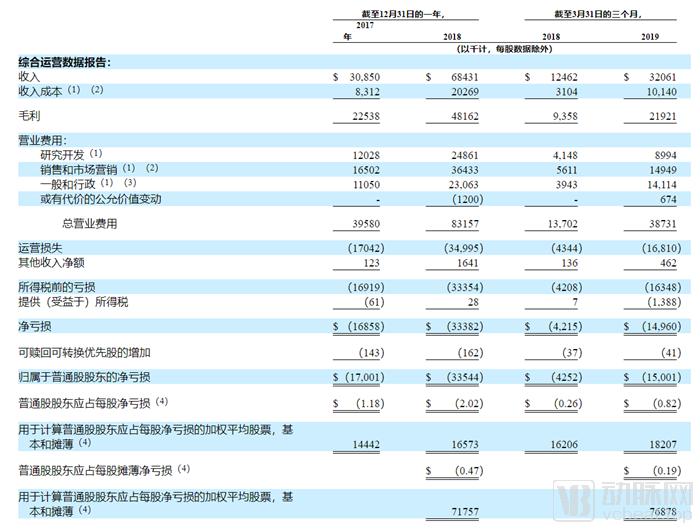 Livongo's Revenue Performance Data Source: Prospectus
In this regard, an analysis by Village Doctor’s Diary (LatitudeHealth) points out: “Judging from the fact that Livongo’s losses have expanded rapidly alongside its revenue growth, its current pricing fails to cover costs. This is primarily due to excessively high proportions of sales and marketing expenses and R&D expenditures. Although the share of these two cost components is declining as revenue grows, the proportion of personnel and administrative expenses is rising steadily, driven by a sharp increase in labor costs following rapid customer acquisition. Therefore, as losses continue to widen, price increases represent one solution, while continuously reducing R&D and sales expenses remains critically important. Drawing from the experience of Teladoc, a prior telemedicine company, sustained losses may be inevitable for digital health firms, since substantial investments in technology and sales are prerequisites for their high growth. This constitutes a major developmental bottleneck for the entire digital health sector.”
VCBeat previously analyzed Teladoc’s 2016 operating expenses to examine its primary expenditures. In 2016, Teladoc reported total operating revenue of $123 million, cost of revenue of $31.97 million, gross profit of $91.2 million, and a gross margin of 74%, which was already quite strong. However, other top-line expenses included $48.57 million in general and administrative expenses, $34.72 million in advertising expenses, $26.24 million in sales expenses, and $21.82 million in technology expenses, among others. When adding expenses such as legal, regulatory, and income taxes, the company incurred a total net loss of $74.21 million. Expenses that increased rapidly—namely advertising, sales, and technology costs—rose substantially in proportion to the growth in operating revenue.
In short, sustained losses are a common phenomenon for digital health management companies focused on chronic diseases. Expenditures are primarily allocated to expanding the customer base, building and operating marketing channels, covering personnel costs, and developing technological solutions. This is an inevitable challenge for growth-stage, platform-level digital health companies. To summarize, the key lies in leveraging superior technology and solutions to retain customers, extend product lifecycle, acquire new users, and boost engagement by offering reasonable pricing, excellent product experience, and proven clinical outcomes in a highly competitive market environment.
Exploration and Evolution in the Course of Business Development
Mapping the Corporate Development Trajectory: Key Milestones in Livongo’s Growth Journey
In September 2014, it launched its first solution, Livongo for Diabetes.
In April 2018, the acquisition of Retrofi marked the launch of the second solution, now known as the Livongo Prediabetes and Weight Management Program;
In August 2018, it launched its third solution, Livongo for Hypertension.
In February 2019, the acquisition of myStrength marked the launch of its fourth solution, now known as Livongo for Behavioral Health.

Livongo’s Financing History
Based on its financing history, public reports reveal that prior to 2016, Livongo primarily allocated its raised funds to clinical research, technological R&D, and customer and channel expansion. Following the completion of its Series C financing in April 2016, the company mainly used the capital to accelerate the upgrade and refinement of new products and services, while expanding into new chronic disease markets—such as hypertension and behavioral health management—on top of deepening its engagement with key enterprise clients. Starting with its Series E financing round in 2018, Livongo placed significant emphasis on investments in data science technology.
Therefore, broadly speaking, Livongo’s development can be divided into three phases: 2014–2016 was the period of product R&D and clinical validation; 2016–2017 was the market expansion phase, during which the company prepared to enter other chronic disease segments, with its April 2018 acquisition of Retrofit marking its substantive entry into prediabetes and weight management; from 2018 to the present, Livongo has entered a phase of personalized chronic disease management driven by data and AI technologies.
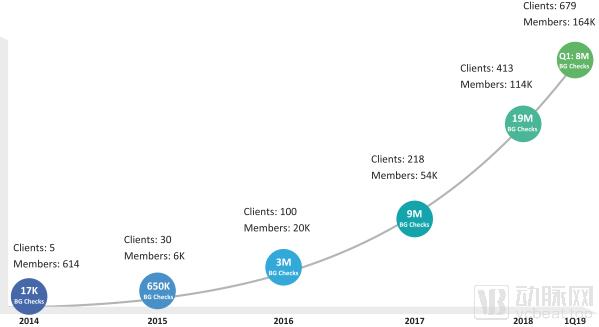
Livongo's User Base
BG Checks represents the cumulative number of blood glucose checks performed by members using Livongo for diabetes management.
This is also reflected in Livongo’s user base and customer scale. In terms of membership size alone, growth was relatively slow before 2016. In April 2016, the company completed a $44.5 million Series C financing round. A key step in this round was the introduction of strategic industrial investors with deep healthcare expertise—such as Blue Cross Blue Shield of Massachusetts and the Merck Global Health Innovation Fund—in addition to existing investors General Catalyst, KPCB, and DFJ Venture. This move proved beneficial for expanding its enterprise client base. The number of members grew directly from 20,000 in 2016 to 114,000 in 2018, while the number of corporate clients increased from 100 in 2016 to 413 in 2018. Furthermore, the member count reached 164,000 in the first quarter of 2019, indicating that the company remained in a phase of rapid growth.
As the cumulative number of blood glucose tests for diabetes on the Livongo platform increases, there is a growing demand for data processing capabilities. Simultaneously, higher standards are being placed on the coordination and matching of medical resources, particularly regarding online response speed and the ability of offline health coaches and physician teams to provide precise and timely health guidance. Therefore, it can be predicted that after Livongo’s public listing, its ability to seamlessly integrate its “data engine strategy” with medical team resources will be critical.
In a nutshell, throughout Livongo’s development over the past few years, it has been consistently addressing the challenge of “user acquisition,” which is directly related to the following three factors:
First, satisfaction.Satisfaction among paying members: the prospectus shows that Livongo has a high satisfaction rate, with an average member Net Promoter Score (NPS) of +64;
Second, Clinical Outcomes.Solutions must demonstrate measurable and sustained clinical outcomes for each chronic disease. The prospectus shows that the Livongo hypertension solution achieved a 10 mmHg reduction in systolic blood pressure within six weeks among individuals with baseline blood pressure greater than 140/80 mmHg, an outcome proven to reduce stroke incidence by 41%, comparable to the effects of antihypertensive medications;
Third, cost management.Cost savings and effective cost control. The prospectus shows that, based on differential cohort analysis, the diabetes solution demonstrated an average monthly saving of $88 per member (PPPM) in the first year of use, and among eligible members who provided data to Livongo, it saved clients an average of $129 per member per month (PPPM).
But what is the customer retention rate after user acquisition? In an article, Village Doctor’s Diary (LatitudeHealth) pointed out: “Even when fully employer-paid, only 34% of employees chose to enroll, and after 12 months of use, the customer retention rate was 47%. This means that only nearly 16% of the target customers will continue to use Livongo’s online diabetes management service in the second year. The commercial sustainability of health management, which goes against human nature, remains to be seen.”
Summary of Livongo’s Development Path, Very Similar to Our Previous Summary of Teladoc, Mainly in Two Aspects:
1. Continuous user acquisition is required to expand the new user base, as revenue generation depends on having users; however, the cost of user acquisition is substantially high;
2. It is necessary to expand the B-side customer base. The difficulty and cost of acquiring B-side clients are lower than those for C-side clients. The conversion of the core business line typically begins in the mid-stage of corporate development, when the company has accumulated resources and established a reputation.
There are also differences: Livongo incurs high hardware R&D costs, but diabetes as a chronic condition exhibits high patient stickiness, with accurate data available to demonstrate clinical symptom relief and a higher degree of standardization in treatment pathways.
Current Status and Future of Digital Chronic Disease Management
How Large Is the Chronic Disease Market? Data show that in 2014, 147 million adults in the United States had chronic diseases, with more than 40% of adults suffering from two or more chronic conditions. Diabetes is one of the fastest-growing chronic diseases worldwide, affecting over 30 million Americans. The American Diabetes Association (ADA) estimates that the market related to diabetes in the United States alone reached $327 billion in 2017.
However, the current U.S. healthcare system is not designed to provide continuous care for patients with chronic conditions, leaving individuals to manage their chronic diseases largely on their own with limited guidance. Although some new digital health devices on the market may help track and collect health data, how to deliver actionable feedback and continuous health monitoring, provide personalized health advice to patients, and—most importantly—reduce costs remains an area of ongoing improvement. Companies represented by Livongo offer one possible solution.
Throughout Livongo’s development, it acquired numerous companies, including Diabeto, Retrofit, and myStrength, continuously broadening its business scope. However, in the field of digital management for diabetes and chronic diseases, it faces many competitors, including but not limited to Virta Health, Omada Health, Glooko, Hello Heart, Lyra Health, Onduo, and Ginger.io.
For instance, Virta Health is leveraging telemedicine and artificial intelligence to transform the current landscape. Upon enrollment, members receive a kit of FDA-cleared medical devices for daily monitoring of physiological metrics such as blood glucose, blood pressure, and body weight. Based on the daily data collected, physicians utilize AI-driven analytics to formulate personalized dietary plans for each patient. Virta Health also employs health coaches who provide one-on-one counseling services. Outside of regular business hours, voice-enabled bots handle frequently asked medical questions with high-standardized answers. Furthermore, patients can join online communities to share treatment experiences and offer mutual encouragement.
Overall, the field of digital health management, particularly for conditions such as diabetes, remains in its early stages of development. As indicated by the above analysis, Livongo and Virta Health employ highly similar business models. Both leverage smart hardware integrated with software to enable continuous monitoring and data analytics for diabetic patients, providing personalized glycemic control guidance. Their revenue models are also alike, primarily relying on B2B subscription-based income.
Getting to the root of it, the ultimate goal for such platforms is to provide patients with solutions that deliver superior clinical outcomes while reducing costs. A standalone analysis of Livongo suggests that, in the long run, breakthroughs can be achieved through the following avenues:
First, increase the product density of solutions.There are cross-selling opportunities for solutions addressing diabetes, hypertension, and weight management, necessitating the continuous development of solutions for other chronic diseases.
Second, strengthen technical processing capabilities.Livongo is currently also developing an AI+AI engine, continuously evaluating which methods are most effective in helping members, improving patients’ health outcomes through ongoing data processing and feedback, and even seeking new technology acquirers.
Third, expansion of payment channels.Refine and follow up on solutions compatible with government programs and other payers, including Medicare Advantage, Managed Medicaid, Traditional Medicare, and Medicaid.
Fourth, integrate the new platform.Integrate and ensure compatibility with existing health monitoring devices while adopting new technologies; for example, in 2019, Livongo established a technology partnership with Amazon to leverage Amazon’s voice technology for improved efficiency.
Fifth, strengthen the offline medical team.A core component of the Livongo model is its team of offline health coaches and physicians; therefore, it is essential to continuously strengthen the medical workforce, enhance clinical coordination capabilities, and provide guidance with greater clinical efficacy. This factor directly determines the success or failure of future expansion.
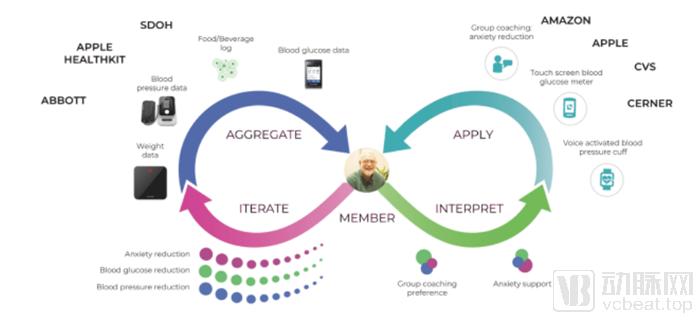
Livongo is also currently developing an AI+AI engine.
Let’s focus on analyzing the first two points. Regarding the first point, although Livongo is expanding into new areas of chronic disease management, conditions such as prediabetes, hypertension, and obesity are positively correlated with diabetes to some extent, allowing for in-depth development of patients with comorbidities.
Regarding the technological R&D mentioned in the second point, the prospectus reveals that Livongo’s multidisciplinary team has built a flexible and robust technology engine capable of processing data from its own platform devices and other data sources, transforming this information into valuable health insights. Currently, the number of data points processed by the engine has rapidly expanded from over 23 million in 2016 to 106 million in 2018. In the first quarter of 2019 alone, more than 31 million data points were collected, primarily leveraging four core functions: aggregation, interpretation, application, and iteration.
Aggregation:Collect data from various sources, including devices that gather information from members in real time or near-real time, third-party applications, medical claims, pharmacy claims, member preference surveys, and third-party partners;
Explanation:Screened extensive health and consumer data to identify relevant health signals, developing actionable, personalized, and timely insights tailored to specific individuals;
Applications:Provide specific health guidance directly to members in the correct format and context, based on each member’s chronic conditions and individual needs;
Iteration:Iteratively and continuously customize the member experience based on patient behavior, preferences, feedback, and outcomes, using a principle similar to Netflix recommendations.
In summary, driven by technological advancements, the treatment model for chronic diseases will undergo fundamental changes. Livongo has provided an exemplary case study. However, whether Livongo can expand into new fields, reduce patient treatment costs and customer acquisition costs, extend to the consumer end to secure larger traffic channels, and achieve new breakthroughs in its profitability model remains to be continuously validated over time.
References:
Livongo Files for IPO: Commercialization of Online Diabetes Management Faces Long-Term Challenges
Teladoc’s Losses Continue to Widen: Where Is the Path Forward for Telehealth Companies?