

Bacteriophage Therapeutics Industry Research and Investment Insights: Over $4.3 Billion in Recent Deals – Can Phage Therapy Rescue Humanity from Antimicrobial Resistance?
Editor’s Note: This report is an original work by Dr. Su Heng of Life Capital, exclusively published with authorization from VCBeat.
When it comes to drug-resistant bacteria, the general public may feel that they are still a distant threat. In reality, the global menace of antimicrobial resistance is imminent, making the search for effective new countermeasures urgently necessary. From late last year to early this year, three major collaborative deals were consecutively announced in the field of phage-based anti-infective therapies:
Locus Biosciences licenses its engineered bacteriophage technology platform and pipeline to Johnson & Johnson for development and commercialization in an $818 million deal;
Bioharmony Therapeutics entered into a licensing agreement with Boehringer Ingelheim for its investigational phage lysin products, with a total value of approximately $500 million;
iNtRon Biotechnology has also entered into a licensing agreement with Roivant for a bacteriophage lysin drug, valued at a total of $667 million, drawing renewed attention to bacteriophages.
Can Bacteriophages Rescue Humanity from Drug-Resistant Bacteria?
What exactly is it?
What stage has research in this field currently reached?
What are the investment opportunities and investment rationale?
This article will explain it all to readers.
Antibiotic Resistance Poses a Major Challenge to Human Health
The discovery and clinical application of penicillin during World War II marked the entry of humanity into the antibiotic era in the fight against bacterial infections. Penicillin, along with subsequently developed classes of antibiotics—including cephalosporins, tetracyclines, macrolides, and carbapenems—has made remarkable contributions to combating bacterial infectious diseases. To date, antibiotics remain a cornerstone of infection treatment.
However, bacteria develop resistance through mutation under the selective pressure of antibiotics. Due to the prolonged use of conventional antibiotics over many years, bacterial resistance has increasingly become a global public health concern in recent years. In particular, the horizontal transfer of resistance genes among bacteria has led to the emergence of multidrug-resistant organisms and even superbugs, leaving humanity with few or no effective therapeutic options and posing a severe threat to human health.
According to a 2016 report by the UK government, antimicrobial resistance currently causes approximately 700,000 deaths annually worldwide. If left unchecked, this figure is projected to rise to 10 million by 2050, comparable to the current annual number of cancer-related deaths. Another report from the United States in 2013 indicated that, in the US alone, up to 2 million people suffer from serious infections caused by drug-resistant bacteria each year, resulting in direct medical costs as high as $20 billion.
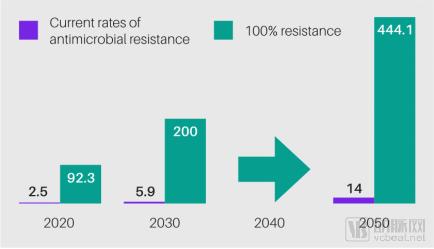
The figure below is from a RAND research report (population unit: millions). The report projects that, at current levels of medical care, the rate of bacterial antibiotic resistance will rise to 14% by 2050, with the number of people worldwide infected by multidrug-resistant bacteria reaching as high as 444 million. The need for effective treatments is urgent.
# The Development of New Antibiotics Faces Numerous Challenges
In the face of the increasingly severe threat of bacterial resistance, significant efforts have been directed toward the development of novel antibiotics. However, progress in this area has been disappointing, with research and development slowing markedly since the beginning of the 21st century. Statistics show that the number of new antibiotics approved for marketing in the United States during the 2010s hit a record low of only nine, less than half the number approved in the 1980s (29) or the 1990s (23). More concerningly, the market performance of most of these newly launched drugs has been underwhelming. With the exception of a few blockbusters such as daptomycin, the majority have achieved only mediocre commercial success, which has significantly dampened enthusiasm for the development of novel antibiotics.
Limited Returns on New Antibiotics: The Multifaceted Reasons Behind the Development Slump
On one hand, most new drugs have low prescription volumes and lack commensurate high pricing. From the perspective of preserving the efficacy of new antibiotics, they are typically reserved as last-line clinical treatments to prevent bacterial resistance and avoid a scenario where no effective drugs remain. Consequently, their usage is far lower than that of first-line therapies. However, the research and development (R&D) costs for new drugs often exceed hundreds of millions of dollars. To recoup these R&D investments, pharmaceutical companies are compelled to set high prices for new drugs. Yet, within the current reimbursement landscapes of major pharmaceutical markets, such high pricing for antibiotics struggles to gain payer support, which in turn further limits the prescription volume of new drugs.
On the other hand, novel antibiotics have limited capacity to address clinical challenges. This is because, prior to the emergence of bacterial resistance, the underlying resistance mechanisms are unclear, making it difficult to initiate preemptive drug development. Once bacteria develop resistant mutations, new drugs still require several years to complete the entire process from project initiation to market approval. This lag in the research and development cycle means that new drugs are perpetually playing catch-up with bacterial evolution, thereby failing to adequately meet the needs of clinical treatment.
Addressing Bacterial Drug Resistance May Require New Approaches
Based on the above analysis, an ideal antimicrobial agent capable of addressing current clinical challenges should possess the following characteristics:
(1) The drug targets a large patient population and is ideally suited for first-line use. A broad user base can alleviate the pressure of high drug pricing, which not only facilitates support from payers but also enables patients to afford the medication more easily without relying entirely on the healthcare security system;
(2) Demonstrating outstanding clinical efficacy, it significantly reduces mortality from infections compared to existing treatment regimens. As a first-line clinical therapy, it should also effectively prevent the emergence of drug-resistant infections, thereby not only lowering mortality but also substantially reducing the high medical costs associated with treating drug-resistant infections.
(3) Possesses a unique bactericidal mechanism, with efficacy unaffected by current bacterial resistance mechanisms (no cross-resistance). Furthermore, bacteria are less likely to develop resistance, or if resistance does emerge, the agent can be rapidly iterated and optimized to overcome it.
(4) It is characterized by low cost, ease of storage, and convenience of use.
The third characteristic mentioned above is difficult to achieve with traditional antibiotics. Consequently, scientists are actively investigating novel antimicrobial approaches that differ fundamentally from conventional antibiotics, such as antimicrobial peptides and bacteriophages. Among these, bacteriophages—naturally occurring bacterial predators with a unique set of properties—have once again attracted significant attention.
The Natural Enemy of Bacteria
Bacteriophages (bacteriophage, phage) are a general term for viruses that can infect microorganisms such as bacteria, fungi, actinomycetes, or spirochetes. Having co-evolved with bacteria for hundreds of millions of years, they are the natural predators of bacteria. Bacteriophages exist in diverse ecological environments, exhibiting great diversity and an abundance of up to 10^31, which is approximately ten times the number of bacteria.
Bacteriophages can be classified into virulent bacteriophages and temperate bacteriophages (also known as lysogenic bacteriophages). Virulent bacteriophages are those capable of continuously completing the lytic cycle within a short period to achieve replication. Upon entering a bacterial cell, virulent bacteriophages alter the host’s properties, converting it into a factory for phage production. This results in the massive generation of new phage particles, which ultimately leads to bacterial lysis and death through the release of endolysins, thereby releasing large quantities of progeny phages to infect additional host bacteria.
Temperate bacteriophages refer to those that, after adsorbing to and invading a host cell, integrate their DNA solely into the host’s nuclear chromosome. They can undergo synchronous replication along with the host DNA over an extended period and, under normal circumstances, do not proliferate or cause lysis of the host cell. Currently, all bacteriophages with practical value for anti-infective applications belong to the virulent type. Temperate bacteriophages cannot kill bacteria; on the contrary, they may facilitate the transfer of antibiotic resistance genes.
Unique Bactericidal Mechanism
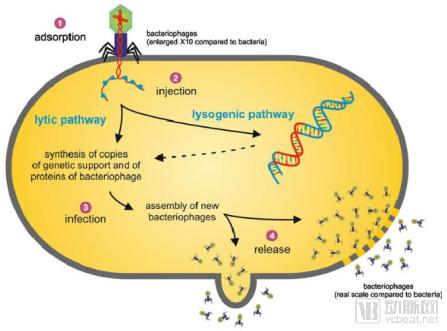
Each bacteriophage specifically identifies its target bacterial category by recognizing specific receptors on the bacterial surface, followed by invasion (applicable to both virulent and temperate phages) and killing (referring exclusively to virulent phages). The lytic cycle of virulent phages comprises five stages: adsorption, penetration, replication, assembly, and lysis (achieved through the production of lysins), as illustrated in the figure below, thereby enabling self-replication and lysis of the target bacteria. The process of bacterial lysis by phages is highly efficient; studies have shown that starting from a single phage, up to billions of host bacteria can be lysed after four lytic cycles.
Although bacteria can indeed develop resistance to bacteriophages, the mechanisms underlying this resistance are fundamentally different from those of traditional antibiotic resistance. Generally, bacteria may acquire phage resistance through mechanisms such as excluding phage genetic material via CRISPR/Cas9 systems or altering surface receptor types to prevent phage recognition. Consequently, there is no cross-resistance between bacteriophages and antibiotics.
Furthermore, bacteriophages do not harm bacterial strains lacking the targeted receptors or eukaryotic cells, demonstrating a high level of safety for human cells.
A Long History of Application
Since their initial discovery, the research and application of bacteriophages have spanned over a century. The discovery of bacteriophages can be traced back to 1896, when British bacteriologist Hankin identified an antibacterial substance in rivers in India. This substance was filterable and heat-labile, and it was found to limit the spread of cholera.
In 1915, British microbiologist Frederick Twort reported that while studying the vaccinia virus, he discovered the presence of a substance capable of passing through bacterial filters and destroying cultured bacteria. He published this finding in the form of a brief note, but it did not attract significant attention at the time.
Subsequently, in 1917, Félix d'Herelle of Canada independently discovered the dysentery bacillus bacteriophage at the Pasteur Institute in France. d'Hérelle then conducted extensive research and attempted to use bacteriophages to treat bacterial infections in humans, achieving significant success and receiving multiple Nobel Prize nominations (though he ultimately did not win the award).
Entering the 1920s, people began to actively use bacteriophages to treat various bacterial infections. Although the bactericidal mechanism of bacteriophages was not understood at that time, certain successes were still achieved. The 1940s were an important period for bacteriophage research, which mainly focused on the series of life cycle stages from parent to offspring, including adsorption, invasion, replication, assembly, and release. During this period, people gradually gained a deeper understanding of the bactericidal mechanism of bacteriophages.
However, the discovery and clinical application of penicillin during World War II altered the course of human history in the fight against bacteria. At that time, antibiotic therapy was not only highly effective but also broad-spectrum, eliminating the need for rigorous bacterial identification prior to treatment. These advantages propelled antibiotics to the forefront of antibacterial therapy, leading Western scientists to gradually lose interest in the use and study of bacteriophages.
In contrast, isolated from the development of Western antibiotic technology, Russian scientists have continued to advance phage therapy. During World War II, the Soviet Union primarily used bacteriophages to treat various bacterial infections in soldiers, such as dysentery and gangrene. A monograph published in 2012, titled *A Literature Review of the Practical Application of Bacteriophage Research*, covers the relevant literature. This practice has persisted to the present day, with bacteriophages still being widely used in many Eastern European countries; for instance, Georgia is home to major phage therapy research institutes.
Since their development, antibiotics have been regarded as powerful tools for the prevention and treatment of bacterial diseases. However, in recent years, due to a lack of regulation and widespread misuse, many pathogenic bacteria have developed resistance, significantly diminishing the therapeutic efficacy of these drugs. Furthermore, through the horizontal transfer of resistance genes among bacteria, the spectrum of drug resistance has continued to expand, leading to the emergence of multidrug-resistant organisms and even superbugs.
Meanwhile, as previously noted, the significant decline in the number of new antibiotics has left our antimicrobial arsenal critically depleted, thereby exacerbating the threat posed by drug-resistant bacterial infections. Furthermore, antibiotic use has been found to potentially disrupt the gut microbiota, leading to life-threatening conditions such as inflammatory bowel disease and Clostridioides difficile infection. There is an urgent need for novel antimicrobial strategies.
In this context, bacteriophages have once again attracted the attention and active exploration of Western scientists as a therapeutic approach for bacterial infections, with successful clinical case reports emerging. For instance, in 2012, Connecticut, USA, reported a case in which a phage was used to cure a refractory thoracic infection. In 2016, the University of California, San Diego (UCSD) reported a case in which phage therapy successfully treated a patient infected with Acinetobacter baumannii; subsequently, the same team went on to successfully treat five additional infected patients.
The positive outcomes achieved in these cases have bolstered confidence and expectations in phage therapy. It is worth noting that over the past five to six decades, significant advancements have been made across multiple disciplines and engineering technologies. A clear understanding of the therapeutic mechanisms of bacteriophages has been established, and a series of challenges related to phage characterization, production, quality control, and storage have been overcome. These developments have laid a solid foundation for the standardized use of bacteriophages in the medical field.
It is worth noting that even in the United States, bacteriophages have been used in food processing for over a decade, primarily for the eradication of pathogenic bacteria such as Listeria. This approach offers prominent advantages, including high efficacy and no residue, with its safety validated through long-term use.
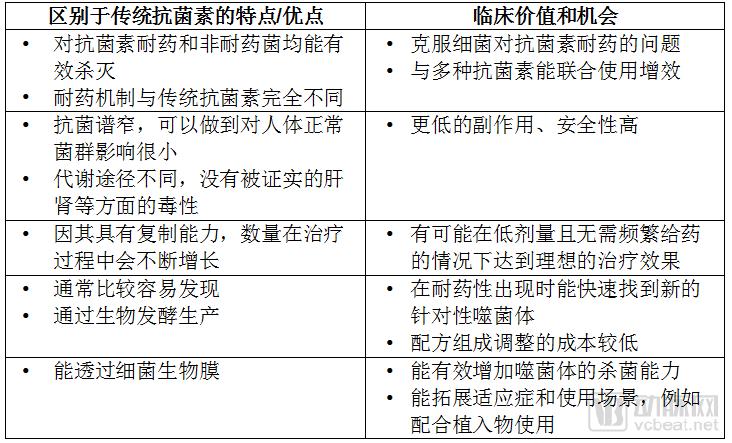
Based on the characteristics of bacteriophages and current research, scientists believe that, compared with conventional therapeutic regimens, phage-based antibacterial therapy offers advantages such as low dosage, high potency, high specificity, and low side effects, as summarized in the left column of the table below. These features not only confer significant value to phages in combating drug-resistant bacteria but also help avoid killing commensal bacteria, thereby preventing dysbiosis and associated complications. The clinical application value is summarized in the right column of the table below.
It is precisely because bacteriophages have demonstrated these superior characteristics and immense application potential that it is no surprise international pharmaceutical giants such as Johnson & Johnson and Boehringer Ingelheim regard them with special interest, sparing no expense to secure a foothold in this field.
As bacteriophages are microorganisms with a distinct set of characteristics compared to traditional drugs, conventional drug development approaches and regulatory pathways are not applicable to phage therapeutics, thereby objectively becoming a major obstacle to the advancement of phage therapy. Therefore, while discussing the research and development progress of phage therapy, it is also essential to gain an in-depth understanding of regulatory policies across different countries and regions.
Abroad: Regulatory Authorities Actively Cooperate, R&D Enterprises Are Active
Here, we primarily discuss industry developments in Europe and the United States, where regulatory oversight is stringent.
In the United States, the FDA approved the first clinical trial of a topically administered phage therapy in May 2016. In January 2019, it approved the first clinical trial of an intravenously administered phage therapy. These two events mark the opening of a regulatory pathway in the world’s largest pharmaceutical market. Due to the unique characteristics and historical safety record of phage drugs, the FDA does not require companies to submit pharmacokinetic and toxicological study data for phage drugs when applying for clinical trials. Notably, according to records from an FDA workshop on phage therapy held in 2017, the FDA is considering regulating phage drugs in a manner similar to vaccines, which would allow modifications to the phage composition (e.g., in response to the emergence of drug resistance) without requiring new clinical trials or submissions.
If the aforementioned regulatory framework is ultimately implemented, phage therapy will hold a significant advantage over traditional antibiotics: it can rapidly evolve to combat bacteria that have developed resistance to the original formulation. Furthermore, in addition to conventional regulatory pathways, the FDA has repeatedly granted expedited approval for the clinical use of phage-based drugs under compassionate use provisions in emergency situations.
In Europe, the European Medicines Agency (EMA) considers that none of the existing regulatory pathways for medicinal products are applicable to phage therapy, necessitating the development of a distinct regulatory framework tailored specifically to this modality. Overall, however, Europe maintains a relatively open and optimistic stance toward phage therapy. The European Union has previously funded a multinational, multicenter clinical research program on phage therapy known as the Phagoburn project. Additionally, scientists in France, Belgium, and the Netherlands have conducted clinical trials evaluating phage therapy in burn patients infected with Escherichia coli and Pseudomonas aeruginosa.
As evidenced by the symposium on phage therapy applications convened by the European Medicines Agency (EMA) in June 2015, the EMA strongly encourages ongoing dialogue between drug developers and regulatory authorities regarding how the regulatory framework can support and provide appropriate flexibility for defining forthcoming phage trials and studies. This aims to help demonstrate the safety and efficacy of phage therapy and facilitate its introduction into clinical practice. The meeting also discussed incorporating phage-based medicines into a regulatory approach similar to that used for vaccines.
Due to relatively clear regulatory pathways, openness, and well-established communication mechanisms, there is a considerable number of active R&D companies abroad in the field of bacteriophages or phage lysins (classified as enzymatic biologics, with relatively clear regulatory pathways). The names of selected representative companies, their key pipelines and development stages, as well as financing/partnership information, are summarized in the table below, which also includes Locus Biosciences, iNtRon Biotechnology, and Bioharmony Therapeutics mentioned at the beginning of this article:
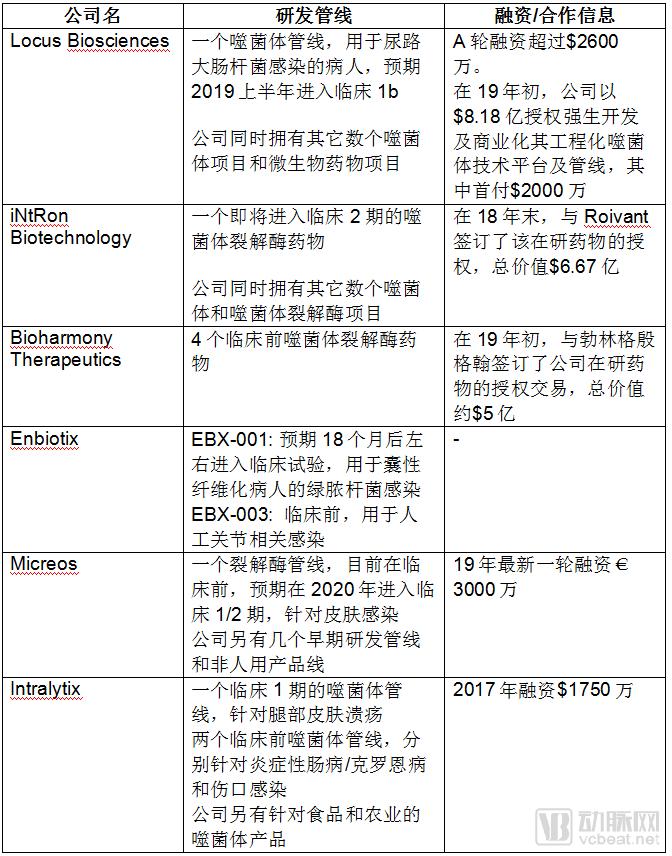
As shown in the table above, foreign phage therapy companies cover a relatively broad range of therapeutic areas, including various infectious conditions such as skin infections, gastrointestinal infections, and systemic infections. Moreover, many of these companies are highly active in fundraising and strategic collaborations, continuing to attract significant attention from investors and large pharmaceutical companies.
Domestic: The regulatory pathway is unclear, and there are relatively few R&D enterprises.
Relatively speaking, due to the incomplete regulatory framework for phage-based pharmaceuticals in China, no clinical trials of phage therapy are currently being conducted domestically. In contrast, according to publicly available information, only a few companies in China—such as PhageTech, Dalian Haisen, and Shanghai Gaoke—are currently developing human-use phage drugs, and apart from PhageTech, there has been virtually no disclosure of R&D progress. The basic profiles of these companies are listed in the table below:
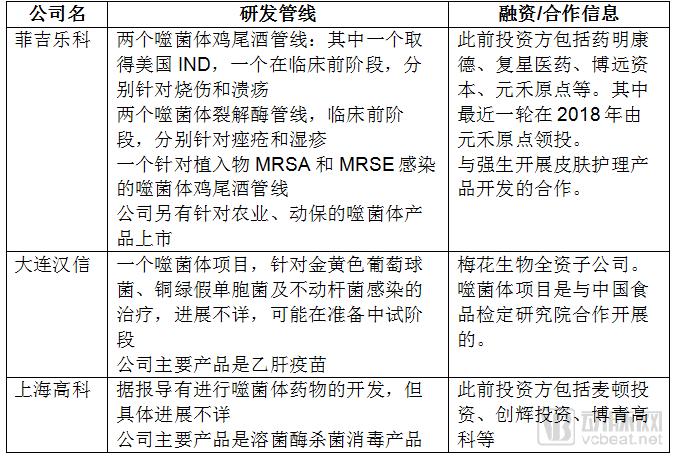
With China’s accession to the ICH and the ongoing alignment of regulatory practices with those of Europe and the United States, it is anticipated that the Center for Drug Evaluation (CDE) will soon introduce a regulatory pathway that mirrors international standards while remaining tailored to domestic conditions. This development is expected to usher in a vibrant new phase for the research and development of human-use bacteriophage therapies in China.
Phage Cocktail Formulation
Bacteriophages exhibit strict host specificity, which is an advantage of phage therapy; however, their narrow antibacterial spectrum necessitates bacterial identification prior to use and may increase the frequency of bacteriophage resistance. This significantly limits the clinical application of phages, particularly in single-phage preparations. In contrast, formulating mixtures of multiple phages with different antibacterial spectra (i.e., phage cocktails) can effectively broaden the product’s antibacterial range. Phage cocktail therapy has been employed for decades at the Eliava Institute of Bacteriophages, Microbiology and Virology in Georgia and the Phage Therapy Unit in Wrocław, Poland. Notably, the Eliava Institute updates its cocktail formulations on average every eight months to ensure therapeutic efficacy. Meanwhile, numerous animal studies and clinical trials based on cocktail therapy have been reported in recent years. Most results indicate that this approach overcomes the limitation of the narrow antibacterial spectrum associated with single-phage therapies and reduces the incidence of bacterial resistance, demonstrating significant clinical value. Consequently, it represents one of the primary directions in the current development of phage therapy.
Combined use with antibiotics
Bacteriophages and antibiotics employ entirely distinct mechanisms for bacterial killing or inhibition. Extensive literature reports that their combined use can produce synergistic effects, restore the sensitivity of drug-resistant bacteria to antibiotics, and reduce the likelihood of developing antibiotic resistance. Results from multiple animal studies have demonstrated that infected animals receiving combination therapy with bacteriophages and antibiotics exhibit significantly higher survival rates than those treated with antibiotics alone. These findings suggest that combining bacteriophages with antibiotics may represent a more appropriate therapeutic strategy. Equally important is the fact that this approach relies less on pre-treatment identification of the specific bacterial strain compared to bacteriophage monotherapy. Furthermore, in the design of clinical trial protocols, this therapeutic positioning may be more readily accepted by regulatory authorities and healthcare institutions.
Gene-Edited Bacteriophages
In recent years, with the rapid advancement of molecular biology, sequencing, gene editing, and various omics technologies, our understanding of bacteriophages has moved beyond mere morphological observation and basic biochemical characterization. It is now possible to comprehensively analyze, edit, and even synthesize bacteriophages at the genetic level. Currently, several technologies, such as CRISPR-Cas, BRED, and YAC, enable the editing of bacteriophages. Genetic modification of bacteriophages can alter or expand their host range and confer various desirable traits, including the ability to control replication and lysis rates to regulate the release of bacterial endotoxins, as well as to enhance phage survival within biological systems. These capabilities significantly bolster phage therapy. However, due to varying national attitudes toward genetically modified organisms, gene-edited bacteriophages may face regulatory hurdles and challenges in medical acceptance in certain countries and regions, potentially requiring additional supporting data. Furthermore, uncertainties and concerns regarding the potential consequences of gene-edited bacteriophages escaping into the environment imply that their use may be subject to stricter regulatory oversight.
Application of Active Phage Substances, Such as Lysins
At the late stage of infection, phage-mediated lysis of host bacteria via lysins is a critical step in achieving bactericidal effects. Endolysins are currently the most extensively studied and applied class of phage-derived lysins, which specifically target the bacterial cell wall. Compared with whole phages, lysins offer several advantages, including non-replicability, ease of targeted delivery, and a lower propensity for bacterial resistance. Furthermore, as biological macromolecules, lysins have a more clearly defined regulatory pathway than phages. In recent years, endolysins have been employed in the prevention and treatment of various bacterial infections. With in-depth research into the structure and mechanism of action of lysins, along with advances in protein engineering techniques, lysins are poised to become a highly valuable therapeutic modality derived from phages.
In summary, as the global threat of antibiotic-resistant bacteria intensifies, bacteriophages—a long-discovered but niche approach to controlling bacterial infections—are gradually returning to the spotlight as a promising countermeasure. Consequently, companies developing phage therapies are poised to become the next investment hotspot. A review of domestic and international firms specializing in phage therapy reveals that, despite differences in technical routes and therapeutic areas, these companies often possess platform-like characteristics, allowing them to expand their pipelines and indications by leveraging phage libraries or editing technologies. Based on this, we believe that companies with the following product positioning, development strategies, capabilities, and resources hold significant investment value and are well-positioned to stand out in this competitive landscape.
(1) Development based on standardized products. We believe that, compared with personalized phage therapy, standardized products offer a more formal and streamlined regulatory pathway. Furthermore, standardized products can be applied to a broader patient population, potentially serving as second-line or even first-line treatment regimens. This approach leverages economies of scale to reduce drug prices, enhance accessibility, and facilitate commercial success. In contrast, due to constraints related to cost-effectiveness, accessibility, and timeliness, personalized therapies are often limited to emergency use, placing them at a significant disadvantage in terms of patient reach and commercial returns.
(2) The ability to identify clinical needs and select appropriate indications. For instance, product development targeting hospital-acquired infections (HAIs) may represent one of the most valuable directions at this stage, including skin and soft tissue infections, respiratory tract infections, and surgery-related infections. The primary reason is that the incidence of HAIs remains persistently high. Statistics show that there are 2 million cases of hospital-acquired infections annually in the United States, 100,000 in the United Kingdom, and 4 million in China. These infections severely affect patient prognosis, increase patient suffering and the workload of healthcare personnel, and in severe cases, lead to patient death. They also result in substantial economic losses (ranging from billions to hundreds of billions of US dollars). Furthermore, hospitals are hotspots for drug-resistant bacterial infections due to their complex sanitary environments and treatment protocols, which facilitate the emergence of multidrug-resistant organisms and severe secondary infections. Therefore, developing products targeting HAIs offers significant clinical, economic, and social benefits. Of course, the application scenarios for phage therapy are not limited to this; companies must possess the capability to identify the most valuable clinical needs and design products accordingly.
(3) The ability to integrate clinical needs with product design and development. As previously mentioned, the practice of phage therapy in mainstream pharmaceutical markets in Europe and the United States is still in its early stages. Prior evidence of efficacy has largely been limited to individual case reports, where the application of phages was rudimentary. To transform phage therapy into a truly valuable product, it is essential to have a thorough understanding of how to align clinical needs with product design, and to possess unique technical capabilities in areas such as manufacturing processes and formulation to realize this integration. For instance, long-acting topical formulations can be employed for treating skin infections, while inhalable formulations are more appropriate for respiratory tract infections. This imposes high demands on the team’s ability to understand clinical needs and to execute product design and development.
(4) Extensive experience in the industrial-scale production and quality control of bacteriophages, particularly when developing them as standardized products. This is because bacteriophages are microorganisms whose manufacturing processes differ significantly from those of chemical drugs and protein-based therapeutics, rendering existing quality standards for other pharmaceuticals entirely inapplicable. When utilized as regulated therapeutic agents, their quality and quality management systems must receive regulatory approval. This requires companies not only to possess the capacity and expertise for large-scale production but, more importantly, to adapt and upgrade their production and quality control technologies to meet the specific quality indicators that regulatory authorities may mandate. Additionally, maintaining reasonable production costs is essential.
(5) Standardized Clinical Development. The target population and clinical value of a product are closely linked to the design and outcomes of its clinical protocols. To truly demonstrate the value of phage therapeutics, taking the development direction of treating nosocomial infections with the aforementioned standardized products as an example, companies could consider adopting a study design comparing phage therapy combined with standard of care versus standard of care alone. By achieving statistically significant advantages in hard efficacy endpoints—such as time to cure and survival rates—in randomized, controlled, double-blind trials, companies can generate compelling evidence to persuade regulatory authorities and healthcare institutions to adopt their products.
(6) For domestic companies, it is advisable to adopt an internationalization strategy for product registration, leveraging the relatively open and clear regulatory pathways abroad—particularly those of the U.S. FDA—to advance clinical development and achieve proof-of-concept (POC) milestones at an early stage. Given that the current regulatory pathway in China remains unclear, this approach allows companies to maintain product development momentum without delay, enabling them to rapidly advance domestic development using overseas clinical data once the regulatory framework in China becomes clearly defined.
(7) The platform technology boasts substantial accumulated expertise. For companies utilizing natural phages for drug development, an extensive library of identified and classified phages, coupled with efficient screening methods, facilitates the rapid discovery of therapeutically effective phages. For companies employing genetically engineered phages, profound understanding and practical experience in the design and implementation of genetic modifications are essential. Alternatively, companies may possess deep expertise in areas such as the isolation and identification of endolysins. On one hand, this enables the company to continuously generate more valuable products in response to clinical needs. On the other hand, once leading development candidates reach key R&D milestones, the value of the platform technology can increase rapidly due to successful validation.
(8) Extensive clinical and regulatory experience and resources. Admittedly, there are currently no marketed phage therapy products, and thus the industry lacks personnel with proven success in developing phage-based therapeutics. However, if team members possess substantial experience in the development and registration of other pharmaceuticals, along with access to a robust network of clinical experts and established channels for regulatory communication, they can help mitigate clinical and regulatory uncertainties, thereby paving the way for product commercialization.
Here, we hold a relatively positive outlook on the prospects of China’s phage therapy industry. We also welcome and encourage interested stakeholders to engage in further dialogue with us, so that we may jointly advance the development of this sector.
About the Author:
Su Heng, Ph.D. from Brandeis University, has nearly a decade of experience in innovative drug R&D, pharmaceutical consulting, and equity investment in the healthcare sector. He previously served as an Investment Manager at a pharmaceutical venture capital firm, Senior Director at a pharmaceutical consulting company, and Project Leader for R&D at a multinational pharmaceutical company. He currently serves as Vice President at Life Capital.
Author's Email: suheng@life-venture.com