

From Product Design to Real-World Trials: Persistent Challenges in AI Healthcare
“To date, artificial intelligence remains merely a big data processing tool.”
At the CCF-GAIR Conference in 2019, hosted by the China Computer Federation (CCF), organized by Leiphone and The Chinese University of Hong Kong, Shenzhen, and co-organized by the Shenzhen Institute of Artificial Intelligence and Robotics for Society, Zhang Zhengyou, Director of Tencent AI Lab & Robotics X, provided the above summary of contemporary “Artificial Intelligence” after discussing its 40-year development. He believes that artificial intelligence today is still at the very beginning of its journey, far from realizing the imaginative visions depicted in films and television series.
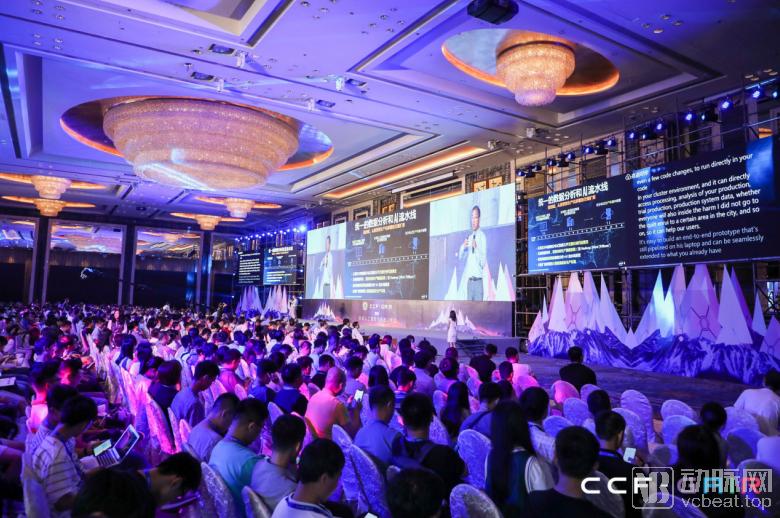
Nevertheless, even at this nascent stage, AI has already made significant inroads into our daily lives. The three major technological branches—Natural Language Processing (NLP), deep learning, and big data mining—are widely applied in healthcare, security, finance, autonomous driving, and other fields. Many of these technologies have achieved commercial deployment, becoming an integral part of our lives.
At the “AI + Healthcare” sub-forum of this conference, attendees focused their attention on the imaging branch of medical artificial intelligence, debating whether it serves as a practical tool for physicians or merely a game of capital. Professors and scholars from enterprises, universities, and hospitals shared their insights, and VCBeat has summarized and analyzed their key viewpoints.
In healthcare, the medical images that artificial intelligence can process are primarily categorized into ophthalmic images, radiological images, and pathological images. Among these, the volume of radiological image data far exceeds that of pathological images. Many AI companies have already processed hundreds of millions of radiological images (with major medical device giants reaching tens of billions), whereas the volume of pathological images processed is less than one percent of that figure.
The challenges in acquiring and processing imaging data are constraining the development of artificial intelligence (AI) in pathology. Yao Jianhua, an Expert Researcher in AI+Healthcare at Tencent AI Lab, stated, “Pathological diagnosis is a critical component of the diagnostic and treatment workflow; however, China faces a severe shortage of pathologists. Unlike the annotation of autonomous driving data, medical image annotation requires experienced physicians to perform this task. Consequently, training data for AI models incur higher costs, are more difficult to annotate, and are thus harder to obtain.” In contrast, the development of AI in ophthalmology and radiology has progressed much more rapidly.
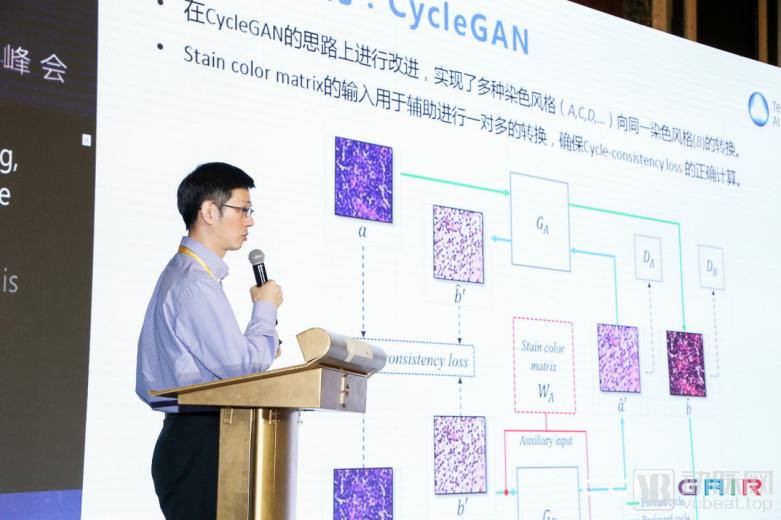
Yao Jianhua, AI+Healthcare Expert Researcher at Tencent AI Lab
Next is the algorithm. Yao Jianhua stated, “We often need to identify very subtle changes in tissue within pathological images. Algorithms that have been successfully applied to natural images in the past often fail to achieve comparable performance in pathological images. Furthermore, to correct for staining biases across different pathological slides, develop prognostic prediction models, and predict patients’ five-year survival rates, we need to make more precise modifications to the algorithms.”
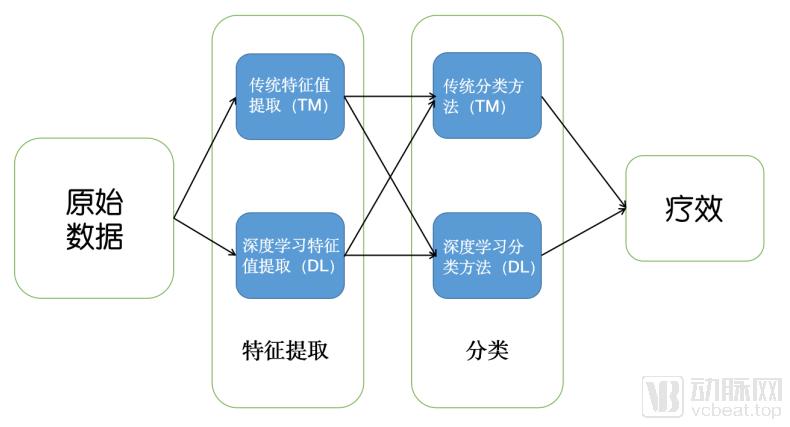
Efficacy PredictionMethod Overview
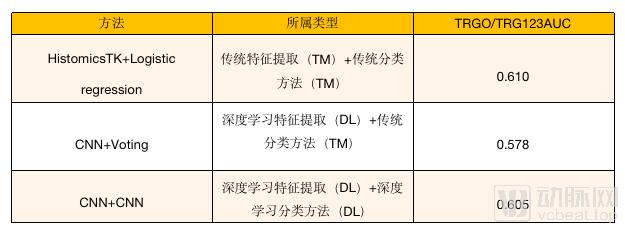
Efficacy Prediction Results Based on a Sample of 813 Rectal Cancer Patients
Overall, product design primarily involves issues at the data and algorithm levels; however, as AI attempts to enter the market, problems arise in quick succession.
Once the training phase is complete, AI products must ultimately enter the real world; however, this is precisely where many AI solutions struggle to adapt. “Many AI systems can already achieve an AUC of 99% in experimental settings, far surpassing pathologists. Yet in practice, this figure is meaningless, as laboratory performance does not equate to real-world effectiveness,” stated Professor Guosheng Yin, Head of the Department of Statistics and Actuarial Science at The University of Hong Kong, during his speech. “The key lies in making effective judgments during image interpretation.”
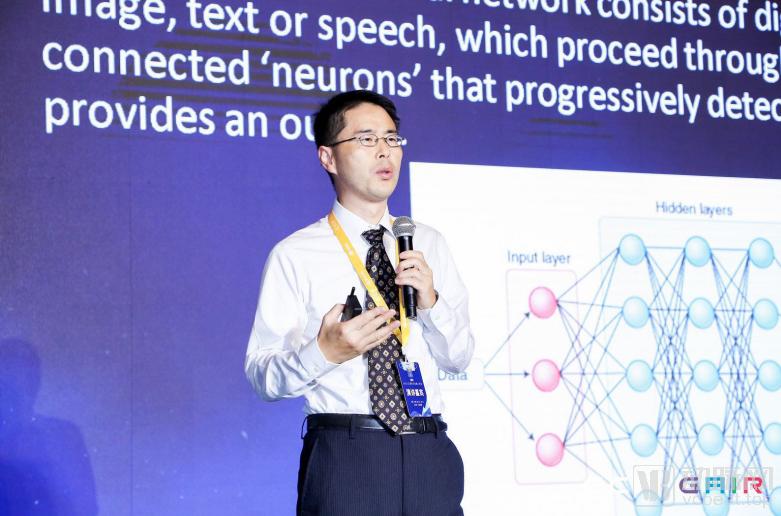
Professor Guosheng Yin, Head of the Department of Statistics and Actuarial Science, The University of Hong Kong
Therefore, the key to AI’s integration into hospitals lies in two aspects: addressing physicians’ pain points and meeting their needs. Liang Changhong, Vice Chairman of the Chinese Society of Radiology under the Chinese Medical Association, cited an example in his speech: the misdiagnosis rate for physicians is 7.5%, that for AI is 3.5%, while the combined “physician + AI” approach achieves a misdiagnosis rate of 1.5%.
Therefore, AI researchers should first communicate with physicians to understand their diagnostic workflows and operational needs, thereby informing product design. Furthermore, as internal strength is paramount, AI products must advance clinical research in accordance with the clinical standards set by the National Medical Products Administration (NMPA), or ensure product quality through innovative approaches such as multicenter studies.
In the future, scenarios such as using mixed reality and augmented reality to guide and teach interventional procedures, intelligent navigation, establishing database models to support particle implantation, supporting interventional diagnosis and treatment decisions based on clinical data, systematizing intelligent evaluation based on RECIST criteria, and implementing intelligent evaluation and selection systems for implantable devices are all likely to be realized. China’s hard-won experience, accumulated over decades, can fully guide the design, testing, validation, and regulation of the aforementioned artificial intelligence technologies.
So, at this current stage, how should AI companies build their own barriers? Gao Yunlong, CMO of Yizhan Medical Group, offered a different answer.
“It is no longer an exception that companies which have specialized in AI-based medical imaging for years are being overtaken by newly established startups. In fact, as long as they have access to high-quality data, many enterprises can achieve relatively satisfactory results. But how meaningful are these metrics? Physicians do not care about them. Therefore, data cannot serve as a competitive barrier for companies,” said Gao Yunlong.
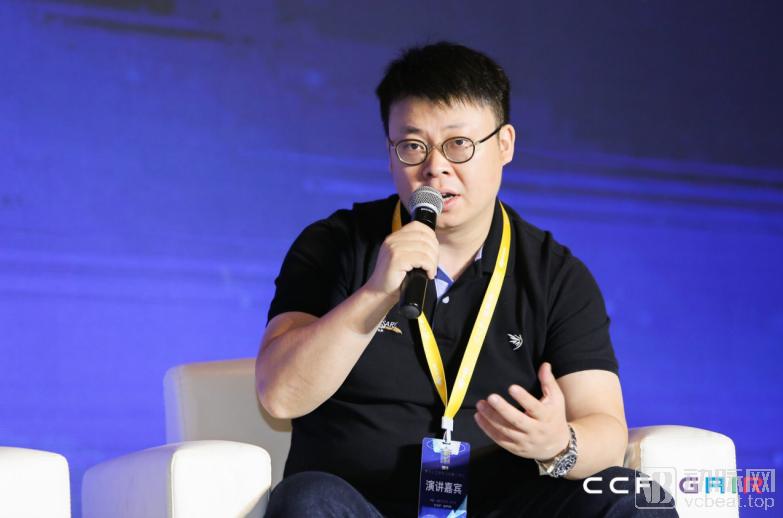
Gao Yunlong, CMO of Yizhan Medical Group
“Taking Yizhan Medical Group as an example, we collaborate with China Mobile, China Unicom, China Telecom, and Inspur to leverage their cloud platforms. We operate at the middle layer, developing AI applications while building a cloud-based PACS. On top of this cloud PACS, we partner with numerous AI companies that provide diagnostic support through their advanced applications. Therefore, in terms of competitive barriers, our goal is to establish a healthcare ecosystem that creates the future of AI through win-win collaboration.”
In simple terms, Gao Yunlong envisions an AI ecosystem where each participant plays its distinct role: platform vendors provide cloud-based PACS, while software vendors develop applications. In this scenario, the greater the number of AI players involved, the more vibrant the entire platform and industry become. However, the current challenge lies in the fact that every company aspires to become the “App Store” of the medical AI sector. How, then, should ecological barriers be established? In the absence of a clear alliance model, more extensive and in-depth collaborations may be the key to differentiating one ecosystem from another.