

Taiyi Technology Files IPO Prospectus: Launching AI-Powered Smart Pulse Diagnostic Device to Establish Standardized TCM Evaluation System
From The Yellow Emperor’s Inner Canon to Compendium of Materia Medica, traditional Chinese medicine (TCM) has grown alongside China and the Chinese nation. However, in the early 21st century, numerous prominent figures and academicians of the Chinese Academy of Sciences repeatedly denounced TCM as “pseudoscience,” even sparking a movement within the medical community to “abolish traditional Chinese medicine.”
Criticism of Traditional Chinese Medicine (TCM) has primarily focused on its scientific validity. At the time, Xie Bo, founder of Taiyi Technology, was operating a TCM clinic in San Francisco, USA. Although overseas, he closely monitored the “Abolish TCM” movement.
Xie Bo stated, “I was furious when confronted with remarks calling for the ‘abolition of Traditional Chinese Medicine (TCM).’” During this movement, Xie Bo experienced for the first time the frustration of being unable to articulate his well-founded arguments. “Nevertheless, it is undeniable that certain individuals raised questions about the scientific validity of TCM that struck a chord with me, leaving me unable to refute them.”
Jie Bo realized that although Traditional Chinese Medicine (TCM) has a unique theoretical system, this system cannot be clearly interpreted in the language of modern science. To provide a rational basis for TCM’s diagnostic and treatment principles, Jie Bo embarked on over a decade of research.
In June 2019, under the leadership of Xie Bo, Taiyi Technology launched an intelligent pulse diagnosis device leveraging its independently developed pulse feature algorithms. With this device, traditional Chinese medicine (TCM) practitioners can establish a comprehensive evaluation system and a complete information data center, enabling a new treatment paradigm grounded in evidence and rational basis.
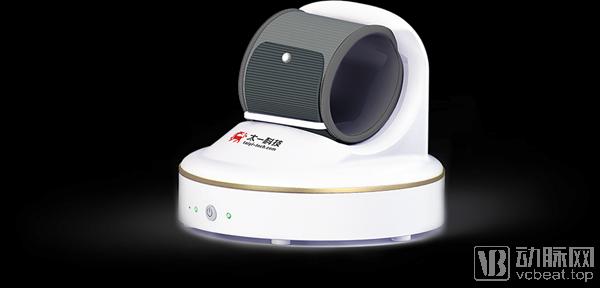
Taiyi Technology Intelligent Pulse Diagnosis Instrument (Image from the company's official website)
Taiyi Technology’s intelligent pulse diagnostic device identifies ailments by examining pulse points, adhering to the methods of the Pulse School within the Cold Damage (Shanghan) tradition of Traditional Chinese Medicine. When discussing the Pulse School, it is essential to mention the Shanghan school, which has had the most significant influence on Xie Bo’s entrepreneurial career.
In 1991, Xie Bo immigrated to the United States with his family. A graduate of a Traditional Chinese Medicine (TCM) college, he opened a TCM clinic in the U.S. One day, a patient presenting with cough visited his clinic. Xie Bo treated the patient for six months based on prescriptions from ancient medical texts, but the patient showed no improvement.
Later, the patient returned to China. When he revisited Dr. Xie Bo’s clinic, his cough had completely resolved. Upon inquiry, Dr. Xie learned that a Sichuan-based TCM practitioner specializing in the Shanghan (Cold Damage) school had prescribed a herbal formula, which cured him after just three days of treatment.
Jie Bo took the prescription and examined it, completely failing to grasp its rationale. “The formula is simple, containing only five herbs, and is intended for treating gastric disorders. Why would a remedy for stomach ailments cure a cough? I posted the prescription on the wall and studied it for a year, yet still could not comprehend it.”
“This experience made me realize the power of the Shang Han school, and I resolved to master its diagnostic and therapeutic techniques.” Xie Bo proactively proposed to the American Medical Association that masters of the Shang Han school be invited to lecture for its members.
Soon, the American Medical Association invited Mr. Zeng Rongxiu to give lectures. Mr. Zeng’s mentor, Master Tian Zengliu, was the preeminent synthesizer of the Shanghan (Cold Damage) school during the Republic of China era. Mr. Zeng’s teachings greatly benefited Xie Bo, and after the lectures concluded, Xie Bo expressed his desire to become Mr. Zeng’s disciple.
At the time, Mr. Zeng was advanced in age. Furthermore, with Mr. Zeng residing in Los Angeles and Xie Bo in San Francisco—a seven-hour drive apart—Mr. Zeng had no intention of taking on apprentices. Nevertheless, eager to master the techniques of the Shanghan (Cold Damage) school, Xie Bo frequently traveled to Los Angeles to seek Mr. Zeng’s guidance. Perhaps moved by Xie Bo’s perseverance in pursuing knowledge across such a distance, Mr. Zeng ultimately accepted him as his last disciple.
"This apprenticeship introduced Xie Bo to the Pulse School. 'The Pulse School diagnoses and treats diseases based on pulse patterns, where different pulse conditions correspond to different diseases and etiologies. All treatment methods are founded on pulse diagnosis,' said Xie Bo."
Leveraging the principles of pulse diagnosis in Traditional Chinese Medicine, Xie Bo returned to China in 2014 to found Taiyi Technology, and after four years of research and development, launched an intelligent pulse diagnostic device.
During traditional pulse diagnosis, Traditional Chinese Medicine (TCM) practitioners often use descriptive terms such as “floating,” “deep,” “moderate,” “slippery,” and “choppy” to characterize pulse conditions. This approach lacks quantitative metrics and relies heavily on the practitioner’s experience and sensory perception. Taiyi Technology’s intelligent pulse diagnostic device is a smart system that replicates the TCM pulse-taking process. Based on the TCM classic *Shanghan Lun* (Treatise on Cold Damage Disorders), the device incorporates the company’s proprietary AI algorithms for TCM pulse pattern recognition, along with micro-pressure array sensing technology. It meticulously captures arterial pulsations accessible to touch, faithfully reproducing the traditional TCM pulse-taking procedure, and achieves a pulse diagnosis accuracy rate of over 80%.
Within just 90 seconds, both users and physicians can receive a comprehensive 3D pulse diagnosis report. This report includes details such as human pulse waveforms and health scores. Based on this pulse diagnosis report, users can engage in self-managed health care. Additionally, physicians can identify the underlying causes and specific conditions corresponding to the patient’s pulse characteristics, thereby enabling precise prescription of medication.
The intelligent pulse diagnosis device enables remote treatment. Patients need to visit the clinic only once; after registering the required information, they can take the pulse diagnosis device home. Subsequently, patients perform regular measurements using the device. Physicians can provide remote treatment based on the pulse pattern reports generated by the device and deliver traditional Chinese medicine directly to the patient’s home via express delivery.
Jie Bo said, “It takes decades to train a traditional Chinese medicine (TCM) practitioner skilled in pulse diagnosis. However, with the intelligent pulse diagnostic device, the pulse diagnosis expertise of renowned physicians can be replicated on a massive scale, thereby benefiting a broad patient population.”
Currently, Taiyi Technology’s intelligent pulse diagnosis device is primarily used in the treatment of metabolic disorders, such as diabetes, hypertension, hyperlipidemia, hyperglycemia, hyperviscosity, and arterial plaques. Jie Bo stated, “70% of diabetes cases and 50% of hypertension cases can be diagnosed using the intelligent pulse diagnosis device, and clinical recovery can be achieved through subsequent Traditional Chinese Medicine (TCM) interventions. Next, we will expand the application of the pulse diagnosis device to the treatment of thyroid diseases and other conditions.”
“The intelligent pulse diagnostic instrument also plays a crucial role in collecting patient data and establishing a comprehensive information data center, thereby facilitating the development of standardized and evaluation systems for Traditional Chinese Medicine (TCM), all empowered by big data and artificial intelligence. ‘Once a standardized system for TCM is established, questions regarding its scientific validity will naturally be resolved,’ stated Xie Bo.”
Since the official launch of the intelligent pulse diagnosis device in June 2019, many enterprises and medical institutions have expressed their intention to cooperate with Taiyi Technology.
Many Chinese nationals living overseas face a common challenge: difficulty in accessing professional Traditional Chinese Medicine (TCM) treatment. Recently, a major Chinese oil and gas company sought to introduce Taiyi Technology’s intelligent pulse diagnosis device to its overseas bases. Reportedly, the company employs over 10,000 staff members abroad, generating substantial demand for medical services.
After introducing the intelligent pulse diagnosis device, only one doctor needs to be dispatched to the base to input all employees’ medical records, enabling remote treatment via the device. This approach not only meets the healthcare needs of overseas employees but also reduces labor costs.
The hardware, software, and algorithms for the pulse diagnosis device have been essentially developed. The company is currently producing the device in small batches, with mass production expected to commence in the second half of this year. Xie Bo projects that sales of the pulse diagnosis device will reach approximately 30,000 to 50,000 units next year.
Artificial intelligence is one of the hottest fields today, and traditional Chinese medicine (TCM) has also been a key area receiving strong government support in recent years. Jie Bo noted that for TCM to achieve rapid development, it must overcome three major obstacles and accomplish three tasks: “First, transform the business model of TCM from generating revenue through drug sales to earning income through clinical services; second, establish an evaluation system for TCM and promote its standardization; third, achieve therapeutic breakthroughs in diseases that have a significant impact on people worldwide.”
In the future, Taiyi Technology hopes to collaborate with researchers and government experts to conduct academic research, jointly promote the establishment of a standardized system for Traditional Chinese Medicine (TCM), and apply intelligent pulse diagnosis devices to a broader range of disease treatment areas.