

ThinMed Tech Files IPO Prospectus: Scaling Clinical Condition Management Platform Across Top-Tier Hospitals in China
In the past, Nurse Zhang’s responsibilities involved executing medical orders and providing nursing care in inpatient wards. Currently, her role is to assist physicians in both outpatient and inpatient settings by delivering full-cycle management for patients with chronic diseases, and her professional title has been upgraded from ward nurse to specialist nurse.
The Department of Nephrology at a top-tier Grade 3A hospital in Chongqing, where Mr. Zhang works, has established a Chronic Kidney Disease (CKD) Management Center. Leveraging continuous and comprehensive personal medical data alongside a software system specifically designed for chronic disease management, the center provides personalized and intensive end-to-end care for enrolled CKD patients, both in-hospital and post-discharge. This process encompasses out-of-hospital tracking measures such as health education, discharge criteria monitoring, nutritional assessment, and follow-up evaluations using various standardized scales. It also includes clinical pathways for follow-up visits and re-examinations tailored to individual patient conditions, which may extend up to one year. When patients reach scheduled re-examination points within these clinical pathways, the system automatically sends reminders to both the patients and the healthcare team, while tracking compliance and evaluating test results.
Currently, the hospital’s CKD Management Center employs five full-time specialist nurses under the leadership of the head nurse. Within six months, the center has enrolled and managed over 4,000 patients with chronic kidney disease. The software system utilized by the center is the “Senmei Clinical Condition Management Platform,” independently developed by Senmei Medical Technology (Chongqing) Co., Ltd.
As the first deployed case for Senmei Medical, this hospital’s clinical condition management platform has launched its chronic disease management module, enabling functions such as AI-based early screening of conditions, clinical decision support, out-of-hospital management, and quality control. According to Zhang Jing, founder of Senmei Medical, the clinical condition management platform is undergoing rapid iteration; the pathology and biobank management module is expected to go live by the end of July, and the peritoneal dialysis management module will be launched in August.
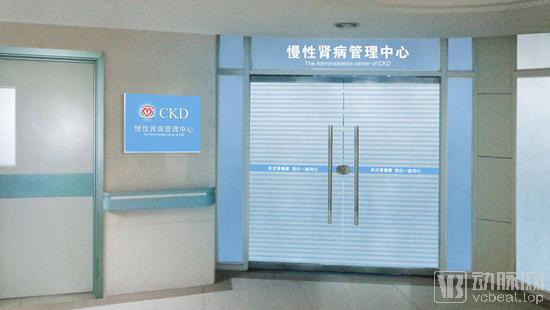
Chronic Disease Management Center of a Top-Tier Grade 3A Hospital in Chongqing. Image provided by Senmei Medical.
Since its establishment in September 2018, Senmei Medical’s independently developed clinical condition management platform was launched at the aforementioned Grade A tertiary hospital in December 2018. Starting from April 2019, it has been successively implemented at the Fourth Hospital of Hebei Medical University, the First Affiliated Hospital of Dalian Medical University, and Zhongda Hospital Southeast University. Hospitals currently utilizing the platform also include top-tier medical institutions across multiple provinces and autonomous regions, such as the Chinese PLA General Hospital, West China Hospital of Sichuan University, the First Affiliated Hospital of Zhengzhou University, the First Affiliated Hospital of Guangxi Medical University, the Second Hospital of Lanzhou University, and the People’s Hospital of Xinjiang Uygur Autonomous Region.
Headquartered in the Liangjiang New Area of Chongqing, Senmei Medical is a technology company dedicated to clinical condition management solutions. Zhang Jing founded Senmei Medical with the original intention of reorganizing the foundation of structured in-hospital medical record data and establishing a structured real-world channel for out-of-hospital settings. This enables clinical visibility and management of out-of-hospital behaviors while providing patients with clinical guidance outside the hospital, thereby achieving a closed-loop lifecycle management of diseases and ultimately improving the quality of life for chronic disease patients.
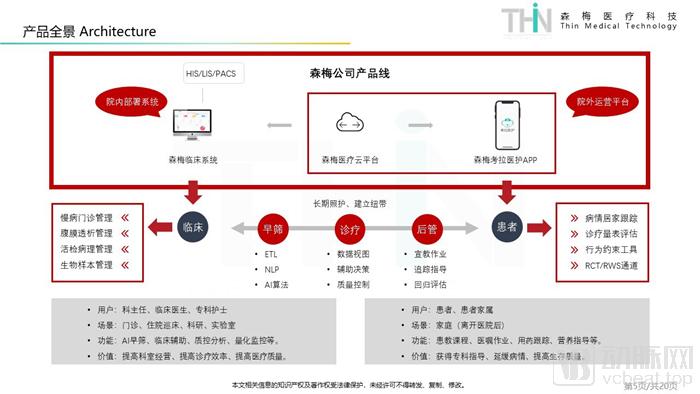
Senmei Medical Product Portfolio. Image provided by Senmei Medical.
Zhang Jing told VCBeat that before the product solution of Senmei Medical was finalized, his team spent six months following doctors of different levels in outpatient clinics and ward rounds, collecting and evaluating clinical doctors' diagnosis and treatment behavior habits, exploring real clinical needs with doctors, organizing ideas, and refining the product.
“Clinical pathways, ward round enrollment, and other features embedded in our current products were jointly refined with professors from the nephrology department of the first tier-3A hospital to adopt them. By involving customers in product design and fostering a collaborative relationship between product development and research, we aim to encourage physicians to actively use the system, rather than merely securing institutional adoption.” Product functionalities that closely align with clinical needs may be a key reason why Senmei Medical has rapidly gained recognition from multiple top-tier hospitals in China.
It was precisely because his entrepreneurial vision received the strongest support from hospitals in Chongqing that Zhang Jing chose to register the company there. Zhang Jing stated that Senmei Medical has chosen to enter the field of chronic disease management by focusing on kidney diseases, which have relatively high patient adherence, thereby establishing its own unique and unified methodology. Subsequently, the company plans to gradually expand this approach to more chronic disease specialties within the broader scope of internal medicine.
Senmei Medical’s Clinical Condition Management Platform is a closed-loop solution comprising an on-premise clinical system for hospitals and a companion patient-facing mobile app. The clinical system addresses key challenges in the management of chronic internal medicine diseases, including early screening, clinical pathway management, home-based patient care, patient education, and quality control of condition management. The mobile app enables direct engagement with patients, thereby establishing an integrated in-hospital and out-of-hospital condition management system centered on clinical data.
Currently, Senmei Medical has launched chronic disease management functionalities, including an early disease screening system, a clinical decision support system, an out-of-hospital management system, and quality control management. In the next phase, it will introduce modules for pathology management, biobank management, and peritoneal dialysis management. These offerings will effectively support clinical departments in operational management, diagnostic and treatment efficiency, medical quality management, talent development, and doctor-patient relationships.
Clinical Decision Support System: Data Visualization and Specialty-Specific Data Restructuring. On one hand, structured data required by each specialty is categorized by importance based on specialty-specific risk factors, enhancing data accessibility and enabling comparative analysis. On the other hand, clinical pathways are designed across multiple subspecialties and integrated with the Hospital Information System (HIS) to provide reminders for follow-up tests during outpatient visits and enable one-click test ordering. This improves physicians' outpatient efficiency, significantly reduces patient waiting times, and greatly enhances the overall healthcare experience.
Out-of-Hospital Management System. Establish a data management repository that offers cloud-based sharing, synchronization, and customization capabilities to ensure the authority of data sources. Provide configuration and implementation functions for both batch and personalized care plans to achieve high-efficiency patient management. Additionally, generate alerts based on out-of-hospital behavioral monitoring data, enabling healthcare teams to closely monitor changes in patients’ conditions.
Quality Control Management. Provides multi-dimensional statistical analysis capabilities to assist clinical departments in operations, management, and medical quality. Content items include suspected cases, patient age, gender, and effectiveness of specialty-specific indicator control.
Pathology and Biobank Management. Manage specimen intake and subsequent operations based on specimen type, including ID generation, storage location visualization, checkout, return, and inventory tracking. Additionally, enter pathological diagnoses for collected specimens, retain original documentation, and structure pathological data to provide a foundational dataset for subsequent research and statistical analysis.
Peritoneal Dialysis Management. Provide an independent peritoneal dialysis management dashboard, offering the medical team clear visibility of patient data. Optimize distributed scale assessments based on clinical scenarios to reduce consultation time per outpatient and empower patients to actively participate in managing their condition.
Furthermore, Senmei Medical is building regional operational standards and a scientific research data center based on clinical collaboration services. This initiative has given rise to a new healthcare service model that enables cross-regional collaboration among hospitals at all levels within specialty alliances to conduct routine follow-up examinations and periodic condition assessments for patients. This model promotes supply-side reform in healthcare, enhances patient care experiences, and balances the interests of hospitals. Currently, in Chongqing, specialty alliances are being led by the aforementioned Grade A tertiary hospitals, with nine prefecture-level Grade A tertiary hospitals joining in the first phase. After the trial operation, participation will be gradually expanded; it is reported that the alliance may eventually include more than 30 public hospitals rated Grade II or above. This model will be replicated across all sample regions where Senmei Medical has established its presence nationwide in the future.
Zhang Jing stated that China’s healthcare system has long been centered on diagnosis and treatment. However, epidemiological surveys indicate that chronic diseases account for 86.6% of all-cause mortality and contribute to 70% of the disease burden, posing a severe societal challenge that demands urgent improvement. Senmei Medical has chosen to initiate its strategy through large tertiary hospitals. Chronic disease management requires systematic operations; given China’s national context, only large hospitals possess the resources and capabilities to develop methodological frameworks and achieve effective control, thereby gradually extending their expertise to secondary and even primary care institutions.
Data forms the foundation for providing digital clinical management solutions. In Zhang Jing’s view, besides accurately grasping clinical needs, robust in-hospital data security assurance is also a key reason for Senmei Medical’s rapid expansion on the hospital side. During the nearly two decades prior to founding Senmei Medical, Zhang Jing was consistently engaged in B-side informatization work, with long-term involvement in information system construction for the financial sector and telecommunications operators, giving him deep expertise in the rules and detailed practices of information security control.
Zhang Jing stated, “A commonality between hospitals and financial institutions is that they both place a high priority on data security.” Therefore, Senmei Medical provided hospitals with a comprehensive solution featuring a clearly structured and robust data security architecture. Throughout the project implementation, Senmei Medical strictly adhered to the security control requirements set forth by the hospital’s Information Department. Additionally, it formally submitted an “Implementation Security Commitment Letter,” along with documentation detailing data security measures and the security of communication processes, via official correspondence.
Typically, when application software integrates with a hospital’s internal information systems, the hospital’s IT department or the system vendor must provide data interfaces. In Senmei Medical’s solution, however, data remains within the hospital and sensitive hospital information is not transmitted to the internet. This approach encourages most hospitals to directly open up their information systems, thereby eliminating numerous intermediary steps associated with data interface integration and significantly improving implementation efficiency.
“Our mission is to deliver services and generate value centered around hospitals’ clinical operations. We are a healthcare business informatics company, not a big data collection firm; we need only master how to use data, without owning it,” Zhang Jing told VCBeat. All of Senmei Medical’s data processing is conducted within the hospital’s intranet, helping medical teams leverage data effectively and even collaborate on research projects or clinical studies.
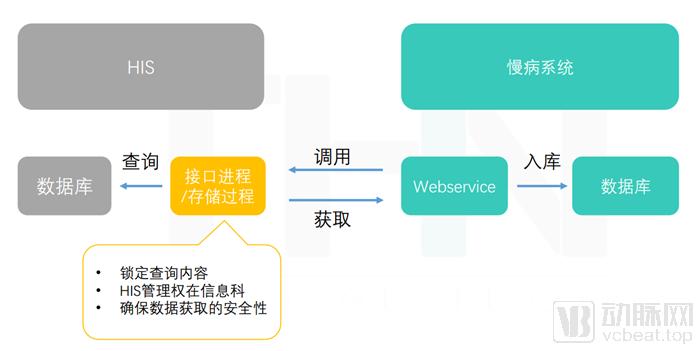
Senmei Medical’s Data Interaction Logic | Image provided by Senmei Medical
Currently, Senmei Medical has launched its first round of financing since its establishment, aiming to raise RMB 8–10 million. The funds will be primarily used for R&D, expanding the implementation team, and exploring profitable business models. Zhang Jing told VCBeat that Senmei Medical is collaborating with hospital clients, insurance companies, pharmaceutical firms, and CROs to explore opportunities in areas such as prescription outflow, dynamic disease-specific insurance, and GCP studies. “However, our main task this year remains the promotion of our clinical condition management platform at the hospital and specialty alliance levels. We aim to establish a presence in 20–25 top-tier provincial hospitals across China and complete the exploration of the specialty alliance model.”