

Bainuo Precision Medicine Develops 'Molecular Doctor Platform' to Empower Clinicians and Advance Precision Healthcare
Before joining Bonuo Precision Medicine, Huang Jingying had over two decades of experience in the fields of big data, artificial intelligence, and information security. “I never expected to venture into the healthcare industry,” Huang Jingying told VCBeat. It was not until a close family member was diagnosed with a serious illness that he realized local county-level hospitals lacked the medical expertise to provide precise diagnoses and treatment plans, while high-quality medical resources were largely concentrated in major cities and difficult to access on short notice. “At that time, we felt lost and knew nothing about the progression of the patient’s condition, treatment options, cure rates, or adverse drug reactions.” He began to consider how hospitals with limited medical capabilities could also deliver more precise medical services to patients.
At the recommendation of a friend, Huang Jingying joined Bainuo Precision Medicine as General Manager. Bainuo Precision Medicine is a company dedicated to providing precision medicine technology services to hospitals and physicians. By leveraging technologies such as big data, artificial intelligence (AI), and bioinformatics, the company has developed “Molecular Doctor,” an AI-powered precision medicine product designed to help hospitals and physicians enhance their precision medicine capabilities and better serve patients.
Precision medicine can be divided into two aspects: precision diagnosis and precision therapy. “The traditional model of precision medicine involves product sales, where companies recommend precision diagnostic products and service solutions to physicians or hospitals. However, the drawbacks of this model directly impact the quality of care that physicians provide to patients,” stated Huang Jingying.
County-level hospitals and specialized hospitals often lack mature precision medicine platforms. Physicians are frequently unfamiliar with precision medicine-related products and lack the expertise to select them appropriately, forcing them to rely on sales representatives for product recommendations. However, the professional competence of these sales representatives varies significantly, which may lead to incorrect selections, omissions, or even excessive testing. The consequences of these issues are severe: they compromise the quality of precision medicine services for patients, increase their financial burden, and may also result in overtreatment.
“Therefore, the traditional business model of precision medicine is difficult to promote,” stated Huang Jingying. In contrast, Bainuo Precision Medicine chose a different entry point by integrating precision medicine knowledge with artificial intelligence (AI) to develop the “Molecular Doctor” platform. The “Molecular Doctor” is a medical big data and AI platform created by Bainuo Precision Medicine. It incorporates a precision medicine knowledge base that integrates clinical knowledge on more than 300 diseases, information on over 2,000 drugs, more than 3,000 disease therapies, over 20,000 biomarkers, and more than 2,000 target genes, along with medical literature. Leveraging AI technology, the platform serves as an intelligent advisor for physicians in the field of precision medicine, supporting tasks such as disease risk assessment, diagnosis, personalized medication guidance, and treatment efficacy monitoring.
The establishment of the “Molecular Doctor” platform is the culmination of decades of dedicated efforts by the Bainuo Precision Medicine team. The company boasts a multinational research team of over 100 members, comprising molecular biomedical scientists, gene clinical research experts, big data and artificial intelligence specialists, medical experts, and healthcare operations professionals from prestigious institutions such as Harvard University and the Massachusetts Institute of Technology. Together, these team members have founded the Bainuo Institute for Clinical Precision Medicine and the Bainuo Laboratory for Precision Medicine. Under the auspices of the Institute for Clinical Precision Medicine are independent laboratories specializing in genetic medicine, proteomics, and human microbiome research. Established in 2010, the Laboratory for Precision Medicine operates central laboratories in both the United States and Shenzhen.
The “Molecular Doctor” platform has developed modules including an oncology knowledge base, Analysis Cloud, Interpretation Cloud, and Storage Cloud, leveraging its vast repositories of clinical data, treatment protocols, and genomic information. By enabling rapid data analysis and in-depth mining, the platform helps hospitals build medical big data ecosystems and facilitates online collaboration among data, healthcare professionals, and medical resources.
Bainuo Precision Medicine has developed the “Molecular Doctor” platform, serving both hospitals and physicians. The hospital-facing component is a big data system that provides technical service solutions for precision medicine departments. It serves cancer patients, individuals with chronic diseases, and healthy or high-risk populations, offering products such as early cancer screening, auxiliary diagnosis, risk assessment, medication guidance for cancer and chronic diseases, and treatment efficacy monitoring. These services help patients select the most appropriate medications, thereby maximizing therapeutic efficacy, minimizing adverse reactions, and optimizing costs. Furthermore, the platform supports disease risk prediction to enable more targeted disease prevention. Additionally, for hospitals with the capability to establish their own genetic testing laboratories, Bainuo assists in building NGS laboratories compliant with relevant regulations of clinical laboratory centers, or customizes molecular probes and in vitro diagnostic kits according to hospital requirements.
The “Precision Medicine Department” platform for hospitals is an open platform, with its version 1.0 recently launched as a PC-based application. The platform features three major treatment and data analysis systems: precision testing, precision interpretation, and precision application. It provides functions such as intelligent item recommendation, treatment plan recommendation, and precise report interpretation, helping hospitals tailor precision treatment plans and services to patients’ needs. By leveraging patients’ molecular biology information, the platform enables personalized diagnosis and treatment, thereby enhancing the value of hospital disease diagnosis and treatment services.
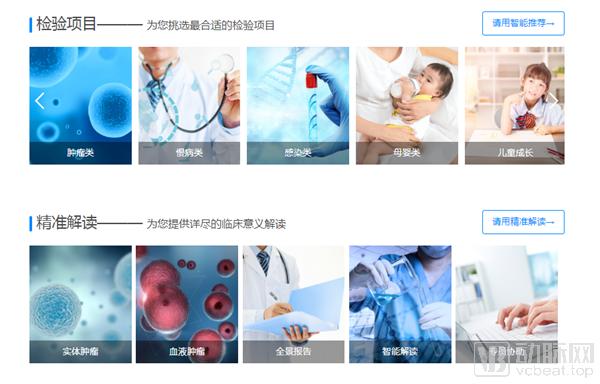
"Department of Precision Medicine"
The operation of the “Precision Medicine Department” follows these steps: First, the web-based platform provides physicians with training on precision medicine services and collects their testing requirements. The platform then returns diagnostic recommendations and corresponding test items to the physicians. Next, physicians submit test requests through the online platform and deliver patient samples to Bionano’s Institute of Precision Medicine Clinical Research or its Precision Medicine Laboratory. Finally, interpretation of patient reports and consultations are provided via the Molecular Physician web portal. “In layman’s terms, we assist physicians in ordering laboratory tests, perform the testing, and interpret the results,” explained Huang Jingying.
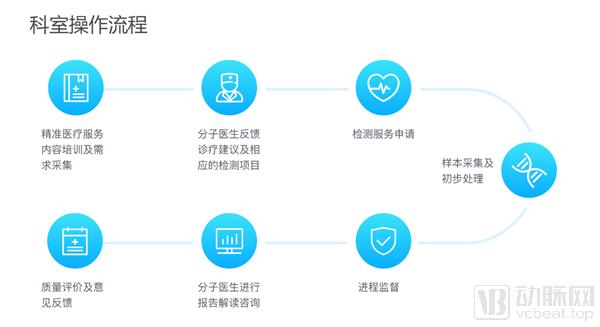
“Precision Medicine Department” Workflow
Currently, Bainuo Precision Medicine has entered the precision medicine sector by targeting specialized hospitals in maternal and child health, chronic disease management, and oncology, successfully deploying its “Molecular Doctor” platform in over 200 private hospitals. In the future, the company will roll out new technologies and products to expand its hospital market presence, such as launching the “Molecular Doctor V2.0” version for mobile apps. The company is also seeking a new round of financing, with a target amount of approximately RMB 200 million, which will be used to expand laboratory capacity, grow the marketing team, and strengthen the technical R&D and service teams.