

Hema Fresh and Sinopharm Online Forge Strategic Partnership in Pharmaceutical New Retail
VCBeat (WeChat: vcbeat) has learned that on July 18, China Pharmaceutical Health Online Co., Ltd. (hereinafter referred to as “Sinopharm Online”), the e-commerce platform operator under China National Pharmaceutical Group Corporation, entered into a pharmaceutical new retail partnership with Shanghai Hema Network Technology Co., Ltd. (hereinafter referred to as “Hema”).
The two parties have partnered to leverage the automated medicine vending machine, “He Yao Xiang.” China Pharmaceutical Health Online Co., Ltd. provides pharmaceutical products and pharmacy services, while Hema is responsible for logistics and delivery. This collaboration offers consumers within a 3-kilometer radius of stores home delivery within 30 minutes, meeting their urgent medication needs.
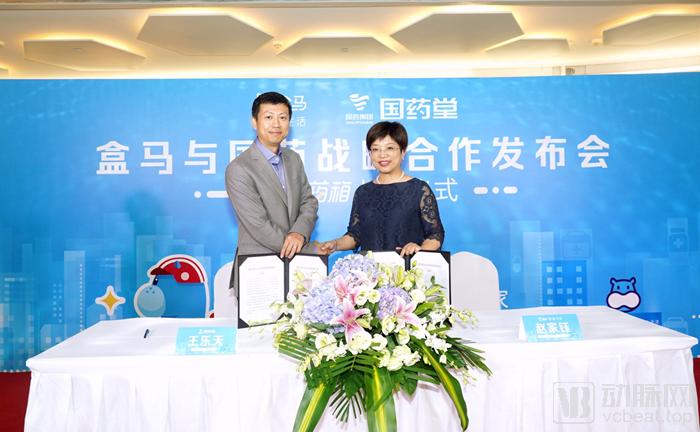
Hema and China Pharmaceutical Health Online Signing Ceremony (Image source: Provided by the company)
For Hema, this integration with China Pharmaceutical Health Online marks another upgrade to the “Hema Zone.” Hema is no longer just a new retail platform offering fresh produce. From imported seafood and rock-bottom-priced flowers to household cleaning supplies and home medicine delivery, Hema provides a one-stop solution for community lifestyle services.
For China Pharmaceutical Health Online, this partnership with Hema also marks an accelerated step in its exploration of new retail models in the pharmaceutical sector. Leveraging its “Internet+” capabilities, China Pharmaceutical Health Online will further explore online-to-offline (O2O) drug sales models and broaden its distribution channels.
What sparked this collaboration? What explorations took place during the process? What ultimately drove both parties to reach an agreement? What significance does this partnership hold for each side? Moreover, what growth opportunities lie ahead for new retail in the pharmaceutical industry? To gain deeper insights into these questions, VCBeat conducted exclusive interviews with Wang Letian, Founder of China Pharmaceutical Health Online Co., Ltd. (Sinopharm Online), and Zhao Jiayu, General Manager of Standardized Product Procurement at Hema.
In early 2017, at a conference, Wang Letian and Hou Yi, CEO of Hema, were seated at the same table. During their conversation, Wang Letian discerned Hema’s intention to expand its product categories, with the aim of incorporating medicinal diet therapy, herbal cuisine, and pharmaceutical products into Hema’s sales offerings.
“I told him that Hema is not itself a GSP-certified pharmaceutical distributor. If it wishes to engage in pharmaceutical sales, it can leverage our nationwide network of GSP-compliant physical entities and integrate with our supply chain,” said Wang Letian. “In addition, there are more than 100 categories of substances classified as both food and medicine. Since Sinopharm already has a supply chain for traditional Chinese medicine decoction pieces, the two parties can collaborate on the category of medicinal diets.”
Following an initial brief chat, China Pharmaceutical Health Online Co., Ltd. and Hema’s team held several formal discussions, ultimately deciding to commence their collaboration with health food products.
In late 2017, China Pharmaceutical Health Online Co., Ltd. launched the “Yanglepai” brand and collaborated with Hema to jointly develop a series of health teas and medicinal dietary soup packs, pioneering a new concept of healthy wellness. It is understood that these products can be consumed by consumers after simple processing or reheating. Their convenience and efficiency align well with Hema’s concept of “retailized catering.”
Relevant data show that two soup dumpling products launched in May 2018 for the summer season achieved monthly sales exceeding 3,000 units in their first month. Building on this initial success, the “He Yao Xiang” project was officially launched in June 2018. By installing medication vending machines within Hema stores and leveraging Hema’s proprietary logistics network to enable real-time delivery within 30 minutes across a 3-kilometer radius around each store, the project aimed to meet customers’ urgent medication needs.
Wang Letian stated that the collaboration between China Pharmaceutical Health Online Co., Ltd. and Hema has evolved from small-scale to large-scale, and from superficial to in-depth. Currently, the first batch of nearly 30 self-service medication vending machines has been deployed in Hema stores across Shanghai, offering approximately 120 types of over-the-counter (OTC) drugs. Moving forward, the companies will optimize processes and enhance user experience. After summarizing these initial experiences, they plan to expand coverage to Hema stores in other provinces and cities, further promoting the nationwide implementation and adoption of smart medication vending machines.
Backed by Alibaba, Hema Fresh has been a constant topic of discussion since its inception in 2015. A review of Hema’s development history reveals a gradual expansion of its product categories, along with services that have become increasingly accessible and user-centric.
Hema initially gained fame for its premium seafood, entering the market with a high-profile strategy by focusing on rare categories. After satisfying consumers’ desire for novel experiences, it gradually expanded its product range to offer greater diversity, meeting shoppers’ needs for one-stop convenience.
Zhao Jiayu stated, “Over the past four years, Hema has continuously expanded its offerings in both products and services. Initially focused on fresh seafood and produce, it now sells vegetables and flowers, and has introduced on-site repair and emergency services. Hema’s 30-minute delivery service ensures timely and accurate distribution of goods and services, which aligns well with pharmaceutical needs.”
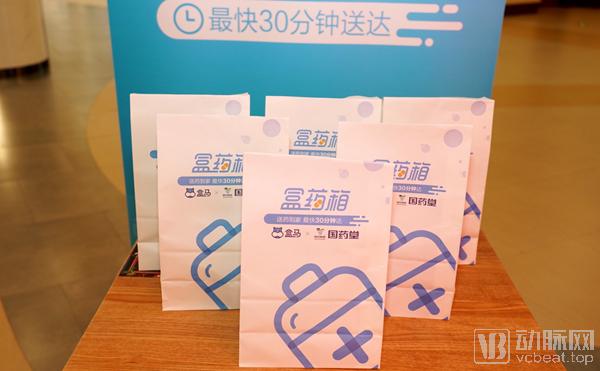
Image source: Provided by the enterprise
Since 2017, Hema Fresh has been gradually expanding its presence in the pharmaceutical sector and has successively obtained multiple pharmaceutical-related approvals. This marks Hema’s first major collaboration with a pharmaceutical and health enterprise, serving as an extension of its emergency response services. It is reported that Hema’s SOS emergency service, which provides consumers with items such as batteries, thermometers, and condoms, has achieved positive results. The average delivery time is just 18 minutes, with 40% of orders placed between 8:00 PM and 10:00 PM.
For pharmaceuticals, the online-offline integrated model and new retail technologies offer more pronounced advantages than traditional pharmacies and conventional e-commerce platforms. “Whether a child has a fever at night and urgently needs antipyretics, or someone experiences sudden stomach pain and requires gastric medication, users can simply place an order via the Hema App, and a delivery rider will deliver the medications within as little as 30 minutes.”
The specific decision to partner with China Pharmaceutical Health Online Co., Ltd. was based on its strong corporate background and financial strength, as well as its stringent control over pharmaceuticals and drug sources.
Sinopharm Online serves as the vehicle for Sinopharm Group’s retail transformation strategy and acts as the group’s online external cooperation portal for its hundreds of retail and distribution subsidiaries. However, China’s pharmaceutical retail and distribution sector has long been plagued by numerous pain points, such as price wars among competitors, high customer acquisition costs, and uncontrollable traffic flows.
Against this backdrop, market participants have been scrambling to identify new business opportunities. “Pharmaceutical O2O can be described as one of the earliest attempts,” Wang Letian told reporters. “In fact, it can be regarded as a prototype of new retail. However, our current understanding of O2O is overly narrow. If we define it merely as an errand-running service, we clearly overlook the pharmaceutical services and responsibilities attached to drugs, which are special commodities.”
“The emergence of new retail, with its technological tools, can effectively fill the gaps in services.” In Wang Letian’s view, pharmaceutical new retail is a novel service model that leverages information technology to enhance service quality and efficiency, underpinned by corresponding responsibilities for medical/pharmaceutical services and logistics.
Through new retail models, the retail sector can leverage online customer acquisition capabilities to maximize offline sales per square meter. “For China Pharmaceutical Health Online Co., Ltd., collaborating with benchmark enterprises such as Hema is highly advantageous in its exploration of new retail. This also represents a positive and meaningful endeavor for the entire industry.” The launch of the “Hema Medicine Box” can be regarded as a milestone event in pharmaceutical new retail.
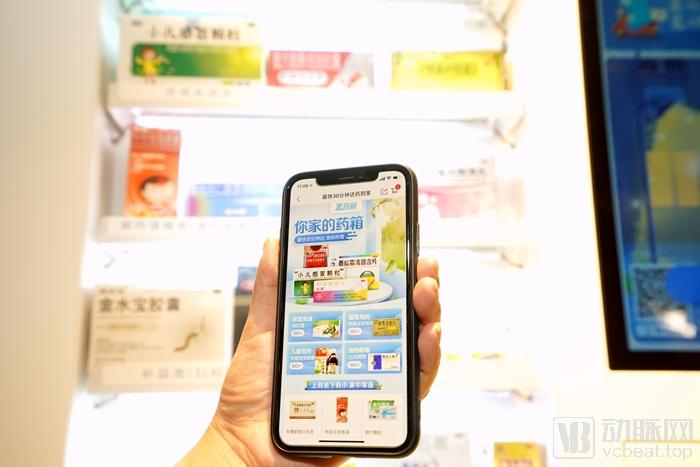
Image source: Provided by the enterprise
Wang Letian candidly acknowledged that China Pharmaceutical Health Online received substantial support and assistance from Hema during their collaboration. The process, spanning over a year from product development to launch, involved overcoming numerous challenges, which ultimately enhanced overall efficiency.
In Shanghai, approval for over-the-counter (OTC) medication vending machines was granted as early as 2015. The decision to adopt the vending machine model is driven by two factors: first, Hema’s physical stores do not meet the requirements for establishing a full-fledged pharmacy; second, it aligns with the Shanghai Medical Products Administration’s regulation that prohibits the opening of a second pharmacy within a 300-meter radius.
Through flexible and convenient automated medicine vending machines, offline users can independently, self-service, and efficiently purchase medications. For online users, by leveraging the Hema App, Hema delivery personnel can pick up orders from the vending machines based on order information and deliver them to consumers within as little as 30 minutes.
Unlike other traditional new retail products, pharmaceuticals prioritize safety above all else. It is reported that because some automated drug vending machines adopted the operational model of general unmanned vending machines, they failed to meet required standards for storage temperature, humidity, and other conditions. Consequently, at the end of last year, the Food and Drug Administration conducted a rectification campaign targeting the automated drug vending machine industry.
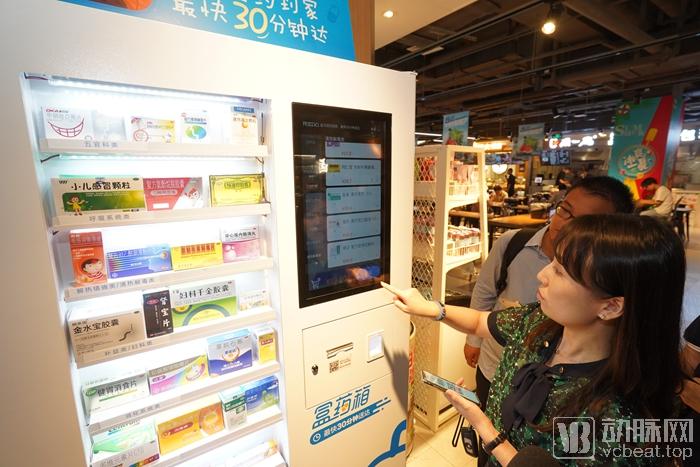
Image source: Provided by the company
Regarding automated medication dispensers, given the unique attributes of pharmaceutical products, China Pharmaceutical Health Online Co., Ltd. has devoted over a year to continuous development and iteration, thereby accumulating extensive experience:
First, by adopting a gravity chute design, the error rate of traditional spring-loaded machines, which is approximately 5%, is reduced to less than 1%.
Second, single lane, multiple batch numbers. The batch number recognition system ensures accurate identification of different batches of the same type of medication.
Third, design the dimensions of the dispensing channels based on the specifications of the listed pharmaceutical products to ensure smooth product flow.
Fourth, accurately identify the quantity of goods and prompt for restocking when the inventory level reaches "1".
Fifth, maintain constant temperature and humidity, with the temperature controlled at 20°C and the humidity maintained between 45% and 75%.
Pharmaceutical products sold must be fully traceable and verifiable throughout the entire process. Therefore, management by batch number is mandatory during pharmaceutical distribution, and sales receipts must include the batch number. Wang Letian emphasized that traditional vending machines stock one product specification per slot, making it impossible to track the batch number of each individual item. In contrast, this customized “Box Medicine Cabinet” enables precise management down to the batch number of each box of medication, thereby fully complying with Good Supply Practice (GSP) standards.
To further ensure safety, during the initial break-in period, China Pharmaceutical Health Online Co., Ltd. assigns a dedicated staff member with a pharmaceutical background to each medication cabinet. The assigned personnel are involved in the entire process, ranging from restocking and shelving to sales, and even handling returns and disposal in extreme circumstances.
In 2016, China’s retail industry was undergoing a major reshuffle. In October of that year, Jack Ma and Lei Jun both introduced the concept of “New Retail” on nearly the same day, and it subsequently became a buzzword in the years that followed.
The biggest difference from traditional retail is that new retail is a sales model characterized by deep integration of online and offline channels, centered on consumers, and leveraging big data, cloud computing, and logistics systems to fully integrate membership, payment, inventory, and service systems. This approach improves efficiency, reduces costs, and enables guaranteed delivery within 30 minutes.
The emergence of new retail has transformed consumer behavior from purely online or offline channels to an integrated online-plus-offline model. Merchants’ production and sales strategies have also evolved beyond traditional retail, guiding consumers to place orders online while experiencing products in physical stores. This approach is more customer-centric, helps liberate labor resources, and enhances service productivity.
The pharmaceutical industry follows the same logic. As a new business model, pharmaceutical new retail relies on the supply chains of traditional pharmacies or the traditional pharmacies themselves, leveraging new retail strategies to expand customer acquisition channels, enhance service quality, and optimize user experience. Wang Letian predicts that, under the influence of policies such as the separation of prescribing and dispensing, internet healthcare, and the outflow of prescriptions, pharmaceutical new retail will undoubtedly secure its place in the pharmaceutical market.
Compared with traditional pharmacies or those within communities and medical institutions, the new retail model for pharmaceuticals serves as a supplement. In Wang Letian’s view, various players in the pharmaceutical sector are currently experimenting with and exploring the new retail landscape.
“Take this year’s medical device exhibition as an example. You will see the venue filled with automated medication dispensers, which signals that an increasing number of such units will be deployed in the market. The emerging trend is becoming increasingly evident, with industry players viewing these dispensers as an extension of pharmaceutical sales and actively exploring this avenue.”
The collaboration between China Pharmaceutical Health Online and Hema aligns with the needs of new retail enterprises to expand product categories from a consumer-centric perspective, as well as with the pharmaceutical industry’s drive to explore new retail models.
Meanwhile, in this collaboration, China Pharmaceutical Health Online leverages its robust supply chain, while Hema relies on its powerful delivery network, enabling rapid delivery of medications to consumers. Furthermore, backed by Sinopharm Group, China Pharmaceutical Health Online operates offline GSP-compliant pharmacy entities across China, providing coverage for all current Hema stores.
It is worth noting that China Pharmaceutical Health Online Co., Ltd. possesses its own IT capabilities, while Hema benefits from the IT support of the Alibaba ecosystem. This enables both parties to achieve precise data integration through system interoperability and underlying technical architecture, thereby laying the foundational technical groundwork for future user profiling via big data technologies and the further development of health management services.
Wang Letian predicted that as internet healthcare policies become more clearly defined, new innovative elements will be brought to the pharmaceutical new retail industry.