

China Research Hospital Association's Internet Hospital Branch Established to Promote High-Quality Development of the Internet Hospital Industry
On July 20, the Internet Hospital Branch of the Chinese Research Hospital Association was officially established in Haikou, Hainan Province, marking the launch of China’s first secondary academic organization dedicated to internet hospitals.
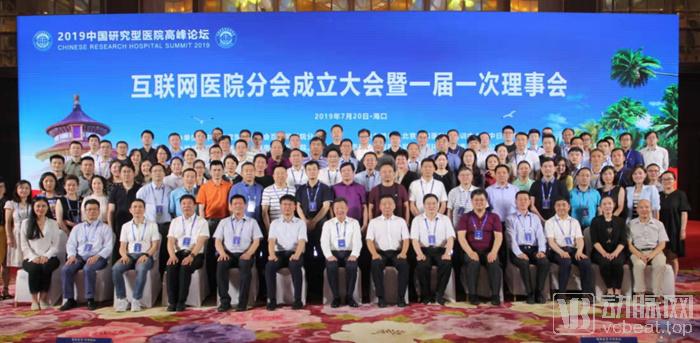
The CPC Central Committee and the State Council attach great importance to the cause of public health. Relevant ministries and commissions have continuously intensified their efforts to promote “Internet + Healthcare.” In particular, in 2018, the National Health Commission and other departments issued three policy documents, including the Administrative Measures for Internet Hospitals. For the first time, these documents clarified the legal status of Internet hospitals at the national regulatory level, defined the scope and connotations of internet-based diagnosis and treatment and telemedicine, marking a milestone in standardizing industry development. In recent years, Internet hospitals have sprung up rapidly, entering a period of explosive growth. They have made significant and effective contributions to improving patients’ access to medical services, meeting diverse and differentiated healthcare needs, facilitating the implementation of healthcare reform policies such as tiered diagnosis and treatment and two-way referrals, and enhancing the compensation and working conditions of medical personnel. As we enter a new era, the development of Internet hospitals is still in its early stages. There is an urgent need for academic organizations within the industry to conduct in-depth research and promote overall progress in areas such as standardized operations, transformation and upgrading, resource integration, complementary advantages, and service improvement. The establishment of the Internet Hospital Branch is therefore a timely and necessary initiative.
The Internet Hospital Branch of the Chinese Research Hospital Association was jointly initiated under the leadership of President Wen Jian, formerly of the Army General Hospital, together with President Wang Haitao of the School of Continuing Education at Peking Union Medical College, and Director Lu Qingjun of the National Health Commission’s Telemedicine Management and Training Center at China-Japan Friendship Hospital. The branch brings together renowned academicians, presidents of large tertiary hospitals, heads of internet hospital, telemedicine, and pharmaceutical e-commerce enterprises, as well as experts and scholars in the fields of healthcare management, clinical medicine, information technology, hospital legal affairs, and medical insurance. The first Council appointed Academicians Wang Chen and Zhang Bo as Honorary Presidents, engaged Fu Zheng, Rao Keqin, Zhou Jun, Zhang Shuyang, and Chen Xiang as five advisors, and elected one President, 15 Vice Presidents, 72 Executive Council Members, and over 100 Council Members, demonstrating broad representation and influence. The Branch also fulfills the functions of the Internet Healthcare Department of the Chinese Research Hospital Association. One standing committee member from each professional committee of the Association concurrently serves as an Executive Council Member of the Branch to coordinate the development of relevant standards, technology promotion, training, and assessment.
At the inaugural meeting of the Internet Hospital Branch and its First Council Meeting, President Wen Jian pointed out that, as an academic industry organization, the Branch will focus on strengthening academic and technical development by introducing and applying the latest medical models, technologies, and equipment to internet hospitals and related fields, thereby enhancing overall technical standards. Emphasizing industry-oriented development and centering on core medical technologies, the Branch will both “accelerate” to lead and promote industry growth and “brake” to ensure medical quality and safety. It will provide academic consultation from multiple macro and micro perspectives, focusing on key areas and critical links such as law, ethics, clinical practice, nursing, management, policy, technology, auditing, and disciplinary inspection, and will offer recommendations for the adjustment and improvement of relevant policies and systems.
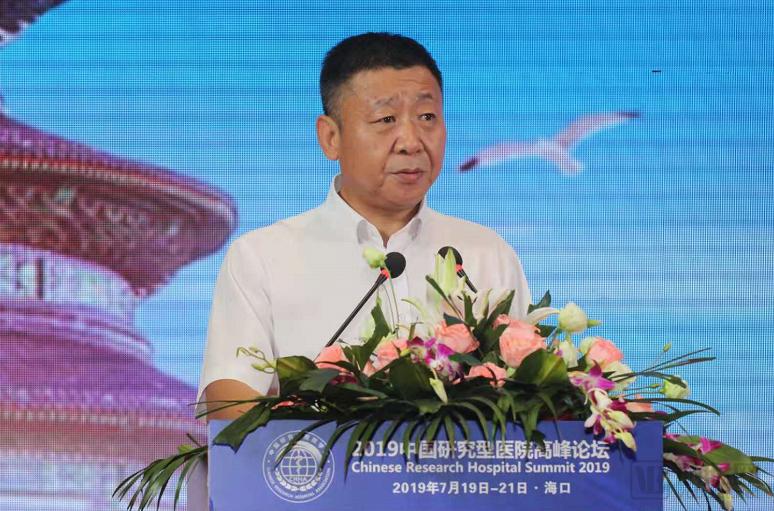
President Wen Jian is delivering a speech.
President Wen Jian outlined the development vision for internet hospitals from three perspectives. First, to empower healthcare professionals engaged in online diagnosis and treatment to be willing, confident, competent, and effective in providing care, thereby fostering greater patient trust and reliance on internet-based medical services, while safeguarding the tangible benefits and legitimate rights and interests of both patients and providers. Second, to guide and assist internet hospitals and related industries in establishing clearer developmental positioning, identifying profitable business models and growth pathways that align with market dynamics, all while upholding their public welfare orientation. Third, to break away from the current limitation of internet hospitals to mere online consultations and follow-up referrals, by integrating and leveraging high-quality online medical resources to strive for significant breakthroughs in the diagnosis and treatment of complex and critical conditions, such as cancer, and rare diseases. By leveraging the functions of professional academic organizations, internet hospitals should become an indispensable component of China’s healthcare security system, a primary platform for the public to maintain physical and mental health and ensure life safety, and a vital stage for healthcare professionals to redefine their value, utilize their expertise, and contribute to society.
President Wen Jian also disclosed that, following the establishment of the Internet Hospital Branch, four key initiatives will be prioritized in the near term:
First, conduct in-depth research to ascertain the baseline data of internet hospitals and related industries, identify key pain points, clarify strategic approaches, provide advisory recommendations, submit policy proposals to relevant national authorities in a timely manner, and release the White Paper on China’s Internet Hospital Industry at an appropriate time;
Second, deepen academic exchanges by hosting a high-level national academic conference on internet hospitals annually, along with several thematic forums and seminars, to cultivate and establish an academic brand with high visibility and influence across China;
Third, improve institutional norms by organizing leaders of relevant hospitals, clinical experts, and heads of medical e-commerce enterprises to refine and enhance policies and measures for the development of internet hospitals. Focus on building a cohort of high-quality internet hospitals and key specialty departments, explore internet-based diagnostic and treatment protocols and clinical pathways, enhance patient trust and loyalty, and ensure medical quality and safety.
Fourth, strengthen industry self-discipline by drafting the “Self-Discipline Convention for China’s Internet Hospital Industry,” promoting exemplary models who uphold medical ethics, provide enthusiastic services, and strive for excellence, while advocating for the cultivation of new, positive trends to establish and maintain a favorable industry image.
Following the inaugural meeting, Wang Haitao, President of the School of Continuing Education at Peking Union Medical College and Vice President of the Branch, presided over the “Forum on Innovative Development of Internet Hospitals.” The forum focused on the new changes, demands, and drivers brought about by the new era, jointly exploring innovative approaches and measures to promote the high-quality development of internet hospitals. Lu Qingjun, Director of the National Health Commission’s Telemedicine Management and Training Center at China-Japan Friendship Hospital, introduced innovation trends in internet hospitals in the 5G era. Yang Bin, Deputy Director of the Institute for Cyber Behavior at Tsinghua University’s Institute for Artificial Intelligence, delivered a speech on reflections regarding innovative applications in internet healthcare. Wang Deqing, Director of the Department of Blood Transfusion at the Chinese PLA General Hospital, presented a report titled “Application of AI Technology in Blood Transfusion Therapy.” JD.com and Jiuzhou Pharmaceutical also elaborated on their perspectives on the development of pharmaceutical e-commerce and internet hospitals from different angles. Attending leaders and guests engaged in a vibrant roundtable dialogue on “Opportunities and Challenges in the Development of Internet Hospitals.”
More than 100 professionals from internet hospitals across China attended the inaugural meeting of the Internet Hospital Branch and the associated forum.