

GUPO Health Files IPO Prospectus to Empower Hospital Digital Transformation and Enhance Physician Mobility

GUPO TECHNOLOGY
Healthcare Digitalization Service Provider
In 2009, the Ministry of Health issued the "Notice on Issues Concerning Physicians' Multi-Site Practice," allowing physicians to engage in diagnostic and therapeutic activities at two or more medical institutions.
In 2017, the General Office of the State Council issued guiding opinions to comprehensively launch pilot programs for the construction of medical consortia, promote the downward flow of medical resources, implement two-way patient referrals, and gradually alleviate the difficulty of accessing medical care.
In 2019, the National Health Commission and the National Administration of Traditional Chinese Medicine issued the Notice on Promoting the Development of Close-knit County-level Medical Consortia, proposing that by the end of 2020, a new type of county-level healthcare service system with clear objectives, well-defined rights and responsibilities, and coordinated division of labor be initially established in 500 counties (including county-level cities and municipal districts, hereinafter referred to as the same), gradually forming a community characterized by shared services, responsibilities, interests, and management.
In recent years, with the implementation of healthcare integration policies such as medical consortia, county-level medical communities, and multi-site physician practice, cross-hospital and off-site practice have gradually become large-scale demands for hospitals and physicians. As a pioneer in advocating online practice standards for physicians in China, Gupo Technology’s telemedicine services, mobile online physician practice platforms, and digital healthcare products have become indispensable components of major specialized medical alliances and urban-rural integrated medical communities.
Gupo Medical, established in 2016, is a technology company dedicated to cloud-based information services for medical big data. It provides one-stop cloud service solutions for comprehensive informatization, facilitating efficient and seamless interactive communication between physicians and among physicians and patients.

Han Min, Founder and CEO of Gupo Medical, stated, “The uneven distribution of medical resources and the scarcity of high-quality primary care resources are prevalent pain points in the industry. The introduction of policies supporting medical consortia, medical communities, and multi-site physician practice has provided a significant boost to addressing these imbalances.” As demand for medical consortia and telemedicine continues to grow, Gupo Medical aims to positively facilitate interaction and communication among physicians within these networks.

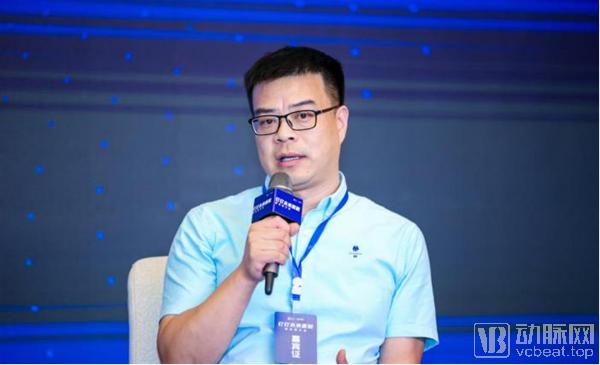
Han Min, Founder and CEO of Gupo Medical
At the time of its founding, internet healthcare was experiencing a period of rapid growth. Han Min stated, “Internet healthcare in the general sense is a solution that starts from the C-end (patient side), focusing primarily on online consultations and prescription circulation. Gupo Medical’s solution empowers the B-end (hospital and physician side) by providing hospitals and doctors with tools for online practice, thereby expanding the service boundaries of hospitals and physicians.”
Regarding the reasons for doing so, Han Min mentioned three points to VCBeat:
First, healthcare is characterized by supply-side scarcity, with hospitals and physicians holding a dominant position in the industry. Over the past two decades, the internet has successfully tapped into consumer-facing (C-end) traffic across nearly every sector, yet it has failed to disrupt healthcare and education, where resources remain scarce. By entering the market through online practice services targeting the business side (B-end) and securing a strategic high ground in internet healthcare, companies can achieve rapid overtaking on the curve.
Second, in the healthcare sector, consumer-side (C-end) engagement is characterized by low-frequency interactions, whereas business-side (B-end) activities are high-frequency. Furthermore, once a critical mass of B-end users is achieved, it can exert a pull effect on the C-end, thereby enhancing consumer engagement and stickiness.
Third, the prerequisite for physicians to practice at multiple locations online is the establishment of a medical service network platform that enables real-time synchronization of consumer-side data and online interaction. Building on this foundation, Gupo Medical has developed a series of specialized medical consortiums, digital medical community interaction platforms, and tools.
Clinical IDC
Gupo Medical’s foundational core product is the Clinical IDC—a distributed clinical data cloud center built on cloud infrastructure and private networks. Han Min stated, “The foundation and prerequisite for physicians’ online practice is the availability of patients’ clinical data online.” Gupo’s Clinical IDC service securely links in-hospital data with cloud-center data, enabling a highly synchronized interaction system between internal and external networks. With hospital authorization, physicians can log in to the hospital’s Clinical IDC online, access clinical data according to their permissions, and perform professional activities (such as providing consultation opinions, issuing medical orders and prescriptions, and submitting requests for diagnostic and therapeutic procedures). These actions are then synchronized back to the hospital’s internal systems via the IDC.
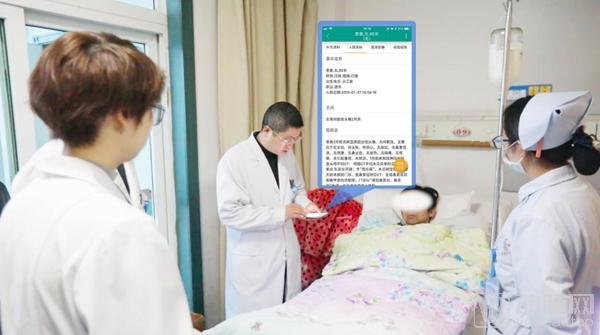
In recent years, the number of hospitals implementing Gupo Medical’s clinical IDC has shown a year-on-year upward trend: 4 and 16 hospitals in 2017 and 2018, respectively, and 19 hospitals in just the first half of 2019.
GUPO Smart Doctor
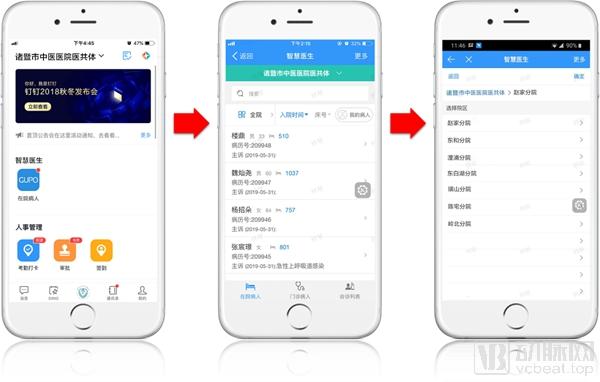
Based on clinical IDC, Gupo Medical and the DingTalk Medical Ecosystem have jointly developed GUPO Smart Doctor.
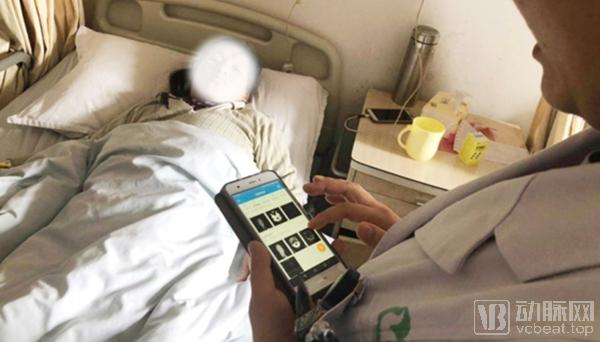
GUPO Smart Doctor is a mobile platform for physicians’ online practice. Its features include: enabling physicians to synchronize in-hospital data and manage patients online via mobile devices; integrating with DingTalk to establish an organizational framework that bridges in-hospital and out-of-hospital operations, facilitating the internal transmission and collaboration of clinical data; and transmitting physicians’ mobile-based practice activities back to the hospital information system for integration into hospital workflows.
Web CDR Service
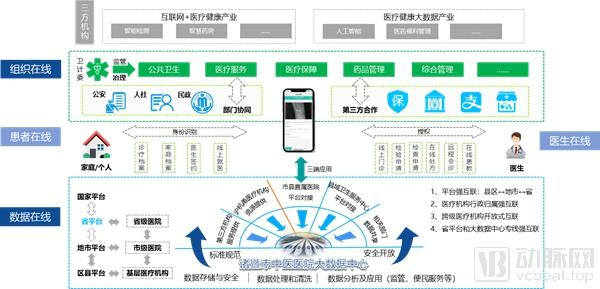
Web CDR is Gupo Cloud’s data center construction solution, specifically designed for regional medical consortia. It delivers end-to-end services spanning the G-side (government), B-side (business), and C-side (consumer), providing comprehensive regional healthcare solutions and big data center operational services.
Web CDR facilitates the information operations of medical consortia by establishing “Four Online Platforms”: first, Data Online, which enables coordinated sharing of clinical data across the consortium; second, Institution Online, which achieves centralized scheduling of consortium-wide business operations; third, Physician Online, which connects all physicians through a unified network; and fourth, Patient Online, which extends data-sharing services to patients to optimize healthcare delivery processes.
Gupo Chaoying
Gupo Medical’s digital imaging system facilitates filmless, digitized management of medical imaging for hospital patients and establishes a regional framework for mutual sharing and recognition of digital images. Patients no longer need to queue for film prints; after scheduling an imaging appointment at the hospital and receiving a printed appointment slip, they can simply scan a QR code with WeChat following the examination to access their images and diagnostic reports.
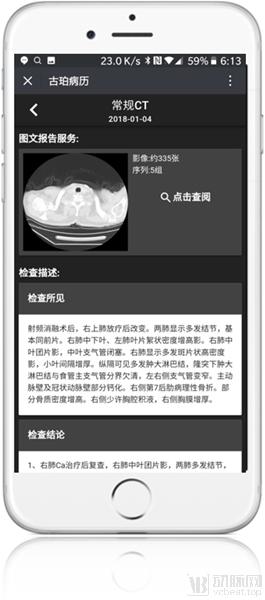
Furthermore, physicians can directly view imaging reports on their mobile devices to facilitate diagnosis. When clinical physicians require collaborative diagnosis with radiologists, they can initiate image discussions online via mobile push notifications, or even request remote consultations with specialists across different hospitals by sharing images and medical records, thereby enabling remote discussion of the patient’s condition and joint determination of the treatment plan.
Currently, Gupo Medical’s revenue is primarily derived from providing hospitals with services such as telemedicine, digital healthcare infrastructure development, and mobile tools. Moving forward, the company will focus its business efforts on the application of clinical hospital data, while accelerating market expansion and increasing brand share by leveraging the advancement of medical consortia and integrated healthcare delivery systems. Han Min also stated, “Gupo Medical’s long-term strategic goal is to ‘empower B-end stakeholders, serve C-end users, and support the tertiary industry,’ thereby enabling greater professional freedom for physicians and more convenient access to care for patients.”