

23Mofang Launches Free Ancestry Testing for New Users and Pioneers Global Genealogical Matching Service
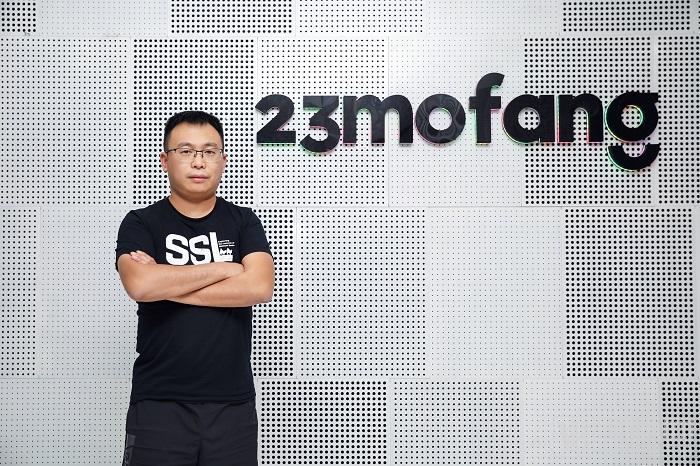
A few months ago, media outlets published articles claiming that the consumer-grade genetic testing industry was overheated. In response, Zhou Kun, founder and CEO of 23Mofang, did not issue a public reply; instead, he remained focused on practical execution, letting growth data speak for itself and gradually earning external recognition for 23Mofang.
Zhou Kun led a team of over 160 people at 23Mofang, reserving their energy for rebuttals and channeling it into action.
On July 23, 2019, after more than six months of silence, Zhou Kun decided to break the quiet. On that day, 23Mofang held a press conference in Zone E of the Tianfu Software Park in Chengdu, where the company is headquartered, announcing a comprehensive upgrade to its genetic testing model and launching a free ancestry testing program for new users. In addition to enjoying 23Mofang’s globally unique service of matching genealogies and locating relatives through genetic testing at no cost, new users participating in this program could opt to pay an additional fee to upgrade to the full-version genetic testing report, thereby unlocking further insights such as genetic disease risks, drug responses, nutritional needs, fitness recommendations, and skincare management.
With this comprehensive upgrade, 23Mofang has implemented multi-dimensional adjustments to its product, including the app architecture, production capacity, database, and collection kit packaging. 23Mofang believes that these enhancements will help drive user growth, improve the accuracy of genetic analysis, and facilitate the deployment of innovative applications.
“We believe that as the volume of data grows, innovative applications based on genetic testing, such as disease prediction, will eventually become a reality,” said Zhou Kun. “We are proud and fortunate to live in an era where we can engage in such meaningful work, creating a better future by digitizing life.”
Whether the strategy involves price cuts or offering services for free, these are ultimately means to serve the vision. In Zhou Kun’s heart, there is something he firmly believes in.
Firmly Believing That Moore’s Law for Genetic Testing Will Become a Reality
In 2003, the first complete human genome sequencing was accomplished, taking 13 years and costing $2.7 billion. In 2007, a U.S. company announced that its technology could reduce the cost of whole-genome sequencing to $350,000. By 2008, the price had dropped to $100,000; by 2011, it fell to $10,000; and by 2014, it reached $1,000.
By a stroke of serendipity, after learning about the current state of genomic sequencing research from two professors at Shanghai Jiao Tong University, Zhou Kun saw a new world:
The cost of genetic testing drops nearly tenfold every three years, surpassing Moore’s Law. Moore’s Law for integrated circuits drastically reduced chip prices, made personal computers possible, and spurred the emergence of the internet. What possibilities will the “Moore’s Law” of genetic testing bring to human society?
Zhou Kun became excited and, together with his partners, began developing gene analysis software for research institutions while simultaneously exploring the nascent market for consumer-grade genetic testing. Ultimately, his optimistic outlook on the consumer genetic testing market gave Zhou Kun the courage to embark on a new entrepreneurial venture. In March 2015, following Ruili Data, 23Mofang was established in another building within the Tianfu Software Park.
Zhou Kun is well aware that he is not one to stay idle; his very bones are filled with the drive to build and create. Perhaps influenced by his father, Zhou had a clear vision of his future career path as early as his student days. After graduating with a degree in computer science, he worked for just over a year before resigning to start his own business. People like him need only a tiny spark to be ignited, after which they become new sparks capable of igniting others. In founding 23Mofang, Zhou believes he received far more than just a small spark.
This entrepreneur, who first encountered computers during his junior high school years in the mid-1990s, missed the pioneering era of internet startups due to his age. However, the rapid advancement of genetic testing technology revealed new possibilities to Zhou Kun, a belief that only strengthened with deeper reflection. By the time he founded 23Mofang, he was firmly convinced of the applicability of Moore’s Law to genetic testing.
Analogous to Moore’s Law in integrated circuits, the “Moore’s Law” of genetic testing can be described as follows: assuming constant costs, the number of genetic loci that can be analyzed in a single test doubles every 18–24 months. However, since the total number of human genetic loci remains fixed, this trend has gradually created room for cost reduction in genetic testing over time.
Some may wonder: Even if Moore’s Law applies to genetic testing and costs decline, companies could still maintain prices to boost profit margins. Why would 23Mofang need to lower its prices?
While profit is an objective pursued by all businesses and entrepreneurs, the entrepreneurial community is filled with many “eccentrics” who often have additional aspirations beyond mere financial gain. For Zhou Kun, this additional aspiration is to become a deep participant, and even a creator, of a new era in life sciences. The prerequisite for ushering in this new era is precisely the statement he tirelessly uses to justify price reductions to the outside world: “Products should be accessible to everyone!” Zhou Kun believes that only in this way can the massive consumer market for genetic testing be unlocked, thereby replicating the success of Moore’s Law in the integrated circuit industry.
23Mofang: Maturing Through Exploration
Many people are often confused: Is 23Mofang a life sciences company, a big data company, or an internet company?
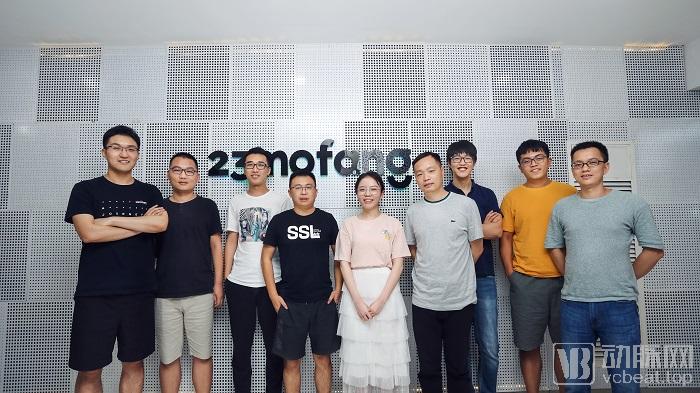
If a detailed analysis is warranted, 23Mofang can be regarded as a startup representing a new business model, incorporating attributes from all three categories. Currently, 23Mofang primarily consists of three major teams: the Gene Sequencing and Genetic Research Team, the Intelligent Big Data Processing Team, and the Internet Team, which handles software development and content operations, among other responsibilities. These three teams have clear divisions of labor yet collaborate closely, jointly constituting 23Mofang’s new business paradigm.
Precisely because its business model was novel and spanned three distinct fields, Zhou Kun encountered significant difficulties and skepticism when he initially crossed over from the big data sector to launch a venture in the life sciences. This distrust came from investors, users, suppliers, and even some potential employees. Pressure mounted from all fronts—financing, marketing, production, and recruitment—surrounding 23Mofang on all sides.
Yet 23Mofang still managed to break through. “Over the past three-plus years, we have demonstrated to everyone that our team possesses strong learning capabilities and robust execution, gradually building trust across all fronts.” Regarding this breakthrough in trust, Zhou Kun expressed deep gratitude for the support of investor friends; without their backing, it would have been difficult for 23Mofang to persevere until today.
In May 2018, 23Mofang completed its Series B3 financing round, bringing the total amount raised in its Series B to over RMB 200 million. Since its establishment, 23Mofang has completed six rounds of financing. In terms of funding scale and pace, it is well deserving of being hailed as a star enterprise in Chengdu’s new economy.
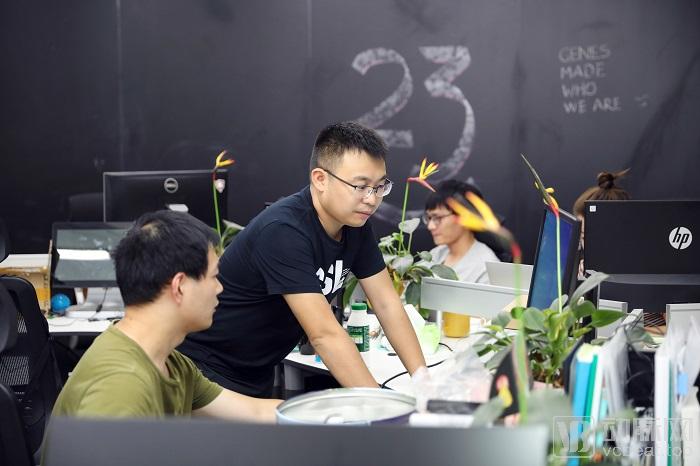
Risk financing implies valuation growth, and valuation growth signifies value creation. 23Mofang has generated substantial value through its work over the past few years. At this press conference, Zhou Kun revealed that since its inception, 23Mofang’s retained genetic data has been growing at an annual rate of 200%–300%. The company currently holds 400,000 genetic samples, ranking first among consumer-grade genetic testing companies in China.
23Mofang has also conducted long-term and in-depth research in the field of genetic ancestry among the Chinese population. As of May 2019, it had identified 88,000 mutation sites on the Y chromosome of Chinese individuals, accounting for 72% of all such discoveries made by Chinese institutions. Furthermore, 23Mofang recently published two academic papers on genetic ancestry, with additional manuscripts awaiting publication. One paper, “Formation of the Maternal Genetic Structure of the Han Population and Its Relationship with Agricultural Diffusion across the Three Major River Basins,” was published in the international journal Molecular Biology and Evolution. This study provides a macro-level explanation of the relationship between the maternal genetic structure of the Han population and the origins and diffusion of prehistoric agriculture in different river basins. The other paper, “A Study on the Historical Evolution of the Ye Surname Group Based on Y-Chromosome Sequencing Data,” was published in the Journal of Human Genetics. Focusing on historical periods and integrating the development of surnames, this research explores the formation and changes in the paternal ancestry of the Chinese population.
Ancestry Research Enables the Implementation of Innovative Application Scenarios for Genetic Testing
In-depth research into ancestral origins has provided practical application scenarios for 23Mofang’s consumer-grade genetic testing. Zhou Kun pointed out that 23Mofang is the world’s first consumer-grade genetic testing company to offer genealogy matching services. Based on the Chinese genetic data currently held by 23Mofang, along with analyses and projections from existing historical records, it is estimated that there have been 220,000 genealogies in China since the Ming Dynasty, with approximately 25% of family lineages covering around 70% of the Chinese population. As of May 2019, 23Mofang had digitized 4,650 genealogies, covering 8% of the Chinese population; it is projected that by the end of 2019, the company will have digitized 34,000 genealogies, covering 60% of the Chinese population. In other words, by that time, 60% of Chinese individuals—men through their own DNA and women through their fathers’ DNA—will be able to match their genetic test results from 23Mofang with digitized genealogical records, thereby indirectly reconnecting with long-lost families and relatives.
23Mofang Presents a Case of Genealogical Reunion: Born in Malaysia, Chen Qiuxing (a pseudonym) frequently travels between China and Malaysia for work. He has one-quarter Chinese ancestry—his grandfather emigrated from China to Malaya in his youth. A man of few words, his grandfather never spoke of his homeland to Chen, who was still a child at the time, before passing away. “Malaysia is where I grew up, yet I still wish to visit my grandfather’s hometown,” said Mr. Chen. Despite his strong desire to trace his roots, his journey faced significant obstacles: given China’s vast territory, where exactly was his grandfather’s ancestral home? Even with frequent trips among Chengdu, Shenzhen, and Kuala Lumpur, he struggled to find answers. 23Mofang helped Mr. Chen resolve this question.
Recommended by a business associate, Mr. Chen tried the genetic testing products from 23Mofang. Thanks to its ancestry detection feature, he was fortunately able to match his grandfather’s genealogy—the Chen clan of Shanghang County, Longyan City, Fujian Province. Guided by a friend in Shenzhen, Mr. Chen traveled to Shanghang, Fujian. There, he saw the family’s old house, which had been built with money his grandfather earned in Malaya. He also paid respects and prayed at his great-grandmother’s grave, perused the remaining genealogical records, and chatted with relatives he had never known before. This journey made Mr. Chen feel, for the first time, that he was truly connected to China.
A more direct approach to “finding relatives” is to conduct genetic matching within the 23Mofang gene database. It is reported that six users have already located their biological parents through 23Mofang’s genetic testing services. As the sample size expands, an increasing number of successful reunions are expected in the future.
Building Genetic Databases with an Open Mindset
Although 23Mofang boasts the largest sample size among consumer-grade genetic testing companies in China, its database is still not large enough to develop globally pioneering applications such as “genealogical matching.”
Regardless of internal or external communications, Zhou Kun consistently emphasizes the mission of 23Mofang: to help users digitize their life data. In Zhou Kun’s view, genetic testing enables the digitization of life, which can then be computationally analyzed, leading to significant gains in efficiency. For instance, “disease prediction” requires the analysis of massive datasets predicated on the digitization of life data and the creation of an open, readily accessible database. Only through these measures can this technology, which benefits all of humanity, be truly implemented.
Such a database should be open, inclusive, and diverse, mirroring the character of Chengdu. At the press conference, Zhou Kun stated that 23Mofang will build a gene database for the entire industry in the future. Together with users and industry peers, they will explore applications and promote advancements in the pharmaceutical industry and life sciences. He believes that as data volume increases, innovative applications based on genetic testing, such as disease prediction, will eventually become possible. Openness can greatly shorten the distance from “possibility” to “reality.”
It is precisely for this reason that Zhou Kun, a firm believer in the imminent arrival of a new era in life sciences, could make such an idealistic and bold declaration: “Fortunate to be born in this era, we shall create a better future.”
Tianfu Software Park and Its Tenant Enterprises: A Mutual Success Story
“Openness” is also a keyword in the Chengdu Tianfu Software Park’s philosophy of “building platforms and fostering connections.” Idealistic entrepreneurs like Zhou Kun are numerous within the park. Over the years, the shared traits of these entrepreneurs have solidified into the distinct character of the software park. Meanwhile, the park’s services subtly nurture the growth and expansion of tenant companies. The relationship between the Tianfu Software Park and its tenants is one of mutual success.
As the industrial park where 23Mofang is rooted, Tianfu Software Park provides services to its resident enterprises with an open, platform-oriented internet mindset. Its openness is mainly reflected in three dimensions:
First is open-minded thinking. Unwilling to work in isolation, Tianfu Software Park frequently collaborates with tenant enterprises and third-party partners to jointly explore approaches for building platforms and fostering connectivity. Tianfu Software Park is willing to try any initiative that benefits the development of enterprises within the park.
Second is the openness of resources. Currently, hundreds of high-tech enterprises and tens of thousands of IT professionals have settled in Tianfu Software Park. In addition to government channels, the park has numerous third-party partners and deeply integrates these resources, making them accessible to enterprises within the park and even those in the surrounding areas.
Third is cultural openness. By hosting a variety of events, Tianfu Software Park fosters a warm community atmosphere, strengthening connections among enterprises, between enterprises and employees, and among employees themselves within the park.
Tianfu Software Park, with its open ecosystem, has long attracted a large number of entrepreneurs and startups. Leveraging its extensive resources for mass entrepreneurship and innovation, it has become a new landmark for entrepreneurial development in Chengdu. Embodying Chengdu’s inclusive spirit, the park has formed several major industrial clusters, including software product R&D, communications technology, IC design, mobile internet, digital entertainment, fintech, and shared service centers. It covers hot sectors such as cloud computing, big data, artificial intelligence, the Internet of Things (IoT), blockchain, and VR/AR, ensuring diversity among its tenant enterprises.
The diversity of Tianfu Software Park is also reflected in the highly in-depth and extensive connectivity services it provides to enterprises. In addition to covering and strengthening connections among enterprises within the park, it helps companies carry out comprehensive resource connectivity services, including capital, market, talent, policy, technology, and media connections. This not only highlights the value of Tianfu Software Park as a platform but ultimately fosters an integrated triad of platform, connectivity, and services.
If 23Mofang expanded its sample size to enhance genetic diversity in its database and thereby improve the accuracy of genetic testing, then Tianfu Software Park’s commitment to maintaining its own diversity aims to increase connection density and resource vitality within the park, thus boosting the success rate of corporate innovation and entrepreneurship. Regarding the understanding of growth environments essential for businesses—such as “openness” and “diversity”—Tianfu Software Park often reaches a consensus with its tenant companies. Behind 23Mofang’s global launch of its genealogy matching service based on genetic testing lies the unwavering support for innovation and entrepreneurship consistently provided by Tianfu Software Park.