

Health Catalyst Goes Public on Nasdaq, Leveraging AI and Big Data to Deliver Hundreds of Millions in Hospital Savings
Health Catalyst
Medical Data Development Service Company
Today, three healthcare companies listed on the NASDAQ in the United States: Livongo, a digital chronic disease management company; Health Catalyst, a healthcare big data company; and Castle Biosciences, a biopharmaceutical company. Livongo’s business model and development history were previously covered by VCBeat.“Amid the IPO Frenzy, Has the Digital Health Model for Chronic Disease Management Proven Successful in the US?”as introduced in the article. Today, we will discuss Health Catalyst, a leading enterprise in the field of healthcare big data in the United States.
Health Catalyst listed on the Nasdaq on July 25 (U.S. time), issuing 2 million shares, which accounted for 17.6% of its total share capital, and raising approximately $158.7 million.
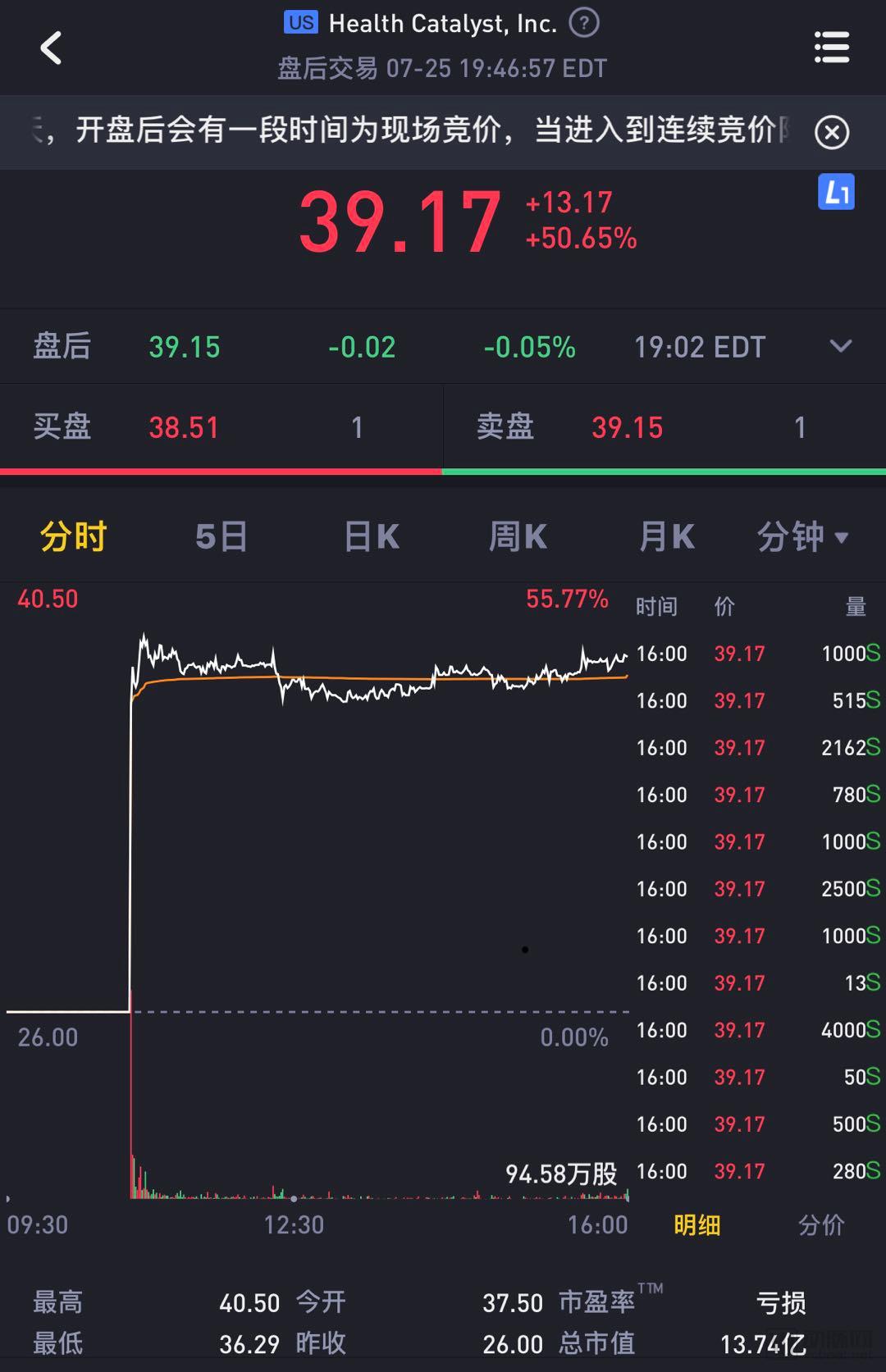
Health Catalyst’s IPO price was $26, and its closing price on July 25 (U.S. time) was $39.17, representing a surge of 50.65%.
Focused on Clinical Data Analysis and Processing
The U.S. healthcare system has invested billions of dollars to collect vast amounts of medical and health data, including digital clinical information (e.g., electronic health record [EHR] systems, pharmacy, laboratory, imaging, patient satisfaction, and health information exchange), financial information (e.g., general ledger, cost accounting, and billing), and operational information (e.g., supply chain, human resources, time and attendance, IT support, and patient engagement).
These comprehensive digital transformations have led to a surge in healthcare data, which is projected to exceed 10 ZB by 2025. Future datasets will also encompass socioeconomic, genomic, and remote patient monitoring information.
Collecting, storing, and using healthcare data from diverse sources, varying depths, and different formats can make the data quite complex. Many healthcare organizations have attempted to develop their own analytical solutions but have found the development and maintenance costs prohibitively high. Health Catalyst specializes in processing and analyzing data for healthcare organizations, addressing clients’ challenges in clinical, financial, and operational domains.

Co-founder Steven Barlow (left), incumbentSenior Vice President of Customer Operations and the Board. Co-founder Tom· Burton (right), incumbentSenior Vice President of Product Development.

Dan Burton is the current CEO of Health Catalyst.
Health Catalyst was founded by Tom Burton and Steven Barlow in 2008; both founders came from Intermountain Healthcare, a leading U.S. healthcare system.
Tom Burton holds an MBA and a Bachelor of Science in Computer Science from Brigham Young University. He teaches courses on the Toyota Production System, Agile Software Development, and Critical Process Analysis in the advanced training program at the Health Catalyst Institute for Healthcare Delivery Improvement. Steven Barlow holds a Bachelor of Science in Health Education and Promotion from the University of Utah. He is a founding member and former chair of the American Health Data Warehouse Association.
Tom Burton and Steven Barlow, leveraging their extensive experience in corporate process improvement and IT, led initiatives at Intermountain Healthcare to enhance care quality and reduce costs. Following HB Ventures’ early investment in Health Catalyst, its co-founder Dan Burton joined the Health Catalyst board of directors in 2011 and assumed the role of CEO in October 2012.
Health Catalyst’s core business comprises three aspects:
Data Platform:Cloud-based Data Operating System (DOS) is an open, flexible, and scalable data platform designed for healthcare organizations, providing customers with a single, integrated environment to consolidate data from disparate software systems for comprehensive data analytics;
Application Analysis:Health Catalyst’s software analytics applications are built on its data platform to deliver foundational or specialized analytics, thereby enhancing clients’ clinical, financial, and operational performance. It also provides a comprehensive suite of prebuilt data models and visualizations that can be customized to meet clients’ specific needs, which Health Catalyst refers to as “Analytics Accelerators.”
Services:Health Catalyst has assembled a team of analytics experts to leverage the company’s technology in helping clients accelerate time-to-value and achieve sustainable, measurable improvements.

Problems Solved by Health Catalyst for Its Customers
By the end of 2018, Health Catalyst served 126 clients, with 50 of them purchasing DOS. Currently, Health Catalyst’s penetration rate in the U.S. market is approximately 4%. In 2018, the company’s revenue saw significant growth, rising from $73.08 million in 2017 to $112.6 million, while reporting a net loss of $61.98 million.
Prospectus data show that clients opting for Health Catalyst’s services achieved varying degrees of cost control.
Allina Health saved up to $125 million in financial and operational improvement projects after using Health Catalyst’s solutions for one year. Meanwhile, in another project, it improved compliance with sepsis treatment protocols, achieving cost savings of over $1 million and reducing mortality from severe sepsis and septic shock by 30%.
University of Pittsburgh Medical Center Achieved $38 Million in Clinical, Financial, and Operational Improvements Over Several Years Using Health Catalyst’s Solutions.
Mission Health leveraged Health Catalyst’s solutions to optimize processes for its Accountable Care Organization’s (ACO) Medicare Shared Savings Program (MSSP), saving Medicare over $11 million and achieving 100 targets, thereby becoming one of the top ACOs in the nation.
Established 11 years ago, with a total of eight funding rounds amounting to $377 million
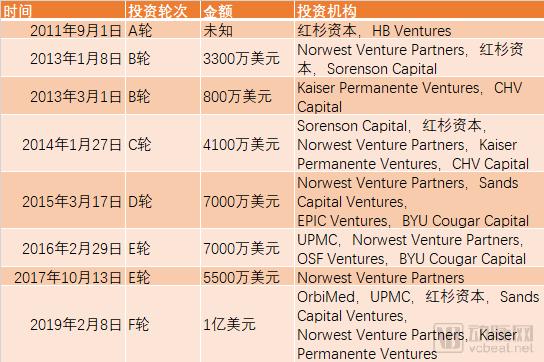
A review of Health Catalyst’s financing history reveals eight funding rounds from 2011 to the present, with a cumulative total of $377 million. In each round, numerous institutions have made repeat investments, reflecting their confidence in Health Catalyst’s performance.
Notably, Norwest Venture Partners participated in six of the eight financing rounds. After its investment in the Series E round in February 2016, it made a separate $55 million investment in October 2017. Sequoia Capital invested four times, and Kaiser Permanente Ventures invested three times. CHV Capital, Sands Capital Ventures, Sorenson Capital, BYU Cougar Capital, and UPMC each invested twice.
Among the institutional investors is UPMC (University of Pittsburgh Medical Center). As a client of Health Catalyst, UPMC must have recognized the significant business impact of its solutions before deciding to invest in the company. UPMC participated twice in Health Catalyst’s financing rounds, investing in both the Series E and Series F rounds.
Among Health Catalyst’s shareholders, Norwest Venture Partners, which has invested the most frequently, is not the largest shareholder, holding a 21% stake. Sequoia Capital is the largest shareholder, with a 21.9% ownership interest. The University of Pittsburgh Medical Center holds a 6.3% stake in Health Catalyst.
Following its IPO, Health Catalyst will invest the proceeds into business expansion and also consider allocating a portion of the funds to acquisitions to support the company’s rapid growth.
From Database Creation to Data Analysis: Optimizing Management for Healthcare Institutions
Health Catalyst Inc. was initially founded to create healthcare databases for clinics and hospitals. Although most large healthcare organizations have already achieved information-based management, overcoming the first hurdle of electronically acquiring medical records, it remains unclear to healthcare administrators how these data can drive tangible business improvements.
Nearly every hospital and health system requires a data warehouse to store, visualize, and leverage healthcare data, using such data to address the $750 billion in waste within the U.S. healthcare system (data sourced from a report by Healthcare Finance News). In the past, a lack of data hindered improvements in the quality of medical care. The situation is now reversed: healthcare organizations have abundant data, but lack effective methods for utilizing it properly.
Before founding Health Catalyst, Tom Burton and Steven Barlow were responsible for cost management and process optimization at Intermountain Healthcare. They keenly recognized a market opportunity, realizing that it was insufficient to merely build healthcare data warehouses for clients; instead, there was a need to help clients identify issues, formulate plans, and implement process and organizational changes.
Building on foundational data management, Health Catalyst offers deeper-level solutions to meet this growing demand. The company’s platform helps large integrated health systems and smaller hospitals improve management quality by integrating and analyzing complex operational, financial, clinical, and research data across healthcare systems, thereby enhancing managerial capabilities through advanced analytics.
Through data analysis, hospitals can reduce costs associated with patient length of stay, readmission rates, unnecessary surgeries, and preventable patient harm, achieving millions of dollars in savings. In addition to lowering administrative expenses, this approach helps meet compliance requirements and, most importantly, improves patient health outcomes. True to its name, Health Catalyst aims to serve as a catalyst for enhancing healthcare quality.
During its first three years, Health Catalyst doubled its business scale annually while expanding its product line from eight standalone solutions into a comprehensive platform comprising more than 40 integrated products. In its early stages, Health Catalyst completed data platform construction for numerous hospitals and clinics, including Allina Health, Indiana University School of Medicine, MultiCare Health System, North Memorial Health Care, Providence Health & Services, Stanford Hospital, and Texas Children’s Hospital, serving 20 million patients. In 2011, Health Catalyst secured Series A funding from Sequoia Capital.
Over the following two years, Health Catalyst experienced rapid growth, with its 2013 revenue increasing more than fivefold to reach $45 million. The Affordable Care Act’s impetus for electronic health records (EHRs) in the United States led healthcare institutions to place greater emphasis on building data platforms. During this period, Health Catalyst secured favorable development opportunities in competition with traditional software giants such as IBM and Oracle, expanding its footprint to 135 hospitals and 1,700 clinics. Health Catalyst claimed to deliver faster and more flexible data solutions than larger companies.
AI Technology Accelerates Business Growth in the Later Stages
A report from Research and Markets shows that the global healthcare analytics market has been growing at a remarkable pace since 2015, with a compound annual growth rate (CAGR) of 26.2%. By 2021, the global healthcare analytics market is projected to reach $18.4 billion. The increasing importance of big data analytics has driven market development and presented Health Catalyst with unprecedented opportunities.
In December 2016, Health Catalyst launched healthcare.ai, the first open-source machine learning software library designed specifically for healthcare. By making this resource open-source, Health Catalyst aims to foster collaboration across the entire healthcare big data industry, thereby promoting the adoption of artificial intelligence in the field and enabling healthcare organizations to easily learn from one another and utilize these tools for data analysis. As many healthcare institutions lack expertise in data analytics, healthcare.ai empowers them to optimize analytical outcomes and workflows, build predictive models to reduce hospital readmission rates, assess patients’ likelihood of payment, and streamline clinicians’ schedules.
Touchstone System
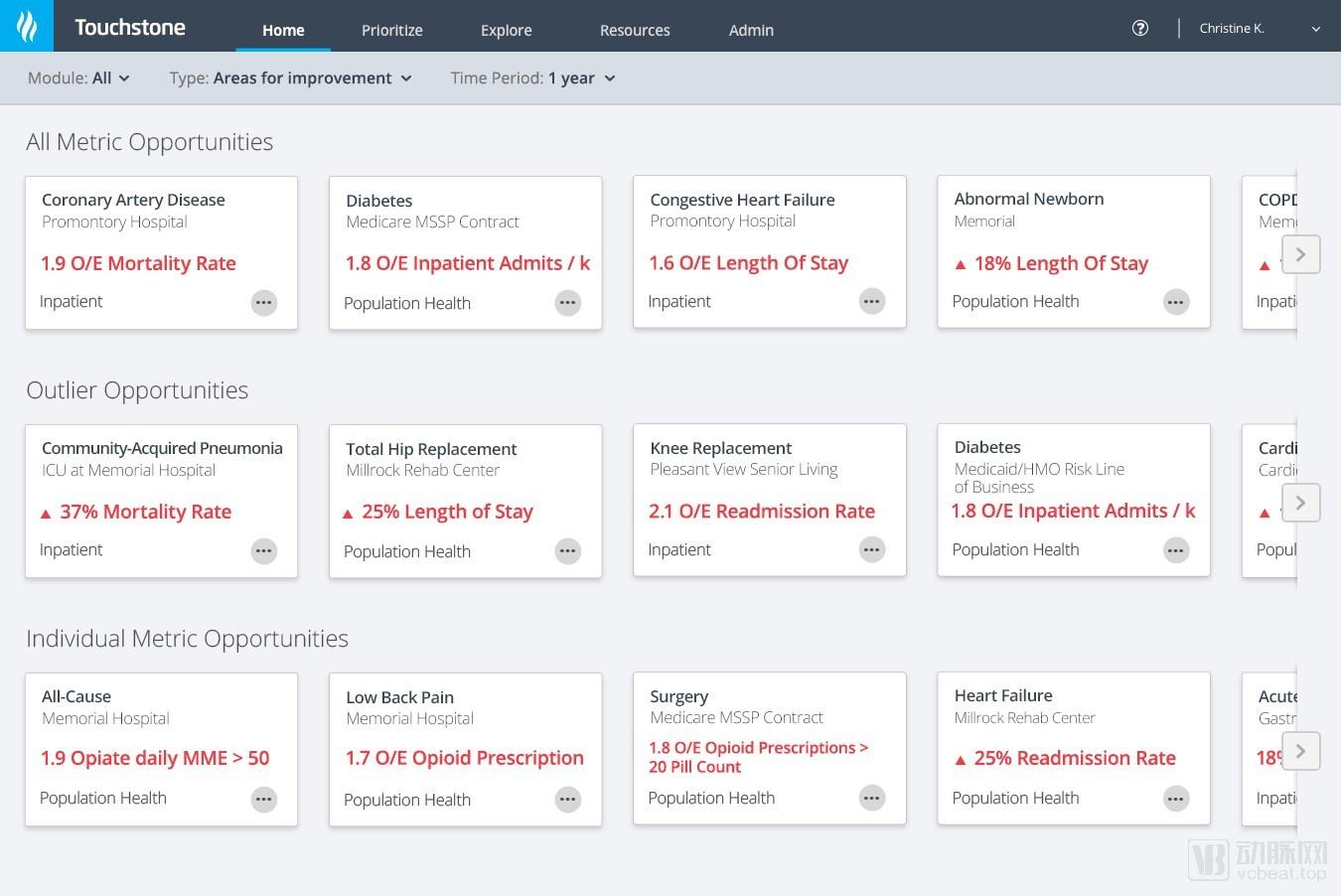
In 2018, after exploring artificial intelligence technologies, Health Catalyst launched Touchstone, a breakthrough AI-powered healthcare benchmarking and performance improvement solution. Survey data from 100 hospital and health system executives conducted by Health Catalyst revealed that identifying top-performing institutions nationwide for benchmarking purposes is a significant challenge when seeking organizational improvement. Healthcare organizations need to achieve sustainable improvements in clinical, financial, and operational areas, but previously had to grope in the dark. Touchstone addresses these challenges faced by healthcare leaders by synthesizing data from electronic health records, claims, cost accounting datasets, operations, and external benchmarks, enabling non-data-analyst hospital staff to easily identify specific causes of underperformance and pinpoint directions for improvement.
In 2018, Health Catalyst acquired Medicity, one of the largest population health management companies in China, nearly doubling its customer base. Leveraging big healthcare data, Health Catalyst is capable of undertaking a wide range of initiatives. News from 2019 highlighted how the company addressed physician burnout through closed-loop analytics and introduced foundational solutions for population health. Furthermore, Health Catalyst partnered with MedRhythms to explore digital therapeutic interventions. This project marked the inaugural initiative of Health Catalyst’s new life sciences division, aiming to utilize AI algorithms and music therapy to repair neural damage in stroke patients.
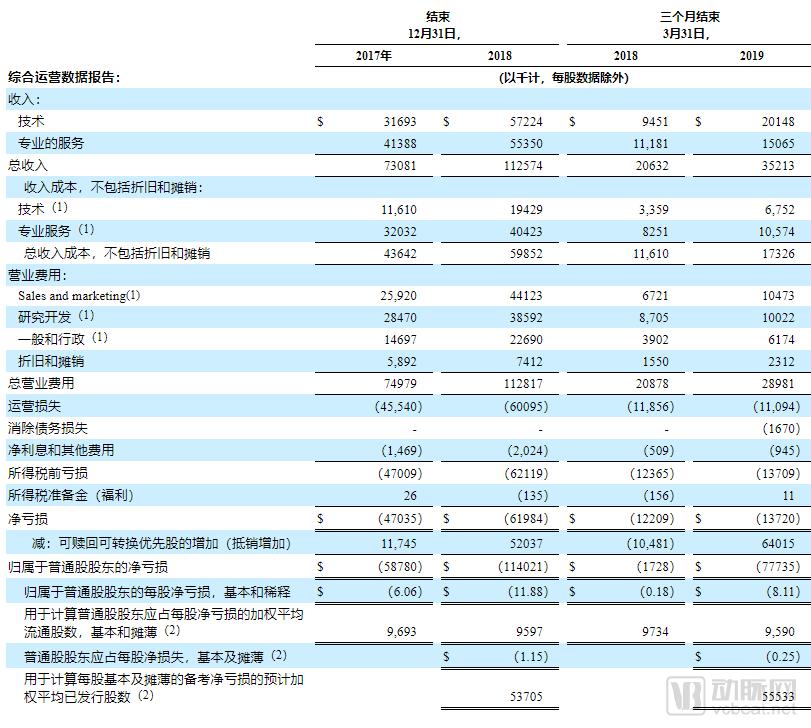
Health Catalyst’s Revenue Data Disclosed in the Prospectus
In 2018, Health Catalyst delivered strong performance. During the year, its revenue grew by more than 50%, and its gross profit increased by over 80%. The company also added 16 new health system clients in 2018, surpassing any other year in its decade-long history. Additionally, Health Catalyst expanded its workforce by more than 200 team members, bringing its total U.S. headcount to nearly 750 by year-end. That same year, Health Catalyst customers achieved more than 250 documented clinical, financial, and operational improvements—the highest annual total in the company’s history. Furthermore, revenue for the first quarter of 2019 reached $35.21 million, significantly exceeding the figure for the same period in 2018.
In addition to its sustained rapid growth in revenue, Health Catalyst has received high ratings from industry analysts. KLAS Research, an industry leader, awarded Health Catalyst the “Best in KLAS” ranking for business intelligence, citing high customer satisfaction and retention rates in its surveys of Health Catalyst clients. Health Catalyst has long been recognized as a “Best Place to Work” by leading healthcare and technology publications, and in 2018, it attracted several world-class experts to join its team.
Reflections for Entrepreneurs in China
In VCBeat’s previous review of medical big data and artificial intelligence enterprises, we observed that a large number of domestic medical big data companies are involved in information technology platforms and databases—that is, the creation and storage of data. However, few enterprises participate in the stages of data processing, cleaning, and analysis. Even among those engaged in data organization and analysis, their focus tends to lie primarily on physician-led research and clinical applications.
In the application scenarios of AI companies, the focus is predominantly on leveraging clinical and imaging data to enhance physicians’ diagnostic and treatment capabilities, while few enterprises are dedicated to cost control, structural optimization, and process improvement in healthcare institutions. In VCBeat’s previous analysis of business models for AI enterprises, some companies lacked suitable payers, making it difficult to establish a closed-loop commercial model.
In contrast, U.S. companies such as Qventus (AnalyticsMD) and Health Catalyst are able to identify methods to enhance hospital management and reduce costs by analyzing vast amounts of data, thereby incentivizing hospitals to pay for their products and ultimately driving substantial revenue growth. We also hope to see the emergence of more similar enterprises in China’s medical big data and artificial intelligence sectors, so that the value of big data and AI can be fully leveraged in the field of hospital management.