

Tang Haofu: Why He Remains Committed to Medical Innovation After Backing 7 IPOs and Managing Over $4.2 Billion
From the perspective of China’s venture capital and private equity community, Tang Haofu is an atypical investor.
Before going abroad, Tang Haofu, as the sole heir to a family-owned traditional manufacturing enterprise, had been involved in corporate management from an early age and developed a unique attachment to the manufacturing sector. Prior to returning to China, he had already become the youngest senior investment manager at a private equity firm on Wall Street in the United States, despite being just over thirty years old. His early exposure to the concept of venture capital, ahead of most domestic investors, enabled him to establish an unconventional framework for investment risk assessment and mitigation.
In 2009, Tang Haofu returned to China. Instead of taking over the family business, he founded an equity investment and corporate capital operations firm—Creation Investment. Currently, the firm manages over RMB 3 billion in assets, which Tang has primarily sourced from traditional manufacturing sectors in China’s Yangtze River Delta region and invested in nearly 40 domestic and international companies. Statistics show that by the end of last year, seven portfolio companies of Creation Investment funds had successfully gone public, while seven others were queued for listing committee reviews.
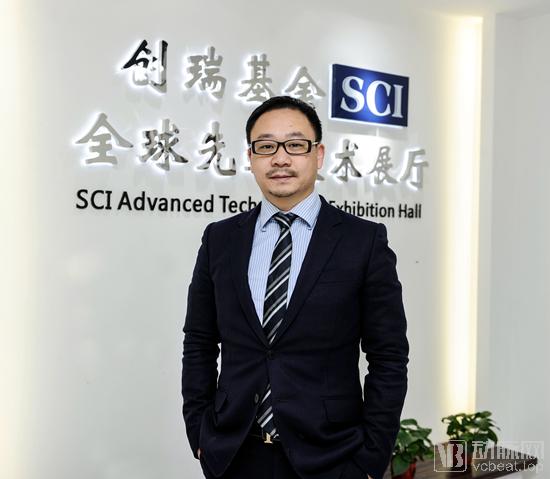
Mr. Tang Haofu (Photo provided by the interviewee)
In recent years, Mr. Tang Haofu and his team have frequently attended professional medical conferences both domestically and internationally, as well as internal exchanges organized by provincial medical industry associations. This has provided Shanghai Creation Investment with opportunities to engage with leading enterprises across various sub-sectors and access cutting-edge technological innovation projects, enabling the firm to acquire high-quality assets at an early stage that were later proven to be exceptional.
Prior to his exclusive interview with VCBeat, Tang Haofu had just participated in a venture capital roundtable forum focused on healthcare informatization. Informatization remains a sector where Creation Investment has limited exposure. Tang believes that, drawing from U.S. experience, the future potential in healthcare informatization is immense; however, due to the unclear direction of domestic healthcare reforms, the product forms for informatization solutions are not yet well-defined. While tiered diagnosis and treatment present significant opportunities, companies should avoid crowding into identical niche segments, as exemplified by the phenomenon of over 400 AI companies developing auxiliary diagnostic tools for pulmonary nodules. He then outlined his first investment thesis: identifying trends through horizontal comparisons between the domestic and international markets.
Opportunities in healthcare investment stem from technological innovation. Since the onset of the modern medical revolution 150 years ago, the United States has maintained an innovation model characterized by “physician-led innovation coupled with adoption by high-end enterprises.” Boasting a vast domestic market, the U.S. has led more than 60% of global healthcare innovation trends. In the foreseeable future, the United States is expected to retain its leadership in global technological innovation, continuing to serve as a source of inspiration and a pioneer for China’s technological advancements.
Global medical technology innovation, represented by the United States, primarily encompasses four key sectors: hospital informatization, medical devices and consumables, medical aesthetics services and consumables, and innovative drugs. Mr. Tang Haofu stated that, projecting U.S. market trends onto China, the investment value in the medical devices and consumables sector and the innovative drug sector is the most definitive over the next five years. Investment opportunities in the medical aesthetics field are also increasing as industry standardization improves.
For a long time, the proportion of domestically developed innovative drugs in China has been severely low, significantly constraining the potential for reducing healthcare insurance costs. Over the past five years, domestic pharmaceutical companies have intensified their efforts to learn from the innovation trajectories of U.S. originator drugs, and investment in innovative therapeutics has become highly active. Cancer targeted therapies, gene therapy, and gene editing represent relatively certain directions for medical breakthroughs over the next 5–10 years. Antibody drug teams and gene therapy teams with strong R&D backgrounds are considered high-quality investment candidates.
Shanghai Creation Investment’s investment decision, based on cross-market comparative analysis, has already yielded results: its portfolio company Akeso Biopharma has initiated its IPO process. Tang Haofu told VCBeat that at the time, bispecific antibody drugs were not yet a mainstream investment focus. With the investment value in the monoclonal antibody segment already diminishing, the Shanghai Creation Investment team analyzed and concluded that Akeso Biopharma was closely aligning with the most advanced R&D directions in the U.S. market, which led to their investment decision. This decision has proven to be highly correct. Shortly after the investment was completed, Akeso Biopharma obtained clinical trial approval for the world’s first bispecific antibody drug, leading to an explosive increase in the company’s technological standing and market valuation.
Tang Haofu pointed out that the research and development and promotion of medical devices have high demands for clinical resources, with top-tier hospitals and physicians being the most critical assets for investment decision-making.
Over the past five years, the Creation Investment team has dedicated half of its personnel and resources to building a platform for translating physicians’ medical innovations into commercial outcomes. Tang Haofu told VCBeat that this is an initiative many other investment firms have not yet undertaken. “Creation Investment adopts a ‘fund plus incubator’ model. The role of Creation Investment’s incubator is to help physicians transform their ideas into patents (by assisting with applications), develop product prototypes, advance through animal studies, clinical trials, and CFDA certification, and move into production, ultimately growing into successful enterprises.”
As of May 2019, Creation Investment had established innovation commercialization platforms for more than 30 hospitals and three renowned national medical universities, spanning six industrial parks. The company was assisting over 100 physicians in translating their technological innovations into practical applications, covering key departments including neurosurgery, orthopedics, clinical laboratory medicine, cardiology, gynecology, and gastroenterology.
In this “fund + incubation” two-stage model, leveraging its extensive network of physicians and hospitals and its deep involvement in the day-to-day operations of the healthcare industry, investment managers at Shanghai Creation Investment have moved beyond a perspective that relies solely on individual experience to understand healthcare companies. Instead, they are able to truly evaluate enterprises from the viewpoints of physicians and hospitals and from within the healthcare industry itself. In fact, it is often easy to identify high-quality companies from a physician’s perspective, as physicians and hospitals are the primary decision-makers in the adoption of medical devices and pharmaceuticals. Mastery of physician resources will be the core competency for future healthcare investors.
For instance, due to the severe imbalance in the distribution of medical resources in China, there are significant differences in medical demands at various levels. If a research manager possesses only localized resources and experience, their judgment on projects is prone to errors. Taking Tiansong Medical, a renowned enterprise in Zhejiang, as an example, it was among the first companies in China to establish independent domestic brands for endoscopes and minimally invasive instruments. During the investment decision-making process, the Shanghai Creation Investment team visited doctors at various levels across different tiers of hospitals. They found that if they interviewed doctors at top-tier (Grade III Class A) hospitals, a considerable proportion still did not recognize domestic brands for gastroenterology consumables and instruments. However, when visiting restructured hospitals as well as Grade II and Grade I hospitals, they discovered that these institutions were more receptive to domestic brands due to cost considerations. Therefore, products from Tiansong and similar domestic brands should focus primarily on Grade II and Grade I hospitals as their core market, while leveraging policy support for localization to increase penetration into Grade III hospitals.
This perspective has gained deep recognition from both the market and enterprises. Such an ability to comprehensively assess and interview healthcare needs at all levels is a rare competency that Shanghai Creation Investment has accumulated through more than a decade of industrial investment and project incubation.
This is the third investment thesis of Tang Haofu and Shanghai Creation Investment.
Tang Haofu pointed out, “Analyzing a healthcare project requires six perspectives: the physician’s, the developer’s, the manufacturer’s, the salesperson’s, the patient’s, and the social security bureau’s. Together, these constitute a comprehensive perspective on healthcare investment. The investor’s own role is the least important during the investment process.” In other words, to some extent, one must set aside self-interest and adopt an industry-wide standpoint.
Tang Haofu believes that modern medicine is built upon the extensive foundational work of numerous medical pioneers. Entrepreneurs should focus more on improving efficiency and patient experience based on established medical practices, rather than hastily seeking to disrupt them. One must not disregard the past 200 years of medical development history when discussing innovation in a vacuum.
Specifically, Mr. Tang pointed out that investors committed to the healthcare sector must respect the industry’s inherent principles. The emergence of new technologies must be underpinned by genuine clinical needs and supported by existing technological foundations. For instance, the development of colonoscopy has benefited from over a century of accumulated expertise. Rigid endoscopes were already being used in clinical practice in France as early as 1860, and the primary structure of Olympus’s 2018 products remains fundamentally identical to those from 150 years ago. While innovation is essential, we must also understand and respect the scientific validity of these established methods. Claims that rigid endoscopes can be completely replaced by alternative approaches lack both historical and scientific basis.
Furthermore, the healthcare industry should not be evaluated using the growth benchmarks of other sectors, where annual growth rates may reach 100% or even several hundred percent. A healthcare company maintaining a growth rate of 20%-30% is already considered outstanding. Over the past three to four years, among the 30,000 categories of medical devices and consumables, only a few segments related to AI and cardiovascular care witnessed the fastest growth in company valuations, due to their significant perceived potential. However, precisely these segments have also seen the largest bubbles, while investment in traditional, hard-core R&D-driven enterprises has been insufficient in recent years.
When Shanghai Creation Investment invested in Wolwo Bio, many investors stayed away, believing the company’s sales growth was merely average. However, the Creation team focused on Wolwo Bio’s products and unique biological attributes, as well as the sustainability and stability of its growth. To date, despite some controversies, Wolwo Bio has ranked among China’s top pharmaceutical companies, maintaining an annual sales growth rate of 20%–30% for over a decade. Its net profit margin has also expanded from approximately 15% initially to 50%. Similarly, in recent years, investment in mature traditional biochemical and immunological IVD enterprises has been far lower than that in the AI sector, and even less than that in innovative reagent companies. This actually contradicts the industry rule that the medical sector requires long-term accumulation of sales channels.
Summarizing over a decade of investment experience, Tang Haofu believes that approaching healthcare investment from a physician’s perspective provides the strongest foundation. Corporate innovation should be grounded in genuine medical needs, and there are, in fact, abundant opportunities for hard-core innovation even in relatively traditional areas of healthcare. In the past two years, the launch of the STAR Market has significantly increased investment volume in hard-core technology companies within these traditional sectors.
Engaging in industrial collaboration with potential portfolio companies is a distinctive practice of Creation Capital. On one hand, Creation Capital facilitates joint R&D initiatives between companies and distinguished physicians. Upon identifying high-potential enterprises, Creation Capital introduces them to leading physicians regardless of whether an investment is made. Leveraging its “fund plus incubator” model, Creation Capital possesses a platform for innovation translation, along with robust incubation and matchmaking capabilities. On the other hand, Creation Capital helps outstanding enterprises enter sales regions where it has not yet invested by co-hosting conferences and organizing innovation competitions.
In this context, Shanghai Creation Investment maintains some form of industrial collaboration with nearly all of its portfolio companies, such as co-establishing incubators, introducing foreign technologies, conducting joint R&D with hospitals, and jointly participating in overseas exhibitions. Currently, this type of collaboration is gradually extending to companies in which it has not yet invested.
During Creation Investment’s investment process, the analysis of a project typically takes about four months. The first step involves verifying the authenticity and leading-edge nature of the technology, which requires approximately one month. This is followed by a two- to three-month period dedicated to validating market acceptance. During this phase, Creation Capital interviews physicians from 10 to 20 hospitals. Leveraging its extensive network of physician resources accumulated through its technology transfer platform, the Creation team can rapidly gather feedback from dozens of physicians across tens of hospitals.
Domestic substitution of medical devices is the sector where Shanghai Creation Investment excels most. Currently, most domestic medical device companies are small in scale and the industry is fragmented, leaving substantial room for Chinese-made products to replace imports. Companies that possess distinct technological advantages in areas of rigid medical demand and execute robust sales strategies represent attractive investment targets.
Mr. Tang Haofu concluded by stating that Creation Investment aims to promote and disseminate medical innovations that contribute to human progress, while investing in the domestic production of high-end medical devices and pharmaceuticals in China. The firm also hopes to engage a cohort of partners who possess a strong sense of social responsibility and a commitment to continuous learning and growth.
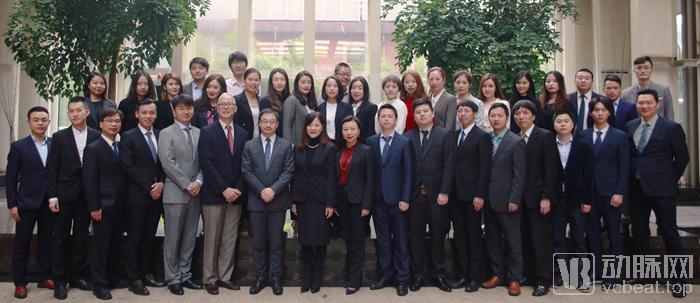
Creation Investment Team (Photo provided by the interviewee)