

SERMO Files IPO Prospectus: The Global Physician Network Powering Medical Crowdsourcing and Drug Intelligence

SERMO
Doctors' Social Platform
To the general public, SERMO may be unfamiliar; but for physicians, SERMO is an online social network exclusively designed for them.
In May 2015, a 14-year-old boy in the United States visited a hospital due to persistent coughing; however, monitoring results showed no abnormalities. When the boy returned for further evaluation, a startling event occurred: after a bout of continuous coughing, he expectorated a “mass,” a symptom that doctors had never encountered before.
Subsequently, the physician took a photograph of the “mass” and uploaded it to the medical social networking platform SERMO to seek assistance. Within just 30 minutes, another physician on SERMO responded. Several hours later, a cardiologist on SERMO identified the mass as a bronchial cast, or plastic bronchitis secondary to Fontan surgery, which is typically associated with hypoplastic left heart syndrome. A pulmonologist subsequently confirmed this diagnosis. The boy was then rapidly referred to a cardiologist for urgent treatment, and the surgery was successful.
Rapid diagnosis saved the boy’s life, which is also the magic of the SERMO platform.
SERMO is a private social networking platform exclusively for physicians. Currently, the platform has established networks across Europe, the Americas, Africa, and other regions, launched in over 150 countries worldwide, and amassed nearly 800,000 members, becoming the world’s first professional online network for doctors.
User Screening: Exclusive to Registered Physicians, Enhancing Platform Professionalism
In 2004, the anti-inflammatory drug rofecoxib was urgently recalled in Pakistan due to adverse effects. Many in Pakistan attributed this incident to deficiencies in the adverse drug reaction reporting system. In 2005, American physician Daniel Palestrant established a new adverse drug reaction reporting system to address this issue.
In 2007, the platform raised $26.7 million in funding; in 2011, it secured an additional $3.5 million. In 2012, Daniel Palestrant sold the platform to WorldOne, after which it was renamed “SERMO.”
Following its acquisition, SERMO began expanding globally beyond the United States. By September 2014, it had expanded into Australia, Canada, Ireland, New Zealand, South Africa, the United Kingdom, Spain, and Mexico. SERMO has also evolved from a platform originally dedicated to discussing drug side effects into a social network where physicians can share specialized expertise, evaluate prescription medications, communicate with peers, and resolve complex clinical cases.
To ensure professionalism, physicians must verify their identity as the first step in joining the SERMO platform. This process includes verifying the member’s name, digital fingerprint recognition, and checking physician master file records from relevant medical associations to confirm their registered physician credentials. After submitting an application on the official website, users will receive a response within 48 hours regarding whether their SERMO registration has been approved. Only physicians certified by SERMO can access the platform’s resources.
Currently, SERMO is freely accessible to all registered physicians.
Anonymous Chat: Freely Discuss, Address Privacy and Security Concerns
“Thanks to its anonymous design, I can participate in discussions on the SERMO platform more freely, without worrying that any of my comments on the platform will be traced back to the healthcare institution where I work,” said an anonymous user on SERMO.
SERMO users need not worry about doubting each other’s identities due to anonymity, as SERMO’s precondition for allowing anonymity is the verification of every user’s physician credentials during registration. Only after this verification can doctors choose whether to use the platform under their real names or anonymously. According to data released by SERMO, nearly 90% of its users have chosen to hide their identities when engaging in social interactions on the platform. This choice is hardly surprising, as anonymity facilitates more candid communication among physicians and enables them to provide more genuine feedback to one another. Shaun Sutner, News Director at SearchHealthIT, commented, “Anonymity is the cornerstone of SERMO’s operations.”
Whether discussing real-world medical cases or theoretical academic knowledge, physicians can engage in anonymous discussions on the SERMO platform. Patients need not worry that various images of skin lesions, wounds, and X-rays shared on SERMO will compromise their privacy, as physicians must obtain patient authorization before using such images for public discussion. Compliance with HIPAA privacy regulations is a fundamental requirement for every physician.
“SERMO” means “conversation” or “discussion” in Latin. Indeed, SERMO brings together physicians from all corners of the globe for such “conversations and discussions.” Armstrong, a rural physician with 30 years of practice experience, stated, “In rural areas, I am a lone doctor, as I am the only physician here. SERMO is a vast physician community platform that connects doctors across China. This is where its value lies.”
Like other SERMO members, Armstrong considers himself a therapist (emphasizing the treatment process) rather than a consultant focused solely on preventive care (emphasizing the diagnostic process). However, when patients seek disease prevention advice and consultations, their responses may expose them to corresponding medical liabilities, a risk that instills fear in these individual physicians. For Armstrong, the absence of input from other doctors means his diagnosis is final, with no second opinions for reference; consequently, he also worries about the accuracy of his own diagnoses.
The existence of SERMO alleviates the concerns of these physicians. For identical symptoms, doctors can obtain diagnostic opinions from other physicians on the SERMO platform, thereby enhancing diagnostic accuracy and reducing the psychological burden associated with making independent diagnoses.
Medical Crowdsourcing: Healthcare Polls Launch Drug Rating System
In addition to serving as a free platform for physicians to engage in peer discussions, SERMO’s anonymity has given rise to a distinctive feature: polls. It is precisely this capability that has earned SERMO the reputation of being the “largest healthcare professional (HCP) research firm.” The SERMO research network comprises 1.8 million HCPs, representing 40% of the physician population in the United States.
SERMO generally hosts a “Poll of the Week” for new communities every two weeks. The poll topics are selected from recent hot topics in medicine, including evaluations of new drugs and ratings of new technological products. Physicians receive small monetary compensation after answering these questions.
On average, SERMO’s annual polls attract 700,000 participant responses, with the majority of surveys conducted among specialists, who constitute more than 70% of the SERMO network. Each year, SERMO provides physicians with a total of over $16 million in funding. The topics of these surveys often align with the needs of pharmaceutical companies seeking to gather authentic physician perspectives and insights. According to SERMO, 15 of the top 20 pharmaceutical companies in the United States have engaged in communication and collaboration with physicians on the SERMO platform.
Furthermore, the SERMO platform has additionally launched a drug rating system to evaluate prescription drug information. This drug rating system is also the world’s first prescription drug review system among licensed physicians, accessible to all doctors registered on the SERMO platform. The system was created in 2016 by SERMO in collaboration with platform physicians, and the statistical algorithms underlying the rating system were independently developed by a biostatistics advisory team led by Lee-Jen Wei.
The drug rating system collects over 300,000 drug ratings annually, enabling physicians worldwide to share their prescription medication treatment experiences with peers and transforming how doctors globally make prescribing decisions in their daily practice.
Commercial Controversy: Marketing Based on Doctor-Patient Conversations Sparks Outcry, Eroding Trust in Physicians
Prior to its acquisition by WorldOne, SERMO was barely profitable. Following the acquisition, SERMO adjusted its business model to monetize interactions among healthcare professionals. In short, the company generates revenue from pharmaceutical companies or other parties seeking physicians’ insights by providing them with market research reports and advertising placements.
However, the most controversial aspect of the company also stems from its business model. SERMO utilizes physicians’ conversations for marketing purposes, such as the tweet posted on its social media platform: “Mining doctors’ conversations and insights about drugs...” Such articles undoubtedly achieve commercial objectives by “eavesdropping” on physicians’ discussions.
In fact, SERMO has previously engaged in marketing efforts of this nature. The company privately monitored physicians’ conversations on its platform regarding diabetes, conducted comprehensive analyses of each discussion, and compiled data on the most frequently discussed treatment methods and medications into a diabetes medical report for sale. Furthermore, former SERMO employees exposed on Twitter that the company had eavesdropped on physicians’ discussions about competitors and business intelligence. This undoubtedly exacerbated physicians’ dissatisfaction with SERMO.
U.S. physician Mark Ryan wrote on Twitter, “The lack of regulation has made it difficult for SERMO to attract more physicians, and the company’s data mining practices have further pushed SERMO into a dire strait.”
Other physicians online have also expressed concerns about SERMO’s monitoring of conversations. Jay Parkinson wrote in his blog, “I am a member of SERMO, but I no longer use it because I feel like dirty voyeurs are watching us. SERMO is promoting the content of doctors’ conversations to help pharmaceutical companies sell drugs more effectively.”
“Transparency is key to marketing. When interactions involve personal health information, people feel threatened. With very few exceptions, social media platforms generally do not choose to profit from users’ conversations,” added Dr. Anthony McCosker, Senior Lecturer in Communications at Swinburne University of Technology. “SERMO’s confirmed terms of service agreement stipulates that physicians bear the responsibility for ensuring patient confidentiality when sharing private information. This is an ambiguous description that misleads doctors into believing they are merely sharing information, rather than infringing on others’ privacy.”
In addition to eavesdropping on physicians’ conversations, another practice by SERMO that has drawn user ire is its core business of “polls.” The results of these polls are sold as research reports to pharmaceutical companies. Some physicians are averse to commercialization; they have stated that they feel uncomfortable if such data are used for commercial purposes. Moreover, SERMO requires users to participate in at least one “poll” per year to maintain their platform membership, which has further exacerbated physicians’ distrust of SERMO.
Despite the abundance of negative news, SERMO’s expansion has remained unaffected. The company has even introduced user incentive programs; for instance, physicians who refer colleagues to the SERMO platform have the opportunity to receive a $100 reward. SERMO employed this strategy during its promotion in Australia. Peter Kirk, the company’s CEO, responded, “Already 13,000 registered physicians in Australia are benefiting from our network, and we will also hold promotional campaigns to incentivize doctors to join the SERMO platform.”
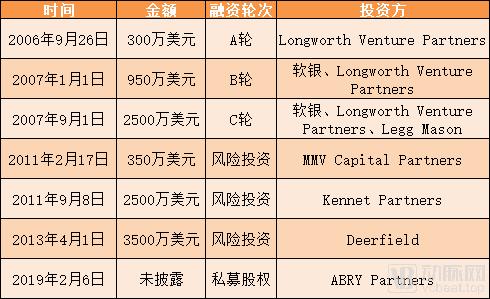
SERMO Financing Status
To date, SERMO has completed seven rounds of financing, raising a total of over $100 million. The company’s most recent funding round occurred on February 6, 2019, with exclusive investment from ABRY Partners; the specific amount was not disclosed.