

Moun Biotech and Chengge Biotech Enter Strategic Collaboration to Co-Develop Live Biotherapeutic Products for Inflammatory Bowel Disease (IBD)
VCBeat (WeChat ID: vcbeat) has learned that Guangzhou Colony Biotechnology Co., Ltd. (hereinafter referred to as “Colony Bio”) and Guangzhou Chengge Biotechnology Co., Ltd. (hereinafter referred to as “Chengge Bio”) have signed a strategic cooperation agreement. The two parties will jointly develop live biotherapeutic products for the treatment of ulcerative colitis (UC), thereby promoting the rapid development of the microbiome pharmaceutical industry.
Guangzhou Colony Biotechnology Co., Ltd. possesses internationally advanced platforms for microbiome discovery and industrialization, along with a large and comprehensive domestic library of gut microbial strains and genomic data. The company has collected and preserved 70,000 human probiotic strains, including approximately 5,000 difficult-to-culture rare human probiotics such as *Akkermansia muciniphila* (*Akk*), which can be applied to preclinical research for microbiome-based drug development projects. Chengge Biotechnology specializes in fecal microbiota transplantation (FMT) and is the first enterprise in China to provide comprehensive, precision FMT solutions, boasting abundant clinical resources and microecological sample data. This strategic partnership will enable both parties to fully leverage their respective professional advantages to discover, develop, and promote live biotherapeutic products for the treatment of ulcerative colitis (UC).
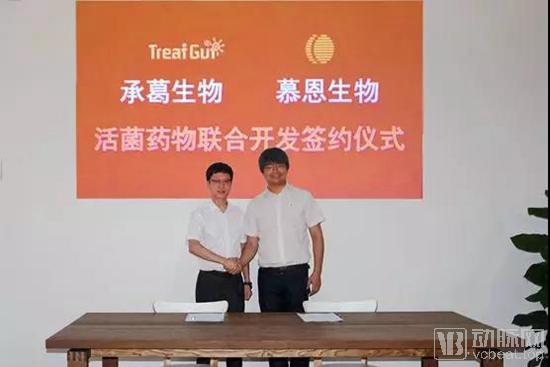
Mr. Jiang Xianzhi, Chairman of Guangzhou Colony Biotechnology Co., Ltd. (far right), and Mr. Xiao Chuanxing, Chairman of Chengge Biotechnology (far left), sign a strategic cooperation agreement
Inflammatory bowel disease (IBD) is a nonspecific inflammatory disorder characterized primarily by dysregulated intestinal immune function, encompassing two main types: Crohn’s disease (CD) and ulcerative colitis (UC). The two parties are jointly developing live biotherapeutic products, primarily for the treatment of ulcerative colitis (UC). As a chronic, progressive inflammatory bowel disease, UC commonly presents with symptoms such as persistent diarrhea, abdominal pain, mucopurulent bloody stools, weight loss, tenesmus, and vomiting. Lesions are predominantly located in the sigmoid colon and rectum, with the condition being difficult to heal and prone to recurrence.
According to statistics, there are 907,000 patients with ulcerative colitis (UC) in the United States, with approximately 38,000 new cases diagnosed annually. In China, the prevalence of UC is approximately 11.6 per 100,000 population, significantly higher than that of Crohn’s disease (CD), which stands at 1.4 per 100,000. The etiology of UC remains unclear, but it is widely believed to involve genetic susceptibility and environmental factors, including the gut microbiota. Growing evidence indicates that the pathogenesis of UC is closely associated with the gut microbiota, characterized by significant alterations in the structure of the gut microbial community and abnormal production of microbiota-related metabolites.
Under the terms of the agreement, Guangzhou Colony Biotechnology Co., Ltd. will leverage its advanced microbiome discovery and industrialization platform to fulfill Chengge Biotech’s requirements for the discovery of live biotherapeutic products for the treatment of ulcerative colitis (UC). This process encompasses clinical sample sequencing data analysis, strain isolation, selection of potential candidate strains, in vitro screening and functional evaluation of strains, animal studies, and ultimately, the identification of target strains or strain combinations.
Guangzhou Colony Biotechnology Co., Ltd. will receive an upfront payment of a specified amount and will be eligible to receive additional R&D and milestone payments based on the achievement of predefined milestones under the agreement. Chengge Biotech shall be responsible for conducting and executing clinical studies and bearing all associated costs. Upon successful commercialization of the candidate drug, both parties will share the resulting commercial benefits according to negotiated proportions. Furthermore, at various stages of the collaboration, the parties may mutually agree to transfer their rights and interests in the candidate drug to third parties, with the proceeds from such transfers distributed in accordance with each party’s respective equity interest in the candidate drug.
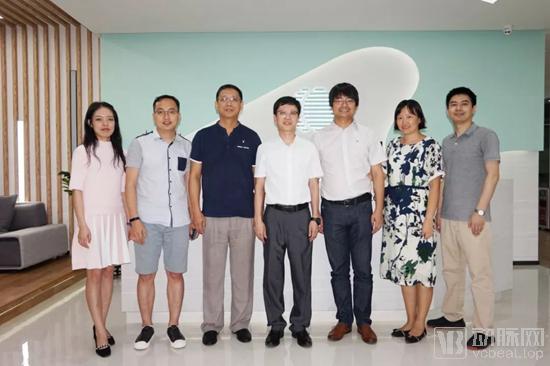
From left to right: Wang Han, Assistant to the Chairman of Chengge Biotechnology; Zhang Cheng, Deputy General Manager; Xiong Dezhi, General Manager; Xiao Chuanxing, Chairman; Jiang Xianzhi, Founder and Chairman of Colony Biotechnology; Chen Juan, Director of the Microbial Diversity Department; Zhou Yuanjie, Director of the Bioinformatics Department
Microbiome-based pharmaceuticals represent an emerging trend in the global pharmaceutical industry over recent years, demonstrating significant potential value in the management of many complex and chronic diseases. Currently, major pharmaceutical companies worldwide have recognized the substantial promise of microbiome therapeutics and are actively partnering with biotechnology firms to rapidly establish their presence in the microbiome drug market. Since 2015, capital invested in collaborative development and mergers and acquisitions in this field has exceeded $5.4 billion.
In June 2018, Genentech, a member of the Roche Group, and Microbiotica announced a multi-year strategic collaboration to discover, develop, and commercialize biomarkers, targets, and therapeutics for inflammatory bowel disease (IBD). Leveraging its precision metagenomics microbiome platform, Microbiotica will analyze patient samples from Genentech’s ongoing IBD clinical trials to identify microbiome biomarker signatures associated with drug response, as well as novel IBD drug targets and live biotherapeutic products. Microbiotica will receive an upfront payment and is eligible to receive up to $534 million in research, development, and commercialization milestone payments upon the achievement of certain predefined milestones.
Overview of Licensing Agreements in the Microbiome Research Field Between Large Pharmaceutical Companies and Biotechnology Companies from 2014 to 2019:
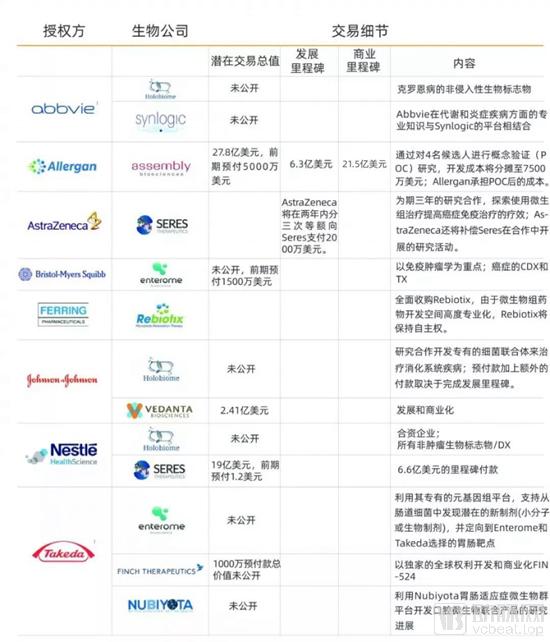
Translated from the Syneos Health report
Currently, China’s industry is primarily concentrated in upstream microbial testing and health management, while the development of microbiome-based therapeutics remains in its early stages. Even among companies that had microbiome preparations approved for market launch in earlier years, the indications for their products were mostly limited to nonspecific diarrhea, with no new microbiome preparations subsequently launched or reported in clinical development.
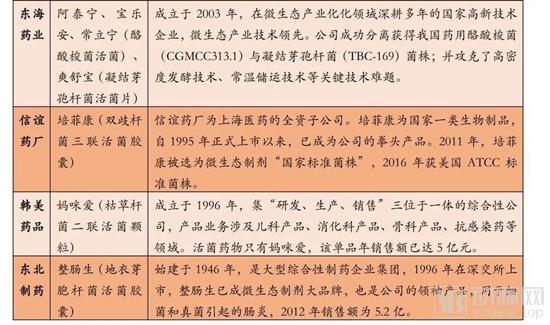
Representative Companies with Microecological Preparations Marketed in China (Source: Company Websites, Guangzheng Hengsheng)
As global pharmaceutical giants and biotechnology companies actively advance the research, development, and industrialization of microbiome-based therapeutics, the strategic partnership between Guangzhou Colony Biotechnology Co., Ltd. (Colony Bio) and Chengge Biotechnology will position them as pioneers in the development and commercialization of next-generation live biotherapeutic products (LBPs) in China. By leveraging their complementary strengths, both parties aim to achieve breakthroughs in core therapeutic areas, ushering in a new chapter for microbiome drug R&D in China and significantly enhancing their competitiveness in the domestic and international microbiome industry. Through close collaboration, Colony Bio and Chengge Biotechnology will initiate their joint efforts with the development of microbiome-based therapeutics for ulcerative colitis (UC), and subsequently expand their LBP R&D footprint in the Chinese market, jointly driving the application and industrial growth of microbiome pharmaceuticals.
About Colony Biotech
Colony Biotechnology is an internationally advanced microbiome discovery and industrialization platform, dedicated to discovering, preserving, and identifying natural microorganisms with pharmaceutical activity and their metabolites through leading microbial isolation, culture, and screening technologies. Currently, it focuses on the research and development of innovative live biotherapeutic products for obesity, non-alcoholic steatohepatitis (NASH), and tumor immunology.
Founded in Beijing in 2015, Guangzhou Colony Biotechnology Co., Ltd. is a national high-tech enterprise. Its core team comprises outstanding interdisciplinary PhDs and key R&D professionals from multinational corporations. The company has established an intestinal microbial strain library and built a core technological framework encompassing multi-omics data mining, culturomics, high-throughput in vitro screening, humanized animal models, anaerobic fermentation, and the development of gut-targeted drug formulations. It is committed to collaborating with partners to rapidly translate next-generation microbiome therapeutic solutions from the laboratory into clinical applications.
About Chengge Biotechnology
Chengge Biotechnology, founded in 2016, is China’s first large-scale comprehensive biomedical technology company dedicated to human (gut) microbiome research, with business operations spanning medical diagnostics, microbiome-based therapeutics, and big data mining in healthcare. It provides rigorous human microbiota transplantation services—namely, Next-Generation Human Microbiota Transplantation (HMT) therapy—to clinicians and researchers worldwide.
Guided by its mission to “Integrate the Microbiome, Revitalize Holistic Health,” the company leverages extensive research achievements in the field of gut microbiota and fully capitalizes on its strengths in fecal microbiota transplantation (FMT) technology. It has established an integrated service platform targeting gut microbiome health, encompassing disease prevention, diagnosis, FMT therapy, post-treatment evaluation, nutritional guidance, and the research, development, and manufacturing of microbiome-based therapeutics, as well as providing lifecycle health management centered on the microbiome.