

From Entry to Expansion: InterSystems' Two-Decade Journey in China Empowering Over 400 Hospitals with IRIS Data Platform
InterSystems
Software Systems and Technology Suppliers
Two decades on, InterSystems has firmly established its presence in China, with its health IT solutions deployed in over 400 hospitals. The company continues to stay at the forefront of innovation by introducing cutting-edge offerings. In December 2018, InterSystems launched IRIS, a data platform that combines ease of use, reliability, interoperability, and scalability. Designed to address challenges such as the complexity of enterprise database deployment and API incompatibility, IRIS provides enterprises and hospitals with a one-stop system covering the entire spectrum of data services.
InterSystems stands out on the global stage of health informatics with its innovative philosophy, a distinction that is closely tied to its profound insights and strategic approach to information technology infrastructure.
In 1978, InterSystems was founded in Cambridge, Massachusetts, USA. The IRIS data platform was launched precisely in the company’s fortieth year. To date, InterSystems has provided software services to more than 80 countries worldwide. As the saying goes, “At forty, one has no doubts.” It appears that InterSystems’ innovations in informatization carry a hint of “transformation.”
From a positioning perspective, the IRIS Data Platform for Healthcare is an enterprise-grade, one-stop data service platform designed for the healthcare sector. Partners can leverage this system to develop software, thereby avoiding additional costs associated with infrastructure setup and facilitating subsequent maintenance. Notably, InterSystems requires partners to have a thorough understanding of its technologies and to complete relevant training and examinations; only qualified enterprises can obtain InterSystems certification and authorization.
InterSystems’ extensive accumulated experience means that the launch of IRIS follows a clear trajectory. In the New York metropolitan area alone, InterSystems powers the HEALTHIX product, leveraging over 85 million medical records provided by healthcare institutions to create interoperable health records for 17 million patients; on average, nearly 1.7 million clinical event alerts are pushed to these institutions each month. These health records feature unified information, patient engagement, and support from an interoperability platform, enabling patients to take control of and manage their own information.
In terms of integrated network services, InterSystems has partnered with Northwell Health, a U.S. healthcare system comprising more than 18,500 physicians, to create a unified medical record containing over one billion data points by extracting data from various systems. This system enables Northwell Health to streamline risk management for risk-based contracts and automatically establish patient cohorts for population health management and cohort analysis. Meanwhile, InterSystems’ HealthShare product provides application programming interfaces (APIs) to external solution vendors for Northwell Health, allowing them to integrate with the group’s systems to test and optimize their complementary products.
The launch of IRIS for Healthcare has made InterSystems’ data management services more versatile, indicating that InterSystems aims to expand its customer base beyond hospitals. From this perspective, a review of the market reveals an unmet need: startups must collaborate with multiple vendors to build a qualified database.
At the 2019 CHIMA Conference, InterSystems prominently showcased the aforementioned IRIS data platform, underscoring the system’s significance. Will the all-in-one philosophy underpinning the IRIS data platform become the future trend for database infrastructure among startups?
Following the exhibition, media outlets such as VCBeat interviewed Lu Xialiang, General Manager of InterSystems Greater China. This marks Mr. Lu’s 11th year in China, during which InterSystems has achieved remarkable success in the Asia-Pacific region.

Interviewee: Luciano Brustia, General Manager of InterSystems Australia and Greater China
The following is compiled from the interview transcript.
VCBeat: InterSystems’ business scope extends beyond the healthcare industry. Could you compare the differences between its healthcare and non-healthcare business operations?
Lu Xialiang: InterSystems’ services span across transportation, astronomy, healthcare, and other sectors. Taking our collaboration with the astronomy startup Skyline as an example, much of the work in the field of astronomy focuses on post-processing massive amounts of data. In this domain, Skyline aims to build AI models based on our IRIS data platform to retrospectively analyze celestial events that have already occurred or to discover previously unobserved supernovae. Such tasks are difficult for a single city’s observatory to accomplish alone; they require connecting observatories worldwide and leveraging telescope data shared by amateur astronomers to create a comprehensive view of the night sky.
In comparison, the two share both similarities and differences. The similarity lies in our processing of big data, while the difference in the healthcare sector pertains to the data itself. First, we must ensure data security; second, we need to collect continuous, uninterrupted data; and third, the volume of data is massive, with stringent quality requirements. Meanwhile, healthcare projects are invariably entangled with numerous stakeholder interests, which makes them more challenging.
VCBeat: How do InterSystems solutions help Chinese healthcare users create value in practice?
Lu Xialiang: Many hospitals and enterprises have adopted InterSystems’ systems, with the value of our solutions demonstrated through these collaborative practices. In big data processing, we can significantly enhance customer efficiency. This improvement in efficiency represents a qualitative leap for startups, particularly AI innovation companies.
Compared with competitors, our advantage lies in the fully integrated nature of all services provided. We once believed that production systems and business systems addressed two separate issues, but a better solution is to integrate these two systems under the management of a unified solution.
By way of analogy, many enterprises require different vendors for their cloud services, integration systems, and other needs, whereas our single system can address all these issues. With our system, startups can rapidly complete the foundational deployment of their products.
The value of InterSystems also lies in the scalability of its solutions. Our partners can develop applications based on our systems, and developers can freely choose between cloud-based and on-premises deployment, both of which support big data implementation.
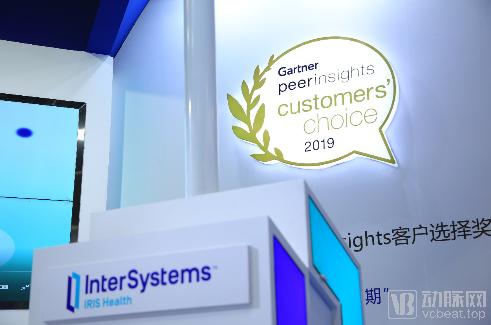
2019year, InterSystems AwardedGartner Peer Insights Operational Database Management System (ODBMS) Customer Choice Award Honor
VCBeat: How does InterSystems select its partners?
Lu Xialiang: It is crucial that our partners recognize and understand the technology we provide. Only through mutual understanding and recognition can we explore win-win models. Based on such win-win cooperation and mutual recognition, we can establish a foundation for long-term development. At the core level, InterSystems does not cast a wide net; instead, we strive to maximize value for both parties through dialogue.
VCBeat: Could you share the changes you have observed in the government, hospitals, and InterSystems over the years?
Lu Xialiang: First, I must emphasize the premise of China’s “large population base.” As life expectancy continues to rise, chronic diseases are becoming increasingly prevalent, leading to a continuous increase in hospital costs. Therefore, cost control has become an additional component of our mission, which represents a change for InterSystems.
Secondly, China’s overall focus on “health” continues to rise. When I came to China in 2008, the average life expectancy was just over 70 years; today, it exceeds 80 years in regions such as Beijing, Shanghai, and Jiangsu. Meanwhile, China’s medical insurance system now covers the entire population, marking a significant achievement.
In terms of policies and concepts, China is also continuously innovating. The state has reallocated resources among many large tertiary Grade A hospitals to optimize the utilization of medical resources. The tiered diagnosis and treatment system is being implemented, with the vigorous development of China’s unique family doctor system providing favorable support for the advancement of this policy.
The entire transformation has been remarkably rapid. In my view, China has accomplished the current changes within a decade, whereas other countries might require several decades to achieve the same results.
VCBeat: How do you think China should advance the interoperability of healthcare information systems?
Lu Xialiang: In China, the interoperability discussed here focuses more on interconnectivity between individual hospitals. This process requires multiple rounds of dialogue between the government and hospitals, as well as among hospitals themselves, before the government establishes a standard that aligns with real-world conditions.
Only after the standards are established can we leverage them to drive hospital upgrades. For hospitals, the most critical issue is internal data management; specifically, they must first organize their data in accordance with the required specifications.
In this process, InterSystems’ role is to empower hospitals. We have helped many hospitals build integrated information platforms, brought extensive overseas experience to China, and accelerated the development of interoperability using new technologies and standards such as 5G and AI.
But we must acknowledge that establishing interoperability is a long-term process. We are part of this journey and believe the future will be increasingly promising.
VCBeat: Could you offer some advice to emerging healthcare startups?
Lu Xialiang: I believe that all healthcare providers must clearly recognize their own value and have a clear understanding of what they can offer to the market. InterSystems’ values are twofold: one is to enhance the services experienced by patients, and the other is to reduce government healthcare expenditures. Specifically, improving overall patient services should focus on matching patients with better-suited physicians and providing them with greater care.
In China’s current healthcare market, there is a mismatch between patient demand and physicians’ available consultation time, and medical resources are relatively scarce. Our information technology solutions can maximize the utilization of existing resources through precise matching. Taking tiered diagnosis and treatment as an example, we enable information sharing across all participating regions. We do not provide treatment plans for patients; rather, we offer measures to assist in resolving patient-related issues.
For example, if a Level II hospital and a Level III hospital both admit the same patient, sharing the patient’s examination data after capture could potentially save on examination costs.
Achieving this type of data sharing presents two major challenges: first, enabling seamless data exchange, and second, scaling the performance of the entire system. Both are areas where InterSystems excels. If we can leverage our technology to empower hospitals with this sharing capability, it would be a significant benefit for most physicians and patients.
Lu Xialiang – Resume (Chinese)
Lu Xialiang (Luciano Brustia)
General Manager, InterSystems Australia and Greater China
Mr. Lu Xialiang is the Head of Business for InterSystems in the Asia-Pacific region, overseeing operations in Australia and Greater China.
Mr. Lu Xialiang is responsible for formulating commercial strategies and driving business growth in the Asia-Pacific region, as well as overseeing the company’s daily operations.
Mr. Lu Xialiang has been with InterSystems for over 15 years, playing a pivotal role in forging strong partnerships with customers and partners worldwide, including those in Chile, Spain, Portugal, the Gulf countries, South Africa, and China.
Over the past decade, Mr. Lu Xialiang has primarily worked in China, leveraging his extensive expertise and experience in healthcare information system development to support numerous world-class Chinese hospitals and help these clients achieve success.
Prior to joining InterSystems, Mr. Lu Xialiang served as IT Director for several hospital groups in Italy. In 1996, he joined a local partner of InterSystems and participated in numerous successful TrakCare implementation projects both in Italy and globally. Mr. Lu studied Electronic Engineering at the Polytechnic University of Milan and earned a Master’s degree in Information Technology Management from SDA Bocconi School of Management in 1995.
During his leisure time while visiting clients in Australia and China, Mr. Lu Xialiang enjoys exploring local museums and historical sites, driven by his deep interest and passion for the local culture and language.