

Yitu Healthcare Unveils Industry's First Integrated AI-Powered Hardware-Software Solution for Bone Age Assessment, Leading the Pediatric Growth Evaluation Market

YITU
Provider of Full-Stack Intelligent Healthcare Product Solutions
Precise Bone Age Assessment Is Poised to Become the Third Key Metric in Evaluating Children’s Growth and Development, Alongside Height and Weight.
As a key indicator for assessing growth and development in adolescents, bone age assessment can more accurately and objectively reflect children's actual growth status compared to metrics such as height and weight. It is roughly estimated that over 100 million children and adolescents in China require bone age assessments annually. However, traditional bone age assessment methods are hindered by lengthy procedures, low efficiency in image interpretation, and poor inter-rater consistency. Coupled with parental concerns regarding radiation exposure from X-rays, these factors significantly limit the clinical application of both single-time bone age assessments and longitudinal follow-up evaluations.
Recently, Yitu Healthcare, a leading domestic medical artificial intelligence enterprise, announced that its intelligent one-stop solution for pediatric growth and development assessment is set to be unveiled. The system pioneers the integration of AI technology with hardware devices in the industry, combining multiple features such as ultra-low radiation, intelligent imaging, AI-based image interpretation, and AI-driven growth and development assessment. It completes the entire workflow of “imaging–interpretation–reporting” in just 5–10 minutes, with the intelligent image interpretation process taking only seconds. The absolute error in interpretation results compared to those of senior pediatric endocrinologists is less than 0.3 years, reaching the proficiency level of experienced specialist physicians.
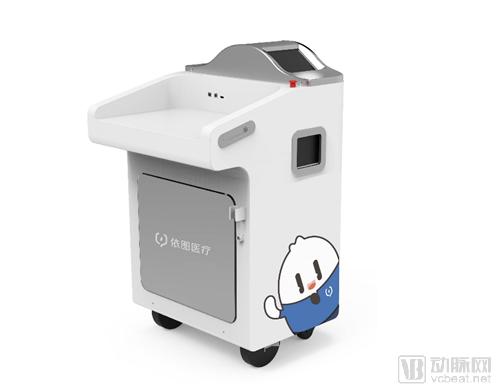
The system features a cute and novel appearance, with a cartoon-style design that integrates ergonomics and child psychology principles. It is user-friendly, minimizes children’s resistance, delivers excellent performance, and is highly portable. Furthermore, thanks to its innovative micro-dose imaging technology, the radiation dose is reduced by more than 80% compared to traditional digital radiography (DR), equivalent to the natural radiation exposure from consuming three bananas. This makes regular growth and development assessments based on bone age evaluation feasible for children, while also expanding its application to clinical departments, thereby making pediatric growth and development assessments more efficient and convenient.
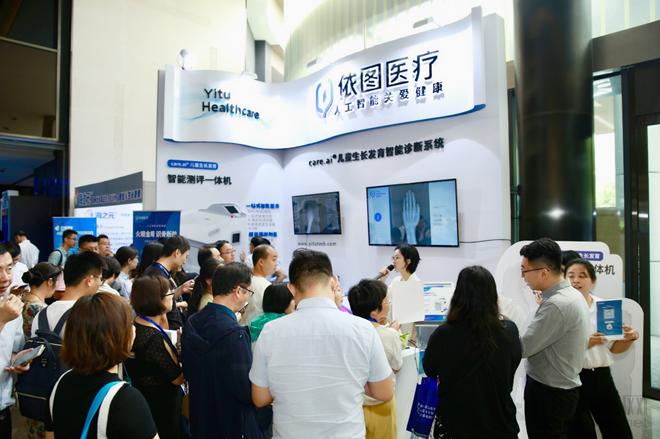
It is reported that the system was presented in a 2.5D format at the 18th National Academic Conference on Pediatric Endocrinology, Genetics, and Metabolic Disorders, and will make its official debut at the National Summit on Smart Maternal and Child Health Big Data and Artificial Intelligence on July 27–28.