
July 1–7, 2019: A total of 11 new drug data entries were recorded this week, including 3 in oncology, 3 in innovative therapies such as gene therapy, 2 in infectious diseases, and 1 each in ophthalmology, musculoskeletal disorders, and hematologic diseases.
❖Sangamo Therapeutics and Pfizer Announce Positive Results from Phase 1/2 Clinical Trial of SB-525, a Gene Therapy for Hemophilia A. For traditional pharmaceutical giants like Pfizer, leveraging external partnerships may be an essential strategy to achieve significant breakthroughs. In May 2017, Pfizer paid Sangamo $70 million upfront to develop and commercialize multiple gene therapy programs, with Sangamo also eligible for up to $475 million in milestone payments. Additionally, in 2014, Pfizer entered into a strategic collaboration with another gene therapy company, Spark Therapeutics, to develop SPK-9001, a gene therapy for Hemophilia B.
❖Karyopharm’s selinexor has finally received approval for marketing in the United States, where it is currently indicated for fifth-line treatment of multiple myeloma (MM). Given the plethora of existing therapies for MM, selinexor must elevate its therapeutic priority and expand into additional indications to achieve commercial breakthroughs. Currently, the combination of selinexor, dexamethasone, and bortezomib is planned for third-line treatment of MM, while indications are also being expanded to include diffuse large B-cell lymphoma (DLBCL).
❖Roche Announces MINISTONE-2 Clinical Trial Meets Primary Endpoint, Demonstrating Xofluza Is Comparable to Tamiflu and Well Tolerated in Pediatric Influenza Patients. With the patent expiration of Tamiflu, Roche has been seeking a superior successor. However, Roche did not release extensive actual data from the Xofluza trial this time, merely stating that it met the primary endpoint. Whether it can successfully replace its predecessor will depend on subsequent detailed data.
Array BioPharma Announces Triple-Combination Therapy for BRAF V600E
Patients with mutated metastatic colorectal cancer (mCRC)
Phase III Clinical Trial Results
Array BioPharma Announces Phase 3 Clinical Trial Results of Its Triple-Combination Therapy in Patients with Metastatic Colorectal Cancer (mCRC) Harboring BRAF V600E Mutations; Company Plans to Submit NDA by Year-End
The triplet therapy consists of the BRAF inhibitor Braftovi (encorafenib), the MEK inhibitor Mektovi (binimetinib), and the anti-EGFR antibody Erbitux (cetuximab).
Inclusion Criteria and Study DesignIn a global Phase 3 clinical trial, patients with metastatic colorectal cancer (mCRC) harboring the BRAF V600E mutation were divided into three groups to receive either triplet therapy, dual therapy with Braftovi and Mektovi, or chemotherapy. These patients had previously received one or two lines of prior therapy and experienced disease progression.
Compared with standard chemotherapy, the triple-drug regimen significantly improved patients’ OS (9 months vs. 5.4 months; HR=0.52), ORR (26.1% vs. 1.9%), and median PFS (4.3 months vs. 1.5 months; HR=0.38).
Sangamo Therapeutics and Pfizer Announce Hemophilia A
Gene TherapySB-525 Phase 1/2 Clinical Trial Results
Sangamo Therapeutics and Pfizer Announce Latest Results from the Phase 1/2 Clinical Trial of SB-525, Their Jointly Developed Gene Therapy for Hemophilia A
SB-525 is a gene therapy that utilizes an AAV6 viral vector to deliver a transgene encoding human coagulation factor VIII. The viral vector design aims to optimize production efficiency and achieve liver-specific expression of the coagulation factor VIII protein.
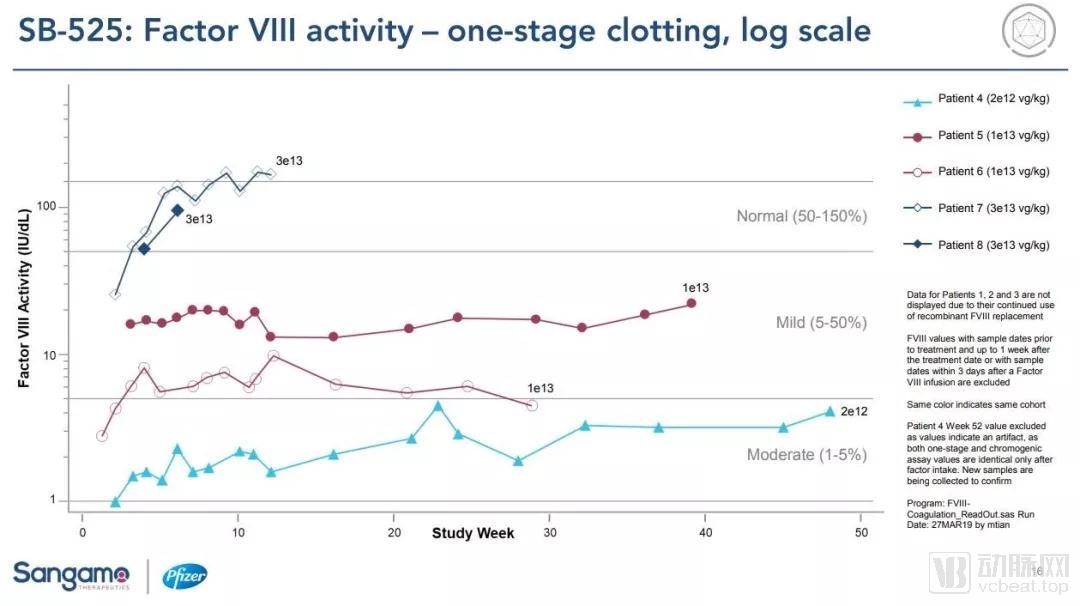
Inclusion Criteria and Experimental DesignIn this Phase 1/2 clinical trial, 10 patients received escalating doses of SB-525, with 4 patients receiving the highest dose of 3e13 vg/kg.
Among the four patients who received the highest dose, two achieved factor VIII levels within the normal range, while the other two demonstrated a rate of factor VIII increase comparable to that of the first two. Furthermore, all patients treated with the highest dose of SB-525 experienced no bleeding events following treatment and no longer required factor VIII replacement therapy after the initial use of prophylactic factor VIII.
Experimental Results of SB-525
Data source: Pfizer
Tyme Technologies' Investigational Drug Combination SM-88
In clinical trials involving patients with advanced pancreatic cancer
Significantly prolongs overall survival (OS) in patients
Tyme Technologies Announces That Its Investigational Drug Combination SM-88, as Monotherapy, Significantly Prolongs Overall Survival (OS) Compared with Historical Data in a Study of Patients with Advanced Pancreatic Cancer, Demonstrating Favorable Tolerability and Safety
SM-88 is a proprietary drug combination developed by Tyme, consisting of a tyrosine derivative and three other drugs (rapamycin, phenytoin, and methoxsalen). SM-88 selectively targets active tumor cells, thereby avoiding the toxic side effects associated with many chemotherapy agents.
Inclusion Criteria and Study DesignThe trial included 49 patients with metastatic pancreatic cancer who had received high-intensity radiotherapy, over 80% of whom had undergone at least two prior treatments.
In this population with a poor prognosis, as of April 25, 2019, the median overall survival (OS) with SM-88 was 6.4 months, whereas an analysis of 19 previous prospective pancreatic cancer trials showed that the median survival for third-line therapy after disease progression was only 2.0–2.5 months.
Bicycle Therapeutics Announces Treatment for Diabetic Macular Edema
Therapies Under InvestigationTHR-149 Achieves Positive Results in Phase I Clinical Trial
Bicycle Therapeutics Announces Positive Results from Phase 1 Clinical Trial of Investigational Therapy THR-149 for Diabetic Macular Edema (DME), Conducted by Partner Oxurion
THR-149 is an innovative plasma kallikrein (PKal) inhibitor based on a bicyclic peptide.
Inclusion Criteria and Study DesignIn an open-label, non-randomized Phase I clinical trial, 12 patients with DME and impaired central vision received a single intravitreal injection of THR-149.
On the first day after treatment, the patient’s vision improved rapidly. By day 14 post-treatment, the mean best-corrected visual acuity (BCVA) had improved by an average of 7.5 letters. At 90 days after injection, the mean BCVA improvement was 6.5 letters.
Xpovio (selinexor) developed by Karyopharm TherapeuticsApproved for Market Launch
Treatment of Patients with Relapsed/Refractory Multiple Myeloma
The FDA announced the accelerated approval of Xpovio (selinexor), developed by Karyopharm Therapeutics, in combination with dexamethasone, for the treatment of patients with relapsed/refractory multiple myeloma.
Xpovio is an oral selective inhibitor of nuclear export that binds to the nuclear export protein XPO1 and inhibits its function.
Inclusion Criteria and Study DesignXpovio in Combination with Dexamethasone for the Last-Line Treatment of 83 Patients with Relapsed/Refractory Multiple Myeloma
In these highly refractory patients, the combination therapy achieved an overall response rate of 25.3%, with a duration of response of 3.8 months.
Genentech’s Innovative Influenza Therapy Xofluza
Achieved Primary Endpoint in Global Phase 3 Clinical Trial
Genentech, a member of the Roche Group, announced that its innovative influenza therapy Xofluza (baloxavir marboxil) met the primary endpoint in the global Phase 3 clinical trial named MINISTONE-2.
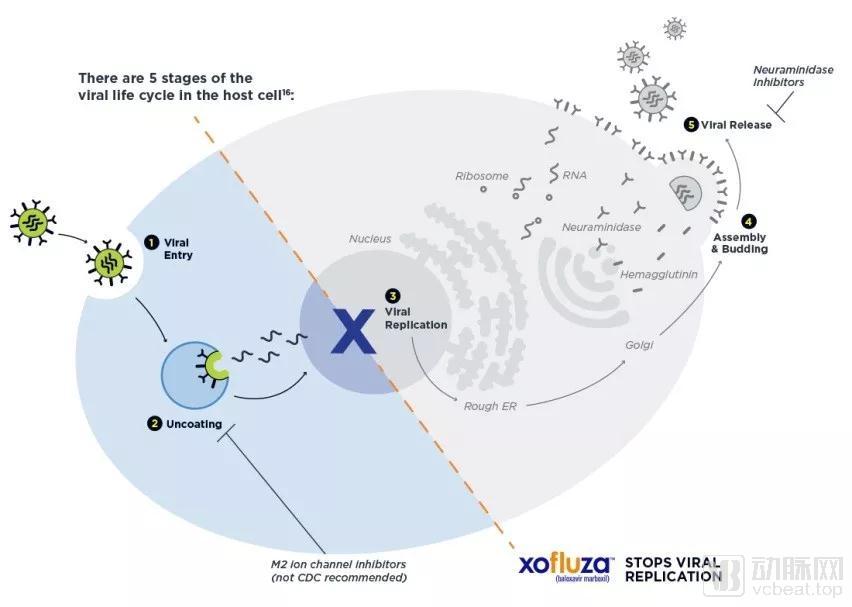
Xofluza’s mechanism of action differs from that of currently available antiviral therapies; it inhibits viral replication by targeting the cap-dependent endonuclease in the influenza virus.
Inclusion Criteria and Study DesignIn two Phase 3 clinical trials involving a total of 1,832 patients with influenza, patients received treatment with Xofluza, placebo, or another anti-influenza medication.
Demonstrated a favorable safety profile in the treatment of pediatric influenza patients aged 1–12 years, while significantly shortening the duration of influenza symptoms, including fever.
Mechanism of Action of Xofluza
Data Source:genentech
Biogen Announces Antisense Oligonucleotide (ASO) Therapy
SpinrazaLong-Term Efficacy Outcomes in Infant Patients with Spinal Muscular Atrophy (SMA)
. Biogen announced long-term efficacy results for Spinraza, the company’s antisense oligonucleotide (ASO) therapy for spinal muscular atrophy (SMA), when treatment was initiated in infants before symptom onset.
Spinraza is an antisense oligonucleotide drug that increases the production of functional survival motor neuron (SMN) protein by modifying the splicing of SMN2 gene pre-messenger RNA (pre-mRNA).
Inclusion Criteria and Study DesignIn the open-label Phase 2 NURTURE clinical trial, 25 patients with spinal muscular atrophy (SMA) received Spinraza treatment within six weeks of birth, prior to the onset of disease symptoms.
100% of patients were able to breathe independently; 100% of patients were able to sit up unassisted; 88% of pediatric patients were able to walk independently; meanwhile, Spinraza demonstrated long-term efficacy over nearly four years.
FibroGen Announces Pamrevlumab
Interim Results from the Phase 2 Clinical Trial in Ambulatory Patients with Duchenne Muscular Dystrophy
FibroGen Announces Interim Results from Phase 2 Clinical Trial of Investigational Drug Pamerevlumab for the Treatment of Duchenne Muscular Dystrophy (DMD) in Non-Ambulatory Patients
Pamrevlumab is a fully human monoclonal antibody targeting CTGF. CTGF is a common factor in fibrosis and proliferative disorders, which are characterized by the persistent and excessive production of scar tissue, leading to organ dysfunction and failure.
Inclusion Criteria and Study DesignIn the single-arm Phase 2 clinical trial, a total of 21 patients with Duchenne muscular dystrophy (DMD) received pamrevlumab treatment.
After 52 weeks of treatment, the mean LVEF% in the intent-to-treat (ITT) population increased by 0.29% from baseline. In the subgroup of patients with a baseline LVEF% greater than 50%, treatment with pamrevlumab resulted in a mean increase of 1.79% in this index.
Pfizer Announces Treatment for Duchenne Muscular Dystrophy
Gene Therapy Yields Preliminary Results in Phase 1b Clinical Trial
Pfizer Announces Preliminary Results from Phase 1b Clinical Trial of Gene Therapy PF-06939926 for the Treatment of Duchenne Muscular Dystrophy (DMD)
PF-06939926 is an investigational gene therapy that packages a “mini-dystrophin” transgene, controlled by a human muscle-specific promoter, into an adeno-associated virus 9 (AAV9) vector.
Inclusion Criteria and Study DesignIn this Phase 1b clinical trial, six patients aged 6–12 years received a single dose of PF-06939926 at either 1E14 vg/kg (low dose) or 3E14 vg/kg (high dose).
Two months after treatment, the proportion of muscle fibers expressing mini-dystrophin in biceps brachii samples was 38% in patients receiving low-dose therapy and 69% in those receiving high-dose therapy.
FDA Accepts RedHill Biopharma’s Innovative Helicobacter pylori Eradication Therapy
Talicia’s New Drug Application (NDA) and Priority Review Designation
RedHill Biopharma, a biopharmaceutical company focused on gastrointestinal diseases, announced that the U.S. Food and Drug Administration (FDA) has accepted its New Drug Application (NDA) for Talicia, an innovative Helicobacter pylori eradication therapy, and granted it Priority Review designation.
Talicia (RHB-105) is a novel fixed-dose oral capsule formulated with two antibiotics, rifabutin and amoxicillin, and one proton pump inhibitor (PPI), omeprazole.
Inclusion Criteria and Experimental DesignITT patients, randomized double-blind controlled trial: the experimental group received Talicia, and the control group received standard therapy.
Helicobacter pylori eradication was achieved in 84% of patients in the Talicia group, compared with only 58% in the control group; this difference was highly statistically significant (p < 0.0001), meeting the primary endpoint of the trial.
FDA Approves DOVE Pharmaceuticals
ThrombopoietinReceptor Agonist
Treatment of Adult Patients with Chronic Immune Thrombocytopenia (ITP)
DOVE Pharmaceuticals Announces FDA Approval of Expanded Indication for Its Thrombopoietin Receptor Agonist Doptelet (avatrombopag) to Treat Adult Patients with Chronic Immune Thrombocytopenia (ITP)
Doptelet (avatrombopag) is an oral TPO-RA taken with food that mimics the action of thrombopoietin (TPO), the primary regulator of normal platelet production.
Inclusion Criteria and Study DesignIn the pivotal Phase 3 clinical study, a placebo control was used.
Doptelet administration resulted in platelet counts of at least 50,000/μL by Day 8 of treatment in the majority of patients; over the 6-month treatment course, Doptelet was superior to placebo in maintaining platelet counts within the target range.

❖Janssen Pharmaceuticals, a subsidiary of Johnson & Johnson, announced the termination of its collaboration with Hanmi Pharmaceutical on the GLP-1/GCG dual receptor agonist antidiabetic drug JNJ-6456511 (HM12525A), returning global development rights. Spurred by this news, Hanmi’s stock price plummeted 27% on the same day.
❖GSK’s marketing application for belimumab for injection in China has been approved by the National Medical Products Administration (NMPA), meaning this innovative new drug for systemic lupus erythematosus (SLE) will soon be available in the Chinese market. Belimumab can be regarded as the first new medication for lupus erythematosus in 60 years.
❖Akeso Announces That Its Self-Developed Novel PD-1/VEGF Bispecific Antibody, AK112, Has Received Investigational New Drug (IND) Approval from the U.S. FDA
❖EOC Pharma Announces Regional Licensing Agreement with Shionogi for Epertinib, a HER2/EGFR Inhibitor for the Treatment of Breast Cancer Brain Metastases
❖The NMPA has granted conditional approval for the import registration application of daratumumab injection, indicated as monotherapy for adult patients with relapsed and refractory multiple myeloma, including those who have received at least one prior proteasome inhibitor and one immunomodulatory agent and demonstrated disease progression on or after their last therapy.
❖BridgeBio Pharma, a company dedicated to developing innovative therapies for genetic diseases, has officially listed on the Nasdaq, raising up to $348 million through its IPO, marking the largest biotechnology IPO of the year. BridgeBio operates multiple R&D projects, each conducted by semi-autonomous subsidiaries. The company currently has 16 programs in its development pipeline, three of which are in Phase 3 clinical trials.
❖Chia Tai Tianqing Announces that Anlotinib Has Received Drug Registration Approval for the Treatment of Soft Tissue Sarcoma, Including Alveolar Soft Part Sarcoma and Clear Cell Sarcoma. This Marks the Second Approved Indication for Anlotinib Following Advanced Non-Small Cell Lung Cancer, Making It the First Targeted Therapy Approved in China for Soft Tissue Sarcoma.