 June 24–30, 2019: A total of 13 new drug data entries were recorded this week, including 4 for oncology, 3 for innovative therapies such as gene therapy, 2 for metabolic diseases, and 1 each for rare diseases, inflammatory conditions, psychiatric disorders, and heart disease.
❖Another Major NASH Drug Candidate Fails in Clinical Trials This WeekNovartis’s investigational NASH drug, emricasan, failed to demonstrate improvement in progression-free survival (PFS) in its Phase 2b clinical trial, leading to the suspension of the study. In 2019, we witnessed the success of Intercept Pharmaceuticals’ obeticholic acid, as well as the failure of Gilead Sciences’ selonsertib in two Phase 3 trials. Allergan and Genfit are also expected to announce key Phase 3 data later this year. The NASH field represents a significant unmet medical need, which continues to attract companies into the space; however, the risks remain considerable based on current evidence.
❖Opdivo Stumbles Again: This Week, BMS Released Topline Data from the Phase 3 CheckMate-459 Trial Evaluating Opdivo as First-Line Treatment for Hepatocellular Carcinoma (HCC), Showing No Significant Difference in Overall Survival (OS) Compared to Sorafenib. Previously, Merck presented results from the KEYNOTE-240 study at the ASCO Annual Meeting, where Keytruda also failed to demonstrate an OS or Progression-Free Survival (PFS) advantage in HCC treatment. Currently, it appears challenging for immune checkpoint inhibitor monotherapy to outperform standard treatments in gastrointestinal cancers (including liver, pancreatic, and gastric cancers). Further efforts will likely be required to achieve breakthroughs in this field.
❖AstraZeneca's PD-L1 AntibodyImfinziPositive Phase 3 data for the treatment of extensive-stage small cell lung cancer (ES-SCLC) were announced this week, demonstrating a significant improvement in overall survival (OS) with the regimen of Imfinzi plus etoposide and platinum-based chemotherapy. Drug development progress in SCLC has consistently lagged slightly behind that in non-small cell lung cancer (NSCLC).ImfinziThis success provides patients with more options and further raises expectations for Drug I, which is already a blockbuster medication.
Pharmaceutical R&D Updates
AstraZeneca's PD-L1 Inhibitor Imfinzi
Treatment for Small Cell Lung Cancer Reaches Phase III Endpoint
AstraZeneca Announces That Its PD-L1 Inhibitor Imfinzi Met the Primary Endpoint in a Phase 3 Clinical Trial for First-Line Treatment of Extensive-Stage Small Cell Lung Cancer, Significantly Improving Overall Survival. The Success of This Clinical Trial Positions Imfinzi to Potentially Become the Second PD-L1 Inhibitor Approved for Small Cell Lung Cancer, Following Tecentriq.
Imfinzi is a PD-L1 inhibitor.
Inclusion Criteria and Study DesignThis approval was primarily based on the CASPIAN trial, an open-label, randomized, global Phase 3 clinical study.
Trial data showed that Imfinzi plus etoposide and platinum-based chemotherapy significantly improved overall survival (OS) in patients compared with standard chemotherapy, meeting the clinical endpoint.
Opdivo Fails as First-Line Treatment for Hepatocellular Carcinoma
BMS Announces Top-Line Data from Phase 3 CheckMate-459 Study of Opdivo as First-Line Treatment for Hepatocellular Carcinoma, Showing Failure to Meet the Primary Endpoint of Overall Survival
Opdivo is a PD-1 inhibitor.
Inclusion Criteria and Study DesignThe Phase 3 clinical trial named CheckMate-459.
Opdivo did not achieve a statistically significant improvement in the OS endpoint, although a trend toward improvement was observed.
FDA Approves Janssen’s Innovative Darzalex Combination Therapy
First-line Treatment for Multiple Myeloma
The FDA announced approval of Darzalex (daratumumab), jointly developed by Janssen and Genmab, in combination with lenalidomide and dexamethasone, for the treatment of newly diagnosed multiple myeloma patients who are ineligible for autologous stem cell transplantation.
Darzalex is the first CD38-mediated, cytolytic monoclonal antibody drug approved globally.
Inclusion Criteria and Study DesignApproval was based on the MAIA trial, an open-label, randomized Phase 3 clinical study that enrolled 737 patients.
Compared with standard chemotherapy, the Darzalex combination reduced the risk of disease progression or death by 44%. Furthermore, patients demonstrated significantly improved complete response rates (48% vs. 25%), partial response rates (79% vs. 53%), and overall response rates (93% vs. 81%).
GSK's PARP Inhibitor Zejula
Submission of sNDA for Breast Cancer Treatment
GSK Announces FDA Acceptance of sNDA for PARP Inhibitor Zejula (niraparib) and Grant of Priority Review. Zejula Is Poised to Treat Ovarian Cancer Patients Who Have Received More Than Three Prior Lines of Therapy.
Zejula is a PARP inhibitor.
Inclusion Criteria and Study DesignThis sNDA is based on the QUADRA trial, an open-label, single-arm, Phase 2 clinical study.
Zejula demonstrated efficacy not only in patients with BRCA gene mutations (ORR of 29%) but also in those without BRCA mutations who exhibited homologous recombination deficiency (HRD) (ORR of 15%).
Figure. Mechanism of Action of PARP
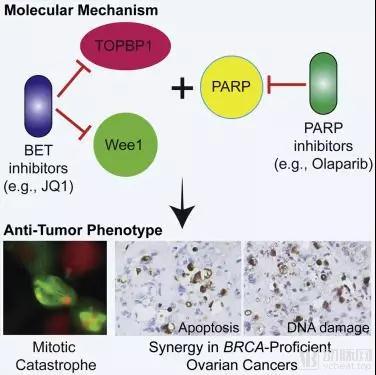
Data source: ScienceDirect
FDA Approves Complement Inhibitor for the Treatment of Neuromyelitis Optica Spectrum Disorder
Soliris (eculizumab), a complement inhibitor developed by Alexion Pharmaceuticals, has received FDA approval for an expanded indication to treat patients with neuromyelitis optica spectrum disorder.
Soliris is a C5 complement inhibitor developed by Alexion Pharmaceuticals that reduces inflammatory responses by inhibiting the C5 protein at the terminal stage of the complement cascade.
Inclusion Criteria and Study DesignThis approval is based on a 48-week clinical trial involving 143 patients.
Compared with the placebo control group, Soliris reduced the number of patient relapses by 94%.
FDA Approves First Biologic Therapy for Sinusitis
Dupixent (dupilumab), a drug jointly developed by Sanofi and Regeneron, has recently received FDA approval for an expanded indication to treat adult patients with chronic rhinosinusitis with nasal polyps.
Dupixent is a fully human monoclonal antibody that inhibits the IL-4/IL-13 signaling pathway.
Inclusion Criteria and Study DesignApproved based on two pivotal clinical trials, SINUS-24 and SINUS-52.
Trial data showed that the severity of nasal congestion/nasal obstruction in treated patients decreased by 57% (SINUS-24) and 51% (SINUS-52), respectively, compared with decreases of 19% and 15% in the control group. The Nasal Polyp Score in the Dupixent treatment group decreased by 33% and 27%, respectively, while it increased by 7% and 4% in the control group.
Lilly's SGLT2 Inhibitor for Heart Failure Treatment
Inhibitor Granted FDA Fast Track Designation
Empagliflozin, co-developed by Eli Lilly and Boehringer Ingelheim (BI), was recently granted Fast Track designation by the FDA for the treatment of patients with chronic heart failure.
Empagliflozin is an SGLT2 inhibitor jointly developed by Eli Lilly and Boehringer Ingelheim.
Inclusion Criteria and Study DesignCurrently, two Phase 3 randomized, double-blind clinical trials are underway, with more than 9,000 adult patients with chronic heart failure having received treatment.
The trial is ongoing.
Carsgen Therapeutics Announces IND Approval for Its BCMA CAR-T Therapy
Keji Biologics’ self-developed BCMA CAR-T therapy, CT053, recently received Investigational New Drug (IND) approval from the U.S. Food and Drug Administration (FDA), becoming the first domestically originated CAR-T project to independently obtain IND clearance in the United States.
This therapy is a fully human antibody-based CAR-T therapy targeting BCMA, independently developed by Carsgen Therapeutics.
Inclusion Criteria and Study DesignClinical trials have not yet been initiated.
Clinical trials have not yet been conducted.
Krystal Biotech Gene Therapy
Achieved Positive Results in Phase II Clinical Trials
Krystal Biotech Announces Positive Results from Phase 2 Clinical Trial of Gene Therapy KB103 for Dystrophic Epidermolysis Bullosa; Therapy Also Receives FDA Regenerative Medicine Advanced Therapy (RMAT) Designation
KB103 is a gene therapy utilizing replication-defective, non-integrating viral vectors.
Inclusion Criteria and Study DesignGEM-2, the Phase 2 Clinical Trial of KB103.
Trial data show that 5 of the 6 patients with skin injuries achieved 100% wound closure after treatment with KB103.
Alnylam’s Oral siRNA Drug Achieves Efficacy Comparable to Subcutaneous Injection
Alnylam Announces Its Innovative Drug Platform Enables Oral siRNA Formulations to Achieve Efficacy Comparable to Subcutaneous Injections
Baxdela is an innovative broad-spectrum antibiotic that is effective against both Gram-negative and Gram-positive bacteria and can treat methicillin-resistant Staphylococcus aureus (MRSA).
Inclusion Criteria and Study DesignResearchers developed an oral formulation by combining N-acetylgalactosamine (GalNAc)-conjugated siRNA with a permeation enhancer.
The experimental results showed that the oral formulation was able to sustain gene knockdown in mouse livers for over 40 days.
Minerva Neurosciences' New Drug for Insomnia
Achieved Positive Results in Phase II Trials
Seltorexant (MIN-202), jointly developed by Minerva Neurosciences and Janssen, met the primary and key secondary endpoints in a Phase 2b clinical trial for the treatment of patients with insomnia.
Seltorexant is a selective orexin-2 receptor antagonist.
Inclusion Criteria and Study DesignA randomized, double-blind, multicenter Phase 2b clinical trial with placebo and active controls.
Trial results demonstrated that seltorexant significantly reduced the time to achieve sustained sleep on the first night (50 minutes vs. 15 minutes).
Novartis’ NASH Drug Emricasan Fails in Phase 2 Clinical Trial
Novartis and partner Conatus Pharmaceuticals jointly announced that the Phase 2b ENCORE-LF study of emricasan for the treatment of NASH did not meet its primary endpoint.
Emricasan is an orally active pan-caspase protease inhibitor.
Inclusion Criteria and Study DesignThe Phase 2b ENCORE-LF study was conducted in patients with decompensated NASH cirrhosis.
Trial results showed that, compared with the placebo group, the emricasan treatment group did not demonstrate a significant improvement in event-free survival.
Figure: Mechanism of Emricasan
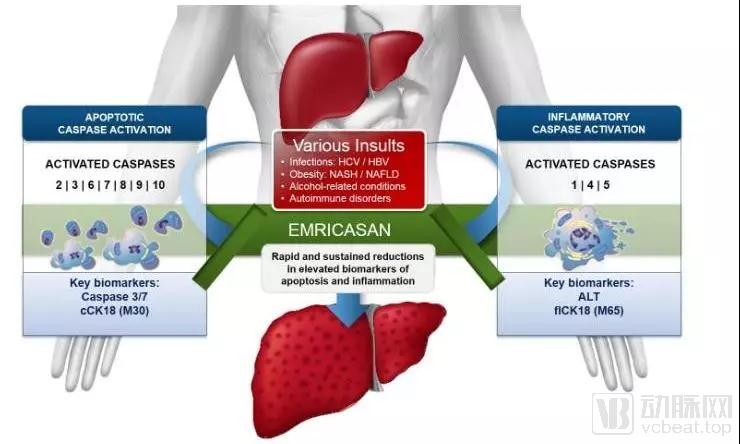
Source:Conatus Official Website
Eli Lilly's Type 2 Diabetes Therapy Trulicity
Met the primary endpoint in Phase 3 clinical trials
Eli Lilly’s diabetes therapy Trulicity (dulaglutide) met its primary endpoint in a Phase 3 clinical trial for the treatment of type 2 diabetes.
Trulicity is a once-weekly injectable GLP-1 receptor agonist.
Inclusion Criteria and Experimental DesignIn the randomized, double-blind Phase 3 clinical trial named AWARD-11, 1,842 patients with type 2 diabetes received treatment.
After 36 weeks of treatment, the AWARD-11 trial met its clinical endpoints for reductions in A1C levels and body weight.

❖Abbvie and Allergan announced that the two companies have signed a final transaction agreement, with AbbVie acquiring Allergan for $63 billion in cash/stock. The deal is expected to be completed in early 2020.
❖BridgeBio Pharma, a company dedicated to developing innovative therapies for genetic diseases, has officially listed on the Nasdaq. Its IPO raised $348 million, setting a record for biopharmaceutical IPO fundraising this year. BridgeBio’s pipeline includes 16 development programs, three of which are in Phase 3 clinical trials.
❖GENFIT Announces R&D License and Collaboration Agreement with Terns Pharmaceuticals. Terns will obtain the rights to develop and promote GENFIT’s lead investigational product, elafibranor, a dual PPARα/PPARδ agonist for the treatment of NASH and PBC, in the Greater China region. GENFIT will receive an upfront payment of $35 million and potential milestone payments totaling $193 million.
❖Boya Bio-pharmaceutical Group plans to acquire a 60.55% equity stake in Luoyi Biological Products by issuing shares and convertible corporate bonds, as well as paying cash. Luoyi Biological Products is primarily engaged in the research and development, production, and sales of vaccines, with its main products including the Group A and Group C Meningococcal Polysaccharide Conjugate Vaccine and the Bivalent Inactivated Vaccine for Hemorrhagic Fever with Renal Syndrome.
❖Fosun Pharma Subsidiary Plans to Acquire Lister Pharmaceutical for RMB 747 Million; Lister’s Product Portfolio Is Primarily Focused on Anticholinergic Drugs