

Yitu AI's All-in-One Solution Revolutionizes Pediatric Growth and Development Assessment with 'Triple Leap'
VCBeat (WeChat ID: vcbeat) has learned that the National Summit on Big Data and Artificial Intelligence for Smart Maternal and Child Health was held in Ordos on July 27. More than 400 experts and leaders, including representatives from the National Health Commission, the Ordos Health Commission, the China Information Association, the Chinese Maternal and Child Health Association, as well as directors and heads of information departments from regional maternal and child health hospitals across the country, attended the event to share insights and exchange views on the development of smart maternal and child healthcare systems.
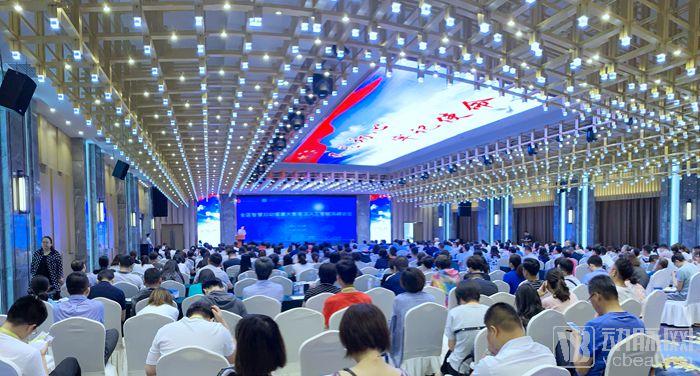
National Summit on Big Data and Artificial Intelligence for Smart Maternal and Child Health
As a leading medical AI enterprise in China, Yitu Healthcare was invited to participate in multiple closed-door meetings and industrial project collaboration seminars at the conference. Its self-developed Yitu Intelligent One-Stop Solution for Child Growth and Development Assessment was officially launched during the same period, immediately becoming the focal point of the event and drawing significant attention from leaders of the National Health Commission as well as directors of numerous maternal and child health hospitals.
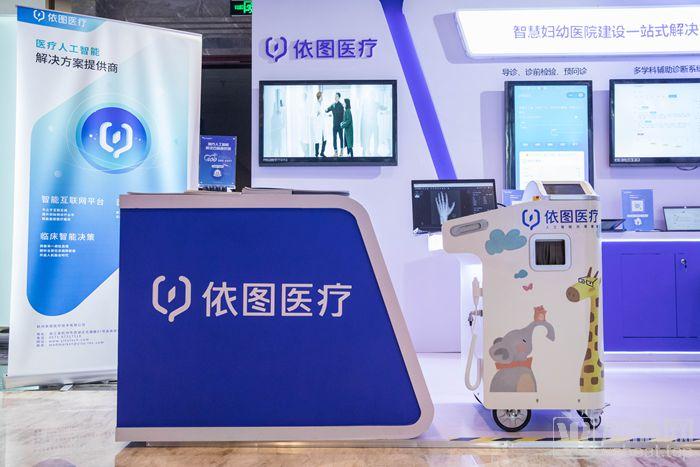
Yitu’s Intelligent One-Stop Solution for Child Growth and Development Assessment Debuts
Yitu Healthcare’s Intelligent One-Stop Solution for Pediatric Growth and Development Assessment has pioneered the integration of artificial intelligence with hardware devices in the industry, combining intelligent imaging, intelligent image interpretation, and AI-based growth and development assessment into a single platform. The entire workflow—from imaging to interpretation to report generation—can be completed in just 5–10 minutes, with intelligent bone age assessment and growth and development evaluation performed in seconds. The absolute error in bone age assessment is less than 0.3 years compared to senior pediatric endocrinologists, achieving a level of accuracy comparable to that of experienced specialists.
Meanwhile, this solution features advanced ergonomic design, one-touch operation, ultra-low radiation, and easy mobility. The radiation exposure per assessment is equivalent to that of just three bananas. It supports multiple connectivity options, including wired and wireless connections. While delivering high-precision, highly reliable, and consistent growth and development assessment results, it significantly lowers the barrier to pediatric growth and development evaluations, thereby enabling large-scale growth and development monitoring.
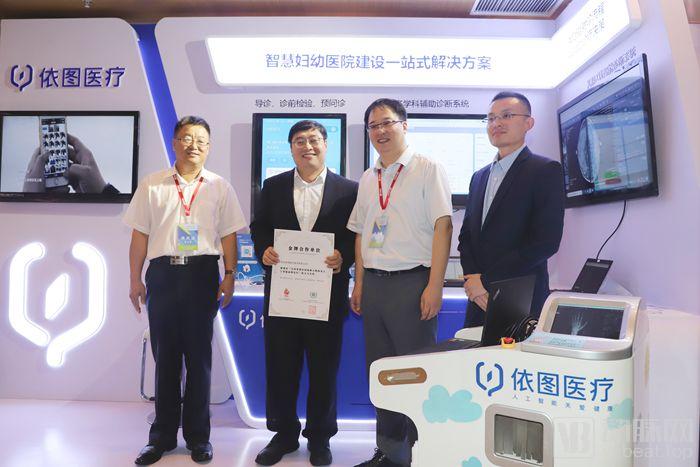
Leaders Visit Yitu Medical’s Booth for Guidance (Far Left: Song Xin, President of the Healthcare and Health Industry Branch of the China Information Association; Second from Right: Gao Chunxiang, Director of Ordos Maternal and Child Health Hospital)
“The intelligent, one-stop solution for pediatric growth and development assessment represents a revolutionary upgrade to the AI-based bone age system. It fundamentally addresses numerous challenges inherent in traditional assessments, such as difficult interpretation, low efficiency, poor consistency, and limitations regarding venue and equipment. This lays a solid foundation for the routine implementation of pediatric growth and development assessments across China, enabling children in even remote areas to access high-standard assessment services,” said Su Xiaoming, General Manager of Yitu Healthcare’s Medical Industry Division. “We look forward to deepening collaborations with more medical institutions to benefit more Chinese children through AI technology.”
Supply Scarcity: The Need for Growth and Development Assessments for Hundreds of Millions Remains Unmet
The number of children and adolescents aged 0–15 in China has reached 248 million. With advancements in medical technology, infectious and communicable diseases have been gradually brought under control, while growth and development issues such as short stature, obesity, and precocious puberty have increasingly become predominant concerns.
Surveys indicate that 48%–63% of children and adolescents aged 6–17 in China exhibit abnormal growth and development. Among them, the obesity rate exceeds 8%, with suspected precocious puberty affecting approximately 3%–8% of girls and 3%–12% of boys. It is roughly estimated that over 100 million children and adolescents require regular growth and development assessments annually.
As a key indicator for assessing adolescent growth and development, bone age-based evaluation can more accurately and objectively reflect children’s actual growth status compared to metrics such as height and weight. However, traditional bone age assessment methods are constrained by lengthy procedures, low efficiency in image interpretation, and poor inter-rater consistency. Coupled with parental concerns about radiation exposure from X-rays, these factors significantly limit the clinical application of single-time bone age assessments and follow-up monitoring.
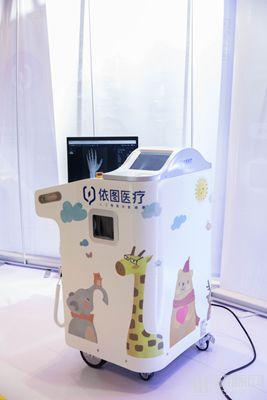
Intelligent One-Stop Solution for Pediatric Growth and Development Assessment
General Manager Su Xiaoming revealed that, on one hand, bone age assessment imposes certain requirements on the qualifications and interpretation proficiency of clinical pediatricians, yet such clinicians are extremely scarce in some regions, particularly in primary-level pediatric hospitals. On the other hand, the traditional fully manual assessment model is time-consuming, inefficient, and suffers from poor consistency. It also places specific demands on facilities and equipment, thereby limiting the widespread adoption of child growth and development assessments across China.
Statistical data show that only about 8% of childhood obesity cases in China receive regular and effective treatment.
“Early detection and early treatment are of paramount importance for pediatric endocrine disorders. This is especially critical in the current social context, where conditions such as obesity and precocious puberty are increasingly prevalent. It is insufficient to rely solely on traditional indicators like height and weight to assess children’s growth and development. Annual regular bone age assessments are essential to accurately monitor a child’s growth trajectory,” stated General Manager Su Xiaoming. “For children, early detection and intervention before puberty are crucial; missing this window may lead to lifelong regrets.”
Comprehensive Support: Bringing Growth and Development Assessment Closer to Chinese Children
Lowering the barrier to pediatric growth and development assessments and truly bringing these evaluations into every Chinese household requires not only a robust foundation in artificial intelligence but also a profound understanding of complex clinical medical issues.
Taking radiation concerns as an example, General Manager Su Xiaoming revealed that “radiation” has long been the most immediate concern for many parents regarding their children undergoing X-ray examinations. A significant proportion of parents avoid regular bone age assessments for their children due to radiation fears, and some even reject all radiological examinations.
To address this challenge, the hardware devices in the intelligent one-stop solution for pediatric growth and development assessment adopt a fully shielded anti-radiation design. The radiation dose is reduced by approximately 80% compared to traditional DR equipment, equivalent to that from eating just three bananas! (Note: Bananas contain potassium, which includes trace amounts of radioactive potassium-40. Eating one banana corresponds to one ten-thousandth of the safe radiation dose.)
Due to its extremely low radiation dose, the device has been measured and certified by relevant national authorities for normal operation in unshielded rooms. Coupled with its convenient wheeled design, this solution offers flexible deployment not only in radiology departments but also in clinical departments, schools, and other settings, thereby removing bottlenecks in the application of growth and development assessments.
During the actual process of taking bone age radiographs, mischievous children often struggle to keep their palms flat and remain still for X-ray imaging, resulting in prolonged acquisition times and a high rate of non-diagnostic images. How can we ensure accurate hand positioning in pediatric patients?
To address this challenge, the intelligent one-stop solution for pediatric growth and development assessment features a completely redesigned approach to traditional bone age imaging equipment. On one hand, it adopts an appealing cartoon-style aesthetic that integrates ergonomic principles with child psychology considerations, thereby reducing children’s resistance. On the other hand, hardware improvements enable both the child and the physician to simultaneously view the hand’s position and posture in the imaging device on both the device screen and the computer monitor. This allows for real-time adjustment of hand placement; once properly positioned, a single-click capture ensures optimal positioning and precise exposure, significantly reducing the rate of failed imaging attempts.
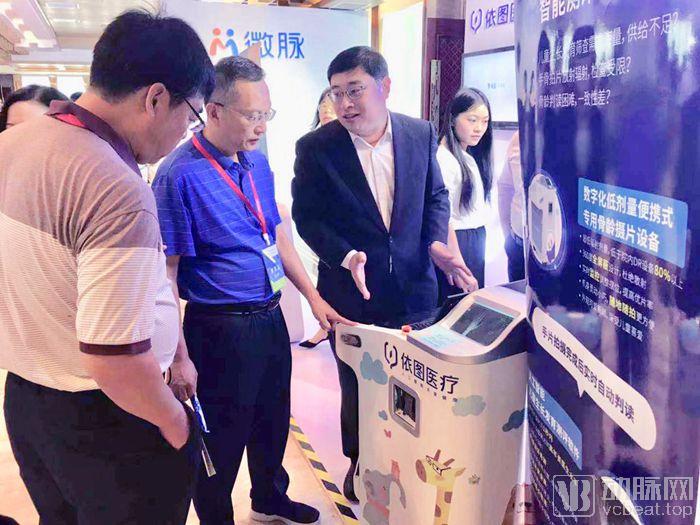 Practical Demonstration of an Intelligent One-Stop Solution for Pediatric Growth and Development Assessment
The image reading process supports three bone age assessment standards—TW3, Chinese 05, and the GP Atlas method—providing an intelligent, one-stop solution for evaluating children’s growth and development. This system serves as a robust guarantee of both interpretation accuracy and efficiency, completing high-precision bone age assessments in just seconds. It automatically generates comprehensive growth and development evaluation reports by integrating parental information and physical development data. From imaging to report generation, the entire process requires only a single-click operation!
It is worth highlighting that telemedicine has become a critical necessity for many hospitals, particularly health examination centers. Supporting multiple connectivity options, including wired and wireless connections, it enables seamless integration with PACS and even facilitates remote imaging and diagnosis. In the upcoming 5G era, this advantage is crucial for healthcare institutions!
Yitu’s Intelligent One-Stop Solution for Pediatric Growth and Development Assessment Achieves a “Triple Leap” in AI Application—From Standalone Deployment to SaaS, and Finally to an Integrated One-Stop Solution—Overcoming Challenges in Application Scenarios and Laying a Solid Foundation for Regular Growth and Development Among China’s 248 Million Children.