

ICE Bioscience Files IPO Prospectus: Built Over 80 Ion Channel Screening Cell Lines in 8 Years, Now Serving Half of China's Drug Discovery Firms

ICE Bioscience
CRO Service Provider
For contract research organizations (CROs), their market focus is on companies engaged in new drug development. However, if there are only a handful of such companies in the market, the survival of CROs becomes a concern. The growth history of ICE Bioscience reflects, from a different perspective, the development trajectory of China’s new drug R&D market.
ICE Bioscience, established in 2010, is the first company in China dedicated to providing contract research organization (CRO) services for the development of innovative ion channel-targeting drugs. The issuance of a series of national policies related to the development of innovative drugs has not only shaped the growth of the innovative drug market but also exerted a profound impact on CRO enterprises.
When human nerve cells and cardiac cells are excited, they generate bioelectric signals. To determine whether a specific class of drugs affects the excitation process of these cells, it is necessary to observe changes in the bioelectric signals emitted by the cells. However, bioelectric signals are extremely weak, making their detection particularly challenging. Bioelectricity is generated through the flow of ions across ion channels on the cell membrane surface, and these ion channels are composed of proteins embedded in the cell membrane (known as ion channel proteins). Therefore, studying changes in bioelectric signals inevitably involves investigating the ion channel proteins on the cell membrane.
In 1991, German biologists Erwin Neher and Bert Sakmann were awarded the Nobel Prize in Physiology or Medicine for their seminal contributions to the study of single ion channels in cell membranes and their functions. Subsequently, this technology was introduced to China by Japanese scholars through technical exchanges. In 1998, Yan Li, founder of ICE Bioscience, was first exposed to this technique during his graduate studies. From that point on, his scientific research career over the next decade centered on neurophysiology.
Research on ion channel proteins in the cell membrane must mention a new technique—the "patch-clamp electrophysiology technique." Patch-clamp refers to a very fine glass pipette that adheres to the cell surface and applies "negative pressure," resulting in ion flow at the open end of the pipette where it adheres; this ion flow generates bioelectric signals. A sensitive amplifier is then connected externally to the glass pipette electrode to capture changes in these bioelectric signals.
The cell membrane surface features numerous distinct ion channel proteins. When a drug acts on a specific ion channel protein, its efficacy against a particular disease can be assessed by observing changes in ion flow through the channel (i.e., changes in bioelectric activity). Similarly, researchers can design drugs to treat diseases associated with these targets by focusing on different ion channel proteins (regarded as therapeutic targets). By setting distinct parameters for different ion channel proteins, the effects of a drug on specific ion channel proteins can be determined. Yan Li frankly stated that patch-clamp electrophysiology is highly challenging to perform and presents significant technical barriers.
From her graduate studies to her eventual role as a research fellow, Yan Li has remained steadfast in her research focus, dedicating over a decade to the field of neurophysiology. After earning her Ph.D. in 2008, she embarked on basic research related to drug development. Like many medical professionals, she was driven by a deep-seated desire to heal and save lives. In 2009, unwilling to limit herself to basic research, Yan Li sought to transition into pharmaceutical R&D within the industry. However, at that time, very few companies in China were genuinely engaged in innovative drug development, and their R&D investments were minimal. This landscape naturally fell short of fulfilling Yan Li’s aspiration to pursue drug development.
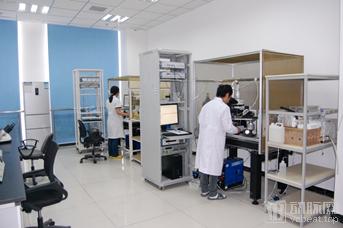
ICE Bioscience Brain Slice Patch-Clamp Laboratory (Image provided by the company)
Currently, diseases associated with ion channel proteins are primarily concentrated in neurological and cardiovascular disorders. At that time, Yan Li’s research focus was mainly on neurological diseases, while her close friend, Li Yingji, happened to be specializing in cardiovascular diseases during his doctoral studies. Yan Li told reporters that, as there were no suitable pharmaceutical companies to join at the time, she and Li Yingji decided to co-found a startup together, which would allow them to comprehensively cover diseases related to ion channels.
In 2010, Yan Li and Li Yingji co-founded ICE Bioscience. When asked why they chose to establish a CRO rather than pursue new drug development, Yan Li told reporters that the primary reasons were the long development cycles and high risks associated with new drug development. He further explained that securing funding for such a “bottomless pit” as new drug development was extremely difficult.
When ICE Bioscience was first established, Yan Li invested RMB 2 million of his own funds, which were exhausted in less than three months. The purchase of two R&D instruments alone cost more than RMB 1.9 million, and the subsequent acquisition of an hERG cell line from abroad incurred an additional expense of RMB 150,000. It was precisely this cell line that later laid a hidden risk for ICE Bioscience.
When everything was in place except for the crucial final element, ICE Bioscience realized a serious problem: as a CRO, they had no market. At that time, domestic new drug R&D companies were few and far between, and those requiring ion channel-related technologies were even scarcer. No customers meant no market. Yan Li lamented, “It was truly difficult back then. We had our technology ready, only to find that no one needed it.”
By 2011, ICE Bioscience finally secured its first client. Although the project involved compound screening worth only RMB 4,500, it allowed Yan Li to recognize the company’s value. By the end of that year, the company acquired a few more sporadic clients. However, a more significant problem emerged: the hERG cell lines imported from abroad were unstable, with their condition fluctuating unpredictably. When the cells were in good condition, the assays yielded accurate results; when they were not, the data were unreliable. This inconsistency led pharmaceutical companies newly engaging with ICE Bioscience to question its capabilities, causing the company to lose several clients amid an already sluggish market.
Amid a market slump and issues with core cell lines, how can ICE Bioscience navigate its way out of this predicament?
After the painful experience of losing a client, ICE Bioscience decided to independently design different cell lines targeting various ion channel proteins. Yan Li recalled, “Once the company began developing ion channel cell lines, it could no longer generate revenue from external services. However, our funding was insufficient to sustain ICE Bioscience’s operations.”
In 2012, ICE Bioscience applied to the Beijing municipal government for a funding grant of RMB 400,000, which barely sufficed to cover the company’s loan repayments and employee salaries. In the same year, ICE Bioscience was selected for the Zhongguancun “Golden Seed” Project and secured RMB 5 million in funding from Longma Peak Venture Capital. Explaining their investment rationale, the investors stated that although ICE Bioscience had not yet penetrated the market, the inclusion of pharmaceutical R&D in the national 13th Five-Year Plan signaled strong government support. They expressed confidence in the company’s future potential and were willing to invest in its prospective market opportunities.
However, the long-awaited market upturn for ICE Bioscience did not arrive until five years later.
In 2015, the appointment of a new commissioner of the China Food and Drug Administration (CFDA) fostered a fertile environment for new drug development. The “Work Plan for Consistency Evaluation of Generic Drug Quality,” initially released in 2013, was further implemented in 2015. The State Council issued the “Opinions on Reforming the Review and Approval System for Drugs and Medical Devices,” which listed “improving the quality of generic drugs and accelerating the consistency evaluation of generic drug quality” as one of the five major objectives of the reform. The “consistency evaluation” established clear specifications for generic drug production, requiring that generic drugs match the originator drugs in terms of characteristics, dosage, and efficacy.
However, prior to this, many domestic generic drug manufacturers merely replicated the chemical composition of originator drugs without achieving comparable therapeutic efficacy. The introduction of new policies has increased the complexity of generic drug production. Moreover, unlike newly developed drugs, generics lack independent pricing authority. Consequently, some generic drug manufacturers have begun to enter the field of new drug research and development.
It was also from that time on that pharmaceutical companies engaged in new drug development began to emerge gradually, and the market for ICE Bioscience started to open up. Yan Li stated, “In 2013 and 2014, ICE Bioscience had not yet gained a significant market presence, but by 2015, we clearly noticed an increase in customers. The peak year was 2016, when the national government was preparing to roll out the ‘4+7 Volume-Based Procurement’ policy.”
“The 4+7 Volume-Based Procurement” Program, in brief, refers to the government’s centralized bidding for pharmaceutical procurement, followed by direct distribution of the purchased medicines to enterprises. Furthermore, the government approves only three pharmaceutical companies per province for inclusion in the national medical insurance reimbursement list; companies failing to gain inclusion will experience a sharp decline in market share, which indirectly incentivizes enterprises to pursue independent innovation. This series of measures also encouraged many overseas R&D professionals to return to China for career development.
A series of policy implementations have had a significant impact on ICE Bioscience. From having virtually no market presence in 2010, the company has, nine years later, benefited from the growing number of new drug R&D enterprises and the corresponding rise in market demand. Currently, ICE Bioscience’s market coverage reaches approximately half of all new drug R&D companies in China, with many renowned pharmaceutical firms having been its clients. This achievement is inseparable from the company’s diligent efforts over the past few years.
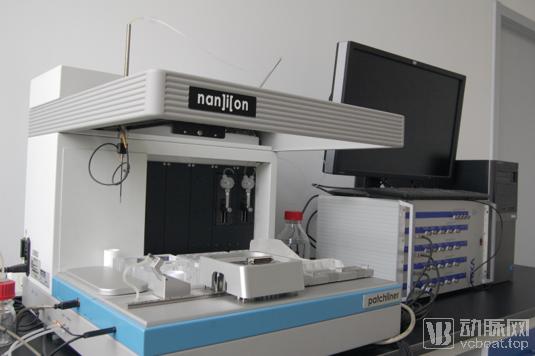
ICE Bioscience’s R&D Instrument: Nanion Patchliner (Image provided by the company)
It has been eight years since Yan Li discovered the instability of hERG cell lines in 2011. The ion channel cell lines developed by the company are now far ahead of its peers. Currently, there are over 400 known ion channels on the cell membrane surface, among which 107 have been confirmed to be associated with diseases. ICE Bioscience alone has developed more than 80 types of ion channel cell lines, making it the largest cell line library in China.
In addition, in recent years, ICE Bioscience has expanded its business beyond ion channel drugs to include GPCRs, kinases, and nuclear receptors, with specialized drug screening platforms for these areas now fully established.
Yan Li told reporters that in addition to building a drug screening platform, ICE Bioscience is also establishing a pharmacology platform and conducting in vitro cardiac safety evaluations. The pharmacology platform can assist clients in the optimization and screening of lead compounds, as well as evaluate the pharmacological efficacy of drugs in animal disease models.
In vitro cardiac safety assessment is one of ICE Bioscience’s distinctive strengths. Currently, the FDA requires that drugs intended to treat cardiovascular diseases undergo hERG ion channel testing to avoid blocking effects. However, the FDA is recently preparing to expand ion channel testing from a single channel to six or seven channels. If this guideline is implemented, it will also impact the China Food and Drug Administration (CFDA). As the CFDA has joined the International Council for Harmonisation of Technical Requirements for Pharmaceuticals for Human Use (ICH), it will likewise increase the scope of ion channel testing. Yan Li estimates that this guideline will be implemented by 2020. By then, ICE Bioscience may be the only mature domestic company capable of performing multi-ion channel assays, and its first-mover advantage will pave the way for a brighter future.