

Shanghai-based Genecast Builds China's Largest Tumor Genomic Database and Expands Clinical and Drug Development Applications
On July 25, 2019, OrigiMed INC held a simple ceremony at its Shanghai headquarters to celebrate the company’s third anniversary. Ms. Qin Ying, Chief Operating Officer, described the team with the phrase, “Together we are a blazing fire; apart, we shine like stars across the sky.”On the day of its anniversary celebration, OrigiMed received the EO Intelligence 2019 China Best Technological Medical Innovation Enterprise Award in the Greater Health Industry.
Just one day earlier, OrigiMed and Yuanxin Huibao announced a partnership to pioneer a new business model of “testing + disease & medication management,” a development previously reported by VCBeat.
In terms of channel innovation in clinical genetic testing, OrigiMed has always played the role of a trailblazer. Unlike many tumor genetic testing companies that focus on specific types of cancer, OrigiMed has spent three years building the largest tumor gene database in China, covering tens of thousands of real clinical cases of more than 50 different tumors. It has carried out clinical business cooperation with more than 300 medical institutions across China and is involved in many cutting-edge fields of individualized tumor treatment.
In the field of tumor genetic testing, targeted sequencing with limited depth and scope for specific types of genes is almost an industry-standard practice. However, the flagship sequencing projects in OrigiMed’s product matrix insist on comprehensive coverage of hundreds of genes at a clinical grade. This approach is closely related to the early experiences of its founder, Wang Kai.
In 2011, Dr. Wang Kai participated in the founding of Foundation Medicine, a renowned U.S.-based next-generation sequencing (NGS) genomic analysis company. Over eight years of providing precision medicine services in the United States, Foundation Medicine enabled hundreds of thousands of patients to receive potential personalized treatment plans through precise testing, successfully accelerating drug approvals and ultimately reshaping treatment guidelines and consensus statements. Comprehensive tumor genomic profiling has become the technical hallmark associated with Dr. Wang Kai’s tenure at Foundation Medicine. According to Steve Jobs’ biography, Apple co-founder Steve Jobs was the first celebrity to undergo whole-genome sequencing for cancer using Foundation Medicine’s technology.
As early as 2013, Dr. Kai Wang led a study involving ultra-deep sequencing analysis of more than 300 genes in 2,221 clinical oncology patients in the United States. The study found that the frequency of most tumor gene mutations was very low in the overall patient population, with the distribution of variant proportions exhibiting a typical “long-tail effect,” and multiple variant forms existing within the same gene. These findings challenged the prevailing paradigm in tumor molecular diagnostics, which was dominated by companion diagnostics at the time, and truly laid the theoretical foundation for the shift toward personalized cancer therapy. The results were published in the prestigious journal Nature Biotechnology and have since become one of the key practical evidences demonstrating how high-throughput sequencing drives precision medicine.
It has long been Dr. Wang Kai’s aspiration to replicate the U.S. experience in personalized oncology care in China, thereby enabling Chinese patients to receive the most appropriate treatment recommendations. In 2016, after returning to China, Dr. Wang founded OrigiMed, aiming to leverage commercial approaches to allow a broader range of clinicians and patients to benefit from comprehensive genomic profiling of tumors. At that time, there was no established practice in China of using large-panel genomic sequencing to obtain a comprehensive molecular profile of patients and provide targeted, personalized oncology treatment plans.
In the more than half year since its establishment, OrigiMed has been dedicated to building internationally leading, high-quality laboratories and testing platforms, developing products, and conducting rigorous quality validation in accordance with international standards to ensure that reports meet the requirements for medical-grade products. Currently, OrigiMed has established a diversified product portfolio addressing multi-layered molecular information needs in tumor treatment.
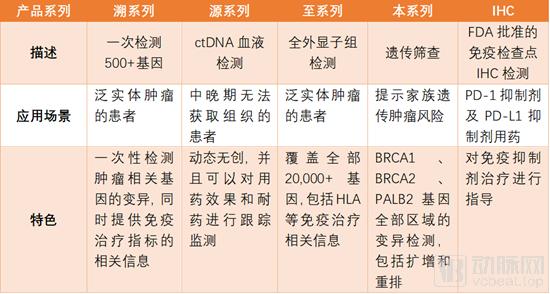
OrigiMed’s Product Portfolio (Compiled by VCBeat)
Meanwhile, OrigiMed regards data quality control as the lifeblood of the enterprise. Its comprehensive genomic testing products undergo 17 quality control steps and real-time monitoring to ensure that specificity and sensitivity meet the standards required for clinical application. Validation articles demonstrating the quality of OrigiMed’s testing products have been accepted by top-tier international SCI oncology journals. In 2018, OrigiMed received dual certification from the College of American Pathologists (CAP) and the Clinical Laboratory Improvement Amendments (CLIA) issued by the Centers for Medicare & Medicaid Services (CMS), marking that its quality management system has reached internationally recognized standards.
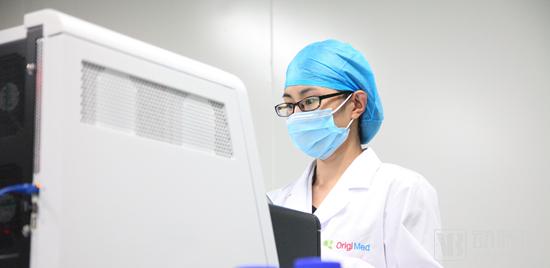
Staff members operating the instrument (Photo provided by the interviewee)
Ms. Qin Ying told VCBeat that OrigiMed has established China’s largest oncology database, leveraging the extensive clinical application data accumulated through the explosive growth of its product portfolio. This database constitutes the core of OrigiMed’s business model. Benefiting from its early accumulation of leading-edge detection technologies, iterative capabilities in bioinformatics algorithm analysis, and professional annotation capabilities built upon OrigiMed’s core knowledge network, OrigiMed has become one of the few commercial entities in China currently capable of detecting and analyzing multi-omics data, including DNA, RNA, and proteomics.
OrigiMed’s comprehensive coverage of genomic regions, ultra-deep sequencing, and advanced algorithms reconstruct a complete molecular-level data profile while identifying low-frequency mutations and rare genes of significant importance to tumor treatment. This approach provides cancer patients with a more thorough understanding of the causes underlying tumor initiation and progression, enabling the development of products that better align with clinical needs. In doing so, OrigiMed is exploring new commercial applications that transform clinical treatment paradigms, accelerate drug development, and even guide pharmaceutical R&D.
The value of data is specifically reflected in clinical practice and drug development.
In the clinical setting, large-panel tumor sequencing data can provide a deeper understanding of disease onset and progression, continuously generate many novel therapeutic approaches, and culminate in treatment strategies with sufficient impact to influence international practice.
In May 2019, the team led by Director Zhou Xianrong from the Department of Pathology at the Obstetrics and Gynecology Hospital of Fudan University, the team led by Director Li Xiuqin from the Department of Obstetrics and Gynecology at Shengjing Hospital, and OrigiMed INC jointly published an article. The study reported, for the first time, that a certain proportion of high-grade serous carcinomas harbor co-mutations in the TP53 and KRAS genes, as identified through OrigiMed’s high-precision next-generation sequencing (NGS) analysis. This finding challenges the traditional consensus on this cancer type and provides a new molecular perspective for the diagnosis and treatment of ovarian cancer.
In June, a paper co-authored by Professor Zhang Li’s team from Sun Yat-sen University Cancer Center and OrigiMed reported on the molecular characteristics of EGFR exon 20 insertion (ex20ins) mutations in Chinese patients with non-small cell lung cancer (NSCLC), as well as a retrospective analysis of osimertinib treatment in this patient population. By selecting osimertinib based on sensitive sites detected via next-generation sequencing (NGS), a disease control rate of 100% was achieved.
In July, Professor Xu Ruihua’s team at Sun Yat-sen University Cancer Center utilized OrigiMed’s TMB algorithm to report, for the first time worldwide, the association between immunotherapy and TMB biomarkers in gastric cancer. This finding suggests that pre-treatment TMB testing can better stratify patients and predict therapeutic efficacy, thereby reducing the risks associated with empirical trial-and-error approaches and avoiding delays in optimal treatment timing.
Furthermore, OrigiMed has conducted extensive research in precision medicine in collaboration with researchers from multiple medical institutions. Within three years of its establishment, the company has published 120 SCI-indexed papers, contributing to varying degrees to physicians’ understanding of cancer and their clinical treatment practices.
In drug R&D, OrigiMed can provide gene information based on drug targets and real-world data, helping pharmaceutical companies quickly complete the screening of enrolled patients and accelerate the launch of new drugs. Since OrigiMed tests comprehensive genetic data, basically covering all the information corresponding to the targets used by pharmaceutical companies in development, it is a treasure trove for pharmaceutical companies. In the future, it can further assist pharmaceutical companies in broader applications of drugs, and even provide analysis and data support for pharmaceutical companies to develop drugs around new targets.
For example, Bayer’s broad-spectrum anticancer drug larotrectinib is a targeted therapy for NTRK gene fusions, with an overall response rate of up to 80% across various tumor types. However, the prevalence of this genetic mutation among Chinese patients has long been unknown worldwide. OrigiMed presented its data at the 2018 European Society for Medical Oncology (ESMO) Annual Meeting, reporting for the first time that the incidence of NTRK fusions in the Chinese population is approximately 0.4%, with mutation rates of 11.1% and 1.1% in patients with fibrosarcoma and colorectal cancer, respectively. Approximately 11.1% of Chinese patients with fibrosarcoma and 1.1% of those with colorectal cancer may derive significant benefit from this remarkable drug, providing a strong rationale for pharmaceutical companies to expand into the Chinese market.
As the timeline for the commercialization of genetic testing products remains unclear, the NGS industry is actively exploring new healthcare payment models to gain market access. The “genetic testing + commercial insurance” model has emerged as the most prominent solution. In the words of Ms. Qin Ying, OrigiMed INC is a pioneering leader in this hybrid sector.
Following its announcement earlier this year of a partnership with Jianyibao to address the commercial insurance needs of patients, OrigiMed has recently entered into an exclusive collaboration with Yuanxin Huibao to jointly serve mainstream health and critical illness insurance products in China. In the event of an insured claim, tumor treatment will be jointly managed by OrigiMed and Yuanxin Huibao: OrigiMed will be responsible for diagnosis, while Yuanxin Huibao will coordinate a series of therapeutic interventions—including medication procurement, surgery, and radiotherapy—based on the diagnostic recommendations, thereby gradually shifting the payment responsibility to commercial insurance.
Ms. Qin Ying pointed out that the accessibility of medical treatment for critical illnesses cannot rely entirely on health insurance payments. On one hand, the treatment of critical illnesses would significantly increase the burden on health insurance; on the other hand, including some new and specialized drugs in health insurance could have a substantial impact on their survival, even leading to the disappearance of these newly insured drugs, which indirectly stifles drug innovation. Therefore, it is necessary to explore new payment models.
“Companies with professional health management capabilities that integrate testing, insurance, pharmaceuticals, and hospital services may become a very important business model for critical illness payment in China in the future.”
In the collaboration between OrigiMed and Yuanxin Huibao, Yuanxin Huibao has built a platform that connects cancer treatment services, while OrigiMed provides the most professional testing and certain specialized services throughout the entire cancer management process, including multidisciplinary consultation platforms and professional report interpretation, helping Yuanxin Huibao and insurance companies achieve treatment outcomes more economically and efficiently. “We plan to launch the first product within two months and are already preparing for its market release,” revealed Ms. Qin Ying.
Amidst the fiercely competitive landscape of tumor genetic testing products, Ms. Qin Ying stated that the penetration rate of tumor genetic testing in China remains very low. Beneath this sub-2% penetration rate lies a vast hidden market opportunity. “The focus of tumor genetic testing is not merely on the testing itself, but on the value embodied by the data generated. If industry peers could concentrate on expanding the clinical application scope of tumor genetic testing, rather than engaging in intense competition over a few specific cancer types, precision oncology would rapidly experience explosive growth.”
Ms. Qin Ying told VCBeat that OrigiMed will continue to increase its investment in expanding and deepening its capabilities in tumor molecular information, while further exploring and strategically positioning itself to deliver tangible benefits to both clinicians and patients.
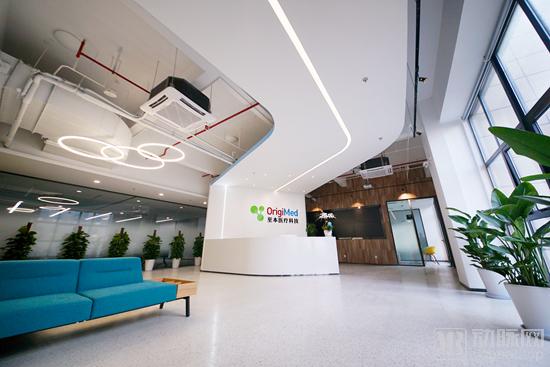
OrigiMed’s Shanghai Headquarters (Photo provided by the interviewee)