

ZlionBrains Develops Non-Invasive Vagus Nerve Stimulation System for Mood Regulation and Sleep Improvement
The vagus nerve is the tenth cranial nerve, classified as a mixed nerve. It extends throughout multiple regions of the body, including the esophagus, thoracic cavity, and heart. Functioning like a roaming sentinel, it innervates all visceral organs except the adrenal glands, playing a role in feeding, metabolism, endocrine function, emotion, and immune regulation. The vagus nerve is also the longest and most widely distributed cranial nerve.
Sensory fibers in the vagus nerve transmit signals from organs such as the heart, blood vessels, lungs, trachea, and gastrointestinal tract to the nucleus tractus solitarius (NTS) in the brainstem. The NTS then sends neural projections to activate multiple key regions within the brain, thereby regulating autonomic functions including emotion, endocrine activity, cardiovascular function, digestion, and respiration.
In 1988, American physician Jacob Zabarra proposed that vagus nerve stimulation could alter electrical potentials within the brain, thereby blocking or even preventing seizures in conditions such as epilepsy. In 1994, the European Union approved the use of vagus nerve stimulation for the treatment of epilepsy. In 1997, the U.S. Food and Drug Administration (FDA) approved the NCP System (an invasive vagus nerve stimulation therapy) developed by Cyberonics for the treatment of epilepsy. The FDA further approved its use for depression in 2005 and for obesity in 2015.
Exploration of the vagus nerve is endless, with sustained high interest in vagus nerve research both domestically and internationally. International studies have reported that surgical stimulation of the vagus nerve can significantly improve symptoms such as depression, sleep disorders, gastrointestinal dysfunction, and cardiac abnormalities. However, invasive surgical stimulation of the vagus nerve has numerous drawbacks, including high surgical risks (e.g., side effects and sequelae), high costs (approximately RMB 150,000 to 200,000), and limited applicability (restricted to severe cases). For a long time, scientists have been seeking alternative solutions.
Following scientific validation and clinical research practice, non-invasive vagus nerve stimulation (nVNS) has emerged as a prominent focus in recent years. This approach has garnered favor among international researchers and medical device manufacturers by circumventing the drawbacks associated with invasive vagus nerve stimulation. In 2017, the U.S. Food and Drug Administration (FDA) granted its first approval for a cervical non-invasive vagus nerve stimulation device (non-invasive vagus nerve stimulation therapy) for the treatment of episodic cluster headache in adults.
Given the unique therapeutic effects of non-invasive vagus nerve stimulation, some companies have attempted to stimulate the vagus nerve through methods such as yoga, massage, meditation, and music. For example, Calm Radio, the largest music media company in the United States, offers users specific music packages designed to optimize vagal tone, thereby promoting physical and mental relaxation.
However, superficial stimulation yields limited efficacy, while deep stimulation is costly and carries high risks. How can we strike a balance between superficial and deep stimulation to optimize vagus nerve modulation? This is precisely what Zlion Brain Control Technology Co., Ltd. (hereinafter referred to as “Zlion Brain Control”) is addressing.
Zhang Feng, head of Zlion Brain Control, told VCBeat that a branch of the sensory fibers of the vagus nerve is located in the skin of the external ear. Transcutaneous stimulation of the auricular vagus nerve can similarly activate the nucleus tractus solitarius in the brainstem, further activating related central brain regions, thereby regulating dysfunctional circulatory, digestive, respiratory, and endocrine systems, and achieving comprehensive modulation of sleep and emotion.
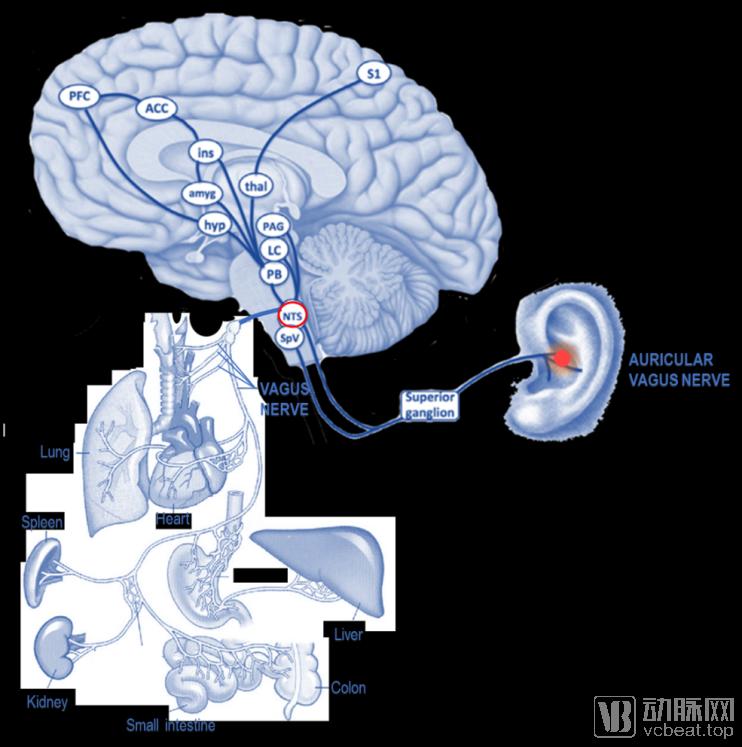
Schematic Diagram of Vagus Nerve Distribution and Its Central Projections
The non-invasive vagus nerve stimulation system developed by Zlion Brain Control leverages the auricular branch of the vagus nerve. Its mechanism involves using artificial intelligence algorithms to deliver microcurrent stimulation via electrodes to the auricular vagus nerve, thereby targeting brain centers responsible for regulating autonomic activity and emotional control. This stimulates the brain’s self-regulatory mechanisms, modulating the activity of multiple visceral systems to restore homeostatic balance, ultimately improving sleep and alleviating emotional distress.
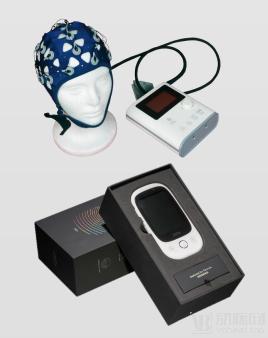
Schematic Diagram of Zlion Brain-Controlled Vagus Nerve Stimulation Product
According to World Health Organization statistics, approximately 1.8 billion people worldwide suffer from sleep disorders, accounting for about 27% of the global population. In China alone, 300 million people have sleep disorders, with an insomnia prevalence rate nearing 40%. Zhang Feng, head of Zlion Brain Control, stated, “Currently, a large number of people in China are in a sub-health state, yet they receive insufficient attention and lack access to adequate treatment. Physical therapies available on the market for insomnia and depression vary widely in quality; some are entirely ineffective or fail to deliver on their promotional claims. Furthermore, patients with severe conditions can no longer find relief through physical therapies and require specific medications for treatment. However, pharmacological interventions carry risks of side effects and addiction, causing additional harm to health. This is the opportunity identified by Zlion Brain Control.”
When Zhao Gongbo, founder of Zlion Brain Control, consulted with Dr. Jose C. Principe, an internationally recognized authority in EEG signal processing, on selecting a niche within brain science, they considered non-invasive vagus nerve stimulation (nVNS) to be the technology most accessible to individuals in suboptimal health status, as it can effectively regulate various issues such as sleep and mood. Consequently, Zlion Brain Control decided to enter the field of brain science through this technology.
Shaanxi Zlion brain Technology Co., Ltd. leverages the latest research advancements in the international field of neuromodulation to develop non-invasive transcutaneous vagus nerve stimulation devices, utilizing its self-developed auricular vagal target electrodes and patented parameters. Currently, R&D personnel account for 68% of the company’s total workforce. The company’s non-invasive transcutaneous vagus nerve stimulation devices boast three core technological advantages:
Zhang Feng added, “The localization of neuromodulation devices marks the rapid development of the neuromodulation industry in China. Zlion Brain Technology will continue to focus on product R&D, and we will continuously launch new products based on market demand.”
In terms of product offerings, Zlion Brain Control has currently launched three products: the “Spinal Nerve Electrical Stimulator,” the “Emotion Regulator,” and the “Healthy Slimming Device.” Users can adjust the vagus nerve stimulation levels according to their individual needs. Consistent daily use for more than 30 minutes yields results over the long term. Furthermore, the devices are portable and convenient, allowing for use in various scenarios such as while driving, watching TV, reading, or before bedtime, without disrupting daily life.
According to VCBeat, Zlion Brain has established joint laboratories with Xi’an Jiaotong University and the School of Life Sciences at Xidian University, respectively. The company has upgraded its products to version 2.0, and its future offerings in brain science are highly anticipated. In addition, the company has engaged in technical collaborations with hospitals such as Peking University Sixth Hospital, the First Affiliated Hospital of Tianjin University of Traditional Chinese Medicine, and Xijing Hospital. Feedback from physicians has confirmed the effectiveness of the company’s products in improving sleep and alleviating emotional distress.
Notably, Zlion Brain Technology is collaborating with several chain pharmaceutical groups to promote and showcase its products through offline channels, while simultaneously collecting user performance data for research and analysis. In addition to offline sales, the company has established its own online store and lists its products on major e-commerce platforms. To expand its market reach, Zlion has built specialized online and offline teams tailored to market and product characteristics, adopting a strategy that radiates from first-tier to second-tier cities, advances from north to south, and expands from the domestic market to international markets.
In the future, Zlion Brain Control will target five sub-markets—wearable devices, home-based solutions, community-level services, clinic-oriented systems, and hospital equipment—with the aim of transforming into a digital healthcare brand. The company’s future development focus will be on delivering added value for new products, dedicated to improving the health status of individuals in a sub-health condition.
Currently, Zlion Brain Control is applying for a Class II medical device registration certificate and plans to offer 10% equity for financing, with a total fundraising target of RMB 20 million. The proceeds will be used to expand R&D and build out the sales network.