

FineReport Empowers Smart Hospital Transformation: An Interview with Liang Ruilin, Director of Information Department at Foshan Hospital of Traditional Chinese Medicine
Foshan Hospital of Traditional Chinese Medicine, established in 1956, is a Grade A tertiary comprehensive TCM hospital. Its departments of Orthopedics and Traumatology, Encephalopathy, Diabetes, and Oncology are key specialties and construction units designated under the 12th Five-Year Plan of the State Administration of Traditional Chinese Medicine. The Department of Orthopedics and Traumatology at Foshan Hospital of Traditional Chinese Medicine is a representative school of the Lingnan style, enjoying widespread renown across mainland China, Hong Kong, Macao, Taiwan, and Southeast Asia. In addition to orthopedics, the internal medicine and surgery departments of Foshan Hospital of Traditional Chinese Medicine are also national key specialties.
Foshan Hospital of Traditional Chinese Medicine currently has more than 2,700 beds. In addition to its main campus, it operates five branch hospitals distributed across the five districts of Foshan City, having developed into a hospital group.
In recent years, hospital informatization has become a key priority in hospital development. Many large hospitals across China have continuously increased their investments in this area, while the national government has placed growing emphasis on evaluating hospital informatization through assessments such as interoperability standards and electronic medical record (EMR) evaluations—all of which serve to gauge the level of hospital informatization. Digital transformation is thus an essential phase for hospitals.
Most hospitals encounter significant resistance during the process of information technology (IT) infrastructure development. Due to the late initiation of hospital informatization, multiple business systems exist, having been developed in different eras, which makes the emergence of data silos highly likely. These disparate business systems rely on different databases, making it difficult to meet the requirements for data collection and integration. Furthermore, hospital management currently has strong demands for accessing operational and business data.
The technology department must meet management’s requirements for data collection, with data visualization serving as a critical component of the digitalization process. Additionally, the hospital has specific requirements for mobile applications, such as mobile nursing and mobile ward rounds. Furthermore, enabling clinical staff and management to rapidly access operational insights remains an urgent challenge to address.
In light of the aforementioned issues, Foshan Hospital of Traditional Chinese Medicine initiated a product selection process, evaluating numerous domestic solutions as well as several open-source tools. The selection criteria primarily focused on the following aspects: first, usability, specifically whether the product could be quickly adopted; second, the breadth of multi-data source support, enabling integration with data from multiple systems to reduce data silos; third, development flexibility, allowing for single-codebase deployment across multiple platforms to significantly streamline developers’ workload and enhance efficiency. Finally, and crucially, cost-effectiveness was taken into account. Based on these considerations, Foshan Hospital of Traditional Chinese Medicine ultimately selected FanRuan.
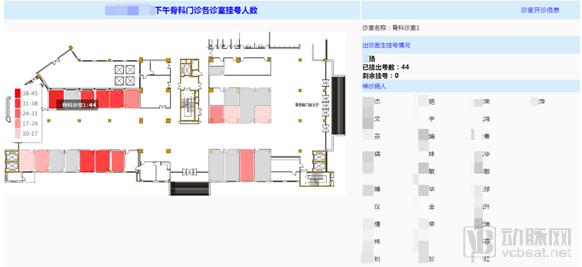
At the Orthopedics Department of Foshan Traditional Chinese Medicine Hospital, large digital screens in the outpatient clinic dynamically display patient density, facilitating the head nurse’s allocation of staff to maintain order. Additionally, the display of registration data in the outpatient lobby and the nursing whiteboards in inpatient wards represent efforts to integrate products with clinical workflows. To date, Foshan Traditional Chinese Medicine Hospital has developed nearly 300 statistical reports. These reports consolidate and visualize data across domains such as medication management, medical affairs, nursing management, and human resources, feeding insights back to respective operational departments.
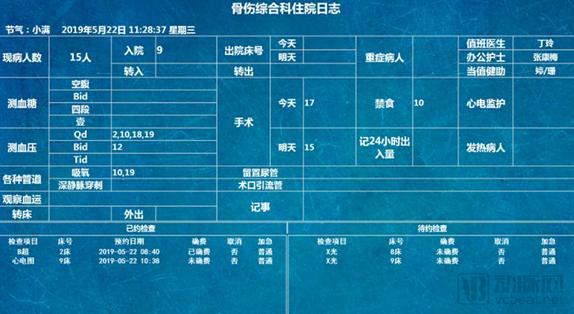
In addition to conventional large-screen data visualization and mobile report querying, Foshan Hospital of Traditional Chinese Medicine has implemented data entry capabilities by embedding FineReport’s data collection and visualization features into its existing business process systems. Recently, during the nationwide rollout of electronic health cards, the hospital leveraged FineReport products for data collection and card issuance. This approach significantly shortened the project cycle, enabling Foshan Hospital of Traditional Chinese Medicine to complete the electronic health card implementation in the shortest time among multiple hospitals across the city. Data management has also become much more convenient; whereas data previously had to be collected individually from each clinical department, various business departments can now directly enter data into the system. This not only improves data entry efficiency but also ensures data quality and accuracy.
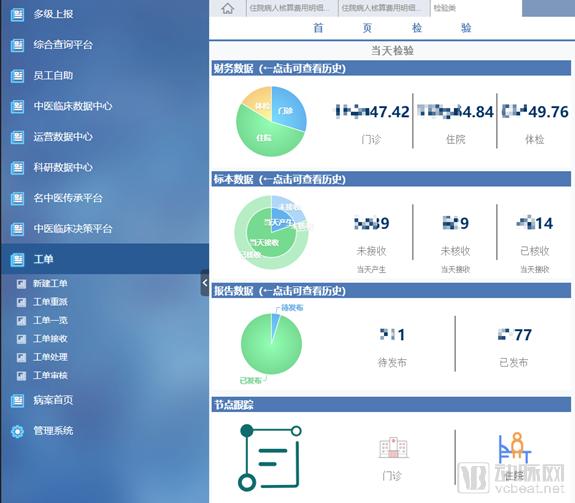
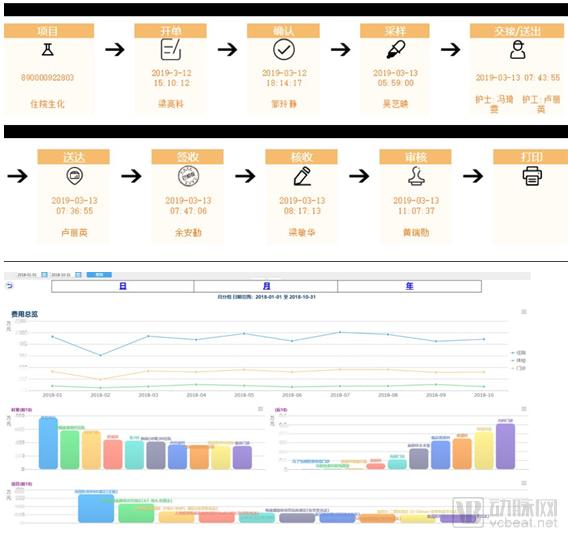
Foshan Traditional Chinese Medicine Hospital will establish an integration platform in the future, consolidating the functionalities of various business systems onto a unified bus, while storing operational data from these systems in a centralized data center, ultimately achieving deep integration of data and business operations.
Event Preview
The 2019 FanRuan Smart Data Conference is a premier event in China for intelligent, data-driven management, meticulously crafted by FanRuan Software. The conference will cover sectors including fashion, retail, power and new energy, transportation and logistics, healthcare, construction, and securities, futures, and insurance, providing an immersive communication platform for IT professionals in these industries. Over the course of three days, the event will feature thematic presentations and discussions centered on topics such as “Digital Transformation,” “New Retail,” “Smart Healthcare,” “Smart Construction Sites,” “Smart Grids,” “Amoeba Management,” and “Training for Chief Data Officers.” With a structure comprising one main forum, seven industry-specific sub-forums, and five specialized sessions on scenario-based data applications, the conference aims to establish a large-scale enterprise informatization exchange platform in China.
For more details, please visit the official event website: https://events.fanruan.com/ids2019