
This week’s content focuses on the ASCO Annual Meeting held in Chicago from May 30 to June 4. This year’s ASCO meeting was characterized as a “quiet year,” primarily due to a temporary lull in immuno-oncology (IO) therapy, which lacked the explosive breakthroughs and headlines seen in previous years. However, shifting the focus back to targeted therapy reveals a landscape still brimming with remarkable advancements.
❖The PARP inhibitor olaparib was one of the biggest winners at this year’s ASCO, with positive data reported across multiple cancer types. Particularly impressive was the doubling of progression-free survival (PFS) in patients with pancreatic cancer in a Phase 3 trial.
❖KRAS inhibitor AMG510 has demonstrated remarkable data, while RET inhibitor BLU667 has achieved significant progress. Therapeutic targets that remained dormant for years are now experiencing a renaissance, primarily driven by new insights into their mechanisms of action (MoA) and signaling pathways. It is anticipated that additional targets will enter a phase of revitalization in the future.
❖In the treatment of EGFR-mutated NSCLC, although overall survival (OS) data have not yet been fully disclosed, osimertinib has essentially established its position as a cornerstone therapy. Furthermore, for TKI-resistant NSCLC, novel agents with new structural mechanisms—such as Daiichi Sankyo’s antibody-drug conjugate (ADC) and Johnson & Johnson’s bispecific antibody—have demonstrated promising therapeutic efficacy.
❖PD-1/PD-L1 inhibitors unveiled a series of trial results at this year’s ASCO conference, presenting a mixed bag overall. While Keytruda stumbled in hepatocellular carcinoma and gastric cancer, positive data were disclosed from clinical trials of Opdivo, camrelizumab, and other agents in lung cancer, hepatocellular carcinoma, gastroesophageal cancer, and colorectal cancer. The debate over whether immuno-oncology (IO) remains a primary track in oncology is expected to intensify.
❖At this conference, we also heard more voices from China and witnessed more domestic clinical trials leading the way globally, which is truly gratifying.
PARP inhibitor olaparib has released clinical trial data across multiple tumor types, with its outstanding Phase III results in pancreatic cancer making it one of the biggest highlights of this year’s ASCO meeting.
Pancreatic Cancer Stage III POLO Study
Double the Patient Progression-Free Survival Rate
AstraZeneca’s Olaparib Phase III Clinical Trial Data in Pancreatic Cancer Released, Showing Positive Results and Providing a Strong Maintenance Therapy Option for Patients with Newly Diagnosed Metastatic Pancreatic Cancer.
Olaparib is a PARP inhibitor.
Inclusion Criteria and Study DesignA total of 154 patients with germline BRCA-mutated metastatic pancreatic cancer who did not experience disease progression after first-line platinum-based chemotherapy received olaparib or placebo as first-line maintenance therapy.
Compared with placebo, olaparib significantly improved patients’ PFS (7.4 months vs 3.8 months), increasing the 1-year progression-free survival rate from 14.5% to 33.74% and the 2-year progression-free survival rate from 9.6% to 22.1%.
The SOLO-3 Study Demonstrates Olaparib Treatment
Efficacy in Patients with Recurrent Advanced Ovarian Cancer Surpasses That of Chemotherapy
Olaparib SOLO-3 Study Results Announced, Confirming Olaparib as the First Drug to Provide Greater Benefit than Chemotherapy for Patients with Multiply Recurrent Ovarian Cancer. Meanwhile, the SOLO-1 study results were presented at this year’s ASCO Annual Meeting, further confirming the benefit of olaparib in the Chinese subgroup of patients with ovarian cancer.
Olaparib is a PARP inhibitor.
Inclusion Criteria and Study DesignThe enrolled subjects were patients with recurrent ovarian cancer harboring BRCA mutations who had previously received more than two lines of therapy.
Compared with chemotherapy, olaparib monotherapy significantly improved patients’ ORR (72.2% vs 51.4%) and PFS (13.4 months vs 9.2 months).
The TOPARP-B trial established olaparib
Efficacy in Patients with Prostate Cancer
As the second phase of the TOPARP study, following the demonstration of olaparib’s antitumor activity in an unselected population in the initial TOPARP-A trial, the TOPARP-B trial further validated the efficacy of olaparib in patients with metastatic castration-resistant prostate cancer (mCRPC) harboring DNA repair gene alterations and in the beyond-BRCA population.
Olaparib is a PARP inhibitor.
Inclusion Criteria and Study DesignThe TOPARP study is a phase 2 clinical trial evaluating the efficacy of olaparib in patients with metastatic castration-resistant prostate cancer (mCRPC). The study consisted of two phases, A and B. In phase B, 92 mCRPC patients with DNA repair gene alterations were included in the endpoint analysis.
The overall composite response rate was 46.7%. Among the subgroups, patients with BRCA1/2 mutations had the highest composite response rate at 83.3% (24/30), followed by those with PALB2 mutations at 57.1% (4/7). The composite response rate was 36.8% (7/19) in the ATM mutation group and 25.0% (5/20) in the CDK12 mutation group.
Olaparib in Combination with CediranibCompared with olaparib
Significant ImprovementPFS and OS in Ovarian Cancer Patients Without BRCA Mutations
At the ASCO Annual Meeting, updated data based on prior studies demonstrated that olaparib combined with cediranib significantly prolonged progression-free survival (PFS) in patients without BRCA mutations, and overall survival (OS) data were presented for the first time.
Olaparib is a PARP inhibitor. Cediranib is a pan-vascular endothelial growth factor (pan-VEGF) receptor tyrosine kinase inhibitor.
Inclusion Criteria and Study DesignA randomized, Phase 2 clinical trial.
Trial results showed that overall survival (OS) was slightly longer with olaparib plus cediranib than with olaparib monotherapy in patients with BRCA-mutated, platinum-sensitive ovarian cancer.
Olaparib in Combination with Cediranib
Can reduce resistance to PARP inhibitors
Data from a Phase 2 Trial Evaluating the Efficacy of Olaparib Combined with Cediranib in Patients with High-Grade Serous Ovarian Cancer (HGSOC) Who Have Progressed on PARP Inhibitor Therapy
Olaparib is a PARP inhibitor. Cediranib is a pan-vascular endothelial growth factor (pan-VEGF) receptor tyrosine kinase inhibitor.
Inclusion Criteria and Study DesignThis study included 34 patients, who were divided into three groups. PS group: platinum-sensitive after PARPi (PS), n=11; PR group: platinum-resistant after PARPi, n=10; and PE group: an exploratory cohort of chemotherapy re-challenge after progression on PARPi, n=13.
Four patients achieved a partial response (2 in the PR group and 2 in the PE group), while 18 patients maintained stable disease. The 16-week progression-free survival rates were 54.5% in the PS group, 50% in the PR group, and 36% in the PE group. The 1-year overall survival rates were 81.8% in the PS group, 64.8% in the PR group, and 39.1% in the PE group.
After decades of exploration, the KRAS target has finally shown a glimmer of hope. Approximately 20% of lung cancers harbor KRAS mutations, with 40% being the G12C subtype. The global pipeline of investigational therapies targeting KRAS G12C mutations is summarized in the table below, and the Phase 1 data for AMG510 presented by Amgen was the highlight of this conference.
Table: Pipeline of Investigational Agents Targeting KRAS G12C Mutation

Source: Bio Century and Company Reports
AMG510 Shows Initial Efficacy in Patients with KRAS Mutations
Amgen Presents First Clinical Trial Data for KRAS G12C Inhibitor AMG510 at ASCO Conference. Previously, Patients with KRAS Mutations Had No Available Treatment Options.
AMG510 is the first KRAS inhibitor.
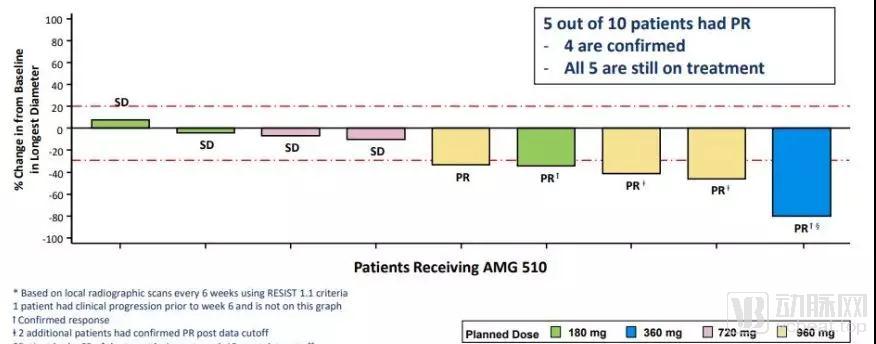
Inclusion Criteria and Study DesignThis open-label, multicenter Phase 1 clinical trial enrolled 35 patients with KRAS G12C mutations who had received at least two prior lines of therapy. Among them, 14 had non-small cell lung cancer, 19 had colorectal cancer, and 2 had other types of tumors.
The overall population demonstrated an objective response rate (ORR) of 17.24% and a disease control rate (DCR) of 79.31%. However, among patients with non-small cell lung cancer (NSCLC), the ORR reached a remarkable 50%, and the DCR achieved 100%.
Figure: Therapeutic Efficacy of AMG510 in NSCLC
Source: 2019 ASCO
In addition to the KRAS target, explorations of several other novel targets have also yielded promising results.
Lurbinectedin as Second-Line TherapySmall Cell Lung Cancer
The effective rate reached 35.2%,Record-High Therapeutic Efficacy
PharmaMar’s lurbinectedin (PM1183) further presented its efficacy results for second-line treatment of small cell lung cancer at the ASCO Annual Meeting.
Lurbinectedin is an RNA polymerase inhibitor independently developed by PharmaMar, capable of covalently binding to the minor groove of the DNA double helix.
Inclusion Criteria and Study DesignA total of 105 patients with extensive-stage small cell lung cancer who had progressed after first-line chemotherapy were enrolled to receive treatment.
Clinical data showed an ORR of 35.2% and a DCR of 68.6%.
Ribociclib Combined with Endocrine Therapy Significantly Improves
Overall Survival (OS) in Patients with HR+/HER2- Advanced Breast Cancer
Phase 3 clinical trial results presented at the ASCO annual meeting demonstrate that adding ribociclib to endocrine therapy significantly improves survival rates in premenopausal patients with HR+/HER2- advanced breast cancer.
Ribociclib is a novel cyclin-dependent kinase 4/6 (CDK4/6) inhibitor.
Inclusion Criteria and Study DesignA total of 672 patients with HR+/HER2− breast cancer were enrolled to receive ribociclib or placebo, in combination with goserelin plus either a nonsteroidal aromatase inhibitor or tamoxifen.
Clinical data show that ribociclib provides a sustained improvement in OS (not reached vs. 40.7 months).
RET Inhibitor BLU-667 Targets RET Mutations
or fusion-positive tumor patients demonstrated significant therapeutic efficacy
ASCO Reported Efficacy and Safety Results of Blueprint Medicines’ BLU-667 in Patients with Lung Cancer
BLU-667 is an oral, potent, and highly selective small-molecule inhibitor targeting oncogenic RET variants, developed by Blueprint Medicines.
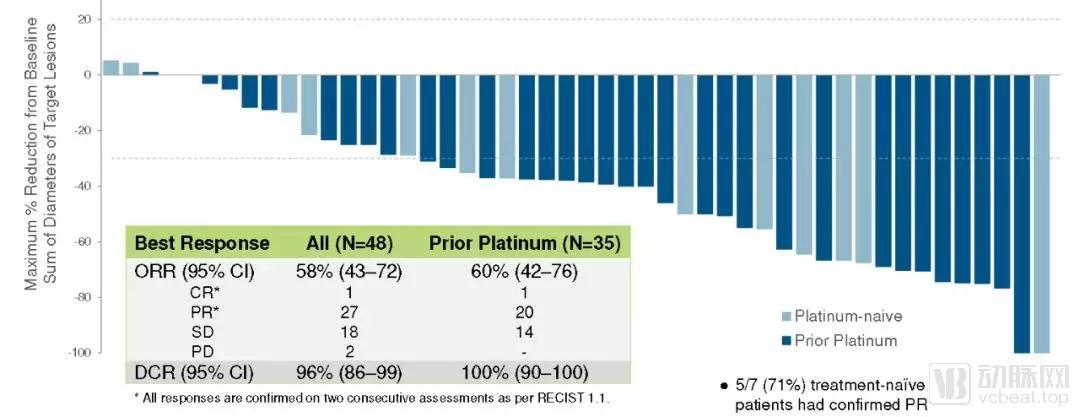
Inclusion Criteria and Study Design120 patients with RET-fusion NSCLC were enrolled to receive treatment.
Among patients evaluable for efficacy, regardless of prior treatments received, the overall ORR reached 58%, and the DCR reached 96%.
Figure: Clinical Trial Results of BLU-677
Source: 2019 ASCO
Novartis Announces Capmatinib Treatment
Phase II Active Study Data for NSCLC
At the ASCO meeting, Novartis presented positive Phase 2 clinical data on capmatinib for the treatment of patients with locally advanced or metastatic NSCLC harboring MET exon 14 skipping mutations.
Capmatinib is an oral inhibitor of the proto-oncogene C-MET.
Inclusion Criteria and Study DesignThe GEOMETRY mono-1 study, whose results were announced this time, is a prospective, multi-cohort, non-randomized, open-label Phase 2 clinical trial.
For treatment-naïve patients receiving first-line therapy, the ORR was 67.9% and the DCR was 96.4%; for patients receiving second- or third-line therapy, the ORR was 40.6% and the DCR was 78.3%.
Sanofi's CD38 Monoclonal Antibody Drug Isatuximab
Achieved the Primary Endpoint of Phase III Clinical Trials
At the ASCO meeting, Sanofi announced that its novel CD38 monoclonal antibody, Isatuximab, for the treatment of patients with relapsed and refractory multiple myeloma, met the primary endpoint in a Phase 3 clinical trial.
Isatuximab is a CD38 monoclonal antibody.
Inclusion Criteria and Study DesignThe ICARIA-MM study, which released its results, enrolled a total of 307 patients with relapsed and refractory multiple myeloma who had received more than two prior therapies, including regimens containing lenalidomide and/or a proteasome inhibitor.
Trial results showed that adding isatuximab to pomalidomide plus dexamethasone improved patients’ progression-free survival (PFS) from 6.47 months to 11.53 months and increased the overall response rate (ORR) from 35% to 60%.
In studies related to EGFR mutations, multiple combination therapy regimens have achieved unprecedented efficacy, and new drugs have been introduced to address targeted therapy resistance.
First-Line Treatment with Osimertinib Combined with Bevacizumab
NSCLC Patients with EGFR Mutations Achieve Positive Outcomes
Osimertinib Combined with Bevacizumab as First-Line Therapy for EGFR-Mutated NSCLC Patients Achieves Positive Outcomes, with Significant Intracranial Efficacy
Osimertinib is a third-generation EGFR-TKI.
Inclusion Criteria and Experimental DesignThis Phase I clinical trial enrolled a total of 49 patients with untreated, advanced non-small cell lung cancer (NSCLC) harboring EGFR mutations.
Clinical data showed an ORR of 80%, with no patients assessed as having PD. The median PFS was 18.4 months, and the 1-year OS rate was 91%. The dual-drug combination demonstrated significant efficacy in brain metastases, with only two cases of intracranial PD observed.
Daiichi Sankyo's New Drug U3-1402Salvaging Patients with EGFR TKI Resistance
Daiichi Sankyo’s Novel Drug U3-1402 Announces Phase I Clinical Trial Results, Demonstrating Favorable Efficacy Against Diverse Pathway Activations (Including C797S, HER2, and CDK4) Emerging After EGFR-TKI Resistance
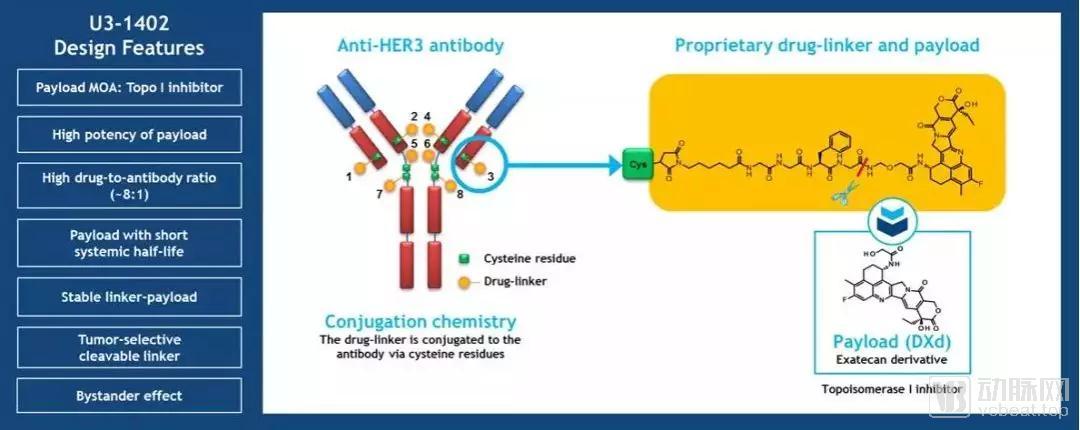
U3-1402 is a novel antibody-drug conjugate targeting the HER3 protein.
Inclusion Criteria and Study DesignThe Phase I clinical trial was designed to evaluate its safety and preliminary efficacy in treating patients with EGFR-TKI resistance. A total of 15 patients were enrolled in the study (10 with exon 19 deletions and 5 with L858R mutations).
Trial data showed that all patients experienced tumor reduction, with a median reduction of 29% and a disease control rate (DCR) of 100%.
Figure: U3-1402 Structure
Source: 2019 ASCO
Johnson & Johnson's New Drug JNJ-372 SolutionMultiple Mechanisms of Resistance to EGFR Mutations
JNJ-372 Achieves Positive Results in Phase I Clinical Study for Non-Small Cell Lung Cancer Patients with Resistance to Third-Generation EGFR Targeted Therapies and EGFR Exon 20 Insertion Mutations
JNJ-372 is a novel EGFR/c-MET bispecific antibody developed by Johnson & Johnson.
Inclusion Criteria and Study DesignThis Phase I clinical study enrolled 108 patients with previously treated, advanced non-small cell lung cancer (NSCLC) harboring EGFR mutations, including 58 patients with resistance to third-generation EGFR tyrosine kinase inhibitors and 27 patients with EGFR exon 20 insertion mutations.
The ORR was 28% in 58 patients with resistance to third-generation EGFR inhibitors, and 30% in 27 patients with EGFR exon 20 insertion mutations.
PD-(L)1 Monoclonal Antibodies: A Mixed Bag of Success and Disappointment. Keytruda’s data in the treatment of liver cancer and gastric cancer are less than ideal, whereas Opdivo has achieved favorable outcomes in liver cancer therapy. Meanwhile, the PD-L1 monoclonal antibody Imfinzi has released several positive data sets, drawing significant attention.
K Drug: 5-Year Survival Rate for Lung Cancer Patients Approaches 30%
ASCO Announces Positive 5-Year Overall Survival Rates for NSCLC Patients Treated with Keytruda Monotherapy
Keytruda is a PD-1 inhibitor.
Inclusion Criteria and Study DesignIn the KEYNOTE-001 study, a total of 550 patients were enrolled in the NSCLC cohort, including 101 treatment-naïve patients and 449 patients who had received at least one prior line of therapy.
The 5-year survival rate for the overall patient population was 23.2%, with a survival rate of 29.6% among patients with high PD-L1 expression and a 5-year survival rate of 15.7% among those with low PD-L1 expression.
Efficacy of Keytruda in Advanced Gastric Cancer Falls Short of Expectations
Keytruda’s KEYNOTE-062 trial, evaluating first-line combination chemotherapy for advanced gastric cancer, failed in April this year, with detailed results presented at this year’s ASCO Annual Meeting.
Keytruda is a PD-1 inhibitor.
Inclusion Criteria and Study DesignKEYNOTE-062 is a phase 3 clinical study evaluating monotherapy or combination chemotherapy versus chemotherapy as first-line treatment for advanced gastric cancer.
The trial results demonstrated that pembrolizumab monotherapy was non-inferior to chemotherapy in patients with a CPS ≥ 1, and improved overall survival (OS) compared with chemotherapy in those with a CPS ≥ 10. However, the median progression-free survival (PFS) and objective response rate (ORR) for pembrolizumab monotherapy were inferior to those observed in the chemotherapy group. Furthermore, the combination of pembrolizumab and chemotherapy did not show additional benefit over chemotherapy alone.
Keytruda Fails in Second-Line Treatment for Liver Cancer
At the ASCO Annual Meeting, results were reported for Keytruda as second-line therapy for liver cancer. Compared with placebo, Keytruda did not demonstrate additional benefit in endpoints such as median progression-free survival (PFS) and overall survival (OS).
Keytruda is a PD-1 inhibitor.
Inclusion Criteria and Study DesignA total of 413 patients with primary liver cancer who had experienced treatment failure or intolerance to sorafenib were enrolled in the KEYNOTE-240 trial.
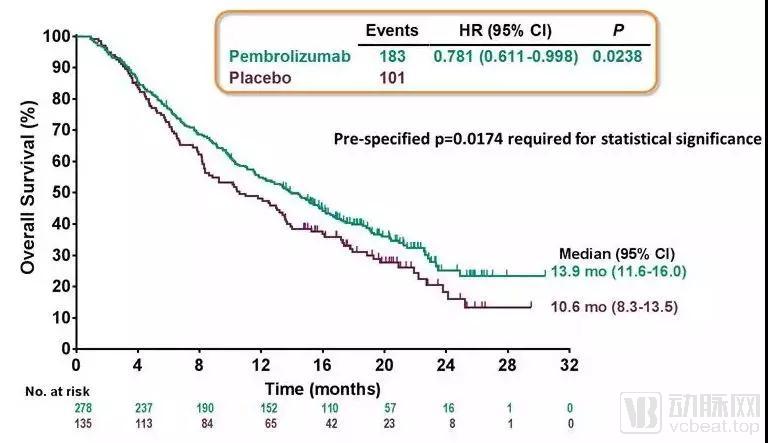
Trial data showed no statistically significant difference in median OS between the K drug group and the placebo group (13.9 months vs. 10.6 months), nor was there a significant difference in median PFS (3.0 months vs. 2.8 months).
Figure: Keytruda showed no significant OS advantage over placebo in the treatment of liver cancer
Source: 2019 ASCO

Keytruda Shows Significant Efficacy as Second-Line Treatment for Esophageal Cancer
ASCO Announces Phase 3 Clinical Trial Results of Keytruda as Second-Line Treatment for Patients with Advanced or Metastatic Esophageal Squamous Cell Carcinoma or Adenocarcinoma/Siewert Type I Gastroesophageal Junction Adenocarcinoma
Keytruda is a PD-1 inhibitor.
Inclusion Criteria and Study DesignA total of 628 enrolled patients were randomized in a 1:1 ratio to receive treatment with either pembrolizumab or chemotherapy.
Clinical data show that Keytruda met the primary endpoint of overall survival (OS), improving median OS compared with the chemotherapy group (9.3 months vs. 6.7 months).
Treatment with Keytruda Combined with NiraparibPositive Outcomes in Platinum-Resistant Ovarian Cancer
ASCO Conference Announces Results of the TOPACIO Study on Keytruda Combined with Niraparib for Platinum-Resistant Recurrent Ovarian Cancer
Keytruda is a PD-1 inhibitor, and niraparib is a PARP inhibitor.
Inclusion Criteria and Study DesignAmong the enrolled patients, 45% had previously received three or more lines of therapy, 97% had previously been treated with taxanes, 63% had received bevacizumab, 29% had primary platinum resistance, and 73% did not carry BRCA mutations.
Clinical data showed that the overall response rate (ORR) was 24% and the disease control rate (DCR) was 67% in the total population.
Positive Data on O Drug Combined with Y Drug for Treating Patients with Advanced Liver Cancer
The Phase 1/2 clinical study CheckMate-040, evaluating the combination of Opdivo and Yervoy in patients with advanced hepatocellular carcinoma who had previously received sorafenib, demonstrated positive results.
Opdivo is a PD-1 inhibitor, while Yervoy primarily targets CTLA-4.
Inclusion Criteria and Study DesignEnrolled patients were divided into three groups to receive treatment with different doses of Drug O plus Drug Y.
Clinical data showed an overall response rate (ORR) of 24% and a disease control rate (DCR) of 67% in the total population.
I-Drug Update: Phase III Trial in Patients with Unresectable NSCLC
Clinical DataThe 3-year OS rate reached 57%.
Imfinzi (durvalumab) Updates Clinical Trial Data for the Treatment of Patients with Stage III Unresectable NSCLC, Showing Positive Results.
Imfinzi is an anti-PD-L1 monoclonal antibody.
Inclusion Criteria and Study DesignThe PACIFIC study is a randomized, double-blind, placebo-controlled, multicenter, international Phase 3 clinical trial.
The 3-year OS rate in the I-drug group was 57%, representing a 13.5% increase over the 43.5% observed in the placebo group; moreover, the median PFS in the I-drug group was twofold higher than that in the placebo group (17.2 months vs. 5.6 months).
I Drug in Combination with Ramucirumab
Effective Against Multidrug Resistance in Multiple Cancers
Phase I clinical data on the combination of Drug I and ramucirumab demonstrate that this therapy is effective against multidrug-resistant cancers.
Imfinzi is an anti-PD-L1 monoclonal antibody, and ramucirumab is an anti-VEGFR2 monoclonal antibody.
Inclusion Criteria and Study DesignA total of 28 patients with NSCLC, 28 with liver cancer, and 29 with gastric/gastroesophageal cancer were enrolled.
This combination therapy has demonstrated favorable outcomes in the treatment of drug-resistant cancers across multiple tumor types, with superior efficacy observed in patients with high PD-L1 expression.
Camrelizumab Combined with Apatinib Therapy
Triple-Negative Breast Cancer Significantly Improves Patient ORR
Camrelizumab Combined with Apatinib Achieves Positive Results in the Treatment of Triple-Negative Breast Cancer
Camrelizumab is a PD-1 inhibitor, and apatinib is a VEGFR2 inhibitor.
Inclusion Criteria and Study Design34 patients with advanced triple-negative breast cancer who had previously received up to three lines of therapy were enrolled and divided into a continuous dosing group and an intermittent dosing group.
The continuous dosing group achieved an ORR of 47.4% and a DCR of 68.4%, with median PFS not reached; the intermittent dosing group had no confirmed ORR, a DCR of 44.4%, and a PFS of 2 months.
Although novel cell therapies have not been as high-profile as in previous years, they have still achieved some promising results. Iovance’s tumor-infiltrating lymphocyte (TIL) therapy and the CAR-CLDN18.2 therapy targeting Claudin-18 for solid tumors have both yielded positive outcomes.
Treatment of Solid Tumors in Gastric and Pancreatic Cancers
Claudin-18 Therapies Yield Positive Results
CAR-CLDN18.2, a CAR-T therapy targeting Claudin-18, presented positive clinical data at ASCO.
Claudin-18 is highly expressed in both gastric and pancreatic cancers; CAR-CLDN18.2 is a CAR-T therapy developed to target this mechanism.
Inclusion Criteria and Study DesignTwelve patients with Claudin-18-positive gastric and pancreatic cancer who had developed resistance to multiple lines of therapy were enrolled for treatment; efficacy was ultimately evaluable in 11 cases.
The overall ORR was 33.3%, the DCR was 75%, and the median PFS was 4.3 months.
Iovance Tumor-Infiltrating Lymphocyte TherapyIn cervical cancer
and melanoma'sAchieving Positive Outcomes in Treatment
Iovance’s Novel Cell Therapy LN-145 Presents Clinical Data on Solid Tumors at ASCO
LN-145 is a novel tumor-infiltrating lymphocyte therapy.
Inclusion Criteria and Study DesignTwenty-seven patients with recurrent, metastatic, or persistent cervical cancer were enrolled in the innovaTIL-04 study. Sixty-six patients with unresectable stage IIIC/IV melanoma were enrolled in Cohort 2 of the innovaTIL-01 study.
The ORR was 44% and the DCR was 85% in patients with cervical cancer; the ORR was 38% and the DCR was 80% in patients with melanoma.
Two Antibody-Drug Conjugate Investigational New Drugs Achieve Positive Results in Clinical Trials for Urothelial Carcinoma
Novel ADC Drug Enfortumab Vedotin
Announcement of Preliminary Positive Data from Phase II Clinical Trial
At the ASCO Annual Meeting, preliminary Phase 2 clinical results of Enfortumab Vedotin, a novel antibody-drug conjugate co-developed by Seattle Genetics and Astellas Pharma for the treatment of advanced bladder cancer, were presented.
Enfortumab Vedotin is an antibody-drug conjugate targeting the Nectin-4 protein.
Inclusion Criteria and Study Design125 patients participated in the Phase II clinical trial.
The overall ORR was 44%, with a CR rate of 12%. In the patient population who had previously received at least three prior therapies, the ORR was 41%; in patients refractory to PD-(L)1 therapy, the ORR was 41%; and even in patients with liver metastases, the ORR reached 38%.
RemeGen’s ADC Drug RC48 Significantly ImprovesTreatment of HER2-positive
MetastaticRemission Rate in Patients with Urothelial Carcinoma
RemeGen Presented Phase II Clinical Data of Its Investigational New Drug RC48 for the Treatment of Urothelial Carcinoma at the ASCO Annual Meeting.
RC48 is China's first antibody-drug conjugate (ADC) to enter human clinical trials, targeting HER2.
Inclusion Criteria and Study DesignRC48-C005 is a single-arm, open-label, multicenter Phase 2 clinical study.
The overall ORR was 51.2%, and the DCR was 90.7%.
Amgen’s bispecific T-cell engager (BiTE) immune platform has demonstrated its unique potential. The BiTE-targeted immuno-oncology platform facilitates the binding of patients’ own T cells to tumor-specific antigens, thereby activating the cytotoxic potential of T cells. At this year’s ASCO Annual Meeting, clinical trial data for two drugs developed from this platform were presented.
Amgen Announces Investigational BiTE MoleculeAMG420
Refractory and RelapsedPositive Outcomes in Patients with Multiple Myeloma
Amgen Recently Presented Positive Early Clinical Data for AMG420, a Novel Drug for Refractory and Relapsed Multiple Myeloma, at the ASCO Conference.
AMG420 is a BiTE molecule targeting BCMA/CD3.
Inclusion Criteria and Study Design42 patients who had previously received at least two other therapies were enrolled to receive AMG420 treatment.
In the maximum tolerated dose group, the overall ORR reached 70%, with a median duration of response of 9 months.
Amgen Announces Its Investigational BiTE Molecule AMG212
Positive Effects in Patients with Prostate Cancer
Amgen Recently Presented Positive Phase 1 Clinical Data for Its Novel Prostate Cancer Drug AMG212 in the Treatment of Patients with Metastatic Castration-Resistant Prostate Cancer at This Year’s ASCO Annual Meeting.
AMG212 is a BiTE molecule targeting prostate-specific membrane antigen.
Inclusion Criteria and Study Design16 patients were enrolled in 5 dose groups and received treatment via continuous intravenous infusion.
During the data presentation, serum prostate-specific antigen (PSA) levels decreased by more than 50% in three patients. Furthermore, one patient achieved complete regression of soft tissue metastases and partial regression of bone metastases.