

Panda Brush Files IPO Prospectus: Building an Internet-Based Oral Healthcare Ecosystem with Smart Toothbrushes for Precision Hospital Referrals
“In China, over 90% of people do not brush their teeth correctly. Chinese people are accustomed to brushing horizontally in a ‘sawing’ motion, which not only fails to clean the teeth thoroughly but also leads to tooth wear, loosening, gum recession, and bleeding over time,” summarized Gao Jie, co-founder of Panda Brush, regarding the current state of oral hygiene practices among the Chinese population. Oral health issues caused by improper brushing are becoming increasingly evident, particularly among children and the elderly, where the prevalence of dental caries and tooth loss exceeds 80%, a figure that continues to rise year by year. Adopting the correct brushing technique can effectively prevent these oral health problems.
What Is the Correct Way to Brush Your Teeth? According to the internationally recognized Bass Brushing Technique, position the toothbrush at a 45-degree angle to the long axis of the teeth, pointing toward the root apex. Gently press against the gums, keeping the bristles close to the tooth surface, and brush back and forth approximately ten times for every two teeth. Then, move the toothbrush to the next group of teeth and repeat the same procedure.
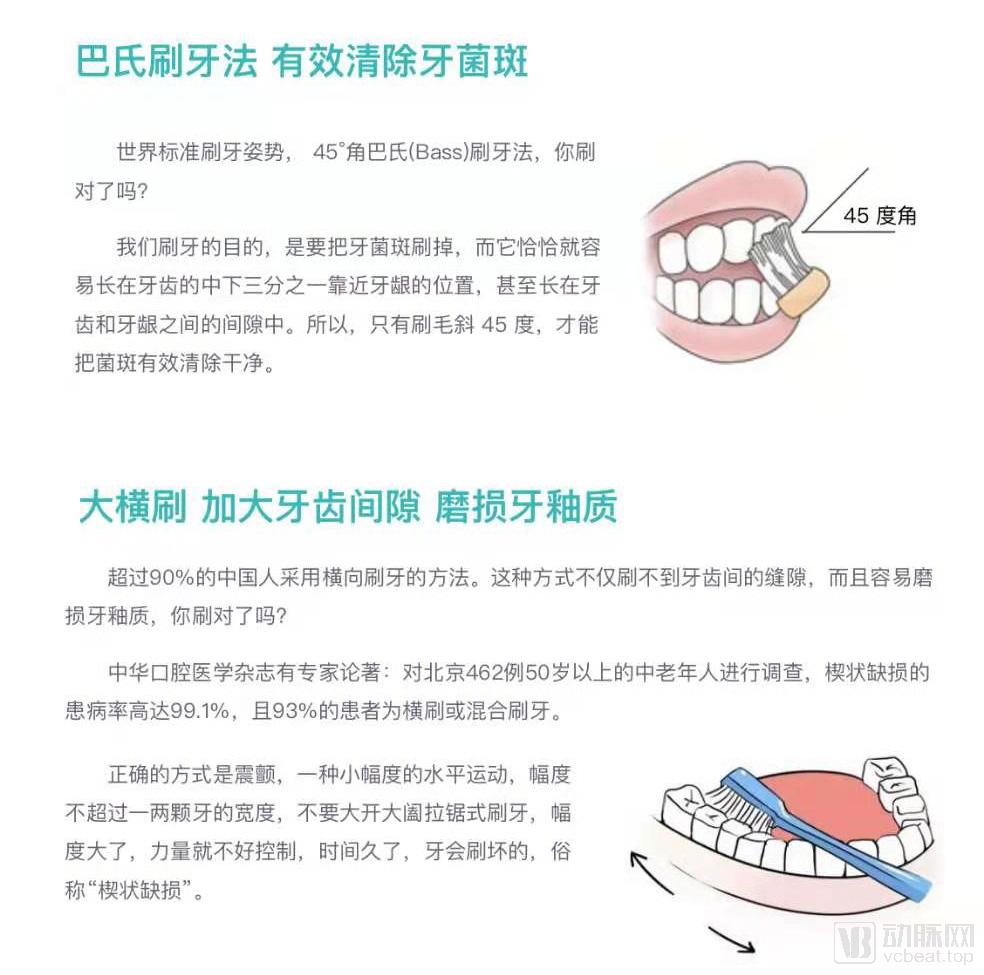
While the Bass brushing technique is beneficial for maintaining oral health, its intricate and meticulous nature makes it difficult for busy individuals to adopt. The desire to brush correctly, coupled with the perceived difficulty of changing established habits, likely resonates with most people. Panda Brushing is striving to help Chinese consumers gradually learn proper brushing techniques.
Panda Brushing Sets the Industry Standard for Proper Toothbrushing
If the Bass brushing technique seems abstract because it remains theoretical, then Panda Brushing is the first to put this theory into practice.
Panda Brush was founded in 2015 by Xing Bo, former co-founder of York Dentistry, together with his two partners, Gao Jie and Bai Runhui. Xing Bo has witnessed the development of the internet-based oral care sector from its inception and has experienced the entrepreneurial innovation journey of “Internet +” dental healthcare. The smart panda toothbrush he developed won first prize in the 2016 Bosch Smart Sensor Competition in Germany and had an invention patent applied for in October of the same year.
This smart panda toothbrush is the first commercialized product under the Panda Brushing brand. It offers a comprehensive brushing monitoring system that utilizes motion sensors to collect brushing data. Through algorithmic processing, it captures the trajectory and posture changes of the toothbrush relative to a digital oral model, tracks brushing coverage for each individual tooth, and provides analysis and recommendations on the brushing process, thereby helping users correct improper brushing habits.
Panda Brushing has independently developed a Bass brushing algorithm that uses the Bass method as the standard for toothbrushing, providing real-time correction of users’ improper brushing techniques. Users can first learn the Bass method through instructional videos offered by the Panda Brushing mini-program. During actual brushing, if the user’s technique is incorrect, the toothbrush will issue a reminder via vibrations in the handle. Conversely, when the user brushes correctly, they will receive corresponding cash rewards in the form of red packets, ranging from 3 to 5 yuan per session based on their brushing performance rating, with rewards available twice daily.
Panda Brushing’s smart toothbrush has secured six national patents for inventions and utility models. It can record in real time the brushing duration, angle, and amplitude for each surface of every tooth. Users can view their star ratings and feedback for each brushing session via the Panda Brushing mini-program. Within just over a month since its market launch, 40% of users have basically corrected their improper brushing techniques within one month.
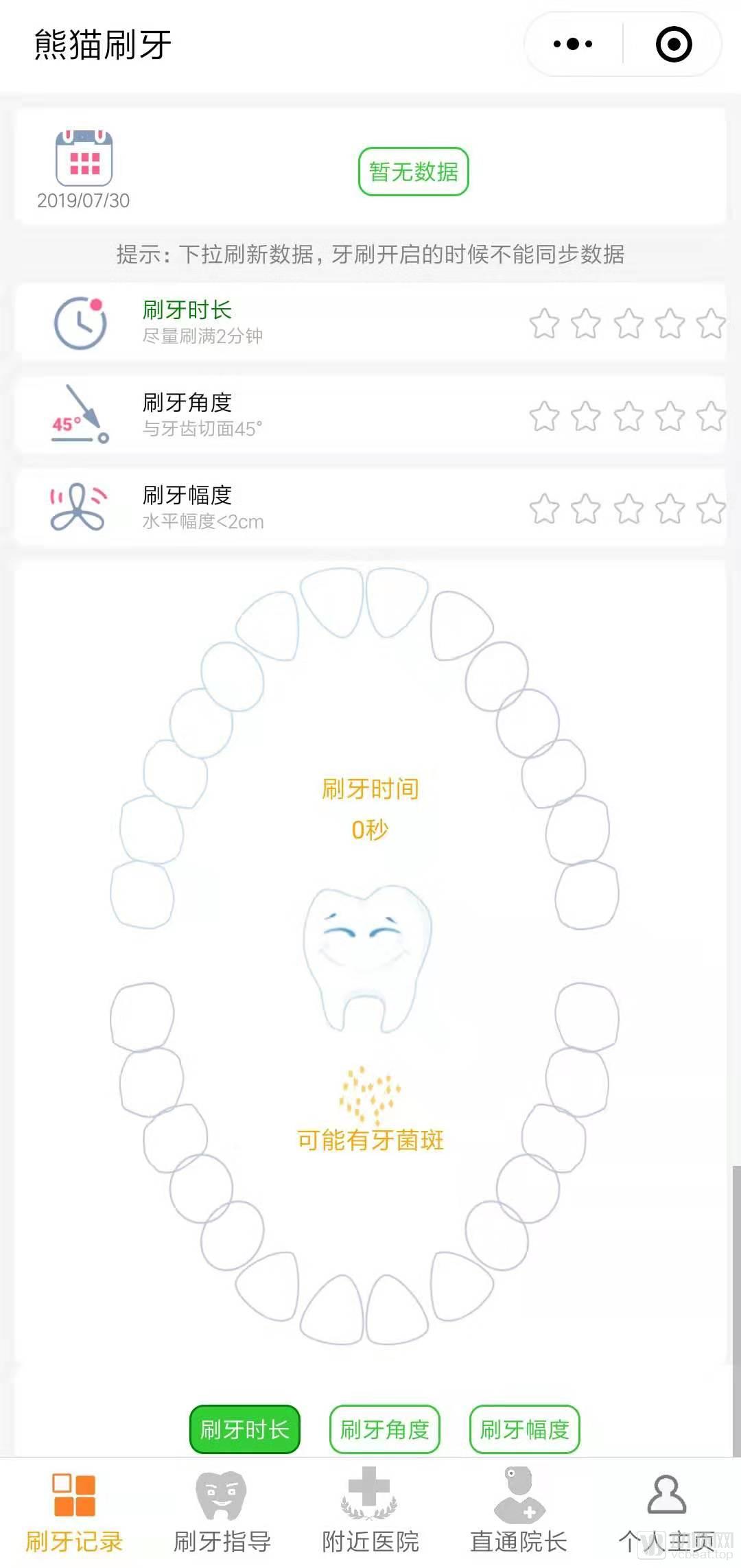
Panda Toothbrushing Mini Program
Notably, Panda Brushing debuted its adult smart toothbrush at the China International Electric Toothbrush Industry Expo on June 28 this year. The company also plans to launch a children’s smart toothbrush by the end of the year, using animated voice guidance and other interactive features to help children learn proper brushing techniques through a “level-clearing” game-like experience.
Building an Ecosystem Loop for Precise Patient Acquisition in Dental Hospitals
People are increasingly prioritizing their health. According to Alibaba’s data, the proportion of Chinese consumers using smart toothbrushes was 5% in 2017 and rose to 8% in 2018. Over the next two to three years, the adoption rate of smart toothbrushes is expected to reach 15%, or even 20%. However, the quality of smart toothbrushes on the market varies significantly, making it challenging to thoroughly improve people’s brushing habits by relying solely on a smart toothbrush.
Changing a habit requires not only personal initiative but also external incentives. As users gradually correct their incorrect horizontal brushing technique, they receive a monetary reward for each instance of proper brushing. Gao Jie told VCBeat, “These rewards accumulate up to a cap of 500 yuan and can be used for dental reimbursement.”
Through this “dental reimbursement” model, Panda Brushing has truly interconnected users with dental hospitals, forming a closed-loop ecosystem. Gao Jie added, “Currently, whether visiting public or private hospitals, dental care in China is rarely covered by insurance. From orthodontic treatment for teenagers to cosmetic procedures like teeth whitening veneers for beauty-conscious individuals, such consumer healthcare expenses are typically paid out-of-pocket by patients. Panda Brushing helps every user find reliable hospitals and dentists while reducing their dental care costs.”
Currently, Panda Brush partners with approximately 400 dental hospitals across 55 cities in China, including the nation’s largest dental chain and numerous well-known dental institutions. Panda Brush carefully vets the professional backgrounds of both dental hospitals and practitioners to ensure that all partner facilities meet high-quality and high-standard criteria. Additionally, the Panda Brush platform enables users to access premium yet affordable dental care services through mechanisms such as reimbursement.
Panda Brushing provides medical institutions with a free, precision marketing channel and improves operational efficiency through an internet platform built on smart toothbrushes. For users, using Panda Brushing’s smart toothbrushes offers convenient access to carefully selected dental hospitals, enabling them to receive high-quality services at reasonable prices.
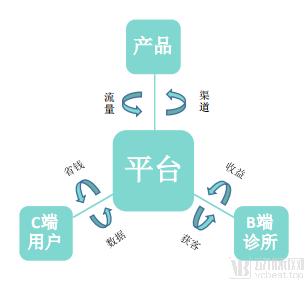
Schematic Diagram of the Panda Brushing Ecological Closed Loop
Since the Panda Brushing internet platform is built on WeChat Mini Programs, users can see reviews from their WeChat friends who also use the Panda Smart Toothbrush when selecting dental hospitals on WeChat. Such endorsements and recommendations from acquaintances often outweigh the sales pitches of 100 strangers, thereby helping to enhance online trust in dental hospitals.
Future: Achieving Industrial Alliance Development Through Strategic Cooperation
Panda Brush, after three years of R&D, has launched its smart toothbrush in licensing mode and established a strategic partnership with Lanxi, a brand under a Foxconn-affiliated enterprise (JD). Gao Jie told VCBeat that they had visited numerous toothbrush manufacturers, but their owners lacked an understanding of proper brushing techniques. Gao Jie aims to help these manufacturers achieve product and industrial upgrades through technology licensing, jointly expanding the oral healthcare market.
Furthermore, the Panda Brushing initiative aims to partner with 2,000 offline clinics this year and expand its reach to 20,000–30,000 offline clinics by next year. The company’s smart toothbrush, “Su Ya,” is currently available for purchase via its WeChat Mini Program store and on Taobao, with plans to launch on the JD.com platform this August.
Currently, Panda Brushing has launched its angel round of financing, with the proceeds primarily allocated to product research and development, as well as accelerating online and offline operations and sales.