
June 10–16, 2019: A total of 15 new drug data entries were recorded this week, including 8 for oncology, 2 each for diabetes and dermatology, and 1 each for hepatitis, arthritis, and rare diseases.
❖Keytruda Further Expands Indications, Approved for First-Line Treatment of Advanced Head and Neck Cancer: It Can Be Used as Monotherapy for First-Line Treatment of Patients with PD-L1 Expression, or in Combination with Chemotherapy for First-Line Treatment of the Entire Population of Patients with Advanced Head and Neck Cancer. In 2016, after the FDA approved Keytruda for patients with recurrent head and neck cancer following platinum-based chemotherapy based on ORR data, it still required Keytruda to provide more clinical benefit data. This approval is mainly based on the OS benefits observed in the trial.
❖Genentech’s antibody-drug conjugate (ADC) Polivy has received accelerated approval, becoming the sixth ADC approved globally. Compared with standard therapy, this drug doubles the complete response (CR) rate to 40% in patients with relapsed or refractory diffuse large B-cell lymphoma (DLBCL). Historically, ADCs have been criticized for their narrow therapeutic window and propensity for off-target effects, resulting in limited progress. However, the past two years have witnessed continuous advancements in the ADC field. Since 2017, four ADC drugs have been launched, all targeting hematologic malignancies. This raises the question of whether systematic investment opportunities have emerged in this sector.
❖Regeneron Discloses Phase 1 Results for Bispecific Antibody REGN1979: ORR of 93% in FL and 57% in DLBCL, with Two DLBCL Patients Achieving CR After CAR-T Therapy Failure. Both CD3/CD20 bispecific antibodies and CAR-T therapies work by mobilizing T cells to kill cancerous B cells, but the two targets, CD19 and CD20, have shown different effects. If data on CD3/CD20 bispecific antibodies for liquid tumors continue to be promising, their relatively lower cost could place significant pressure on CAR-T therapy in the future.
❖CymaBay’s PPAR agonist Seladelpar failed in its Phase 2b clinical trial, causing the company’s stock price to plummet by 50% on the same day. Seladelpar did not meet the primary endpoint of demonstrating superior improvement in MRI-PDFF compared to the placebo group. Although it showed favorable results in biochemical markers of liver injury, it was still considered unlikely to persuade the FDA, effectively ruling it out. The prospects for Elafibranor, Genfit’s investigational NASH drug and another PPAR agonist, have also dimmed as a result.
BeiGene Updates Tislelizumab
TreatmentRecurrenceor refractory classical NHLChinese Patients
Key Phase 2 Clinical Study Results
BeiGene Updated Key Results from a Phase 2 Clinical Study of the Anti-PD-1 Antibody Tislelizumab for the Treatment of Chinese Patients with Relapsed/Refractory Classical Hodgkin Lymphoma at the EHA Annual Meeting.
Tislelizumab is an investigational humanized monoclonal antibody against PD-1 developed by BeiGene.
Inclusion Criteria and Study DesignThis pivotal, single-arm, multicenter Phase 2 clinical study of tislelizumab monotherapy in Chinese patients with relapsed/refractory classical Hodgkin lymphoma enrolled 70 patients who had previously experienced failure of autologous hematopoietic stem cell transplantation or had received at least two prior lines of systemic therapy for classical Hodgkin lymphoma.
As of the data cutoff, the ORR was 87.1%, the CR rate was 62.9%, and the median PFS had not been reached.
Genentech's Antibody-Drug Conjugate Polivy
Granted Accelerated Approval by the FDA for Market Launch
Genentech’s antibody-drug conjugate Polivy (polatuzumab vedotin-piiq) has received FDA approval for marketing, in combination with bendamustine and rituximab, for the treatment of adult patients with relapsed or refractory diffuse large B-cell lymphoma (DLBCL). This is also the first chemoimmunotherapy agent approved for DLBCL.
Polivy is a novel antibody-drug conjugate.
Inclusion Criteria and Study DesignIn the Phase 1b/2 trial, 80 patients with relapsed or refractory DLBCL were enrolled for treatment.
The trial results showed that the CR rate of this innovative combination therapy reached 40%, while the CR rate of conventional therapy was 18%.
Hutchmed China Surufatinib Treatment
Advanced Non-Pancreatic Neuroendocrine Tumors
Achieved the Primary Endpoint in Phase III Clinical Trials
Surufatinib (HMPL-012), a multi-mechanism innovative anti-cancer drug developed by Hutchmed China, has met its pre-specified primary endpoint ahead of schedule in the pivotal Phase 3 clinical trial for the treatment of advanced non-pancreatic neuroendocrine tumors.
Surufatinib is a novel anticancer agent with multiple mechanisms of action. It inhibits angiogenesis by blocking vascular endothelial growth factor receptors (VEGFR) and fibroblast growth factor receptors (FGFR), and also modulates tumor-associated macrophages by inhibiting the colony-stimulating factor-1 receptor (CSF-1R), thereby promoting immune responses.
Inclusion Criteria and Study DesignThe Phase 3 clinical trial in China named SANET-p.
Surufatinib has successfully met the prespecified primary efficacy endpoint of progression-free survival (PFS), with detailed results to be presented at an upcoming academic conference.
Blueprint Medicines
Fourth-line Gastrointestinal Stromal TumorTherapy NDA Submission
Blueprint Medicines Announces Submission of NDA to FDA for Avapritinib for the Treatment of Adult Patients with Gastrointestinal Stromal Tumors (GIST) Harboring PDGFRA Exon 18 Mutations, or as a Fourth-Line Therapy
Avapritinib is a highly selective oral KIT/PDGFRA inhibitor.
Inclusion Criteria and Study DesignAs of November 16, 2018, a total of 237 patients were enrolled, including 111 patients with gastrointestinal stromal tumors (GIST) in the fourth line of therapy or beyond, and 43 patients with PDGFRA exon 18 mutations.
Trial results showed that the ORR in patients with PDGFRA exon 18 mutations reached 86%, while the ORR in patients with gastrointestinal stromal tumors receiving fourth-line therapy was 22%.。
Regeneron Bispecific Antibody REGN1979
Positive Results from Early-Stage Clinical Trials
Regeneron Announces Positive Early-Stage Clinical Trial Results for Its Investigational Bispecific Antibody REGN1979 in Patients with Relapsed/Refractory B-Cell Non-Hodgkin Lymphoma at the EHA Congress
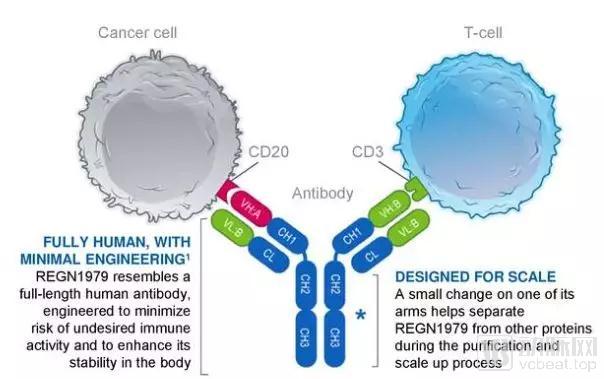
REGN1979 is a bispecific antibody targeting CD20 and CD3.
Inclusion Criteria and Study DesignAs of March 2019, 81 patients were included in the assessment.
ORR reached 93%, CR reached 71%, and even patients who failed CAR-T therapy achieved complete remission.
Figure: Structure of REGN1979
Source: Regeneron presentation materials
Keytruda Approved for First-Line Treatment of Advanced Head and Neck Cancer
Keytruda Recently Approved by FDA as First-Line Monotherapy for Patients with Advanced Head and Neck Cancer Expressing PD-L1. Additionally, Keytruda Can Be Combined with Standard Chemotherapy Regimens for First-Line Treatment of Patients with Advanced Head and Neck Cancer.
"K drug" is a PD-1 inhibitor.
Inclusion Criteria and Study DesignApproval was based on the pivotal Phase 3 KEYNOTE-048 clinical trial.
Trial data show that Keytruda monotherapy demonstrated an overall survival (OS) benefit in patients expressing PD-L1; furthermore, the combination of Keytruda and chemotherapy was effective regardless of PD-L1 expression status.
Bristol Myers Squibb's CD19 CAR-T Cell Therapy Liso-sel
Positive Data in Lymphoma Treatment
Celgene Announces Latest Analysis Data on Lisocabtagene Maraleucel (liso-cel, JCAR017), an Anti-CD19 CAR-T Cell Therapy, for Patients with Relapsed or Refractory Non-Hodgkin Lymphoma
Liso-cel is a CAR-T cell therapy targeting the CD19 antigen with 4-1BB as the costimulatory domain.
Inclusion Criteria and Study DesignThis study is an open-label, multicenter Phase I trial.
Trial data showed that the ORR across all dose levels was 71%, with a CR rate of 53%.
Celgene's JAK2 Inhibitor Fedratinib
Demonstrates robust efficacy in the treatment of primary or secondary myelofibrosis
Celgene recently announced Phase II clinical data for its investigational JAK2 inhibitor, fedratinib, in the treatment of primary or secondary myelofibrosis.
Fedratinib is a JAK2 inhibitor.
Inclusion Criteria and Study DesignA single-arm, open-label, Phase 2 clinical trial conducted in patients with primary or secondary myelofibrosis.
After six treatment cycles, 31% of patients achieved a spleen volume reduction of ≥35%, and the proportion of patients with a symptom response rate of ≥50% was 27%.
AbbVie Rheumatoid ArthritisNew Drugs
Positive Phase 3 Results for Upadacitinib
AbbVie’s Investigational JAK1 Inhibitor Upadacitinib Achieves Positive Results in Phase 3 Trial for Moderate-to-Severe Rheumatoid Arthritis
Upadacitinib is a highly selective second-generation JAK inhibitor.
Inclusion Criteria and Study DesignThe SELECT-EARLY Trial and the SELECT-COMPARE Trial.
Clinical trial data show that, after 48 weeks of treatment, the proportion of patients in the upadacitinib group who achieved clinical remission was significantly higher than that in the active control group.
Novartis Secukinumab for the Treatment of Psoriasis
Positive 2-Year Efficacy Data
Novartis Announces That Its Secukinumab Demonstrates Long-Term, Sustained Inhibition of Disease Progression in Patients with Psoriatic Arthritis in a Follow-Up Trial
Secukinumab is the world’s first approved fully human monoclonal antibody against IL-17A.
Inclusion Criteria and Study Design996 patients with psoriatic arthritis participated in the Phase 3 FUTURE 5 extension trial
89.5% of patients in the 300 mg group and 82.3% of patients in the 150 mg group achieved the key clinical endpoint of freedom from radiographic progression for more than 2 years.
Roche's Rituximab for the Treatment of Pemphigus Vulgaris
Item 2: Phase III Study Achieves Positive Top-Line Data
Roche Announces Positive Topline Data from PEPHIX, the Second Phase 3 Study of Rituximab for the Treatment of Pemphigus Vulgaris
Rituximab is a chimeric monoclonal antibody that binds to the CD20 antigen on abnormal B lymphocytes and triggers an immune response leading to B-cell lysis.
Inclusion Criteria and Study DesignPEMPHIX is a randomized, double-blind, double-dummy, active-controlled, parallel-arm, multicenter Phase 3 study.
Compared with the standard treatment group, a higher proportion of patients in the rituximab group achieved sustained complete remission.
Lilly’s New Diabetes Drug Tirzepatide Shows Positive Clinical Results
Launch of NASH Phase 2b Clinical Trial
Eli Lilly Announces Positive Clinical Trial Results for Tirzepatide, an Investigational Drug for Type 2 Diabetes. The trial results also indicate that tirzepatide can improve markers associated with nonalcoholic steatohepatitis (NASH), and a Phase 2b study for the treatment of NASH is scheduled to launch this year.
Tirzepatide is a biological macromolecule with dual agonist activity at the gastric inhibitory polypeptide receptor and the glucagon-like peptide-1 receptor.
Inclusion Criteria and Study DesignA 26-week Phase 2b clinical trial and a 12-week Phase 2 clinical trial.
Trial data show that tirzepatide improves markers of insulin sensitivity, significantly lowering blood glucose levels while also reducing body weight.
Novo Nordisk AnnouncesTwo Oral Semaglutide
3a Clinical Trial Results
Novo Nordisk recently announced the results of two Phase 3a clinical trials of oral semaglutide.
Semaglutide is a natural human glucagon-like peptide-1 analog.
Inclusion Criteria and Study DesignTwo clinical trials named PIONEER 2 and PIONEER 4.
Compared with the control drug empagliflozin, oral semaglutide treatment resulted in a greater reduction in glycated hemoglobin levels (0.9% vs. 1.3%). Oral semaglutide also demonstrated superior efficacy in lowering glycated hemoglobin levels compared with liraglutide.
PTC Therapeutics’ Emflaza for the Treatment of DMD
Approved Indication Expansion
PTC Therapeutics’ Emflaza (deflazacort), a treatment for Duchenne muscular dystrophy (DMD), has received FDA approval to expand its indication to include patients aged 2 to 5 years with DMD.
Emflaza is a glucocorticoid prodrug.
Inclusion Criteria and Study DesignApproval of a clinical trial involving 196 male pediatric patients.
Trial results indicated that children receiving Emflaza at a dose of 0.9 mg/kg exhibited a significant improvement in muscle strength compared with the placebo control group; however, no benefit was observed in the high-dose group.
Seladelpar, a PPAR Agonist for the Treatment of NASH
Encountered Phase 2b Clinical Failure
CymaBay’s Seladelpar, a drug for the treatment of non-alcoholic steatohepatitis (NASH), failed to meet its primary endpoint in Phase 2b clinical trials, with clinical benefits inferior to those of placebo.
Seladelpar is a PPAR agonist.
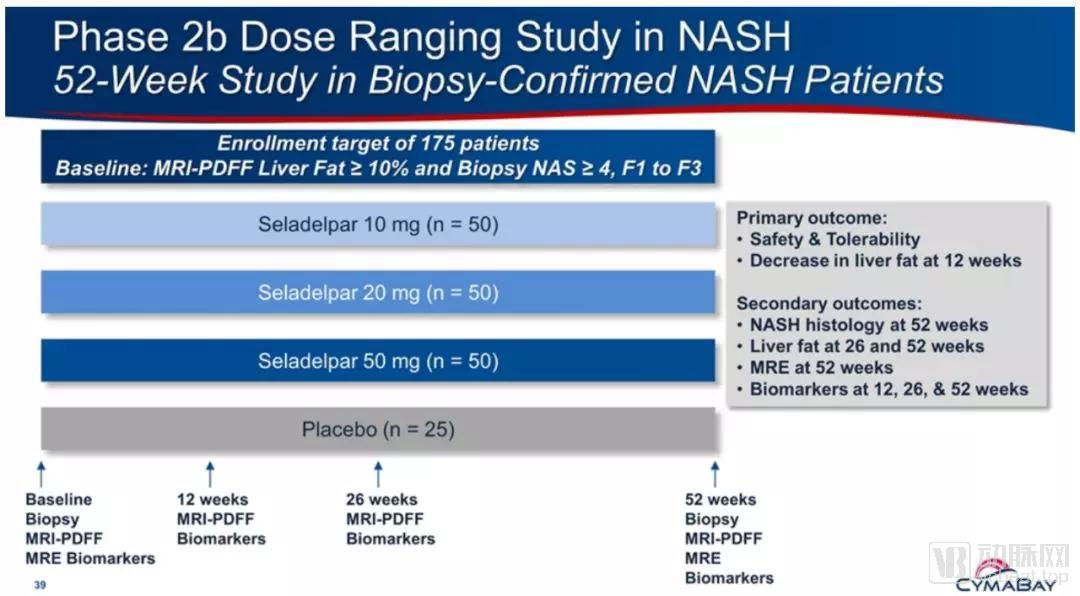
Inclusion Criteria and Study DesignNCT03551522 is a double-blind, placebo-controlled Phase 2b clinical trial with magnetic resonance imaging–proton density fat fraction (MRI-PDFF) as the primary endpoint.
Seladelpar demonstrated inferior clinical benefit compared with placebo and failed to meet the primary endpoint.
Figure: Seladelpar NASH Phase 2b Clinical Trial Protocol
Source: CymaBay Investor Presentation Materials

❖Suzhou Bio and Zhejiang Xincuo Biopharmaceutical have entered into a comprehensive strategic cooperation agreement for the late-stage clinical product development and commercial manufacturing of the monoclonal antibody component of ARX788, a next-generation antibody-drug conjugate.
❖Tessa Announces Joint Venture with Sino-Singapore Guangzhou Knowledge City, Investing $120 Million; the JV Will Serve as Tessa’s Exclusive Licensee for Research, Clinical Development, and Commercialization of Its Cell Therapies in China. Sino-Singapore Guangzhou Knowledge City Will Acquire a 13% Equity Stake in the Joint Venture for $40 Million.
❖WuXi AppTec’s New Drug R&D and Production Base Project Signed and Settled in Changshu Suyu Biopharmaceutical Industrial Park (BioBAY-Changshu), to Build a Globally Leading CDMO Base in Changshu
❖GSK has partnered with leading CRISPR researchers Professor Jennifer Doudna and Professor Jonathan Weissman to establish a genomics research laboratory, jointly developing innovative CRISPR-based technologies to significantly accelerate new drug development. GSK will invest $67 million in the laboratory over the next five years.
❖Certara’s Simcyp® physiologically based pharmacokinetic (PBPK) simulation technology was used by the FDA for the first time to replace in vivo clinical studies in demonstrating bioequivalence during the approval of complex generic drugs, potentially paving the way for a safer, faster, and more cost-effective approach to bioequivalence (BE) studies.
❖Genmab, based in Copenhagen, Denmark, and Janssen have announced a collaboration to jointly develop HexaBody-CD38, a next-generation anti-CD38 monoclonal antibody. HexaBody-CD38 utilizes Genmab’s proprietary HexaBody technology, which employs ring-shaped hexameric antibodies. Currently, Genmab has two marketed drugs: Darzalex (daratumumab), a multiple myeloma therapy licensed to Janssen, and Arzerra (ofatumumab), a chronic lymphocytic leukemia treatment licensed to GSK.
❖Merck & Co. Announces Plan to Acquire Tilos Therapeutics, Gaining Access to Its Investigational TGFβ-Modulating Antibody Products. The Acquisition Includes an Upfront Payment and Milestone Payments Totaling up to $773 Million. Tilos Therapeutics Primarily Develops Antibody Therapeutics Targeting Latency-Associated Peptide (LAP) for the Treatment of Cancer, Fibrosis, and Autoimmune Diseases.
❖Bayer and CStone Therapeutics Enter into a China-Focused Global Clinical Collaboration to Jointly Evaluate the Safety, Tolerability, Pharmacokinetics, and Antitumor Efficacy of CStone’s PD-L1 Monoclonal Antibody CS1001 in Combination with the Oral Multi-Kinase Inhibitor Regorafenib for the Treatment of Various Cancers, Including Gastric Cancer. CStone Therapeutics Will Serve as the Sponsor of This Study, and Bayer Will Provide the Regorafenib Required for the Trial.