

Hospital Smart Service Evaluation System Launches Today: How Can Enterprises Help Hospitals Overcome the Three Key Challenges?

Tencent
Internet Comprehensive Service Provider
Today (August 1), the National Health Commission officially launched the implementation of the “Notice on Issuing the Graded Evaluation Standard System for Smart Hospital Services (Trial)” (hereinafter referred to as the “Notice”). By September 10, a total of 32 regions across 31 provinces and municipalities nationwide will complete the data submission required for the evaluation within one month. Following the release of the Notice, VCBeat has engaged in discussions with relevant industry companies to understand the impact of this policy direction on the sector and to explore the solutions enterprises are offering to support the development of smart hospitals.
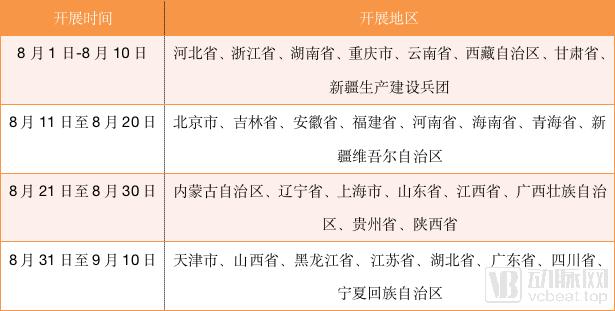
The “Notice” states that the National Health Commission has decided to carry out the 2019 graded assessment of smart hospital services in secondary and tertiary hospitals that provide smart services through information systems, and has set forth clear requirements for the grading criteria and assessment methodologies for smart hospitals.
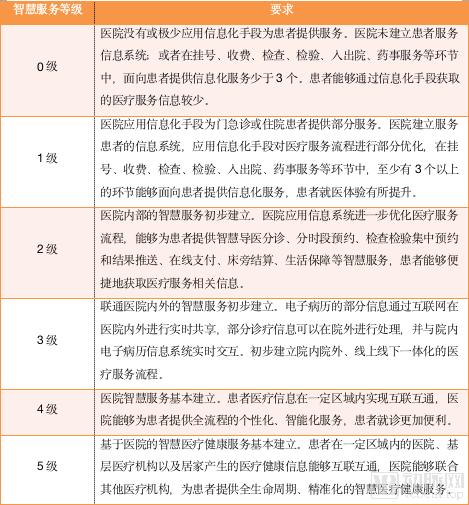
# Six Levels Determine the Degree of Hospital IntelligenceIn this grading system, the National Health Commission will evaluate hospitals based on two aspects: the functionality of smart services provided to patients through information technology applications and the perceived effectiveness by patients, resulting in a total of six levels.
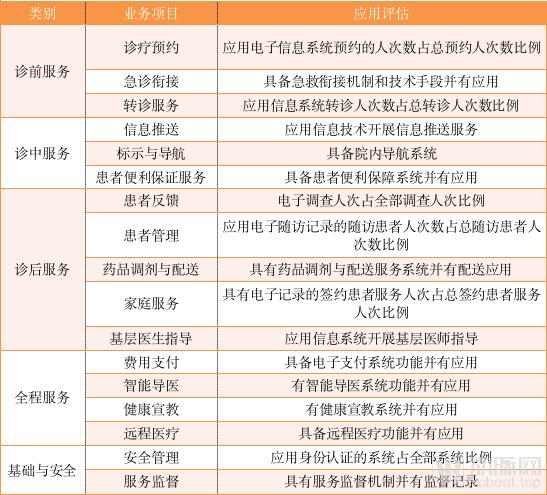
Based on the basic service content that should be covered in the pre-diagnosis, during-diagnosis, and post-diagnosis stages, and combined with hospital informatization construction and the internet environment, the overall system defines 5 categories comprising a total of 17 evaluation items. Furthermore, the Notice provides detailed descriptions for each level of every rating item.
With the policy now in place, how do health IT companies, artificial intelligence firms, and chief information officers view the promotion of the tiered evaluation standard system for smart healthcare services? How should enterprises and hospitals respond? VCBeat (WeChat ID: vcbeat) interviewed several companies to uncover the trends behind the policy.
“Connecting the Future” once depicted such a scene: at midnight, long queues had already formed at the registration and cashier’s office of Shenzhen Maternity and Child Healthcare Hospital, with some family members bringing along folding stools and power banks, prepared for an all-night vigil.
“Queues for departments with a severe shortage of physicians may start forming as early as midnight, while those for less scarce specialties might not begin until 6 a.m. With our daily outpatient volume ranging from 3,000 to 5,000 visits, patients have to arrive very early,” a doctor told reporters, recounting the scene in the outpatient hall in the past.
Nowadays, such scenes are no longer present. With AI-guided triage, patients can be matched with a doctor in one second, enabling online triage and registration, thereby eliminating the anxiety caused by long queues.
This is one of the achievements in the construction of smart hospitals. Domestic enterprises such as Tencent, Huawei, Weiyi Orthopedics, Liankong Yijia, Zuoshou Doctor, and Jianhai Technology have long established their presence in the smart hospital sector. In addition to the intelligentization of pre-consultation services mentioned above, there are corresponding solutions for intra-consultation and post-consultation phases, as well as for doctor-patient education.
Zuoshou Doctor is an enterprise involved in a significant number of smart hospital grading projects. Among the 17 projects covered by this "Notice," Zuoshou Doctor’s products are applicable to nine evaluation items at Level 5, covering more than 50% of the graded projects. To some extent, policy guidance and corporate promotion are complementary.
However, unlike evaluations such as the Interconnectivity Assessment, no single enterprise can fully cover all 17 service items in this rating project, which is partly attributable to the detailed selection criteria. In fact, this rating extends beyond assessing hospitals’ informatization levels to also evaluate their technological capabilities. For instance, the Level 5 evaluation standard for “Patient Management” under “Post-consultation Services” requires hospitals to dynamically adjust rehabilitation plans based on changes in patients’ conditions. The key assessment criteria have surpassed hospitals’ in-house development capabilities, necessitating collaboration between hospitals and artificial intelligence and informatization enterprises to jointly complete the project evaluation.
In addition, there are several Level 5 initiatives that have already been implemented or are relatively easy to implement. For instance, the “Home Care Services” under “Post-Consultation Services” require hospitals to recommend family physician teams to patients based on their medical conditions, residential addresses, and other relevant factors. Meanwhile, the “Patient Convenience Assurance Services” under “Intra-Consultation Services” mandate that hospitals enable administrative departments to automatically recommend appropriate meals to patients by integrating dietary orders issued by dietitians with individual patient treatment profiles. Given the current state of natural language processing (NLP) technology, these two requirements are comparatively straightforward to implement. Their inclusion primarily reflects hospitals’ commitment to extending care and support to patients after discharge.
In the past, hospitals focused on building internal information systems, prioritizing their own operational convenience. By improving administrative and information transmission efficiency, they indirectly enhanced patients’ healthcare experience. In contrast, the current policy directly targets patient experience. A representative from Zhuojian Technology stated, “The most prominent aspect of this document is its emphasis on hospital services for patients and on enhancing patients’ ‘sense of gain’ from medical care. In the past, we often celebrated the significant achievements of healthcare reform, but those accomplishments were too abstract. Only when ordinary people tangibly experience the changes can there be a true ‘sense of gain.’”
“Overall, the ‘Smart Hospital’ concept encompasses ‘Smart Medical Care’ for medical staff, ‘Smart Services’ for patients, and ‘Smart Management’ for hospital operations. Strengthening the foundational systems in these three areas will lay a solid groundwork for integrated diagnostic and treatment services. In the future, a specialized smart healthcare system tailored to specific disease characteristics will undoubtedly provide patients with safer, higher-quality, and more efficient medical services, significantly enhancing their healthcare experience,” stated Zhao Hui, Chief Medical Officer of Weiyi Orthopedics.
From the perspective of specific scoring criteria, the current grading assessment for smart hospital services is exhaustive, providing detailed descriptions of every link and every level. So, will smart hospitals enter an era of rapid, large-scale development? In fact, smart hospital grading may remain an optional task in the short term; only by taking a long-term view will its effects gradually become apparent.
During the interviews, we observed that companies maintained a relatively calm attitude toward the “Notice,” as smart hospitals are not built overnight and the implementation of smart solutions requires a gradual, step-by-step process.
Haici Technology stated, “At the hospital level, the policy has for the first time incorporated improving patient care experience and implementing full-lifecycle health management into evaluation objectives, providing standardized construction guidelines for hospitals’ smart service information systems. At the enterprise level, the policy has expanded development pathways for numerous medical informatics companies, including ours, and the tiered evaluation program will also stimulate the emergence of more projects and enterprises in vertical sectors. From the perspective of doctors and patients, the policy offers patients greater access to higher-quality medical services, and improved patient satisfaction can effectively alleviate doctor-patient tensions.”
Zhuojian Technology told VCBeat, “This document is essentially tailored for internet hospitals. Levels 1–3 pertain to infrastructure, while Levels 4–5 fall within the scope of internet healthcare and require assistance from enterprise partners.”
Taking the Phase 2.0 of Zhuojian Technology’s Internet Hospital Platform as an example, it has achieved online-offline integration, meeting functional requirements for online consultations, online appointments, and offline examinations. However, a continuous healthcare experience has not yet been fully established. Outside the hospital setting, patients have incomplete health awareness and lack health maintenance guidance under professional medical supervision.
The recently released Zhuojian Internet Hospital Platform Version 3.0 aligns closely with the core principles of this smart hospital rating, as its “patient-centric” philosophy extends beyond serving in-house patients to encompass full-process management. This includes modules such as internet hospital services, mobile hospital services, collaborative diagnosis and treatment services, integrated appointment scheduling, and doctor-patient health education. Patients can access a range of services on the platform, including inpatient care, appointment booking for consultations and examinations, chronic disease prescription renewals, medication reminders, health education, satisfaction surveys, and post-discharge health management, thereby meeting “patient-centric” needs.
Wang Jian, CEO of Hangzhou Jianhai Science and Technology Co., Ltd., stated, “The Chinese government has explicitly prohibited public hospitals from participating in any evaluation programs organized by overseas third parties, including accreditations such as JCI and HIMSS. Instead, the focus has shifted to three domestic assessment frameworks: the Electronic Medical Record (EMR) System Grading, the Hospital Information Interconnectivity Standardization Maturity Measurement, and the Smart Hospital Grading Evaluation. Some provinces and municipalities have even set clear deadlines for hospitals to achieve these certifications. Therefore, the Smart Hospital Grading Evaluation is directly driven by national policy, and all hospitals are required to comply.”
“Jianhai Technology has been developing a hospital-wide follow-up platform, rather than one focused on specific diseases or specialties. Therefore, when national policies are introduced, our follow-up platform aligns more closely with policy requirements. We interpreted the policy immediately upon its nationwide release, and our fully compliant products have already been implemented in three renowned hospitals across China. These three hospitals will apply to become among the first batch of hospitals nationally to achieve smart hospital grading certification.”
Left Hand Doctor also views this as a prime opportunity. “Currently, most of our partner hospitals are classified at Level 2 or Level 3. We can provide these institutions with intelligent systems that meet the requirements for Level 5. In the future, we may integrate our existing products to create a one-stop service ecosystem, facilitating hospitals’ efforts in achieving higher smart hospital ratings.”
Of course, the key to implementation lies with the hospitals. Shao Wei, Director of the Information Center at the First Affiliated Hospital of China Medical University, told VCBeat: “As the standards have been recently introduced, there are numerous items requiring interpretation. The Information Department must thoroughly study these items and further optimize their application under the premise of hospital management adjustments, thereby ensuring that business operations comply with the standards. Of course, to implement such a large number of smart hospital projects, the relevant standards also need to be further refined.”
Overall, the “Smart Hospital” framework encompasses “Smart Medical Care” for healthcare professionals, “Smart Services” for patients, and “Smart Management” for hospital administration. Strengthening the underlying institutional frameworks in these three areas will lay a solid foundation for integrated diagnostic and treatment services. In the future, a specialized smart medical care system tailored to the characteristics of specific diseases will undoubtedly provide patients with safer, higher-quality, and more efficient medical services, significantly enhancing their healthcare experience.
From the pilot implementation of policies to the achievement of results, a prolonged optimization process may be required. This has been the case with the Electronic Medical Record (EMR) grading system and the Interconnectivity grading system, and it may well apply to the Smart Hospital grading system as well.
At this stage, three issues still need to be addressed.
The first issue stems from informatization, specifically the failure of data standards and interoperability to meet requirements, leaving smart healthcare struggling to deliver. The Level 5 standard for “Presentation and Navigation” in during-consultation services requires hospitals to “access patients’ diagnostic and treatment schedules across multiple departments within the hospital or within the medical consortium, and plan the optimal diagnostic and treatment pathway for patients.” The Level 5 standard for “Patient Management” in post-consultation services requires hospitals to “receive relevant electronic medical record information from outside the hospital through information systems, and combine it with the patient’s in-hospital diagnostic and treatment data to generate follow-up records.” The former of these two standards pertains to intra-hospital informatization, while the latter relates to informatization within medical consortia. Where informatization is insufficient to provide support, smart healthcare will require more time to mature.
Second is the issue of cost. Although official mandates for hospital grading can drive smart upgrades, this applies only to hospitals with sufficient financial resources and relatively mature information systems; furthermore, hospitals do not have a strong urgency to pursue such grading.
The third issue is medical quality and safety alongside patient privacy protection. As information becomes increasingly open, the difficulty of safeguarding it also grows. The tension between information openness and information security has long been a dilemma; only by addressing this systematically can true intelligence in healthcare be realized.
“Of course, every issue has two sides. Regarding these matters, the founder of Liankong Network holds a positive view: ‘The introduction of national policies marks a transition in the development of smart hospital service systems from an extensive approach to a mature and orderly stage. On one hand, this will drive the growth of related industries; on the other, it will raise requirements for construction outcomes, standards, and security systems. It presents both opportunities and challenges.’”
The path forward is always fraught with twists and turns. The development of smart hospitals will not be achieved overnight, but it will remain a key direction in the foreseeable future, with healthcare IT companies playing a pivotal role. Those who can advance hospital smart ratings while ensuring safety and feasibility are likely to take the lead in hospitals’ digital transformation. This also requires companies in the industry to continuously strengthen their core capabilities to truly meet this demand.