

WeDoctor Completes Stake Acquisition in A-Listed Hangzhou Advance Gear, Advances 'One Core, Two Wings' Digital Health Strategy
According to VCBeat (WeChat ID: vcbeat), on August 2, Hangzhou Advance Gearbox Group Co., Ltd., an A-share listed company, announced that its largest shareholder, Xiaoshan State-owned Assets, had completed the transfer of shares to Hangzhou Guangfa Technology Co., Ltd. via agreement on July 31. After the transfer, Xiaoshan State-owned Assets holds 100 million shares of Hangzhou Advance Gearbox, accounting for 25.02%, and remains the largest shareholder and actual controller. Guangfa Technology holds 79.97 million shares, accounting for 19.99%, becoming the second-largest shareholder.
Guangfa Technology was established in 2004. Liao Jieyuan, founder and CEO of WeDoctor Group, directly holds a 21.88% equity stake and indirectly holds a 77.90% equity stake through Tibet Jianyun, making him the actual controller. In January 2019, the medical technology unicorn WeDoctor Group acquired a significant stake in the listed company Yilianzhong, bringing its combined shareholding to 9.58% and becoming the second-largest shareholder of Yilianzhong.
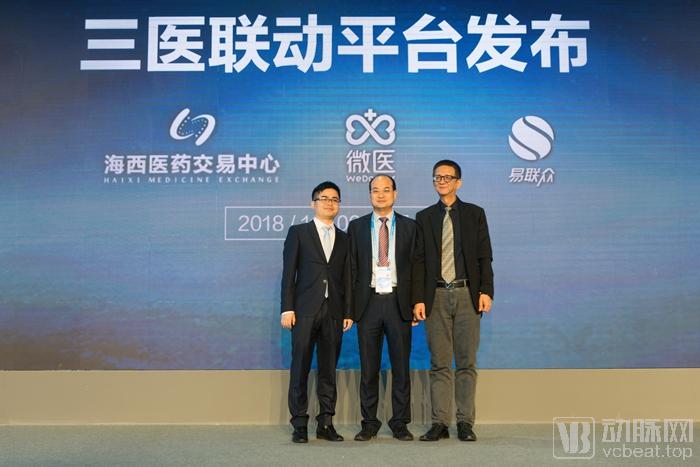
China’s First “Three-Medical Linkage” Platform, “San Yi Lian,” Launched
Over the past six months, WeDoctor Group has deeply intervened in two A-share listed companies through direct and indirect delisting and shareholding disclosure methods.
Accompanying this pace is WeDoctor’s concurrent digital healthcare platform strategy and organizational upgrade. Internal sources reveal that WeDoctor has recently further established an organizational structure of “Cloud + Membership + Consumption” on the basis of its original “Cloud + HMO” strategy, targeting government bodies, consumers, and industry clients respectively.
WeDoctor has evolved from connecting patients with hospitals in the 1.0 era, to pioneering internet hospitals in the 2.0 era by linking patients, hospitals, and doctors to achieve integrated online and offline diagnosis and treatment. Now, it has entered the 3.0 era, vertically connecting cities and villages while horizontally expanding across healthcare services, pharmaceuticals, medical insurance, and elderly care. This has formed a data-driven digital healthcare network, which serves as WeDoctor’s primary platform for continuous deep engagement across the industry chain.
Beneath these seemingly ordinary investment maneuvers lies WeDoctor’s determination to expand its industrial chain and strategically build a digital healthcare network through investment. Today, WeDoctor’s industrial ecosystem has taken shape with a “one body, two wings” structure: WeDoctor as the core, flanked by Yilianzhong, its intelligent health insurance platform, and Hangchi Qianjin, its intelligent manufacturing company. The ultimate goal is to evolve into an Amazon-like digital healthcare platform in China.
“One Body,” the core business of WeDoctor, encompasses three major business lines—WeDoctor Cloud, WeDoctor Membership, and WeDoctor Internet Hospital—aimed at building China’s largest digital healthcare network.
The two wings consist of, on the “software” side, taking a stake in the listed company Yilianzhong, leveraging its service network across more than 20 provinces in China to penetrate the smart health insurance sector and truly integrate healthcare, pharmaceuticals, and health insurance; and on the “hardware” side, acquiring the listed company Hangzhou Advance Gearbox Group, tapping into its world-class advanced manufacturing capabilities to establish a new high ground for intelligent medical devices.
The completion of the equity investment in Hangzhou Advance Gearbox Group will undoubtedly further strengthen WeDoctor’s intelligent manufacturing capabilities in the healthcare sector. Although a latecomer, WeDoctor has achieved large-scale application in the smart hardware field by leveraging its digital platform’s service scale and scenario connectivity. It has successively launched WeDoctor Connect for households, the “Pharmacy-Clinic” integrated software and hardware system for pharmacies, intelligent infirmaries for enterprises, and intelligent cloud mobile clinics for family medicine and public health services, as well as two AI-powered medical devices: a breast cancer screening robot and an all-in-one AI fundus camera.
It is reported that the third-generation high-throughput genetic device, jointly developed by WeDoctor and Shengjie Technology—a portable genetic tester integrating next-generation high-density DNA chips—is also expected to be launched in China within the year.
Investment is merely a means; what deserves closer attention going forward is how WeDoctor will further strengthen its “One Body, Two Wings” industrial ecosystem platform. With its digital healthcare platform as the core and supported by two listed companies specializing in smart medical insurance and intelligent hardware, WeDoctor is leveraging digital tools to drive integrated reforms across China’s healthcare, pharmaceutical, and medical insurance sectors. Its vision for the health and medical industry is now unfolding across the sector.