
May 27, 2019–June 2, 2019: A total of 13 new drug data entries were recorded this week, including 7 for oncology, 2 each for neurological diseases and rare diseases, and 1 each for respiratory diseases and other indications.
❖Camrelizumab from Hengrui Medicine has officially been approved for market launch amid controversy. Previously, four PD-1 monoclonal antibodies had already been approved in China; while they achieved considerable commercial success, their pricing has begun to face pressure. With Hengrui’s entry, regulatory approval and commercial expansion opportunities in the PD-1/PD-L1 sector are expected to gradually tighten. Companies lagging behind, particularly those offering only “me-too” or even “me-worse” products, may find it increasingly difficult to achieve substantial returns.
❖Another Blockbuster Gene Therapy Shows Promise for Market Approval. BioMarin, the first company to develop a gene therapy for hemophilia A, announced that its valoctocogene roxaparvovec therapy has met the pre-specified regulatory review criteria in the United States and Europe. Currently, most patients with hemophilia A require weekly prophylactic injections of coagulation factor VIII, which are extremely costly. BioMarin states that this novel therapy enables patients to maintain near-stable factor activity within three years following a single infusion, with bleeding control sustained for at least eight years. However, concerns remain among external stakeholders regarding the product’s durability and commercial viability.
❖Celgene Announces Approval of Revlimid in Combination with Rituximab for the Treatment of Patients with Indolent Non-Hodgkin Lymphoma. This is the first non-chemotherapy combination therapy approved for indolent non-Hodgkin lymphoma. Indolent lymphomas account for 40% of non-Hodgkin lymphoma cases, and most patients experience relapse and develop resistance after chemotherapy. Notably, the prescribing information includes boxed warnings for a range of toxicities and thromboembolic events, with adverse events reported in at least 20% of patients across two clinical trials.
❖The ASCO Annual Meeting was recently held in Chicago, USA. Next week, Legend Healthcare will launch a special ASCO feature, focusing on key breakthroughs in oncology. Stay tuned.
Celgene’s Lenalidomide and Rituximab Combination Therapy
Approved for the Treatment of Indolent Non-Hodgkin Lymphoma
Celgene Announces Approval of Lenalidomide in Combination with Rituximab for the Treatment of Follicular Lymphoma or Marginal Zone Lymphoma. This Will Become the First Non-Chemotherapy Combination Therapy for Indolent Non-Hodgkin Lymphoma. Lenalidomide Was Previously Approved for the Treatment of Multiple Myeloma and Myelodysplastic Syndromes.
Lenalidomide has a chemical structure similar to that of thalidomide and exhibits multiple effects, including antitumor, immunomodulatory, and anti-angiogenic activities.
Inclusion Criteria and Study DesignApproval was granted based on the AUGMENT trial, a randomized, double-blind, Phase 3 clinical study.
Experimental data showed that the combination therapy group significantly improved patients' PFS (39.4 months vs. 14.1 months).
Novartis’ PI3K Inhibitor Approved for Breast Cancer Treatment
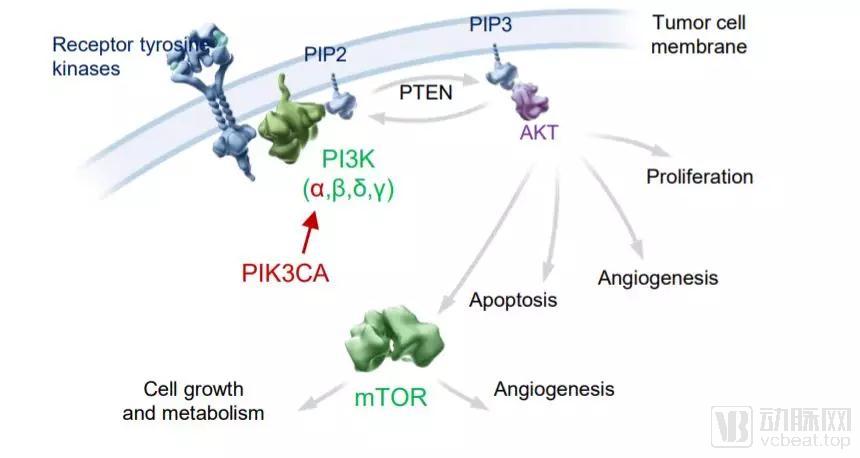
Novartis’ PI3K inhibitor Piqray (alpelisib) has recently been approved for marketing, for use in combination with fulvestrant to treat patients with HR+/HER2- advanced or metastatic breast cancer harboring PIK3CA gene mutations.
Piqray is a small-molecule, α-specific PI3K inhibitor developed by Novartis.
Inclusion Criteria and Study DesignApproval based on the Phase 3 clinical trial named SOLAR-1.
Trial results demonstrated that this innovative combination therapy significantly improved median PFS (11 months vs. 5.7 months).
Figure: PI3K Cancer Signaling Pathway
Source: Novartis Investor Presentation 20190523
Hengrui’s PD-1 Inhibitor Camrelizumab Officially Approved for Market Launch
Camrelizumab (Airuituo), the PD-1 inhibitor developed by Hengrui Medicine, has recently received official approval for market launch, indicated for third-line treatment of patients with relapsed or refractory classical Hodgkin lymphoma.
Camrelizumab is a PD-1 inhibitor.
Inclusion Criteria and Study DesignApproval is based on confirmation from multicenter evidence-based medical studies.
Trial results showed that the ORR was 77.3% and the CR rate was 31.8% in treated patients.
BeiGene's Tislelizumab
Application for Expansion of Indications in Urothelial Carcinoma
BeiGene Announces NMPA’s Recent Acceptance of sNDA for Investigational Anti-PD-1 Antibody Tislelizumab in Patients with Locally Advanced or Metastatic Urothelial Carcinoma
Tislelizumab is a PD-1 monoclonal antibody.
Inclusion Criteria and Study DesignApproval is based on clinical, nonclinical, and other CMC data, primarily from the Phase 2 trial CTR20170071.
The trial results showed that among the 104 patients who received treatment, the ORR was 23.1% and the CR was 7.7%.
Zymeworks Announces Its Bispecific Antibody Drug ZW25
Granted FDA approval for first-line treatment of HER2
Fast-Track Designation for Gastric Cancer Patients with High Expression
Zymeworks Announces FDA Grants Fast Track Designation to ZW25, Its Bispecific Antibody Drug, in Combination with Chemotherapy as First-Line Treatment for Patients with HER2-Overexpressing Gastric Cancer. BeiGene Holds Exclusive Rights to Develop and Commercialize the Drug in Asia (excluding Japan), Australia, and New Zealand.
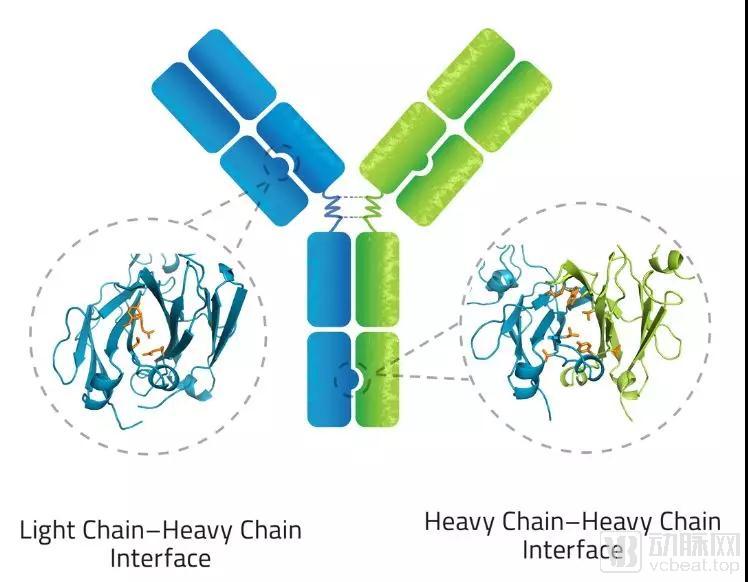
ZW25 is a bispecific antibody capable of simultaneously binding to two non-overlapping epitopes on HER2, developed using Zymeworks’ Azymetric technology.
Inclusion Criteria and Study DesignThe Phase I clinical trial of this drug is expected to be completed in 2019. The Phase II clinical trial is currently underway.
Clinical trials are ongoing.
Figure: Schematic diagram of Zymeworks’ Azymetric technology
Source: Zymeworks Official Website
Arvinas' Protein Degradation Therapy ARV-110
Granted FDA Fast Track Designation
Arvinas’ PROTAC protein degradation therapy ARV-110 was recently granted Fast Track designation by the FDA for the treatment of metastatic castration-resistant prostate cancer.
ARV-110 is an innovative therapy utilizing PROTAC protein degradation technology.
Inclusion Criteria and Study DesignThis therapy entered clinical trials in the first quarter of 2019. The grant of this expedited approval pathway was based on ARV-110’s addressing of unmet clinical needs.
Clinical trial data are expected to be available in the second half of the year.
Bayer’s PI3K Inhibitor for Lymphoma
Granted FDA Breakthrough Therapy Designation
Bayer Announces FDA Breakthrough Therapy Designation for Its Anti-Cancer Drug Aliqopa (copanlisib). Aliqopa is indicated for the treatment of patients with relapsed marginal zone lymphoma who have received at least two prior therapies.
Aliqopa is an injectable PI3K inhibitor.
Inclusion Criteria and Study DesignApproval based on the results of the Phase 2 CHRONOS-1 clinical trial.
The ORR was 69.6% in patients with relapsed marginal zone lymphoma who received treatment, and 59.2% in the overall indolent non-Hodgkin lymphoma group.
Novartis Asthma Combination Therapy QMF149
In Phase III Clinical TrialsAchievement of Primary and Secondary Endpoints
Novartis recently announced that its combination inhaled powder QMF149 for the treatment of asthma met both primary and secondary endpoints in Phase 3 clinical trials.
QMF149 consists of the long-acting β2-adrenergic agonist indacaterol and the inhaled corticosteroid mometasone furoate.
Inclusion Criteria and Study DesignThe data released herein are from the QUARTZ Phase 3 clinical trial, a randomized, double-blind, active-controlled study.
Trial data demonstrated that QMF149 met the primary endpoint of significantly improving patients’ pulmonary function compared with the control group, increasing both forced expiratory volume in one second (FEV1) and evening peak expiratory flow.
Allergan's Psychiatric Drug Vraylar
Approved for Expanded Indications
Allergan Announces FDA Approval of Expanded Indication for Its Psychiatric Drug Vraylar (Cariprazine) to Treat Depressive Episodes Associated with Bipolar I Disorder. With This Approval, Vraylar Becomes the First Medication Approved to Treat All Manifestations of Bipolar I Disorder.
Vraylar exerts its therapeutic effects by partially activating dopamine D2 and serotonin 5-HT1A receptors in the central nervous system, while inhibiting serotonin 5-HT2A receptors.
Inclusion Criteria and Study DesignApproval Based on Three Clinical Trials: RGH-MD-53, RGH-MD-54, and RGH-MD-56。
Trial data show that Vraylar significantly improves depression scores in patients after 6 weeks of treatment.
Pfizer's Epilepsy Drug Lyrica
In Phase III Clinical TrialsFailed to meet the primary endpoint
Pfizer’s Lyrica (pregabalin), an adjunctive therapy for primary generalized tonic-clonic seizures, failed to meet its primary endpoint in Phase 3 clinical trials.
Lyrica, a blockbuster drug from Pfizer for the treatment of epilepsy and pain management, generated global sales of $4.97 billion in 2018, with its patent expected to expire on June 30 this year.
Inclusion Criteria and Study DesignA 12-week, randomized, double-blind, placebo-controlled, multicenter Phase 3 clinical study.
Compared with the placebo group, Lyrica did not significantly reduce the frequency of primary generalized tonic-clonic seizures.
Santhera Treats Respiratory Dysfunction in DMD
New Drug Marketing Authorization Application Submitted in Europe
Santhera recently announced that it has submitted a marketing authorization application to the European Medicines Agency (EMA) for Puldysa (idebenone), its novel drug for treating respiratory dysfunction in Duchenne muscular dystrophy (DMD).
Idebenone is a short-chain benzoquinone that reduces reactive oxygen species levels and replenishes cellular energy levels.
Inclusion Criteria and Study DesignApproval is based on the trial results of the drug in Phase 2 and Phase 3 clinical studies.
The trial results indicate that the drug can slow the decline of respiratory function in patients.
BioMarin Hemophilia Gene Therapy
Meeting the clinical standards for regulatory review in the United States and Europe
BioMarin Announces That Its Gene Therapy Valoctocogene Roxaparvovec for Adult Patients with Severe Hemophilia A Met Pre-Specified Regulatory Review Clinical Endpoints in the United States and Europe
This therapy is a gene therapy utilizing an AAV8 vector.
Inclusion Criteria and Study DesignTwenty patients participated in the Phase 3 GENEr8-1 clinical study.
Trial data showed that 8 of the 20 treated patients achieved FVIII levels above 40 IU/dL after 23–26 weeks.
Novel Drug for Cocaine Degradation
Granted Breakthrough Therapy Designation by the FDA
Tonix Pharmaceuticals Announces FDA Breakthrough Therapy Designation for Investigational New Drug TNX-1300. The novel therapeutic agent degrades cocaine and is indicated for the treatment of cocaine intoxication.
TNX-1300 is a cocaine esterase that rapidly hydrolyzes cocaine into inert metabolites.
Inclusion Criteria and Study DesignRandomized, double-blind, placebo-controlled Phase 2 clinical trial.
Clinical data demonstrate that TNX-1300 is well tolerated and effectively blocks the effects of cocaine.

❖GSK and Pfizer have established a joint venture by merging portions of their consumer healthcare businesses, including GSK’s Sensodyne, Voltaren, and Panadol, as well as Pfizer’s Advil, Centrum, and Caltrate. The joint venture will focus on areas such as analgesics, respiratory supplements, vitamins and minerals, digestive health, over-the-counter (OTC) skin health, therapeutic oral health, and vaccines. GSK holds a 68% controlling stake, while Pfizer holds a 32% stake. Analysts predict that the joint venture’s total sales will reach $12.7 billion.
❖Hansoh Pharmaceutical and Viela Bio have entered into a collaboration agreement under which the two parties will conduct R&D cooperation in China on the CD19 monoclonal antibody inebilizumab for the treatment of neuromyelitis optica spectrum disorders (NMOSD), other autoimmune diseases, and hematologic malignancies. Viela Bio is eligible to receive up to $220 million.
❖Eli Lilly Announces Acquisition of Global Exclusive Rights to Centrexion Therapeutics’ Pain Treatment Candidate CNTX-0290; Centrexion to Receive $47.5 Million Upfront Payment, up to $575 Million in Development and Regulatory Milestone Payments, and $375 Million in Sales Milestone Payments
❖Amicus Therapeutics and the Perelman School of Medicine at the University of Pennsylvania jointly announced an expansion of their collaboration to develop gene therapies for rare diseases, including lysosomal storage disorders. Moving forward, the two parties will collaborate on the development of treatments for Pompe disease, Fabry disease, CDKL5 deficiency disorder, Niemann-Pick disease type C, mucopolysaccharidosis type IIIB, and mucopolysaccharidosis type IIIA. Additionally, Amicus may partner with the University of Pennsylvania’s Gene Therapy Program to develop gene therapy platform technologies targeting other rare diseases.
❖Bayer and Foundation Medicine jointly announced the co-development of a companion diagnostic test based on next-generation sequencing (NGS) technology. The first project under this collaboration focuses on developing a companion diagnostic for the broad-spectrum anticancer drug Vitrakvi.