

GenoSensor Bio Completes Tens of Millions RMB Financing Led by Anlong Fund to Advance Digital PCR Product Development and Manufacturing
VCBeat has learned that ZIZBO recently completed a new round of financing amounting to tens of millions of yuan, with Anlong Fund, an investor focused on life sciences and healthcare, as the lead investor.
ZIZBO, founded in 2016 and located in the Juke Biopark in Xuhui District, Shanghai, specializes in the research and development and production of digital PCR products. Guo Feng, founder and CEO of ZIZBO, revealed that the funds from this round of financing will be primarily used for mass production, product iteration, and regulatory registration.
ZIZBO’s core team comprises executives and marketing experts from leading global medical device companies, as well as scientists and technical specialists in fields such as micro-nano fabrication, precision instrumentation, image recognition, biological reagents, and applications. Founder and CEO Feng Guo previously worked at multinational corporations including Agilent Technologies and Medtronic, bringing extensive experience in corporate operations and marketing. Co-founder and Chief Scientific Officer Dr. Dongdong Li is an expert in micro- and nano-optoelectronic materials and devices, as well as bionanotechnology.
Starting a business after working for several years is the life path of most entrepreneurs. Guo Feng is no exception.
In 2004, Guo Feng graduated with a degree in Precision Instruments from Shanghai Jiao Tong University and joined a foreign-owned semiconductor company. Eight years later, he left the company to join a foreign medical device firm. Why make such a significant career shift from semiconductors to medical devices? When asked about his professional journey, Guo Feng stated, “Working for others is not a lifelong pursuit. I have always harbored the ambition to start my own company and build a business.” He acknowledged that the semiconductor industry requires substantial capital investment and has high entry barriers, making it unsuitable for individual entrepreneurs. In contrast, as living standards improve, people are increasingly focusing on their health, positioning healthcare as a sunrise industry. In 2012, Guo Feng made the decisive move to enter the medical device sector.
At this medical device company, Guo Feng served as the Testing Department Manager for four years. This experience gave him a comprehensive understanding of the processes and management within the medical device industry. Later, he was invited to join a startup founded by his alumni, where he was responsible for market expansion. During this period, Guo Feng met several like-minded partners, which sparked the idea of starting a business together. In 2016, ZIZBO was officially established. “In the early stages, I was the only full-time employee; the other co-founders were all part-timers,” Guo Feng joked.
In the field of molecular biology, various technical approaches are available. Why was digital PCR technology chosen as the focus? “The decision to pursue digital PCR technology as our startup direction was based on multiple considerations,” explained Guo Feng.
First, the project must have strong long-term growth prospects. Second, it should align with the professional backgrounds and career experiences of the founding team, ensuring that specialists handle areas within their expertise. Third, to facilitate future fundraising, the project should belong to a high-demand sector. Fourth, it must be innovative and capable of independent research and development. Fifth, it should target a market that is viable yet relatively niche, with less intense competition, thereby lowering barriers to entry for entrepreneurs.
Two of the founding members specialize in materials chemistry, one is engaged in software development, and another is an expert in the healthcare industry. This interdisciplinary collaboration has laid the foundation for the research and development of digital PCR technology.
PCR, short for Polymerase Chain Reaction, is a technique for in vitro amplification of DNA sequences. More than 30 years have passed since the invention of PCR technology, which has now evolved into its third generation. Over the past three decades, PCR technology has made indelible contributions to the advancement of life sciences.
The first generation of PCR technology is known as endpoint PCR. It utilizes conventional PCR thermal cyclers to amplify target genes, followed by analysis of the products via agarose gel electrophoresis, allowing only for qualitative analysis. The second generation, known as quantitative real-time PCR (Real-Time PCR) or qPCR, incorporates dyes or fluorescent probes into the reaction system to indicate the progress of the reaction. It monitors the accumulation of amplification products through the buildup of fluorescent signals. Results are determined based on fluorescence curves, and quantification can be achieved using Cq values and standard curves. The third generation is called digital PCR (Digital PCR, dPCR, Dig-PCR). This represents a novel approach to PCR detection capable of detecting and quantifying nucleic acids. By directly counting target molecules without reliance on any calibrators or external standards, it can determine the absolute number of target molecules under detection, down to single-copy levels.
In overseas markets, digital PCR has gained widespread industry recognition and begun to enter the clinical market after years of market accumulation. Last November, Illumina, the giant in gene sequencing, led a €16 million Series A financing round for Stilla Technologies, a well-known digital PCR manufacturer. Also in November, at the annual meeting of the Association for Molecular Pathology held in the United States, Roche reported on its progress in developing digital PCR instruments. In early 2019, at the 37th Annual J.P. Morgan Healthcare Conference, Qiagen announced that it had acquired digital PCR technology from Formulatrix, a Boston-based company. In mid-February 2019, Bio-Rad's digital PCR system received FDA approval. In contrast, in China, several domestic startups, represented by ZIZBO, have entered the field of digital PCR.
“Digital PCR, as the latest PCR technology, can partition nucleic acid molecules (DNA or RNA) into tens of thousands to millions of micro-reaction units, followed by ‘single-molecule amplification’ and optical detection of the target sequences within all micro-reaction units, thereby achieving absolute quantification,” explained Guo Feng.
Unlike endpoint PCR and qPCR, digital PCR performs amplification and optical detection at the single-molecule level, thereby offering superior sensitivity, specificity, and precision. Digital PCR holds broad application prospects in numerous areas, including tumor liquid biopsy, non-invasive prenatal testing, pathogen and environmental microbiological detection, food safety testing, genomic research, sequencing library quality control, and result validation.
“The core of digital PCR technology lies in chips and AI-based image algorithms,” stated Guo Feng. ZIZBO has independently developed chip technology, producing chips with low cost, high uniformity, and high amplification efficiency, achieving an effective well rate of over 90%. Meanwhile, leveraging big data-driven machine learning, the company has independently developed image recognition algorithms that offer high identification efficiency and accurate computational results.
ZIZBO operates in the upstream segment of the digital PCR (dPCR) instruments and consumables R&D and manufacturing sector, a high-end field that integrates advanced technologies and specialized expertise in micro-nano fabrication, manufacturing supply chains, software algorithms, and application development. ZIZBO has assembled a team of top-tier talent and fully mastered the core technologies of digital PCR. By efficiently integrating supply chain resources, the company has earned a strong reputation within the industry. According to Guo Feng, feedback from multiple customers indicates that product performance metrics—such as droplet count, precision, accuracy, and sensitivity—have reached or surpassed those of foreign competitors.
At the end of 2017, one year after its establishment, ZIZBO successfully developed China’s first chip-based digital PCR system. In July 2018, ZIZBO completed the product commercialization of its digital PCR instruments and supporting reagent kits. In July 2019, the company’s newly expanded R&D and production facility completed renovation, with mass production expected to be achieved within the year.
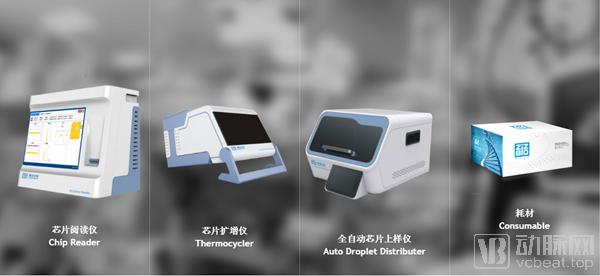
ZIZBO Digital PCR Instruments and Matching Reagent Kits
Regarding future development, Guo Feng stated that ZIZBO is currently undertaking iterative development of its second-generation products, building upon the foundation of its first-generation digital PCR instruments. Meanwhile, Guo Feng expressed his hope that the company will fully leverage its technical advantages in micro-nano fabrication, software algorithms, optical detection, and reagent development to gradually expand its product portfolio into broader IVD fields, thereby achieving multi-domain detection capabilities spanning from molecules to cells and proteins.
“In short, we aim to become a tool-platform company in the life sciences sector,” said Guo Feng. “The future digital PCR market will see domestic and imported brands competing on equal footing. ZIZBO will continue its ‘open platform’ strategy, collaborating with industry partners to expand the digital PCR market. With leading product performance, we will offer lower prices and efficient services, build a strong reputation, and strive to create a premium digital PCR brand that is both user-friendly and affordable.”
About Anlong Fund
Anlong Fund was established in 2015, focusing on early-stage and growth-stage investments in high-quality enterprises within the life sciences sector, including pharmaceuticals, medical devices, and healthcare services. The firm’s team possesses extensive experience in scientific research, multinational corporations, entrepreneurship, and fund investment, representing a perfect blend of overseas returnee and local expertise, with a strong professional background in life sciences and healthcare. Since its inception, Anlong Fund has invested in numerous high-quality companies, five of which are preparing for initial public offerings (IPOs), including Guoke Hengtai, I-Mab Biopharma, Beiken Medical, Conatus Pharmaceuticals, and Laikai Medicine. Additionally, the portfolio includes several standout companies such as Hanyu Medical, Lianxin Medical, Huatai Chenguang, and Qianglian Zhichuang.
Dr. Zhao Chunlin, founder of Anlong Fund, stated: “We are highly optimistic about the field of digital PCR and its significant potential for clinical applications. The founding team, led by Guo Feng, possesses extensive industry experience and strong technical capabilities. We believe that ZIZBO will continue to grow and strengthen, achieving outstanding results.”
Anlong Fund has always adhered to its investment philosophy: “Invest in trustworthy people, and do trustworthy things.” This also represents the core insight Anlong Fund has gained from years of investing in the healthcare sector.